When humidity rises, your bedding feels sticky because fabrics absorb moisture differently. Natural fibers like cotton wick moisture away, but in humid conditions, they can trap dampness, making you feel clammy. Synthetic fabrics often trap humidity too, increasing stickiness. The weave and thread count also matter—looser weaves breathe better, reducing this sensation. To stay comfortable, choosing breathable fabrics and managing indoor humidity helps prevent that annoying stickiness. Learn more to keep your sheets dry and cozy.
Key Takeaways
- High humidity causes fabrics to absorb moisture, leading to dampness and a sticky feeling on bedding.
- Natural fibers like cotton absorb moisture quickly, increasing stickiness in humid conditions.
- Denser weaves and higher thread counts trap heat and moisture, making bedding feel heavier and stickier.
- Synthetic fabrics may trap humidity, reducing breathability and intensifying the sticky sensation.
- Proper fabric choice and ventilation help reduce moisture buildup, minimizing the stickiness caused by humidity.
How Moisture Interacts With Different Fabrics

Different fabrics respond to moisture in unique ways, affecting how comfortable your bedding feels. When you consider fabric dyeing, some materials absorb moisture more readily, which can cause colors to fade or bleed over time. This impacts bed linen care, as certain fabrics require specific washing instructions to maintain their quality and avoid damage. Natural fibers like cotton and linen tend to wick moisture away, helping you stay dry and comfortable, while synthetic fabrics might trap humidity, making your bedding feel sticky. Understanding how moisture interacts with each type of fabric helps you choose the right bedding and care routine, ensuring your sheets stay soft, vibrant, and comfortable. Proper knowledge of fabric dyeing and bed linen care is key to maintaining a pleasant sleeping environment. Additionally, choosing fabrics with high moisture-wicking properties can significantly improve comfort during warmer nights.
Do Humidity Levels Make Bedding Feel Sticky?
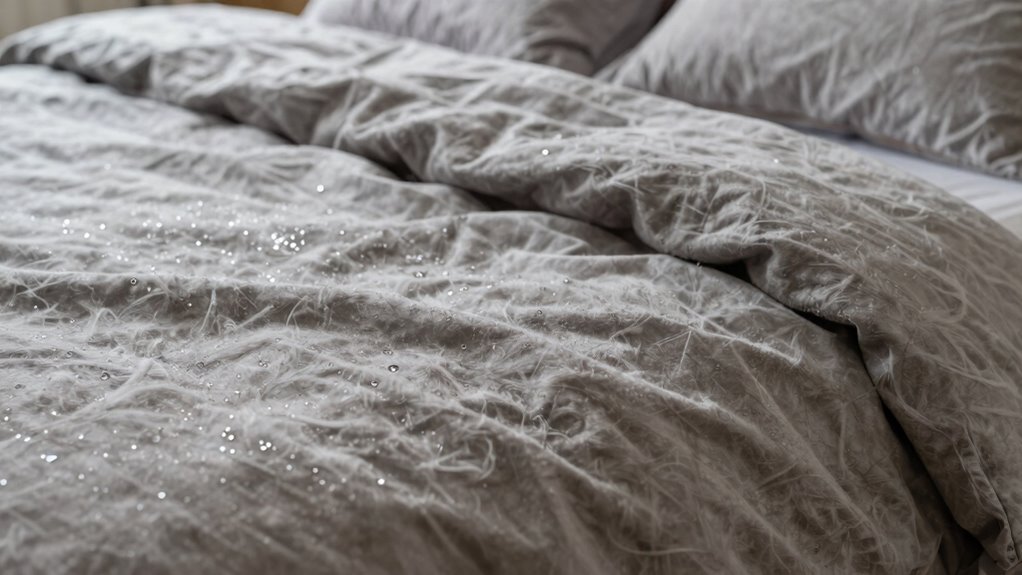
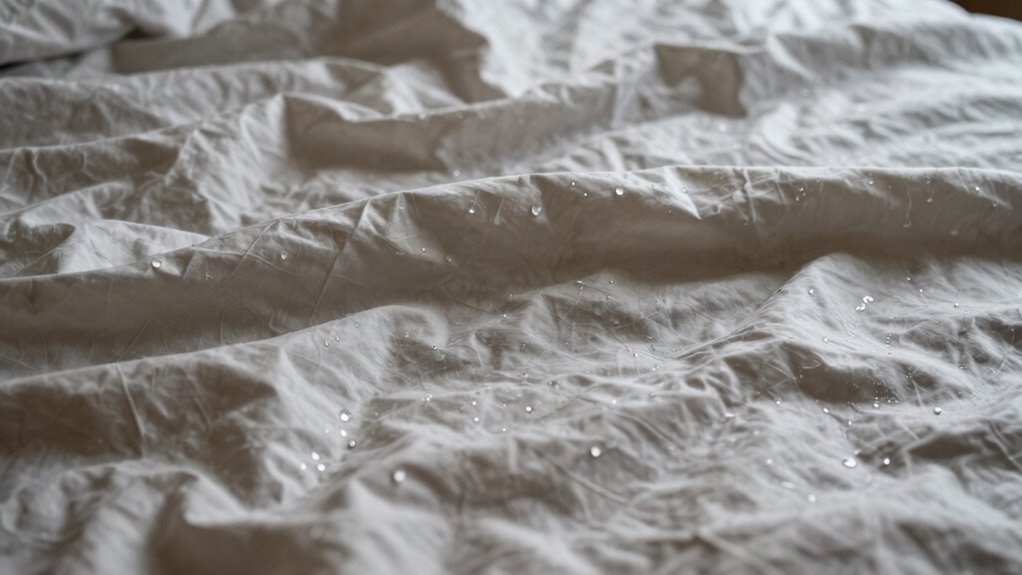
High humidity increases moisture content in your bedding, making it feel sticky and uncomfortable. Fabrics that absorb moisture quickly can intensify this sensation, especially if they lack breathability. Understanding how humidity affects absorption and airflow helps you choose bedding that stays comfortable even in damp conditions. Opting for breathable fabrics can significantly reduce the sticky feeling in humid environments.
Increased Moisture Content
When humidity levels rise, your bedding can start to feel sticky and uncomfortable. Higher moisture content in the air leads to more water settling into the fabric fibers, making them feel damp. This increased moisture can also affect the fabric dyeing process, causing colors to appear dull or uneven. Additionally, during thread weaving, excess moisture can weaken fibers, leading to a less structured fabric that retains more water. As the fibers absorb this moisture, they swell slightly, intensifying the sticky sensation. This added moisture doesn’t just make the bedding feel damp; it also creates an environment where bacteria and mold thrive, further contributing to discomfort. Proper ventilation techniques and managing indoor humidity can help prevent excess moisture buildup. Managing humidity levels helps keep your bedding dry, fresh, and less prone to feeling sticky. Understanding fabric composition can help you choose materials better suited to humid environments, reducing the likelihood of a sticky feel. Additionally, moisture absorption properties vary among fabrics, so selecting the right material can significantly improve comfort. Proper ventilation and fabric care also play a key role in maintaining comfort and preventing moisture buildup, especially in humid environments.
Fabric Absorption Rate
Elevated humidity levels increase the fabric’s absorption rate, making your bedding feel sticky and uncomfortable. When humidity is high, fabrics absorb more moisture from the air, similar to how textile manufacturing uses humidity control during fabric dyeing to ensure even color absorption. This heightened absorption causes fibers to retain more water, resulting in a damp, clingy feel. Fabrics like cotton and linen readily soak up moisture, amplifying the sticky sensation. Understanding this helps explain why bedding feels damp or clammy in humid conditions. By controlling humidity, you can reduce this effect, as lower moisture levels decrease the fabric’s tendency to absorb excess water. Additionally, native cultural practices such as traditional weaving techniques can influence fabric properties and their response to humidity. Overall, the fabric’s absorption rate directly influences how sticky your bedding feels in different humidity environments.
Humidity and Breathability
Humidity levels directly impact how breathable your bedding feels. When humidity is high, you may notice increased dampness perception, making your sheets feel sticky and uncomfortable. Moisture in the air causes fabrics to trap heat and moisture, reducing airflow and making the fabric feel stiffer and less breathable. This fabric stiffness can intensify dampness perception, creating a sensation of stickiness, especially during hot or humid nights. Conversely, lower humidity allows fabrics to dry faster, enhancing breathability and comfort. To improve your sleep environment, opt for moisture-wicking fabrics and maintain proper ventilation. Understanding how humidity affects your bedding helps you choose materials that resist dampness perception and minimize fabric stiffness, ensuring a cooler, more comfortable sleep.
How Different Fabrics Respond to Moisture and Humidity
Different fabrics absorb and retain moisture differently, affecting how comfortable you feel in humid conditions. Some materials, like cotton, quickly soak up moisture, making them feel damp and heavy. Others, such as polyester, resist moisture, helping you stay dry and comfortable. Additionally, natural oils from essential oils can sometimes alter fabric texture and moisture absorption properties. The fabric’s water resistance is also influenced by its weave and treatment, which can either promote or hinder moisture absorption.
Fabric Absorption Levels
Fabrics vary widely in how they absorb moisture, which directly impacts comfort and durability in humid conditions. Natural fibers like cotton and linen tend to absorb more moisture quickly, making them feel damp but breathable. Synthetic fabrics, such as polyester, typically repel water, offering less absorption but sometimes trapping moisture inside. Fiber dyeing processes can influence absorption levels by affecting fiber surface properties, while fabric aging can change how fibers respond to humidity, often increasing their absorbency over time. Understanding these differences helps you choose bedding that stays comfortable and less sticky in humid environments. Higher absorption fabrics may feel cooler initially but can also lead to quicker fabric degradation if exposed to persistent moisture. Additionally, the fabric’s weave pattern can significantly impact its moisture-wicking capabilities, further influencing how it reacts to humidity. Recognizing the fiber surface properties of different fabrics allows for better predictions of their behavior under humid conditions. Moreover, the fabric’s breathability is crucial for maintaining dryness and comfort during humid weather, influencing overall bedding performance. The type of fiber, its treatment, and fabric construction all play vital roles in moisture management, which is essential for staying comfortable in high humidity.
Moisture Retention Properties
While some textiles quickly release moisture, others hold onto it, markedly impacting comfort in humid conditions. Fabrics with effective fiber treatments often include moisture barriers that limit water absorption, helping to keep bedding dry and reduce stickiness. Natural fibers like cotton may absorb moisture easily, but their moisture retention varies depending on treatments applied during manufacturing. Synthetic fabrics, such as polyester, typically have moisture barriers that prevent water from penetrating deeply, making them more resistant to humidity. These properties influence how long bedding stays damp or dry. Understanding moisture retention helps you choose fabrics suited for humid environments, ensuring comfort. Fabrics with enhanced moisture barriers or specialized fiber treatments tend to maintain a drier, more comfortable feel, reducing the sticky sensation caused by high humidity. Additionally, selecting fabrics with moisture management properties can further enhance comfort in humid conditions. Proper fabric selection can also decrease mold and mildew growth, which thrive in damp environments. Recognizing how different fabrics respond to humidity levels allows you to make informed choices that improve overall sleep quality, especially when considering the use of specialized textile technologies designed for moisture control. Moreover, using fabrics with moisture-wicking capabilities can significantly improve comfort by actively pulling moisture away from the skin.
Why Natural Fibers Feel Different From Synthetic Materials

Natural fibers often feel softer and more breathable than synthetic materials because their structure allows for better moisture absorption and air flow. This means they help you stay cool and dry, especially in humid conditions. Natural fibers like cotton and linen have a porous structure that enhances fabric softness and comfort. Additionally, their moisture-wicking properties can help reduce the feeling of stickiness in humid weather. These properties are further supported by their breathable construction, which facilitates airflow and evaporation. The fiber composition of natural fabrics contributes to their overall comfort and makes them feel less clammy. Plus, dye impacts are more subtle, allowing these fabrics to maintain their natural look and feel over time. Synthetic fabrics, on the other hand, tend to trap heat and moisture, making them feel less comfortable. When choosing bedding, consider these factors for better comfort: better moisture-wicking properties, softer, more natural feel, and reduced dye impact over time. This results in fabrics that feel more pleasant and less sticky, especially in humid weather.
Why Does Cotton Sometimes Feel Sticky in Humid Weather?
Cotton can sometimes feel sticky in humid weather because its porous structure absorbs moisture from the air, causing the fabric to cling to your skin. This effect is common in dorm rooms where humidity levels fluctuate or if you have pet allergies that increase moisture in the environment. The following table shows how different factors influence cotton’s comfort:
| Factor | Effect on Cotton | Recommended Action |
|---|---|---|
| Humidity Levels | Increases stickiness | Use breathable sheets |
| Pet Allergies | Raise humidity, worsen stickiness | Keep bedding clean and dry |
| Fabric Type | Porous fabrics absorb more moisture | Opt for moisture-wicking fabrics |
| Room Ventilation | Reduces humidity and stickiness | Improve airflow in dorm rooms |
How Bedding Weave and Thread Count Affect Comfort
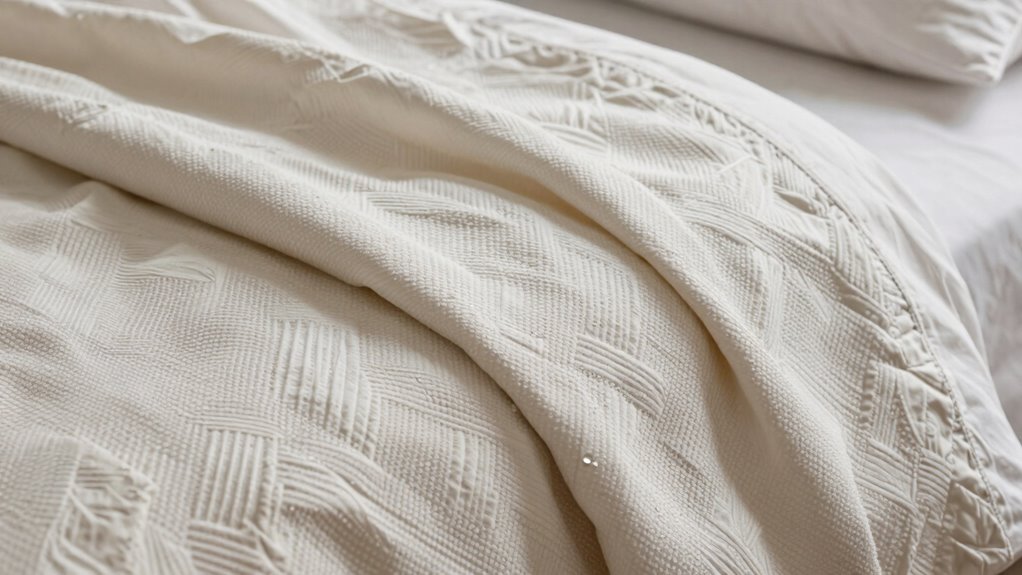
The way your bedding is woven and its thread count directly impact comfort, especially in humid conditions. Higher thread counts often mean increased fabric density, which can trap heat and moisture, making you sweat more. Conversely, lower thread counts usually create a more breathable surface, helping moisture evaporate faster. When choosing bedding, consider these points:
Opt for lower thread counts and looser weaves for cooler, more breathable bedding in humid weather.
- A moderate thread count (200-400) balances durability and breathability
- Looser weaves allow better airflow and moisture wicking
- Denser fabrics can feel heavier and less airy in humidity
Fabric density influences how well your bedding manages moisture and air circulation. Thinner, loosely woven fabrics typically feel cooler and more comfortable in humid weather, reducing that sticky sensation.
How Can You Tell If Your Bedding Is Absorbing Too Much Moisture?

If your bedding feels damp or clammy even after waking up, it’s a sign that it might be absorbing too much moisture. This can lead to breathability issues, making it harder for your skin to breathe during the night. You might notice your sheets feel heavy or stay damp despite your efforts to dry them. Over time, excessive moisture absorption can also affect fabric durability, causing fibers to weaken or fray faster. If you see persistent dampness, it indicates your bedding isn’t effectively managing humidity. To check, look for signs like musty odors or visible damp spots. Addressing these issues early can help improve sleep comfort and extend your bedding’s lifespan.
What Are the Best Bedding Options for Breathability and Humidity Resistance?

Choosing bedding that promotes breathability and resists humidity buildup can substantially improve your sleep quality. Natural fabrics like cotton, linen, and bamboo wick moisture away from your skin, helping you stay dry and comfortable. These options also enhance bedroom aesthetics by offering a clean, fresh look. To maintain their benefits, look for bedding that’s easy to care for and durable. When selecting the best bedding for humidity resistance, consider:
- Breathable fabrics such as cotton, linen, and bamboo
- Weave types like percale or sateen for better air circulation
- Lightweight, moisture-wicking materials for quick drying
These choices not only keep you cooler but also simplify bedding maintenance, preventing mold, mildew, and mustiness. Prioritizing breathability and humidity resistance ensures a healthier sleep environment and longer-lasting bedding.
Practical Ways to Keep Your Sheets Dry and Comfortable

Keeping your sheets dry and comfortable requires practical strategies that address moisture buildup and temperature regulation throughout the night. Start by choosing bedding that complements your bedroom decor and promotes good sleep hygiene, such as moisture-wicking sheets and breathable blankets. Maintain a consistent sleep environment by using a dehumidifier or air purifier to reduce excess humidity. Make sure your room is well-ventilated, opening windows when possible. Adjust your sleepwear to lightweight, breathable fabrics to prevent sweat accumulation. Regularly washing your bedding helps eliminate dust mites and mold spores, which can contribute to discomfort. Ultimately, consider a cooler room temperature to prevent overheating and excessive perspiration. These steps keep your sheets dry, enhance comfort, and support restful sleep.
Frequently Asked Questions
Can Laundering Methods Affect Bedding’s Moisture Absorption?
Yes, laundering techniques can affect bedding’s moisture absorption. Using fabric softeners, for example, can coat fibers and reduce their ability to absorb moisture, making bedding feel less breathable. Additionally, washing bedding with harsh detergents or at high temperatures can weaken fibers, potentially altering their moisture-wicking properties. To maintain ideal moisture absorption, opt for gentle laundering techniques and avoid fabric softeners during washing.
Do Bedding Materials Impact Allergy Symptoms in Humid Conditions?
Think of your bedding as a shield in a humid forest. Breathable fabrics act like a breathable canopy, letting moisture escape and reducing allergy triggers. Non-breathable materials trap humidity, encouraging mold and dust mites that worsen allergy symptoms. So, choosing bedding with good fabric breathability helps you stay dry and comfortable, preventing allergy flare-ups. Always opt for natural, airy fabrics to create a barrier that keeps allergens at bay.
How Does Bedding Age Influence Moisture Retention?
As your bedding ages, fabric deterioration from the aging process causes it to retain more moisture. Over time, fibers break down, creating tiny gaps that trap humidity, making your bedding feel damp or sticky. This increased moisture retention can lead to a less comfortable sleep environment and promote mold growth. To avoid this, replace your bedding regularly, especially as it shows signs of wear, to keep moisture levels in check.
Are There Specific Treatments That Make Bedding More Moisture-Resistant?
Yes, you can treat bedding to make it more moisture-resistant. Look for fabrics with special finishes, like water-repellent or stain-resistant coatings, which act as fabric finishes. You can also add moisture barriers, such as waterproof mattress protectors or treatments, to prevent moisture from seeping in. These options help keep your bedding dry and comfortable, especially in humid environments or during spills.
What Are Signs of Mold or Mildew Growth Caused by Humidity?
You might notice a musty smell or see fuzzy, discolored patches on your bedding—that’s a warning sign of mold or mildew. These signs often appear in humid environments, risking your health. To prevent mold, keep your bedding dry and well-ventilated. Watch for mildew signs like spots or a slimy texture, and address them quickly. Mold prevention is essential for a safe, comfortable sleeping space.
Conclusion
Think of your bedding as a quiet guardian of your comfort, absorbing the whispers of humidity around you. When it feels sticky, it’s like the fabric’s silent cry for breathability. Choosing the right materials and caring for your sheets helps restore balance, letting your bed breathe freely—your sanctuary. Embrace this gentle dance with moisture, and your nights will always be a haven of cool, dry serenity, no matter what the weather whispers outside.