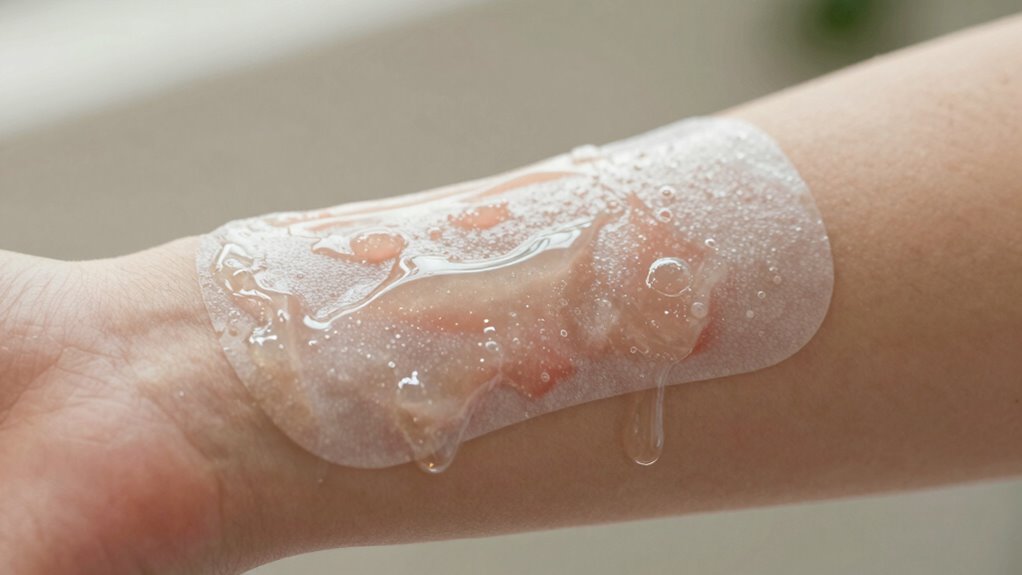

When you apply a cooling gel, heat quickly moves from your skin to the gel through conduction, creating that initial cold sensation. As heat diffuses and your skin and gel reach a thermal equilibrium, the temperature difference lessens, and your nerves respond less strongly, making the cold fade. Factors like the gel’s composition and external heat sources influence how long this sensation lasts. To learn more about these thermal effects, continue exploring how heat transfer shapes your experience.
Key Takeaways
- The initial cold feeling results from rapid heat transfer from skin to the gel, creating a temperature difference sensed by nerve endings.
- Sensory adaptation reduces nerve sensitivity over time, decreasing the perception of cold even if the gel remains in contact.
- As the gel warms to skin temperature, the temperature difference diminishes, leading to a reduction or cessation of the cold sensation.
- External factors like heat sources and sunlight accelerate warming, shortening the duration of the cooling effect.
- Proper application and storage extend cooling duration by maintaining the gel’s low temperature and minimizing external heat influences.
Why Does Heat Transfer Cause the Cooling Sensation?

When you touch a cooling gel, it feels cold because heat immediately moves from your skin to the gel. This rapid heat transfer occurs because the gel has a high thermal conductivity, allowing heat to diffuse quickly from your warm skin into it. The process of heat diffusion ensures that energy flows from the hotter area (your skin) to the cooler material (the gel). As heat leaves your skin, it creates a cooling sensation. The faster the heat diffuses, the more intense the feeling of cold. This transfer continues until the temperature difference lessens, making the sensation fade. Your body’s natural response is to balance this heat exchange, but during initial contact, the swift heat diffusion makes the gel feel significantly cold.
How Do Evaporation and Conduction Make the Gel Feel Cold?
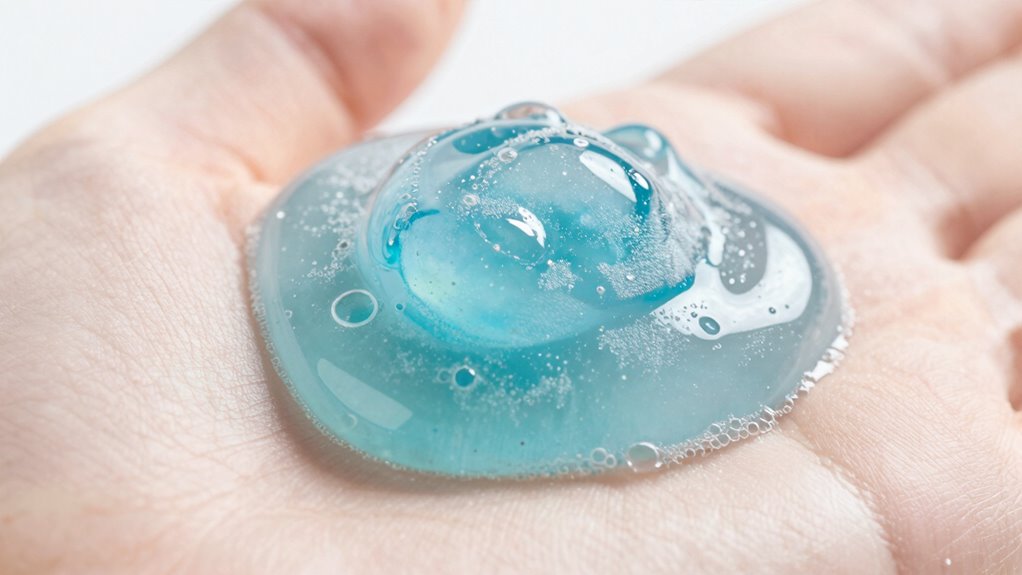
As heat moves from your skin into the gel, two processes—conduction and evaporation—help make the cooling sensation even more noticeable. The gel’s texture and composition play a key role here. Conduction occurs as heat transfers directly from your skin into the gel, making it feel cold initially. Meanwhile, evaporation happens when tiny moisture molecules on the gel’s surface absorb heat to turn into vapor, further cooling your skin. The gel’s water content facilitates rapid heat transfer. Evaporation absorbs heat, amplifying the cold sensation. Gel composition influences how quickly heat dissipates. Texture allows for intimate skin contact, boosting conduction. Additionally, the thermal conductivity of the gel material determines how efficiently heat is transferred, impacting how quickly the gel feels cold.
Why Does the Cold Feeling Fade Over Time?

The cooling sensation fades over time because the heat transfer processes gradually slow down as your skin and the gel reach thermal equilibrium. When this happens, your nerve sensors become less responsive due to sensory adaptation, making the cold feeling less noticeable. As heat continues to flow from your skin to the gel, the temperature difference decreases, and both surfaces approach the same temperature. Once thermal equilibrium is achieved, there’s little to no temperature gradient, so your nerves stop sending strong cold signals. This natural adjustment explains why the initial chill diminishes, even though the gel remains in contact with your skin. Additionally, the thermal properties of the gel influence how quickly it heats up or cools down, affecting the duration of the cold sensation. Fundamentally, your body’s sensory system adjusts to the new temperature, reducing the perception of cold over time.
How Do Skin and Gel Temperature Differences Influence Sensation?
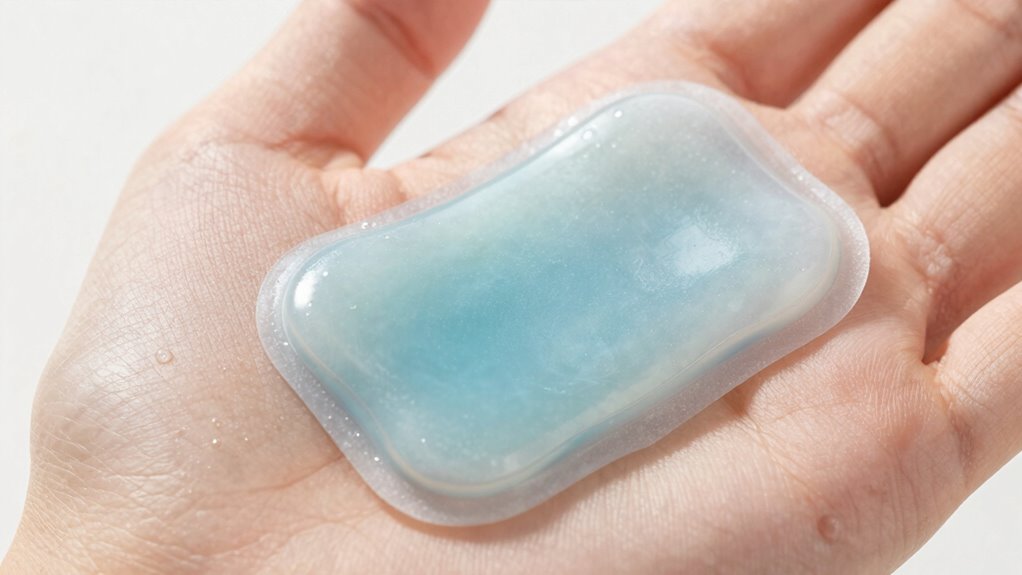
The temperature difference between your skin and the cooling gel directly affects how strongly you feel each sensation. When the gel is much colder than your skin, your skin response triggers a sharper cooling feeling. As the skin detects the temperature change, nerve endings send signals to your brain, making the sensation intense initially. Over time, sensory adaptation occurs, reducing your perception of cold even if the temperature difference remains. Additionally, sensory adaptation helps explain why the sensation diminishes despite ongoing exposure. – A larger temperature gap causes a more intense initial sensation – Skin response diminishes as nerves adapt to constant stimuli – Sensory adaptation lessens the perceived coolness over time – Smaller temperature differences result in milder sensations from the start Understanding this helps explain why the cooling effect feels strongest at first and then fades as your skin adapts.
How Does Your Body React to the Cooling Effect?
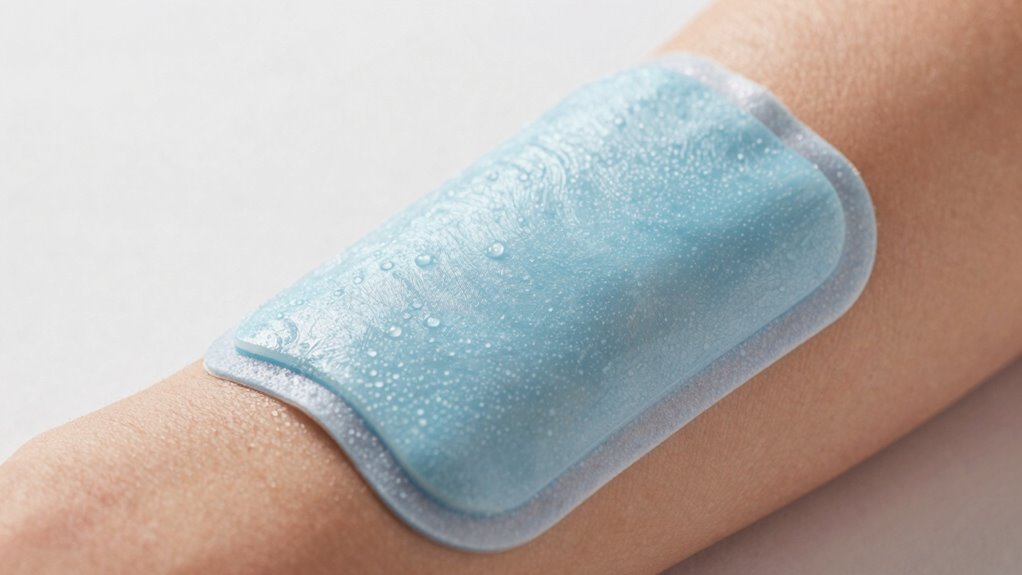
When your skin encounters the cooling gel, your body’s immediate response is to activate its natural defense mechanisms. Your nerve response detects the sudden drop in temperature, sending signals to your brain. Over time, sensory adaptation occurs, making your nerves less sensitive to the cooling sensation. This process helps prevent overstimulation and allows your skin to adjust to the cooler environment. As your nerves adapt, the initial cold feeling diminishes, giving you the impression that the cooling effect has stopped. Your body naturally aims to maintain thermal balance, so these reactions are part of your body’s way of protecting itself from extreme temperature changes. Additionally, thermal regulation involves complex processes that help dissipate excess heat or conserve warmth, further contributing to the sensation diminishing over time. This dynamic interplay between nerve response and sensory adaptation explains why the cooling sensation is temporary.
What Science Explains the Gel’s Temperature Changes?
Understanding how the gel causes temperature changes involves exploring its chemical properties. The key lies in its material properties, especially thermal conductivity, which determines how quickly it transfers heat. When you apply the gel, its high thermal conductivity allows rapid heat absorption from your skin, creating that cool sensation. As the gel cools, its ability to draw heat diminishes, explaining why the effect stops. The gel’s composition, often including water and specific polymers, influences how effectively it conducts heat. Additionally, the gel’s viscosity affects how long it maintains contact and cools your skin before warming back up. Heat transfer principles explain temperature shifts in the gel.
How Can You Maximize the Cooling Effect of Your Gel?
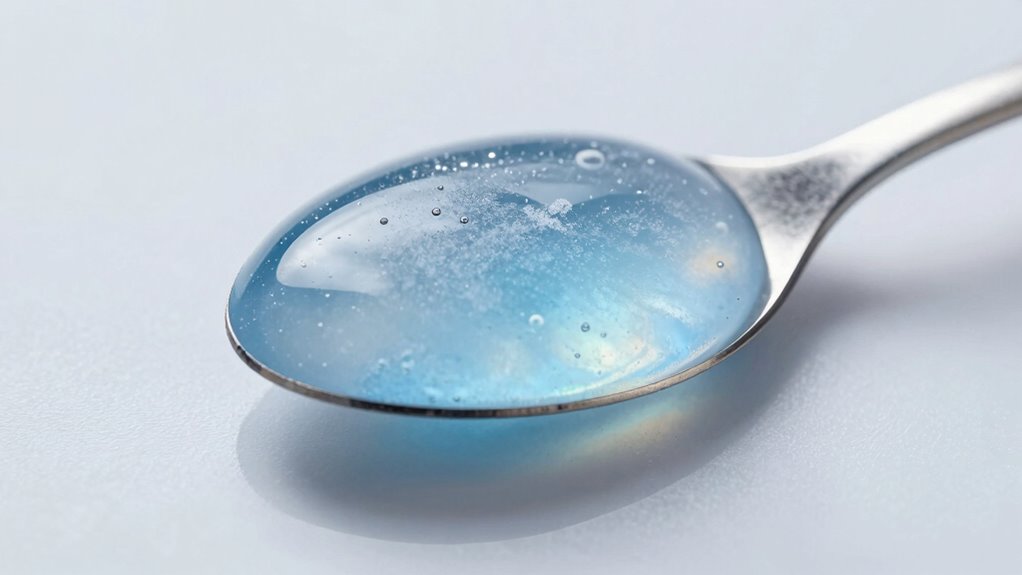
To get the most cooling from your gel, start by storing it in the fridge before use. Apply it evenly to maximize contact and cooling effect, and consider reapplying as needed to extend its chill. You can also enhance the duration of the cooling sensation by keeping the gel cool and avoiding warm environments. Incorporating natural cooling methods can further improve its effectiveness.
Proper Storage Techniques
Storing your cooling gel properly is key to maximizing its effectiveness. Good storage conditions help maintain gel longevity, ensuring it stays cold and effective when needed. Keep the gel in a cool, dry place away from direct sunlight, heat sources, and humidity. Avoid frequent temperature fluctuations, which can degrade the gel’s cooling properties. For ideal results, consider refrigerating the gel, but don’t freeze it, as extreme cold can alter its consistency. Proper storage not only preserves its cooling effect but also extends its shelf life. Proper storage techniques are essential for maintaining the gel’s temperature-retaining qualities over time.
Optimal Application Methods
Proper storage helps keep your cooling gel effective, but how you apply it also matters. To maximize the cooling effect, focus on application techniques that suit the gel’s consistency. If your gel is thick, warm it slightly with your hands or a brief warm-up to make spreading easier and ensure better contact with your skin. For thinner gels, apply a generous amount and gently massage it into targeted areas, distributing evenly for maximum cooling. Avoid rubbing too vigorously, as this can warm the gel and reduce its chill. Instead, use gentle, consistent pressure to help the gel stay in place and cool your skin effectively. Properly applying the gel ensures you get the most benefit from its cooling properties, prolonging the sensation and comfort. Additionally, understanding thermal transfer helps you optimize how the gel interacts with your skin for longer-lasting relief.
Enhancing Cooling Duration
If you want your cooling gel to stay effective longer, there are simple steps you can take to enhance its cooling duration. First, choose gels with a balanced gel composition that retains cold for extended periods. Keep the gel in the freezer before use to maximize initial cooling. Applying the gel directly to clean, dry skin improves contact and prolongs the cooling effect. Avoid exposing the gel to heat sources or sunlight, which can reduce its cooling duration. You can also consider layering with a breathable cloth to slow heat transfer.
- Use gels with a high water content for longer cooling effects
- Freeze the gel beforehand for an initial cold boost
- Keep the gel away from direct heat or sunlight
- Apply to dry skin for better contact and extended cooling
Frequently Asked Questions
Can Environmental Factors Alter the Cooling Gel’s Temperature Sensation?
Yes, environmental factors can change how you perceive cooling gel’s temperature. When ambient temperature is high, the gel might seem less cold because your skin already feels warm. High humidity levels can also reduce the cooling sensation, as moisture on your skin affects heat transfer. Conversely, cooler surroundings enhance the gel’s cooling effect. So, your perception varies depending on these environmental conditions, influencing how cold or warm the gel feels.
Does the Gel’s Formulation Affect How Quickly It Loses Its Cold Feeling?
While a refined gel formulation can influence its cooling duration, it doesn’t extend the feeling indefinitely. You’ll notice that by adjusting ingredients, manufacturers aim to optimize how long the gel feels invigorating. The gel’s formulation affects how quickly it absorbs heat and how long it maintains that cool sensation. So, if you want a longer-lasting chill, selecting a product with a carefully crafted formulation is your best bet.
How Does Body Heat Influence the Duration of the Cooling Sensation?
Your body heat directly impacts the cooling duration of the gel. As your body warms the gel, it speeds up the evaporation or absorption process, which diminishes the cooling sensation faster. The more heat your body generates, the shorter the cooling duration becomes. To prolong the feeling, keep the gel in cooler environments and avoid excessive body heat, allowing the cooling effect to last longer.
Are There Health Risks Associated With Prolonged Exposure to Cooling Gels?
Prolonged exposure to cooling gels can pose health risks like skin irritation or allergy risks, especially if you have sensitive skin or allergies. You might develop redness, itching, or swelling if you leave the gel on too long. To stay safe, follow the product instructions carefully, avoid applying excessive amounts, and remove the gel if you notice any irritation. Always do a patch test before extended use.
Can Repeated Use Diminish the Gel’s Cooling Effectiveness Over Time?
Repeated application of cooling gel can diminish its cooling effectiveness over time, as the gel’s longevity depends on how often you use it. Each time you reapply, the active ingredients may lose potency or become less noticeable, reducing the cooling sensation. To maximize the gel’s benefits, give it time to restore its original properties between uses, and avoid overusing it, which can lead to decreased effectiveness.
Conclusion
Understanding why cooling gel feels cold at first and then stops helps you make the most of its benefits. As you learn how heat transfer, evaporation, and your body’s response work together, you’ll see it’s all about science at play. So, don’t let this cooling sensation fool you—just like a flash in the pan, it’s temporary. Use this knowledge to maximize its effects and stay cool when it counts the most.