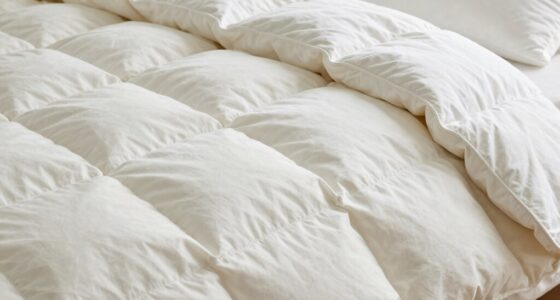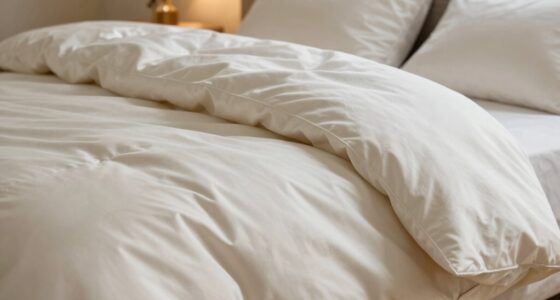
Cooling blankets feel cooler because they’re made with materials that promote airflow, moisture wicking, and heat dissipation. Fabrics like linen, cotton, or bamboo help keep you dry and comfortable by drawing moisture away from your skin. Textures like open weaves or mesh improve ventilation, while advanced technologies like phase change fabrics absorb and release heat. Choosing the right combination of breathable materials, moisture management, and design features can markedly enhance your sleep comfort—discover more below.
Key Takeaways
- Materials with high thermal conductivity, like linen or bamboo, transfer heat away from the body efficiently.
- Breathable fabrics with open weaves or mesh textures promote airflow and enhance cooling.
- Moisture-wicking fabrics draw sweat away, keeping the skin dry and reducing heat buildup.
- Light-colored blankets reflect heat, preventing absorption and helping maintain a cooler surface.
- Advanced cooling technologies, such as phase change materials or gels, actively regulate temperature for a cooler feel.
cooling blanket with phase change materials
As an affiliate, we earn on qualifying purchases.
As an affiliate, we earn on qualifying purchases.
How Do Cooling Blankets Work? The Science Behind the Chill
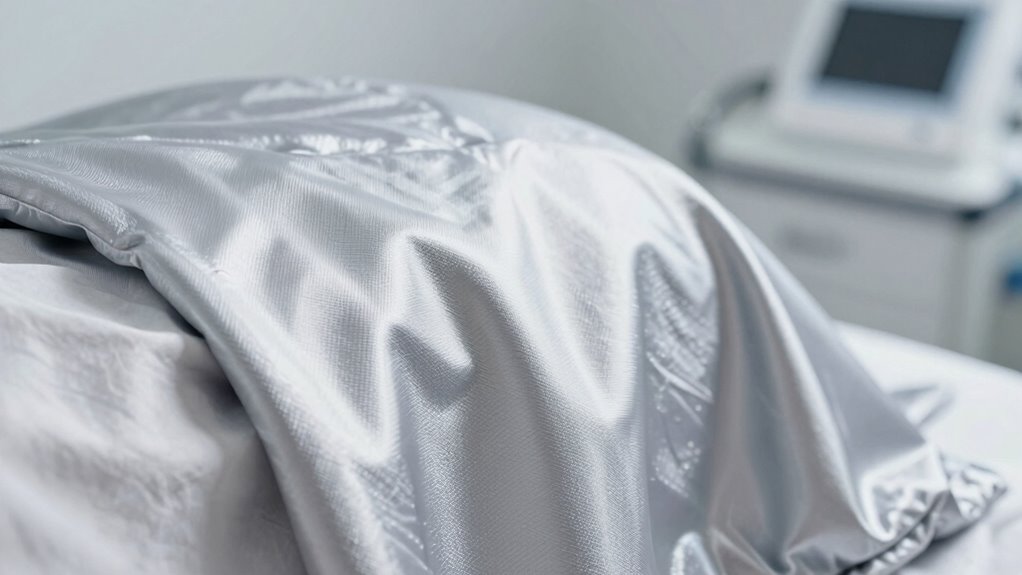
Cooling blankets work by actively drawing heat away from your body to help regulate your temperature. They facilitate thermoregulation, ensuring you stay comfortable throughout the night. These blankets use advanced materials and design features to enhance heat transfer, speeding up the process of releasing excess body heat. When you use a cooling blanket, heat moves from your warmer body to the cooler surface of the blanket through conduction. Some blankets incorporate moisture-wicking fabrics or specialized cooling gels that further accelerate heat transfer. As a result, your body maintains a stable temperature, preventing overheating and promoting restful sleep. This active heat transfer process is essential for managing body heat effectively, especially if you tend to sweat or feel overly warm during the night. Additionally, understanding the science behind heat transfer can help you choose the most effective cooling blanket for your needs. Proper material selection plays a crucial role in optimizing thermal regulation, and selecting fabrics with high thermal conductivity can improve overall cooling performance. Incorporating proper airflow around the blanket can further enhance its cooling effectiveness. Moreover, advancements in fabric technology continue to improve the efficiency of cooling blankets, making them more comfortable and effective for users.
moisture-wicking cooling blanket
As an affiliate, we earn on qualifying purchases.
As an affiliate, we earn on qualifying purchases.
What Materials Make a Blanket Feel Cooler? Key Options Explained
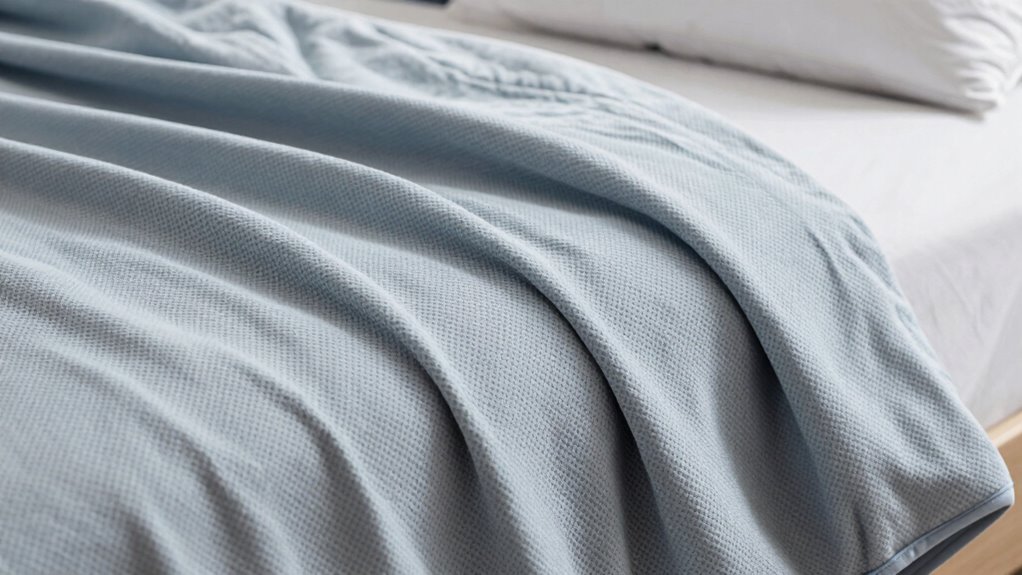
The materials used in a blanket considerably influence how cool and comfortable it feels. To achieve a cooler sensation, opt for fabrics that are lightweight and have moisture-wicking properties, such as linen or bamboo. These materials promote airflow, helping you stay dry and cool throughout the night. Fabric softness is also key; smoother fabrics like Tencel or certain cotton blends provide a gentle touch against your skin, enhancing comfort. Additionally, the aesthetic appeal matters—materials with a sleek, matte finish or modern textures can make your bedding look inviting and stylish. Choosing the right material guarantees your blanket feels cool to the touch while maintaining an appealing appearance, so you can rest comfortably without overheating. Breathable fabrics ensure maximum airflow, further contributing to a cooler sleeping experience. Selecting fabrics with moisture-wicking properties can significantly reduce night sweats and improve overall sleep quality.
As an affiliate, we earn on qualifying purchases.
Why Is Breathability Important for Cooling? Let’s Break It Down
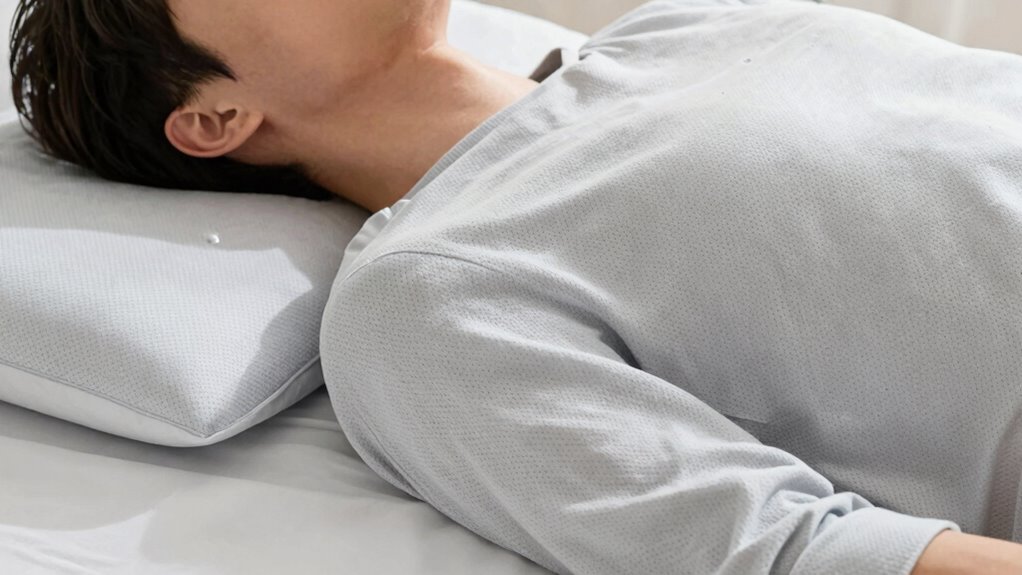
Breathability plays a crucial role in keeping you comfortable throughout the night because it allows air to flow freely through your blanket. This breathability importance helps regulate your body temperature, preventing overheating and sweating. When your blanket promotes good airflow, it reduces heat buildup, keeping you cooler for longer periods. The airflow benefits ensure moisture evaporates quickly, reducing dampness and discomfort. Without proper breathability, heat and moisture can become trapped, leading to restless nights and disrupted sleep. Choosing a breathable blanket means you’ll stay cooler and more comfortable, especially during hot weather or if you tend to sweat at night. Additionally, moisture wicking fabrics enhance breathability by actively moving sweat away from your skin, further improving your sleep quality. Incorporating fabric composition into your selection process can significantly impact breathability and overall comfort. Proper fabric design also plays a vital role in enhancing airflow and moisture management. Overall, breathability is essential to enhance your sleep quality by maintaining a balanced, cool environment throughout the night, especially when considering the material composition of your blanket. Recognizing the importance of ventilation can help you choose the most effective cooling blankets for your needs.
breathable linen cooling blanket
As an affiliate, we earn on qualifying purchases.
As an affiliate, we earn on qualifying purchases.
How Do Moisture-Wicking Fabrics Keep You Cooler? The Benefits Explained
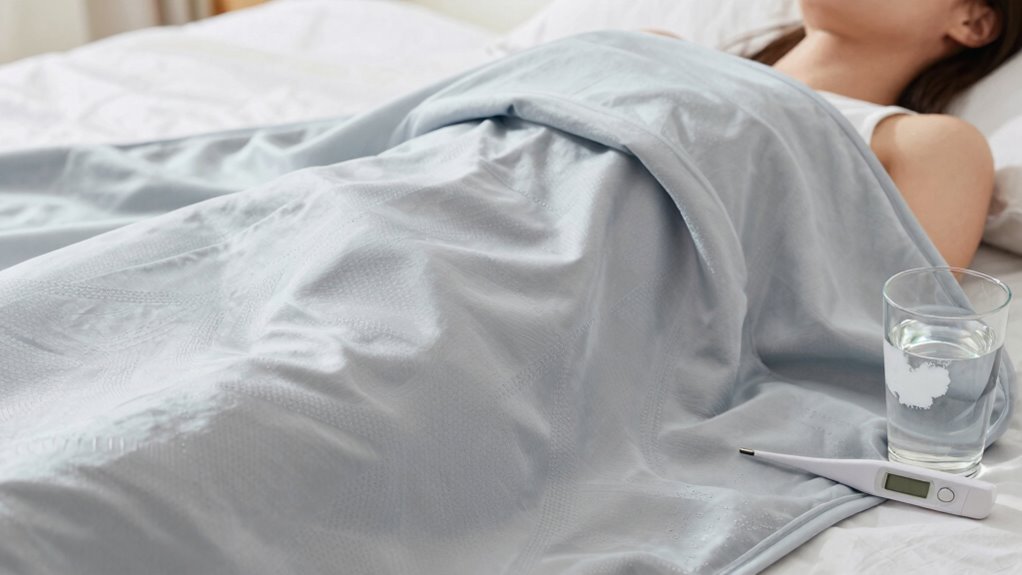
Moisture-wicking fabrics help keep you cooler by promoting airflow and reducing heat buildup. They efficiently move sweat away from your skin, preventing discomfort and overheating. With better moisture management and ventilation, you stay dry and comfortable all day long. Additionally, their design often incorporates breathable materials that further enhance airflow and cooling. These fabrics are engineered with advanced textile technology to optimize cooling performance and durability. Incorporating proper maintenance ensures these fabrics continue to perform at their best over time. Utilizing specialized fabric treatments can further improve moisture-wicking efficiency and longevity. Moreover, choosing fabrics with moisture-wicking properties that are also lightweight can significantly enhance comfort during hot conditions.
Breathability and Ventilation
When you sleep under a cooling blanket, its ability to promote airflow and wick away moisture plays a crucial role in keeping you comfortable. Breathability and ventilation prevent heat from getting trapped, reducing thermal insulation and heat retention that can make you feel hot. Fabrics designed for airflow allow air to circulate freely, helping your body dissipate heat more efficiently. By managing moisture and encouraging airflow, these blankets keep your skin dry and cool throughout the night. Proper fabric choices and open-weave designs enhance thermal regulation, ensuring a cooler sleep environment. Additionally, choosing fabrics with moisture-wicking properties further enhances comfort by drawing sweat away from the skin. The use of lightweight and breathable materials also contributes to a more comfortable sleeping experience, making it easier to stay cool during warm nights. Incorporating fabrics with breathability and ventilation features helps prevent overheating and promotes restful sleep, especially when combined with moisture management techniques.
Moisture Management Benefits
Because moisture can quickly make you uncomfortable and disrupt your sleep, moisture-wicking fabrics are designed to draw sweat away from your skin. This dampness control helps keep you dry and prevents that sticky, clammy feeling. Effective moisture management pulls sweat to the fabric’s surface, where it evaporates faster, keeping you cooler. By managing moisture efficiently, these fabrics reduce the risk of overheating caused by trapped moisture. This not only enhances comfort but also helps regulate your body temperature throughout the night. When your skin stays dry, you’re less likely to wake up feeling hot or sweaty. Incorporating Free Floating design principles in fabric construction can also improve airflow and moisture dispersion. Moisture-wicking properties are a key feature in cooling blankets, ensuring you stay comfortable, dry, and cool all night long.
How Does Surface Texture Affect Cooling? Tips for Choosing the Right Feel
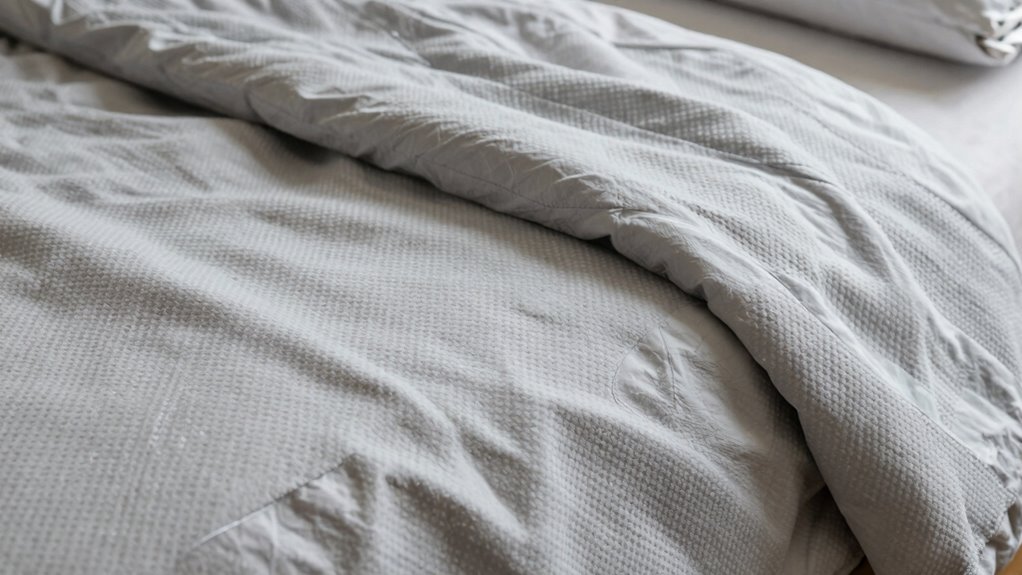
The surface texture of your cooling blanket can considerably influence how cool you feel. Softer, smoother fabrics often provide a gentle touch, while textured surfaces may enhance breathability and airflow. Consider your personal comfort and cooling needs when choosing a feel that works best for you. Additionally, understanding material properties can help you select fabrics that optimize cooling performance and durability.
Surface Texture and Cooling
Surface texture plays a crucial role in how effectively a cooling blanket regulates your body temperature. A texture comparison reveals that smoother surfaces tend to feel more gentle on your skin, offering better surface comfort, while rougher textures can create a sensation of increased airflow and breathability. For example, a silky or matte finish can feel cooler and more soothing, helping to dissipate heat quickly. On the other hand, textured fabrics with a slight ribbing or waffle pattern may enhance airflow, making you feel cooler during warmer nights. When choosing a blanket, consider how the surface texture interacts with your skin. The right feel can make a significant difference in your comfort, ensuring you stay cool without sacrificing softness or comfort.
Choosing Feel for Comfort
Ever wondered how your blanket’s feel impacts your comfort and cooling? Fabric softness plays a key role in how pleasant your blanket feels against your skin. Softer fabrics like bamboo or fine cotton create a smooth, gentle surface that enhances comfort without trapping heat. Conversely, rougher textures can cause irritation or warmth buildup, reducing cooling effects. Your weight preferences also matter—lighter blankets with thinner fabrics promote airflow, helping you stay cool, while heavier blankets may feel cozy but trap heat. When choosing a feel, consider your sensitivity to texture and how much weight you prefer for comfort. Opt for a balance that feels soothing and breathable, ensuring your blanket helps you stay cool without sacrificing comfort.
What Are Cooling Fibers and Technologies? How They Help You Sleep Better
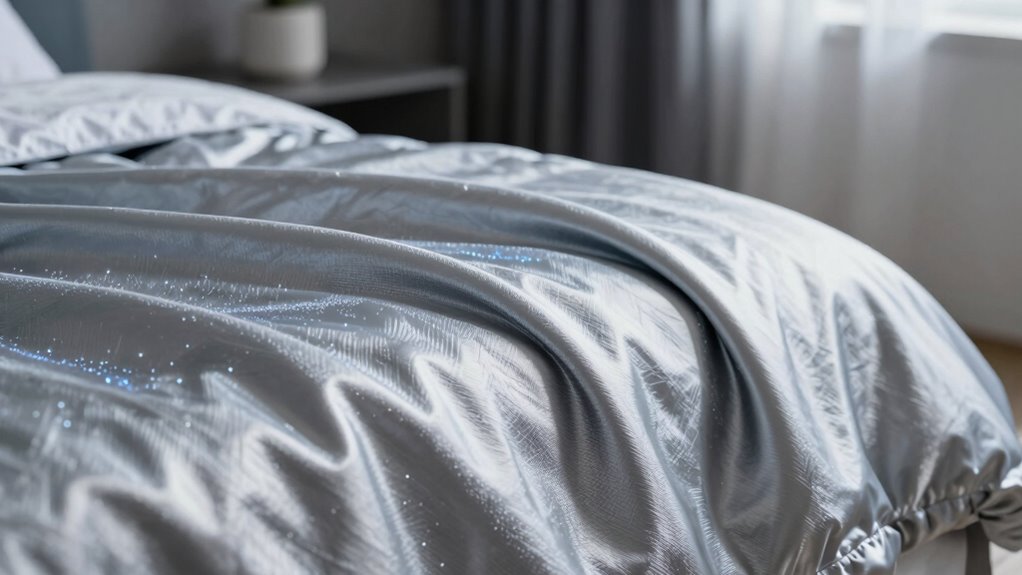
Cooling fibers and technologies are designed to regulate your body temperature throughout the night, helping you stay comfortable and sleep more soundly. Modern fiber technology incorporates special materials that enhance moisture-wicking and heat dissipation, keeping you cooler. These fibers work by absorbing excess heat and releasing it, promoting effective temperature regulation.
Imagine:
- Breathable fabrics that prevent overheating
- Moisture-wicking fibers that draw sweat away
- Thermoregulating textiles that adapt to your body heat
- Innovative materials that stay cool to the touch
These advancements make a significant difference in how your bedding feels, ensuring you stay comfortable regardless of the temperature outside. By integrating cooling fibers and technologies, you set yourself up for a more restful, invigorating sleep.
Which Design Features Make a Blanket More Cooling? What to Look For

When choosing a blanket that keeps you cool, pay attention to its design features that enhance breathability and moisture management. Fabric patterns play a key role; open weaves or mesh-like textures facilitate airflow, helping heat escape and moisture evaporate. Look for lightweight, breathable fabrics like linen or cotton with simple, loose-knit patterns for better ventilation. Color options also matter—lighter shades reflect heat, keeping you cooler throughout the night, while darker tones tend to absorb heat. Avoid heavy, tightly woven fabrics that trap heat and moisture. Instead, opt for blankets with strategic fabric patterns and light colors to promote airflow and reflect warmth. These features work together to create a cooler, more comfortable sleeping environment.
How Do Traditional and Modern Cooling Blankets Compare? Pros and Cons
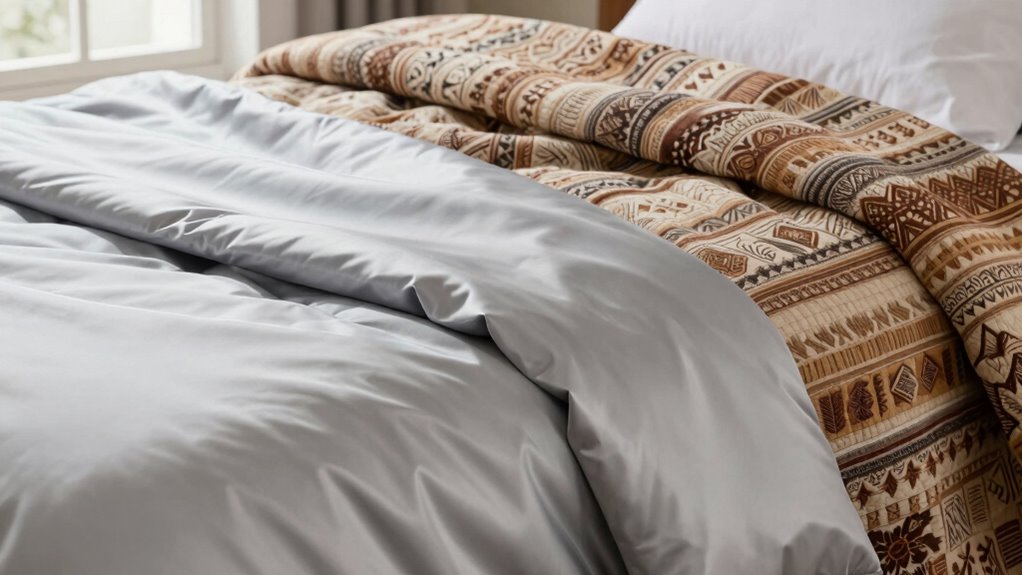
Traditional cooling blankets often rely on natural fabrics like cotton or linen with open weaves that promote airflow, making them effective and affordable options. They tend to be durable, with fabric durability lasting through multiple washes, but may have limited color options, typically sticking to neutral shades. Modern cooling blankets incorporate advanced materials like phase change fabrics or cooling gels, offering enhanced temperature regulation. However, these often come at a higher price and may have reduced fabric durability over time.
- Light, breathable textures that feel soft against your skin
- Wide variety of vibrant color options in modern designs
- Lightweight and easy to wash, but may wear faster
- Cost-effective options that fit different budgets and style preferences
How to Pick the Best Cooling Blanket for Your Needs? Key Factors to Consider
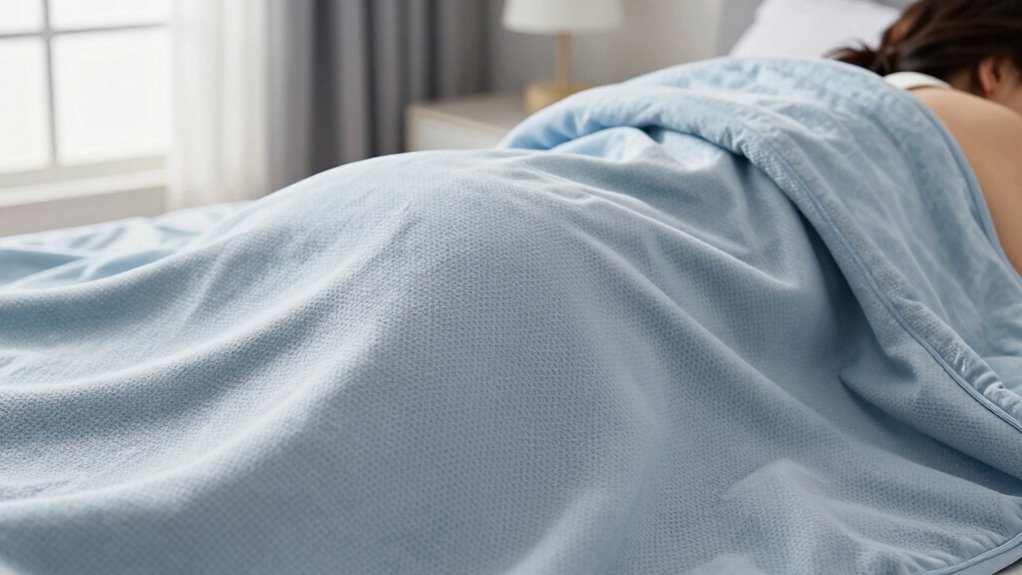
Choosing the right cooling blanket depends on understanding your specific needs and preferences. Consider how your sleep cycle is affected by temperature fluctuations—if you tend to overheat or wake up sweaty, seek a blanket with excellent temperature regulation. Look for materials like breathable cotton or moisture-wicking fabrics that promote airflow. Weight can also impact comfort; lighter blankets often help with better temperature control. If you tend to toss and turn, opt for a blanket that maintains consistent cooling without causing chills. Additionally, check for features like cooling gels or phase-change materials that adapt to your body’s heat. Ultimately, selecting a blanket that aligns with your sleep habits helps you stay cooler and supports more restful sleep.
Frequently Asked Questions
Can Cooling Blankets Help With Night Sweats or Hot Flashes?
Yes, cooling blankets can help with night sweat relief and hot flash management. By promoting airflow and moisture wicking, they keep your body temperature lower throughout the night. When you use a cooling blanket, you may notice fewer hot flashes and less sweating, leading to more restful sleep. Choose a breathable, lightweight material to maximize comfort and stay cool during those hot flashes and night sweats.
Are Cooling Blankets Suitable for All Skin Types?
Cooling blankets are generally suitable for most skin types, but if you have sensitive skin, you should check the materials used. Look for hypoallergenic fabrics to reduce the risk of allergic reactions. If you notice irritation or discomfort, discontinue use and consult a dermatologist. Testing a small area first can help you determine if the cooling blanket suits your skin, ensuring you enjoy its benefits without adverse effects.
How Often Should I Wash My Cooling Blanket?
You should wash your cooling blanket every one to two weeks to maintain proper fabric maintenance and hygiene practices. Regular washing removes sweat, dirt, and bacteria, ensuring it stays fresh and effective. Always follow the manufacturer’s care instructions, using gentle detergents and cold water to protect the fabric’s cooling properties. Proper cleaning not only prolongs the blanket’s lifespan but also keeps your skin healthy and free from irritations.
Do Cooling Blankets Work Better in Summer or Year-Round?
Imagine a gentle breeze whispering through a summer night—that’s how cooling blankets work best. They provide seasonal benefits by enhancing temperature regulation, making them more effective in summer when heat peaks. Year-round, they still offer comfort, but their cooling effects shine brightest during hot months. So, if you want to stay comfortably cool, use your cooling blanket primarily in summer, but enjoy its benefits anytime you seek relief from heat.
Can Cooling Blankets Be Used With Other Sleep Aids or Bedding?
Yes, cooling blankets are compatible with pillows and can be layered with quilts for added comfort. You can easily drape a cooling blanket over your existing bedding or tuck it around pillows to enhance airflow. Combining it with other sleep aids can improve your sleep quality, especially during hot nights. Just make certain the materials don’t trap heat and that layering feels comfortable, so you stay cool all night long.
Conclusion
Choosing the right cooling blanket can remarkably improve your sleep quality. Did you know that 65% of people report better sleep after switching to breathable, moisture-wicking bedding? By understanding materials, textures, and features, you can find a blanket that keeps you cooler all night long. So, consider your needs carefully, and enjoy the comfort of a restful, revitalizing sleep experience every night.