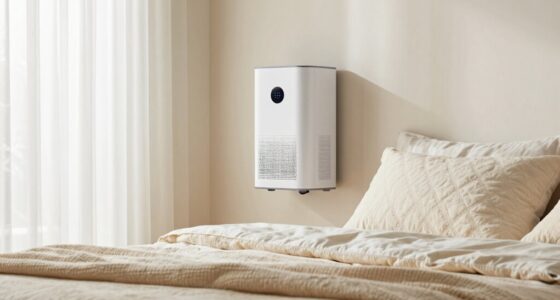
Relying only on your bedroom temperature doesn’t give you the full picture of restful sleep because other factors like humidity and your body’s natural rhythms also matter. Too warm or cold environments can disrupt your sleep, even if your thermostat is set correctly. Maintaining a balanced humidity level and understanding your body’s cycle can improve your rest considerably. Keep exploring, and you’ll discover how these environmental pieces work together for truly restful nights.

Get home appliances delivered free with Prime
- Fast, free delivery on millions of items
- Prime Video, Amazon Music and more included
- Member-only deals all year
Key Takeaways
- Sleep quality depends on multiple environmental factors, not just temperature.
- Humidity levels significantly impact comfort and overall sleep, regardless of temperature settings.
- The body’s natural sleep cycle involves temperature regulation that cannot be controlled by thermostat alone.
- Overly warm or cold rooms can disrupt sleep even if the thermostat is set correctly.
- Small adjustments in humidity and airflow often improve sleep more than temperature changes alone.

Have you ever wondered why setting your bedroom thermostat to a certain temperature doesn’t always guarantee a good night’s sleep? It’s because sleep quality depends on more than just the air temperature. Your body’s sleep cycle, for instance, plays a vital role. During the night, your body naturally shifts through different sleep stages, and temperature influences how smoothly these changes happen. If your room feels too warm or too cold, it can disrupt your ability to fall into deep, restorative sleep. Even if your thermostat is set to what you think is the ideal temperature, your body might still struggle if other factors aren’t aligned.
Temperature alone doesn’t ensure quality sleep; your body’s natural rhythms and environment must align.
Humidity levels are another often-overlooked element that can make a significant difference. When the air in your room is dry, it can cause discomfort, leading to dry throat, irritated sinuses, or even skin dryness, all of which disturb your sleep. Conversely, overly humid environments can make you feel sticky and uncomfortable, causing restless tossing and turning. Maintaining a balanced humidity level—generally between 40 and 60 percent—helps create a more comfortable environment that supports better sleep. It’s not just about the temperature setting on your thermostat; you need to *think about* how moisture in the air interacts with your body’s natural rhythms. Paying attention to environmental factors can help you better understand how your sleep environment impacts your rest.
It’s also worth noting that your perception of comfort varies throughout the night. Your core body temperature naturally drops as you enter sleep, signaling your body to rest. If your room feels too warm, it can hinder this cooling process, making it harder to stay asleep or reach those deep sleep stages. On the other hand, a too-cold room might cause your muscles to tense up or wake you up prematurely. That’s why, instead of relying solely on the thermostat, you should pay attention to how your body responds and adjust accordingly. Using a fan, humidifier, or breathable bedding can help fine-tune your sleeping environment. Additionally, understanding sleep cycles and how environmental factors influence them can help optimize your sleep quality.
It’s important to recognize that thermal regulation is a complex process involving multiple environmental and physiological factors that work together to support restful sleep. Incorporating tools such as sleep trackers can provide valuable insights into how your environment and habits impact your rest. Ultimately, sleep isn’t just about setting a specific temperature. It’s a delicate balance involving sleep cycles, humidity levels, and personal comfort. When you focus only on the thermostat, you miss the bigger picture. Achieving restful sleep means creating an environment where temperature, moisture, and your body’s natural rhythms work together seamlessly. So, next time you’re struggling to sleep despite what seems like the perfect room temperature, *think about* checking the humidity and how your body interacts with the environment. Small adjustments can make a big difference in how well you sleep through the night.
As an affiliate, we earn on qualifying purchases.
Frequently Asked Questions
How Does Humidity Affect Sleep Quality Alongside Temperature?
Humidity effects play a vital role in your sleep environment, alongside temperature. High humidity can make your room feel hotter, cause discomfort, and lead to restless sleep since your body struggles to cool down. Conversely, low humidity might cause dry skin and throat irritation, making it hard to breathe comfortably. Maintaining ideal humidity levels creates a balanced sleep environment, helping you fall asleep faster and enjoy more restful, uninterrupted sleep.
What Role Does Bedding Material Play in Perceived Comfort?
Bedding materials play a vital role in your sleep comfort by influencing breathability, temperature regulation, and softness. Natural fabrics like cotton or linen help wick away moisture, keeping you cool and comfortable, while memory foam or polyester can trap heat, potentially disrupting sleep. Choosing the right bedding materials tailored to your preferences and climate enhances overall sleep quality, ensuring you wake up refreshed and rested.
How Do Individual Preferences Influence Ideal Bedroom Temperature?
Your personal comfort and temperature preferences greatly influence your ideal bedroom temperature. You might prefer a cooler room for deep sleep or a warmer one to stay cozy. Factors like age, health, and sleep habits shape these preferences. Recognizing that your ideal temperature is unique helps you create an environment that promotes restful sleep and overall comfort, rather than relying solely on standard temperature recommendations.
Can External Noise Impact Sleep Regardless of Temperature?
They say, “Silence is golden,” but external noise can still impact your sleep regardless of temperature. Noise disturbance causes sleep disruption, making it harder to fall asleep or stay asleep. Even if your room is perfectly heated or cooled, loud sounds like traffic or loud neighbors can wake you up or fragment your rest. Managing external noise, through earplugs or white noise machines, helps guarantee a more restful, uninterrupted sleep.
What Are the Health Risks of Consistently Incorrect Bedroom Temperatures?
Consistently incorrect bedroom temperatures can harm your health by disrupting temperature regulation and sleep comfort. If it’s too hot, you risk dehydration, heat exhaustion, and poor sleep quality. Too cold, and you might experience hypothermia or weakened immunity. Poor temperature regulation also leads to frequent awakenings, causing fatigue and reduced cognitive function. Ensuring ideal sleep comfort is essential for overall health, so maintaining the right bedroom temperature supports your well-being.
As an affiliate, we earn on qualifying purchases.
Conclusion
So, next time you feel too warm or too cold, remember it’s not just the thermometer that matters. Sometimes, it’s the humidity, your bedding, or even your mood that influences your sleep. Because in the end, it’s these little coincidences—these hidden factors—that shape your comfort more than temperature alone ever could. Keep an eye on the whole picture, and you’ll find the perfect sleep balance just waiting to be uncovered.
bedroom air purifier with humidity control
As an affiliate, we earn on qualifying purchases.
As an affiliate, we earn on qualifying purchases.
As an affiliate, we earn on qualifying purchases.
Fall Picks
fall essentials
As an affiliate, we earn on qualifying purchases.