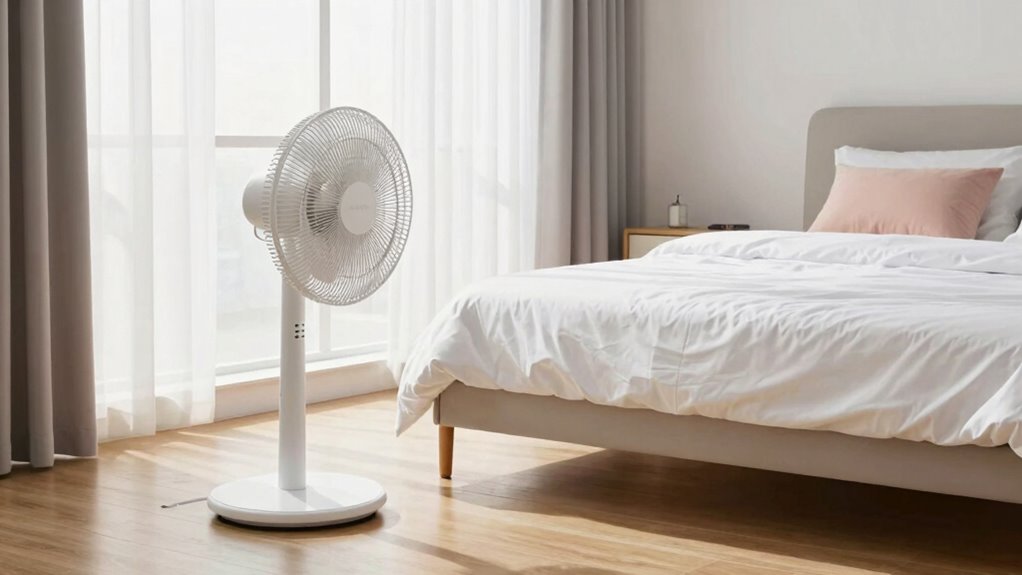

To improve cooling, position your fan across from a window, facing inward, to create a cross-breeze that pulls in cooler outside air. Place it near doorways or in corners to circulate air evenly and prevent hot spots. Keep furniture and objects away from the fan to avoid obstructing airflow. Use lower speeds at night for quieter, energy-efficient comfort. Want more tips? Keep going to discover how strategic placement can make your room cooler and more comfortable.

Get home appliances delivered free with Prime
- Fast, free delivery on millions of items
- Prime Video, Amazon Music and more included
- Member-only deals all year
Key Takeaways
- Place the fan across from a window facing inward to create a cross-breeze for better cooling.
- Position the fan near an open window at night to draw in cooler outside air.
- Keep the fan at a slight angle and away from direct contact with occupants to reduce noise.
- Use strategic placement in corners or doorways to promote even airflow and prevent hot spots.
- Combine fan use with ceiling fans spinning counterclockwise for optimal room circulation.
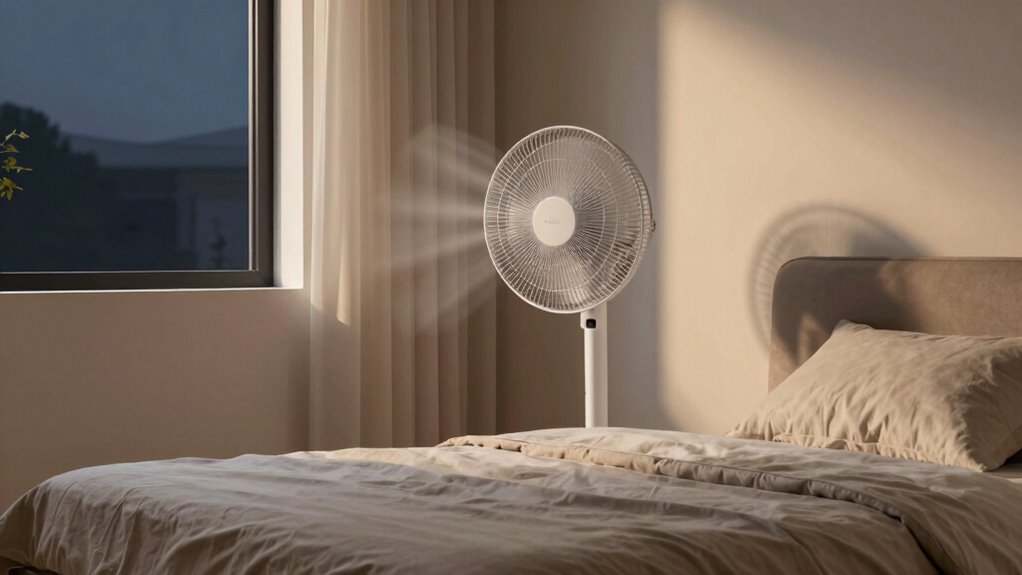
If you’re struggling to keep your bedroom cool and comfortable, the way you place your fan can make a big difference. Proper placement doesn’t just improve airflow; it also enhances energy efficiency and noise reduction. When you position your fan thoughtfully, you get better cooling results without increasing your energy bill or disturbing your sleep with excessive noise. The goal is to maximize airflow while minimizing energy waste and sound disruptions.
Start by placing your fan across from a window, ideally facing inward. This setup helps create a cross-breeze, drawing cooler air from outside and pushing warmer indoor air out. During the night, if the outside air is cooler, position your fan near an open window to pull in fresh, cool air, which naturally lowers the room’s temperature without overworking your air conditioner or fan. This method improves energy efficiency because your fan works smarter, not harder, by enhancing airflow rather than running at full blast.
Position your fan across from a window to create a cross-breeze and improve cooling efficiency.
To reduce noise, position the fan on a stable, flat surface away from your head or bed. Keep it at a slight angle rather than pointing directly at you, which can create unpleasant noise or draft discomfort. If your fan has adjustable speed settings, opt for a lower setting during nighttime hours. Running the fan at a lower speed not only cuts down on energy consumption but also significantly reduces noise, allowing you to sleep more peacefully. Additionally, proper fan placement can help prevent unnecessary noise and turbulence, making your cooling experience more comfortable.
Another trick is to avoid blocking the fan’s airflow. Clear space around the fan ensures unobstructed air movement, maximizing cooling efficiency. If you have ceiling fans, make sure they spin counterclockwise during summer to push air downward, creating a breeze that cools the room effectively. Combining ceiling fan use with a portable fan placed strategically can enhance circulation without needing to increase power consumption. Additionally, understanding fan placement can help optimize cooling and reduce unnecessary energy use. Proper air circulation is essential for achieving the best cooling results with minimal energy waste. Moreover, experimenting with different fan angles can further improve airflow and comfort in your room. Proper ventilation also plays a crucial role in maintaining a comfortable temperature and reducing indoor heat buildup, further supporting efficient cooling.
Lastly, consider the layout of your furniture. Keep large objects away from the fan’s direct path to avoid obstructing airflow. Placing your fan in a corner or near a doorway can help circulate air throughout the room more evenly, avoiding hot spots and making the entire space feel cooler with less effort.
As an affiliate, we earn on qualifying purchases.
Frequently Asked Questions
Can Ceiling Fans Help Cool a Room More Effectively Than Portable Fans?
Ceiling fans can cool a room more effectively than portable fans because they promote better airflow optimization by circulating air across the entire space. Unlike portable fans, ceiling fans operate quietly, reducing fan noise and creating a more comfortable environment. You’ll notice a consistent breeze that helps you feel cooler without the noise or clutter of portable units. Proper placement enhances their efficiency, making ceiling fans a smart choice for cooling.
How Do I Determine the Best Fan Placement for Maximum Airflow?
Think of fan placement like a puzzle piece fitting perfectly. To maximize airflow, position your fan across from windows or doorways to create a cross-breeze. Keep it at an ideal height—usually near ceiling level or slightly lower—and angle it for directing air toward the room’s center. For airflow enhancement, avoid obstructions and experiment with fan positioning until you find the sweet spot that cools most effectively.
Is It Better to Place Fans Near Windows or Doorways?
Placing fans near windows is better for airflow optimization, especially if you want to cool a room effectively. Position your fan to blow air out of the window during the hottest part of the day, creating a draft that pulls in cooler air from other openings. Avoid placing fans near doorways unless you’re trying to circulate air between rooms. Good window placement maximizes airflow and enhances cooling efficiency.
Can Fan Placement Affect Energy Consumption?
Yes, fan placement can affect energy consumption by improving energy savings and fan efficiency. When you position fans strategically near windows or doorways, they circulate air more effectively, reducing the need for air conditioning. This means your cooling system works less, saving energy and lowering costs. Proper placement guarantees maximum airflow, making your fan more efficient, so you stay comfortable without wasting electricity.
Should Fans Be Turned off When Leaving the Room?
You should turn fans off when leaving the room to save energy and reduce noise levels. While fans are generally safe, leaving them on continuously might pose slight fan safety concerns or cause unnecessary noise disturbances. Turning them off prevents wear and tear, prolonging their lifespan. Plus, it’s courteous to minimize noise, especially if others are sleeping or working elsewhere. So, switching off fans when not in use benefits both your energy bills and peace of mind.
As an affiliate, we earn on qualifying purchases.
Conclusion
Think of your bedroom fan as a silent guardian, guiding cool air like a gentle breeze through a quiet forest. When placed wisely, it becomes a symbol of comfort and control, turning sweltering nights into peaceful retreats. Remember, a simple shift in placement can reveal the true power of your fan—transforming a restless heatwave into a soothing lullaby. Embrace this trick, and let your room become a sanctuary where coolness reigns.
As an affiliate, we earn on qualifying purchases.
quiet night fan with adjustable speed
As an affiliate, we earn on qualifying purchases.
As an affiliate, we earn on qualifying purchases.
Halloween Picks
halloween
As an affiliate, we earn on qualifying purchases.