
Bamboo viscose sheets feel silky and breathable, but their eco-friendliness depends on how the bamboo is processed. The fibers come from chemically treated bamboo, raising concerns about pollution even though bamboo itself is a highly renewable resource. While they offer softness, moisture-wicking, and durability, their sustainable aspects vary by manufacturer. To understand the true impact of bamboo sheets and how to care for them, keep exploring the details behind what bamboo really means.
Key Takeaways
- Bamboo viscose sheets are made from chemically processed bamboo fibers into a silky, breathable fabric.
- The production involves chemical extraction of cellulose, raising environmental concerns despite bamboo’s renewable nature.
- Bamboo is sustainably farmed and grows quickly without pesticides, but chemical processing impacts eco-friendliness.
- Proper care includes gentle washing and avoiding harsh chemicals to maintain sheet durability and sustainability.
- Alternatives like Tencel or organic cotton offer eco-friendly, breathable options with less chemical processing.
What Are Bamboo Viscose Sheets, Exactly?
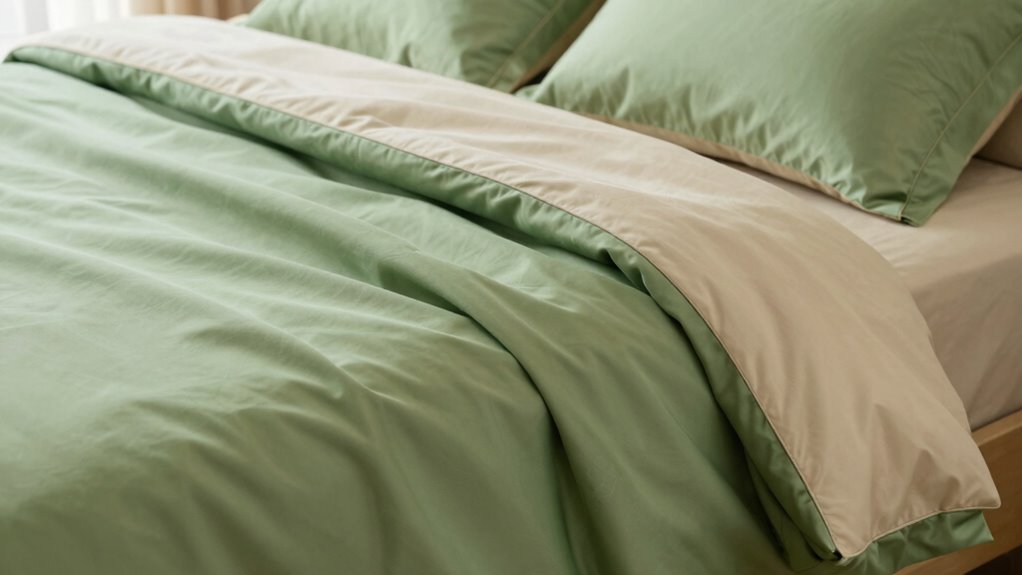
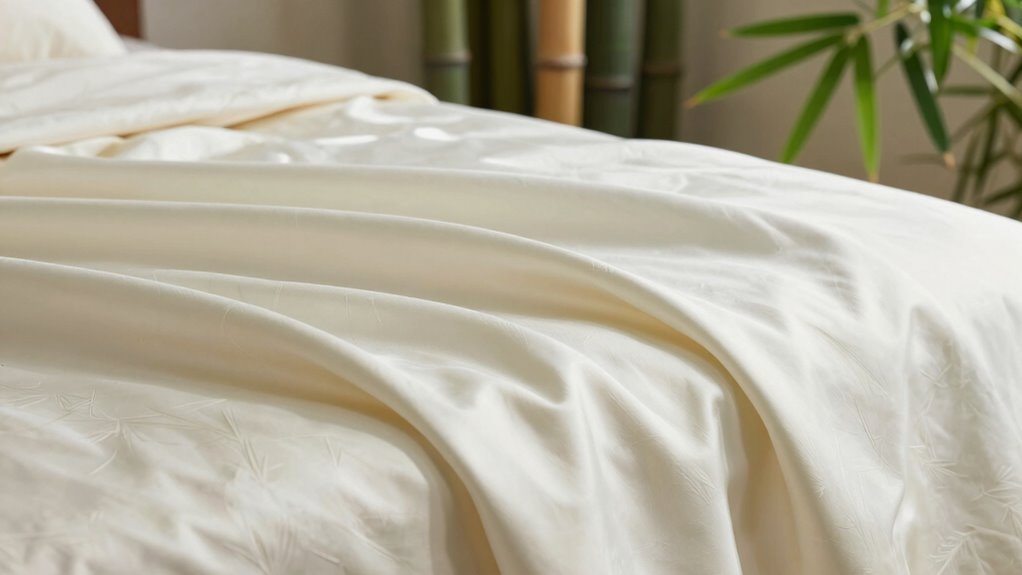
Bamboo viscose sheets are made from bamboo fibers that are chemically processed into a soft, breathable fabric. These sheets are known for their silky feel and moisture-wicking properties, making them a popular choice for comfortable sleep. When considering their environmental impact, it is crucial to recognize that the processing involves chemicals, which can raise concerns about sustainability. However, bamboo itself is a highly renewable resource that grows quickly without pesticides. Additionally, the processing methods used can influence the overall eco-friendliness of the product. Market popularity has surged because of their eco-friendly appeal and luxurious texture, appealing to eco-conscious consumers. Despite debates about processing methods, bamboo viscose sheets remain a top choice for those seeking sustainable bedding options combined with comfort and style.
How Is Bamboo Viscose Made?

You might wonder how bamboo viscose is made, starting with the harvesting process where mature bamboo stalks are carefully collected. Next, cellulose is extracted using a chemical method that breaks down the bamboo fibers, turning them into a pliable solution. This solution then undergoes a fiber regeneration technique to produce the soft, silky threads used in your sheets. Additionally, understanding the different fiber types available can help you choose the most suitable bedding option.
Bamboo Harvesting Process
The process of turning bamboo into viscose begins with harvesting mature bamboo stalks, which are carefully selected for their fiber quality. To guarantee sustainability, harvesting is typically done from well-maintained bamboo plantations practicing sustainable farming. These plantations allow bamboo to grow quickly and regenerate naturally, reducing environmental impact. Skilled workers cut the stalks at the right time to maximize fiber strength without damaging the plant or surrounding ecosystem. After harvesting, the bamboo is transported for processing. This careful selection and harvesting process helps maintain ecological balance and promotes responsible resource use. By focusing on sustainable farming practices, the bamboo harvesting process minimizes environmental harm and supports the eco-friendly reputation of bamboo viscose. Additionally, understanding the Free Floating nature of bamboo allows for more flexible harvesting schedules that do not harm the overall ecosystem.
Cellulose Extraction Method
To transform bamboo into viscose, manufacturers first extract cellulose—the primary fiber responsible for its softness and durability—through a series of chemical processes. This involves dissolving the bamboo pulp using chemicals like sodium hydroxide and carbon disulfide, which break down the plant fibers. The chemical processing enables the cellulose to be spun into fibers suitable for fabric production. However, this method raises concerns about environmental impact, as these chemicals can be toxic if not managed properly. Waste from the process may pollute water sources and harm ecosystems if not handled responsibly. As a result, some producers seek eco-friendlier alternatives or implement stricter waste management practices to reduce their environmental footprint during cellulose extraction.
Fiber Regeneration Technique
Bamboo viscose is created through a fiber regeneration process that transforms dissolved cellulose into soft, silky threads. First, the cellulose from bamboo is dissolved using chemical processing, which breaks down the plant fibers into a viscous solution. This step often involves chemicals like sodium hydroxide and carbon disulfide, raising concerns about environmental impact. However, if sourced sustainably, bamboo is cultivated responsibly, reducing ecological damage. The viscous solution is then extruded through fine nozzles to create fibers, which are spun into yarns for fabric. This regeneration process allows manufacturers to produce smooth, high-quality textiles. While chemical processing is necessary, choosing brands committed to sustainable sourcing ensures that bamboo viscose is made with minimal ecological harm, balancing product quality with environmental responsibility. Environmental impact considerations are crucial when evaluating the sustainability of bamboo viscose production.
Is Bamboo Viscose Really Eco-Friendly?
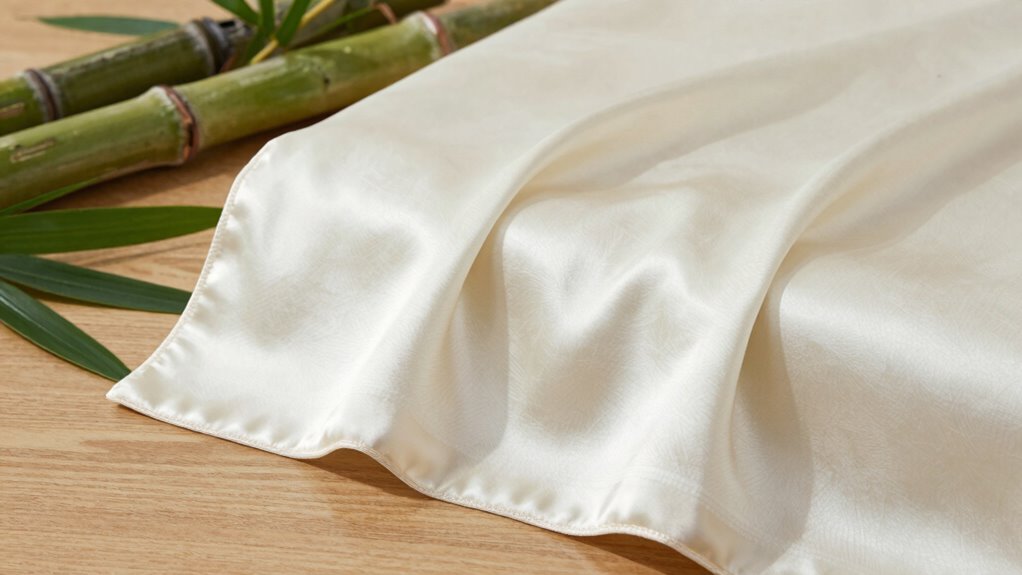
Is bamboo truly an eco-friendly resource, or do its environmental benefits come with hidden costs? While bamboo grows quickly and requires minimal water, the sustainability of bamboo viscose depends heavily on how it’s farmed and processed. If the bamboo is sourced through sustainable farming practices, it reduces environmental impact. However, the chemical processing involved in turning bamboo into viscose often involves toxic substances like carbon disulfide, which can harm ecosystems and workers’ health if not managed properly. Additionally, some manufacturers may cut corners, leading to pollution and waste. So, even though bamboo has natural eco-friendly qualities, its viscose form isn’t automatically green. To truly evaluate its eco-friendliness, you need to consider both sustainable farming methods and responsible chemical processing. Environmental impact assessments are crucial for understanding the full sustainability of bamboo viscose products.
What Are the Benefits of Bamboo Viscose Sheets?

One of the biggest benefits of bamboo viscose sheets is their exceptional softness and smooth feel against your skin. Thanks to sustainable farming practices, bamboo grows quickly with minimal water and no need for pesticides, making it an eco-friendly choice. When processed into viscose, bamboo fibers undergo chemical processing to create a silky, breathable fabric that feels luxurious. These sheets are naturally hypoallergenic and moisture-wicking, helping you stay comfortable all night. Plus, bamboo’s rapid growth means it’s a renewable resource, reducing environmental impact. Unlike some fabrics, bamboo viscose offers a combination of softness, durability, and eco-conscious production. As a result, you enjoy a cozy sleep environment while supporting sustainable farming practices that prioritize the planet’s health. bamboo as a renewable resource
Myths and Facts About Bamboo Fabric
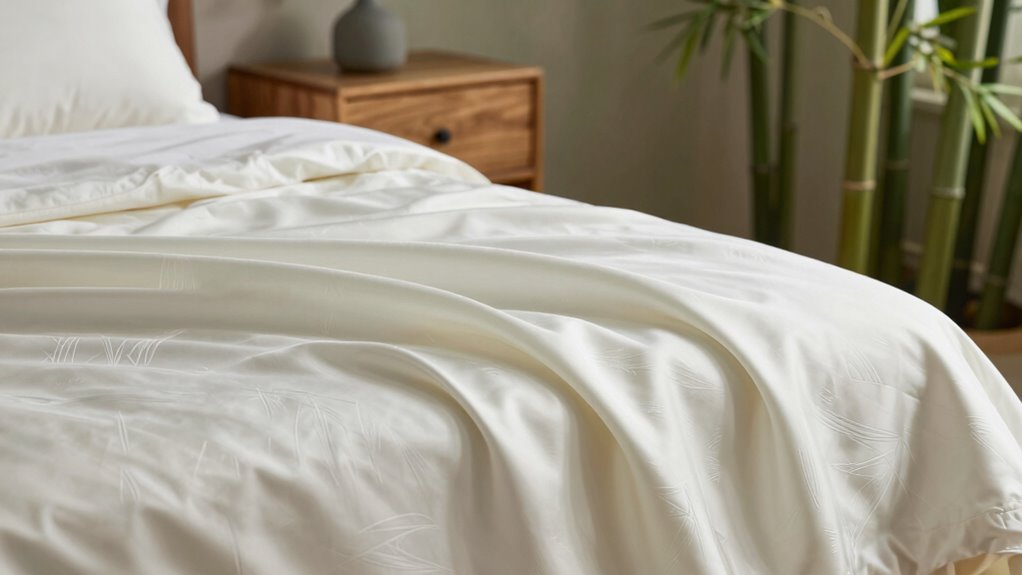
Many people believe that bamboo fabric is entirely eco-friendly and sustainable, but this isn’t always the case. While bamboo itself grows quickly and requires minimal water, the manufacturing process often involves chemical processing to turn raw bamboo into fabric. This chemical treatment can release harmful substances into the environment, undermining bamboo’s eco-friendly reputation. Additionally, some claims about bamboo being sustainably farmed ignore how much land, water, and chemicals are used during processing. It’s important to understand that not all bamboo fabric is created equal. To truly benefit from bamboo’s sustainability, look for brands that prioritize sustainable farming practices and use less harmful chemical processes. Otherwise, you might be misled into believing you’re choosing an eco-friendly option when that’s not always accurate. Moreover, understanding navigation and mapping of the supply chain can help consumers identify brands that adhere to environmentally responsible practices.
How Should You Care for Bamboo Viscose Sheets?
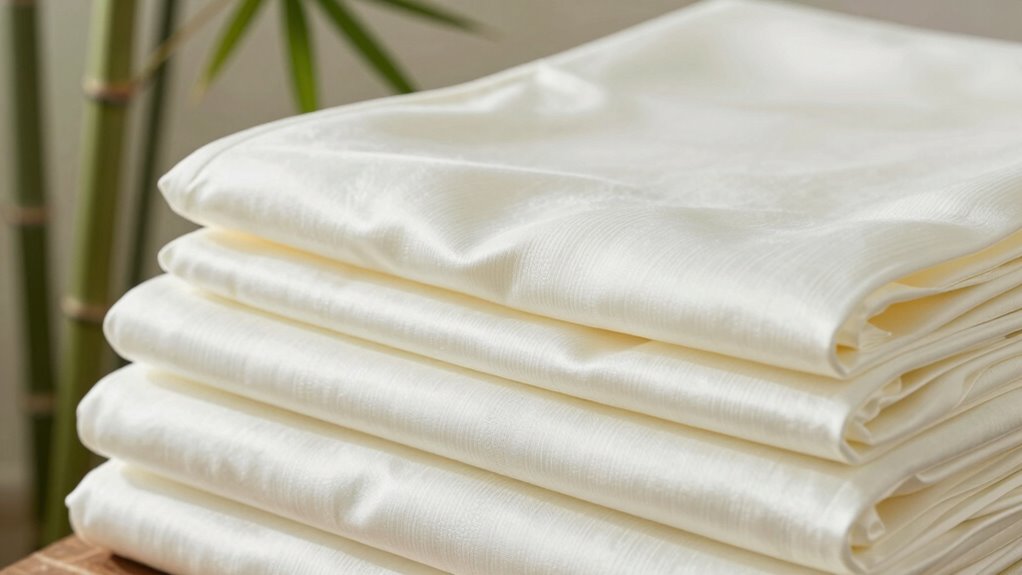
Caring for bamboo viscose sheets requires a gentle touch to maintain their softness and longevity. Always wash them in cold or warm water on a gentle cycle to protect the fabric’s softness and stain resistance. Use mild, eco-friendly detergent to avoid harsh chemicals that can degrade the fibers. Avoid bleach or fabric softeners, as they can weaken the material and diminish its natural qualities. To keep your sheets looking and feeling their best, tumble dry on low or air dry. Ironing is usually unnecessary, but if needed, use a low heat setting. Proper care helps preserve the natural fabric softness and stain resistance, ensuring your sheets stay comfortable and beautiful for years to come. Additionally, understanding the fiber properties of bamboo viscose can help you better maintain and care for your bedding.
What Are Some Alternatives to Bamboo Viscose Bedding?

If you’re looking for alternatives to bamboo viscose bedding, several options can match its softness and sustainability. Linen bedding is a great choice, offering durability and a natural, breathable feel. Cotton alternatives like organic cotton are also popular, providing comfort without synthetic chemicals. Here are three options to contemplate:
- Linen Bedding – eco-friendly, durable, and cool to the touch.
- Organic Cotton – soft, breathable, and grown without pesticides.
- Tencel or Lyocell – made from sustainably sourced eucalyptus, offering silky smoothness similar to bamboo viscose.
– Additionally, sustainable fabrics are increasingly available, giving consumers more eco-conscious options for bedding.
Is Bamboo Viscose a Good Choice for Your Sleep?
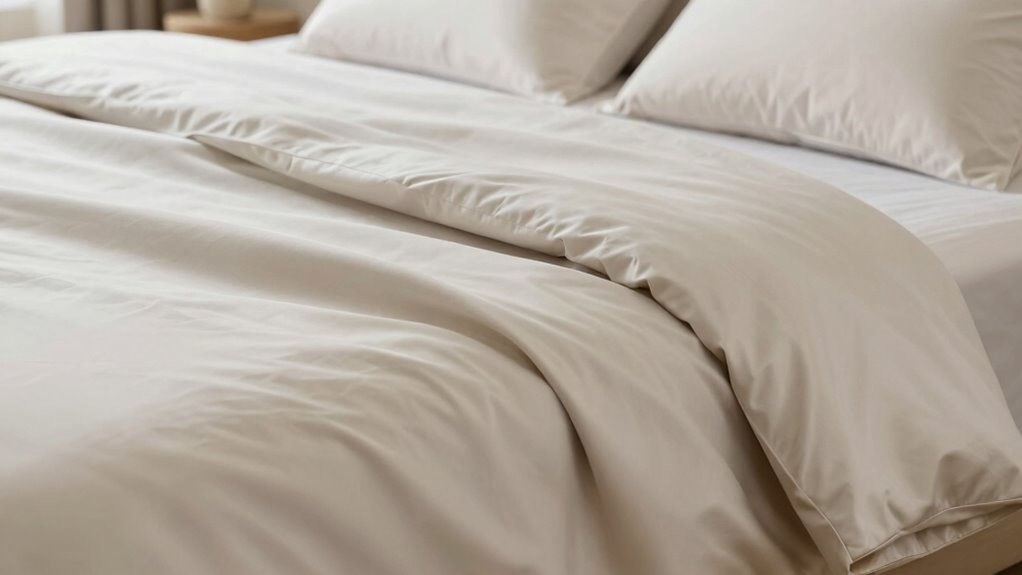
Bamboo viscose sheets are known for their breathability and soft feel, helping you stay cool and comfortable all night. They’re also an eco-friendly choice, making them appealing if you want sustainable bedding. Plus, with proper care, they’re durable and easy to maintain, so they can be a practical option for your sleep. Additionally, understanding outdoor gear and how to care for it can help ensure your bedding remains in top condition over time.
Breathability and Comfort
Because of its natural properties, bamboo viscose is known for being highly breathable, making it an excellent choice for a comfortable night’s sleep. Its breathability helps with moisture management, keeping you dry and comfortable throughout the night. Additionally, bamboo viscose excels at temperature regulation, preventing overheating in warm weather and retaining warmth when it’s cooler. Here are three reasons why bamboo viscose enhances your sleep experience:
- The fabric’s moisture-wicking ability keeps sweat away, reducing discomfort.
- Its natural breathability promotes better airflow, reducing night sweats.
- The fabric adapts to your body’s temperature, maintaining a consistent, cozy feel.
This combination ensures you stay comfortable, dry, and well-regulated for a restful sleep.
Eco-Friendly Fabric Choice
Choosing eco-friendly bedding options is an important step toward sustainable living, and bamboo viscose stands out as a responsible choice. Look for products with organic certification to guarantee the bamboo is grown without harmful pesticides or chemicals. While bamboo itself is a renewable resource, the chemical processing involved in transforming it into viscose can impact its environmental friendliness. Some manufacturers use eco-friendly methods, minimizing chemical use and waste, which makes their sheets more sustainable. By selecting bamboo viscose sheets from brands committed to transparent, low-impact processing, you can enjoy a soft, breathable fabric that aligns with your eco-conscious values. Ultimately, choosing certified, responsibly processed bamboo viscose helps reduce your environmental footprint while providing comfort.
Durability and Maintenance
While bamboo viscose sheets are known for their softness and breathability, you might wonder if they hold up over time. Fortunately, they’re quite durable if you follow proper care. To maintain their fabric softness and longevity, keep these tips in mind:
- Wash on a gentle cycle with cold water to prevent fiber damage.
- Avoid bleach and harsh detergents that can weaken fibers.
- Follow the washing instructions carefully, and air dry or tumble dry on low heat.
Frequently Asked Questions
How Long Do Bamboo Viscose Sheets Typically Last?
Bamboo viscose sheets usually last around 3 to 5 years with proper care and maintenance. To maximize their sheet longevity, wash them in cold water, avoid harsh detergents, and tumble dry on low or air dry. You’ll find that following these tips helps keep the sheets soft and durable longer, ensuring you get the most out of your investment and enjoy comfortable nights for years to come.
Are There Any Health Concerns With Bamboo Viscose Bedding?
You might wonder if bamboo viscose bedding is safe, and the answer isn’t simple. While generally considered safe, some sheets undergo chemical processing that raises concerns about chemical safety and potential skin irritation. Additionally, the environmental impact of production methods can affect overall health. To stay safe, choose organic or eco-friendly options, and always check for non-toxic, chemical-free certifications before buying.
Can Bamboo Viscose Sheets Be Used With Sensitive Skin?
Yes, bamboo viscose sheets are great for sensitive skin because they have hypoallergenic properties that reduce irritation. You’ll find they’re soft, smooth, and breathable, which helps minimize skin sensitivity and discomfort. Since they naturally resist allergens like dust mites and mold, they’re an excellent choice if you have allergies or sensitive skin. Just guarantee you choose high-quality, chemical-free options to maximize their gentle, skin-friendly benefits.
How Does Bamboo Viscose Compare to Cotton in Durability?
You’ll find bamboo viscose sheets are quite durable, thanks to their fiber strength and tear resistance. While they may not be as robust as high-quality cotton, they still hold up well with regular use and washing. Over time, bamboo viscose maintains its softness and strength, making it a reliable choice. Just remember to follow care instructions to preserve their durability and enjoy their comfort for longer.
Are There Specific Brands Known for High-Quality Bamboo Viscose Sheets?
You get what you pay for, so choose brands with a stellar reputation for quality. Look for eco-friendly certifications like OEKO-TEX or FSC, which guarantee sustainable practices. Brands like Cozy Earth, Ettitude, and Cariloha are known for high-quality bamboo viscose sheets that feel soft, durable, and eco-conscious. When shopping, prioritize those with positive reviews and certifications; they’re often the best in the market.
Conclusion
Think of bamboo viscose sheets as a gentle breeze on a warm night—they promise comfort and freshness. By understanding what they truly are and how to care for them, you can enjoy their benefits without being fooled by myths. When you choose bamboo viscose, you’re weaving sustainability into your sleep routine. Embrace this eco-friendly fabric, and let it be the soft, nourishing blanket that supports your restful nights, like a trusted friend guiding you into peaceful dreams.