If you want better sleep, a humidifier may help by adding moisture, preventing dryness, and keeping nasal passages clear, which promotes easier breathing. An air conditioner cools your room, helping you stay comfortable and reducing sweat, but it can dry the air if not used properly. The best choice depends on your climate and personal needs, and balancing both devices can optimize your sleep environment. Keep going to discover how to get the most restful night.
Key Takeaways
- Air conditioners cool the room, reducing heat and sweat, which can promote better sleep in hot climates.
- Humidifiers add moisture, preventing dryness and nasal congestion, supporting comfortable breathing during sleep.
- Proper temperature control with ACs prevents overheating, while humidifiers maintain optimal humidity levels for health and comfort.
- Both devices improve air quality: ACs filter pollutants, and humidifiers add beneficial moisture to dry air.
- Combining both, or choosing based on climate needs, provides the best environment for restful sleep.
How Do Air Conditioners Impact Your Sleep?
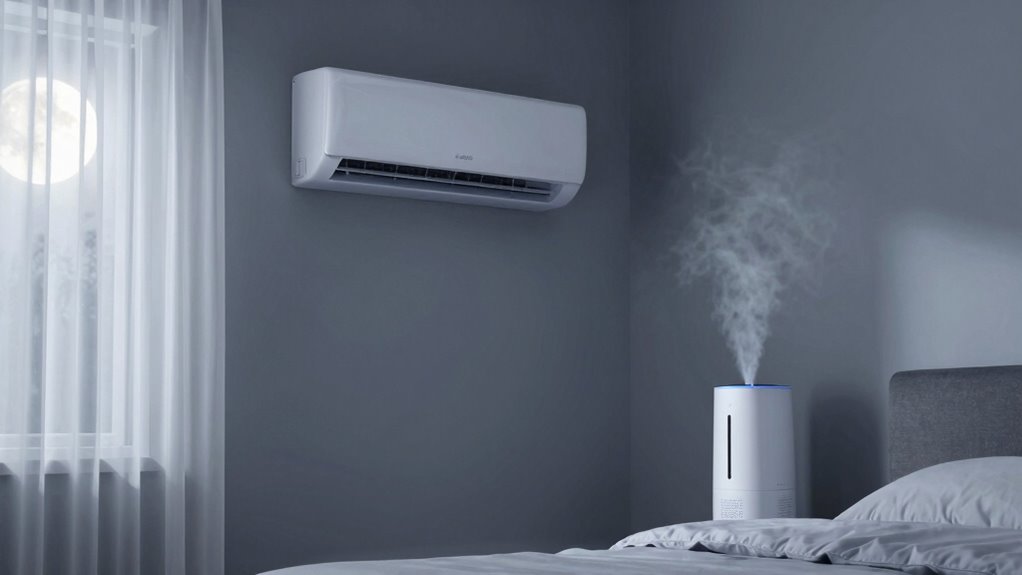
Air conditioners can considerably influence your sleep quality, often in both positive and negative ways. One key factor is temperature regulation, which helps you stay cool and comfortable throughout the night. When the room temperature is just right, you’re less likely to wake up feeling hot or sweaty, promoting more restful sleep. Additionally, many air conditioners offer humidity control, helping to reduce excess moisture that can disrupt sleep or create discomfort. Proper humidity levels prevent your skin and nasal passages from drying out and minimize mold or dust mites’ growth. However, if not set correctly, air conditioning can make the air too dry or too cold, leading to dry skin, sore throat, or disturbed sleep. Balancing temperature and humidity is essential for better sleep quality. Incorporating specialized accessories can help optimize your system and enhance overall comfort during sleep.
Do Humidifiers Make It Easier to Sleep?
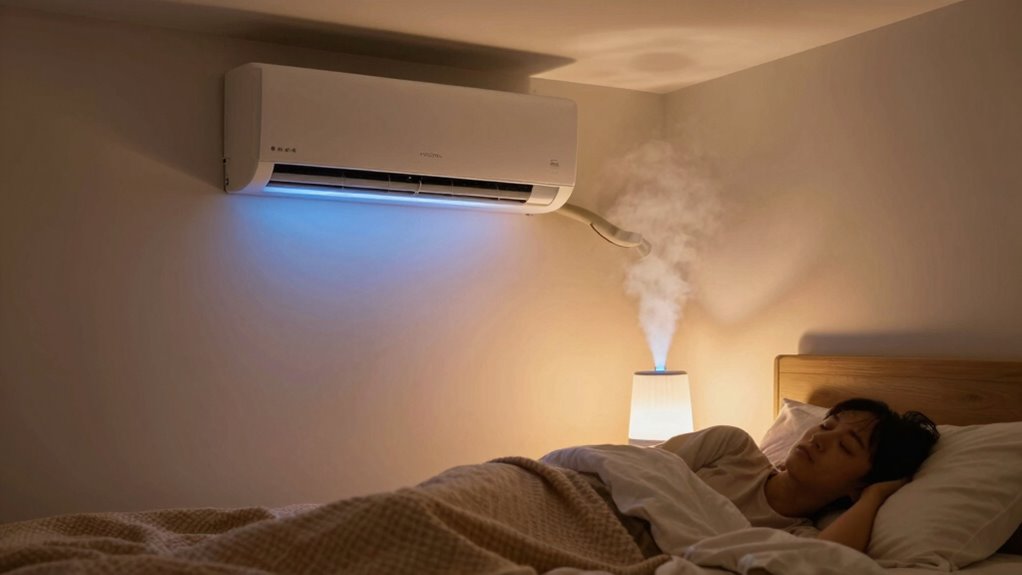
Humidifiers can greatly improve your sleep by maintaining ideal moisture levels in the air. When your sleep environment has proper humidity, you’re less likely to experience dry skin, irritated sinuses, or throat discomfort, all of which can disrupt rest. Plus, a balanced moisture level can help keep your nasal passages clear, making breathing easier throughout the night. Regarding noise levels, some humidifiers operate quietly, providing a soothing background sound that can promote relaxation and mask disruptive noises. This creates a calmer sleep environment, helping you fall asleep faster and stay asleep longer. Additionally, air quality can be enhanced by proper humidification, contributing to healthier breathing during sleep. Overall, a humidifier can make your sleeping conditions more comfortable, leading to more restful, uninterrupted sleep.
Which Helps You Sleep Better: Air Conditioner or Humidifier?
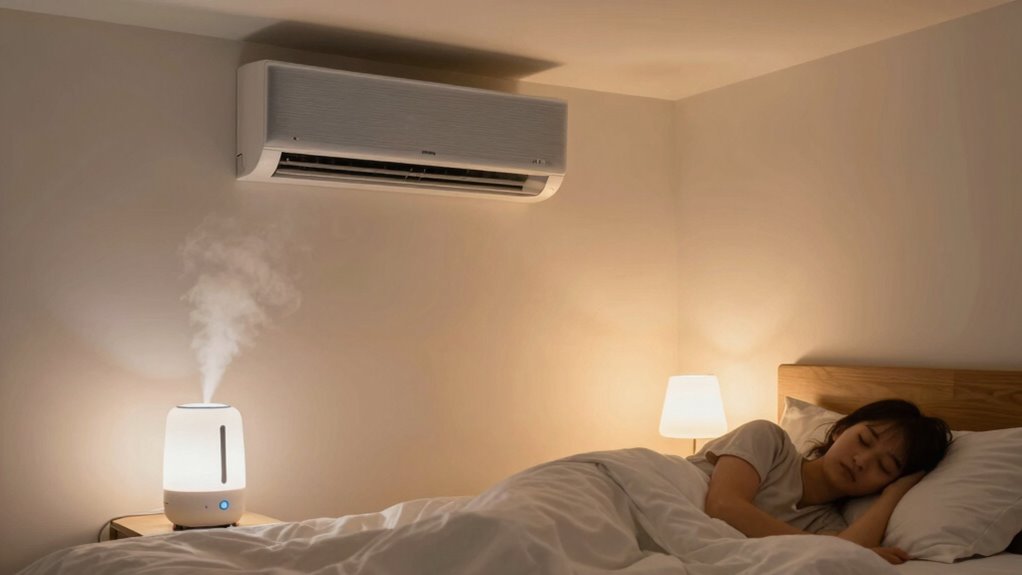
When choosing between an air conditioner and a humidifier for better sleep, consider how each one affects your comfort level. An air conditioner can make the air feel cooler and more comfortable, while a humidifier adds moisture that prevents dryness. Both also impact air quality, which can influence how well you rest through the night. Additionally, understanding the air quality benefits of each device can help you make a more informed decision for your sleep environment.
Comfort Level Enhancement
Achieving a comfortable sleep environment often depends on properly managing indoor air conditions. Both an air conditioner and a humidifier can enhance your sleep comfort by aiding temperature regulation. An air conditioner cools the room, reducing discomfort caused by heat, while a humidifier adds moisture, preventing dry air that can irritate your skin and airway. To understand their impact, consider this comparison:
| Feature | Air Conditioner | Humidifier |
|---|---|---|
| Primary focus | Temperature regulation | Humidity control |
| Effect on sleep comfort | Cooler, less sweaty environment | Softer, less dry air |
| Ideal for | Hot, dry climates | Dry, cold winters |
Both devices improve sleep comfort, but their effectiveness depends on your specific needs. Energy-efficient technology can further optimize their performance and reduce energy consumption.
Air Quality Impact
While both air conditioners and humidifiers influence indoor air quality, their effects on your sleep environment differ considerably. Air conditioners help reduce airborne pollutants by filtering dust, pollen, and other particles, leading to cleaner air. They also assist with odor control, keeping unpleasant smells at bay. However, if not maintained properly, they can circulate allergens or mold. Humidifiers, on the other hand, add moisture that can help trap airborne pollutants, but they might also foster mold or bacteria if not cleaned regularly. They don’t typically contribute to odor control and may sometimes worsen musty smells if neglected. Overall, an air conditioner tends to improve air quality more effectively by filtering pollutants and controlling odors, creating a healthier sleep environment. Additionally, incorporating proper maintenance practices can maximize the benefits of either device and ensure a healthier indoor atmosphere.
What Should You Consider Before Choosing an AC or Humidifier?
Before picking an AC or humidifier, you should consider your room size to guarantee proper coverage and efficiency. Safety and health factors, like allergies or respiratory issues, also play a vital role in making the right choice. Taking these points into account helps you select the device that best fits your needs. Additionally, consulting with architectural solutions can provide insights into optimal device placement and integration within your space.
Room Size Compatibility
Choosing the right air conditioning unit or humidifier depends heavily on your room size. If your room is large, you’ll need a device with higher capacity to effectively cool or humidify the space. For smaller rooms, a compact unit with lower capacity is sufficient and more energy-efficient. Measure your room’s dimensions to determine the appropriate device capacity, ensuring it can handle the space without overworking or underperforming. An undersized device won’t adequately regulate temperature or humidity, while an oversized one may cycle on and off frequently, wasting energy. Always check the manufacturer’s specifications for recommended room size compatibility. Properly matching your device to your room size guarantees ideal performance, comfort, and energy savings. Understanding room size is essential for choosing the most efficient and effective device for your needs.
Health and Safety Factors
Considering health and safety factors is essential before selecting an air conditioner or humidifier, as improper use can lead to potential risks. For example, a humidifier that isn’t cleaned regularly can promote mold growth and bacteria, which may worsen allergy triggers and harm your respiratory health. Similarly, an AC that cools the air too much or circulates dry air can irritate your respiratory system or cause dryness. It’s important to choose devices with safety features like automatic shut-off and to follow manufacturer instructions carefully. Regular maintenance, such as cleaning filters and tanks, reduces health risks. Being aware of these factors helps you create a safer environment, ensuring your sleep isn’t disrupted by avoidable health issues linked to improper device use. Additionally, understanding how humidity levels impact your respiratory health can help you make better choices for your sleep environment related to indoor air quality.
How Can You Optimize Your Sleep Environment With ACS and Humidifiers?
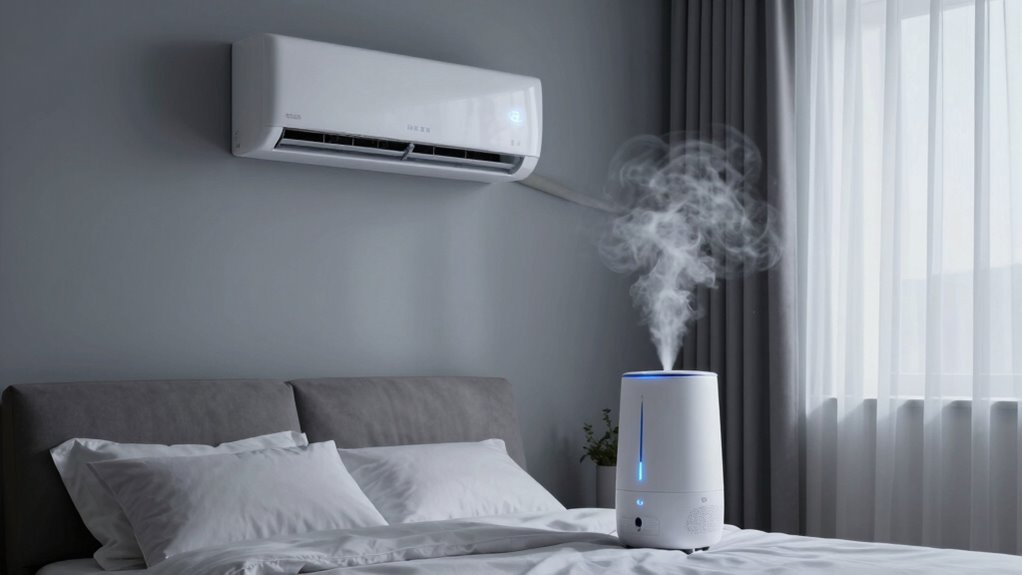
To create an ideal sleep environment, balancing both air conditioning (AC) and humidifiers is essential. Adjust these devices to maintain perfect temperature and humidity, which can markedly improve your sleep quality. Keep noise levels in check, as loud sounds from either device can disrupt your rest. Here are some tips:
Balancing AC and humidifiers creates the perfect sleep environment for restful nights.
- Use a timer or sleep mode to minimize noise and prevent overcooling or overhumidifying
- Regularly clean your humidifier to avoid mold and bacteria buildup
- Set the thermostat to a comfortable temperature, around 60-67°F (15-19°C), for better sleep
- Understanding indoor climate control can help you optimize your sleep environment further by balancing humidity and temperature effectively.
Tips to Use ACs and Humidifiers for Better Sleep
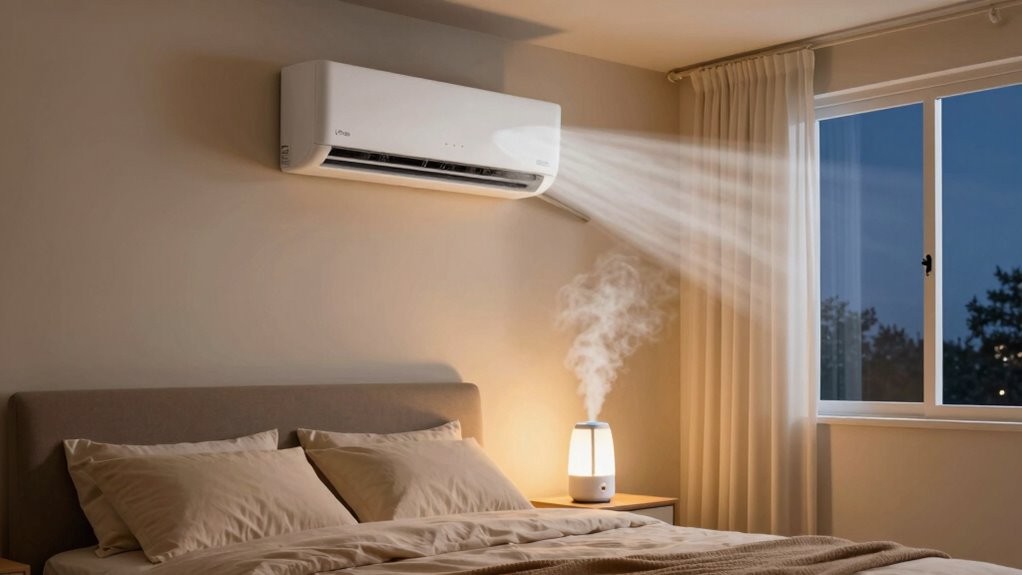
Using your AC and humidifier effectively can considerably enhance your sleep quality. Focus on creating a comfortable sleep environment by adjusting temperature control to suit your preferences, ideally between 60-67°F. Keep your AC set to a consistent, cool temperature without creating drafts that can disturb sleep. For humidifiers, aim to maintain humidity levels around 40-50%, preventing dryness without making the room too damp. Place your devices away from your bed to avoid direct airflow or moisture exposure. Regularly clean your humidifier to prevent mold, and use a programmable thermostat to regulate temperature smoothly. Additionally, air quality can influence sleep comfort, so ensuring proper filtration and ventilation is beneficial. By fine-tuning these settings, you ensure a balanced sleep environment that promotes better rest and minimizes disruptions caused by temperature fluctuations or dryness.
Frequently Asked Questions
Can Using Both an Air Conditioner and Humidifier Improve Sleep Quality Simultaneously?
Using both an air conditioner and humidifier can improve your sleep quality, provided you manage air quality and noise levels. The air conditioner cools and filters the air, while the humidifier adds moisture, reducing dry throat and congestion. Together, they create a comfortable environment. Just make certain they operate quietly to avoid disrupting your sleep. Properly balancing both devices helps you breathe easier and enjoy a more restful night.
How Do Allergies Influence the Choice Between ACS and Humidifiers for Sleep?
Allergies can turn your sleep into a battlefield, so choosing between an AC and humidifier depends on your allergy triggers. If dust and pollen inflame your immune response, an air conditioner with a clean filter might help reduce airborne allergens. Conversely, if dry air worsens your allergies, a humidifier can ease irritation. Consider your allergy triggers carefully to create a sleep environment that calms your immune response rather than stirs it up.
Are There Health Risks Associated With Overusing Air Conditioners or Humidifiers During Sleep?
Overusing air conditioners can lead to health hazards like dry skin, sore throat, and respiratory issues, while long-term effects may include worsened allergy symptoms. Excessive use of humidifiers risks mold growth and bacteria buildup, which can cause respiratory problems. To avoid these health hazards, use both devices in moderation, maintain proper cleaning routines, and keep humidity levels balanced to support safe, comfortable sleep without adverse health effects.
What Is the Ideal Humidity Level for Comfortable Sleep With a Humidifier?
Imagine slipping into a cozy, misty oasis where your body feels just right. That’s the magic of maintaining ideal humidity—between 40-60%. This range boosts sleep comfort by preventing dry skin and congestion. With a humidifier set within this level, you create a soothing environment that promotes deep, restful sleep. Keep it steady, and watch your sleep quality improve as your body relaxes in perfect humidity balance.
How Does Room Size Affect the Effectiveness of ACS and Humidifiers for Sleep?
Room size directly impacts the efficiency of both ACs and humidifiers, so choose devices suited to your space. Larger rooms require more powerful units or multiple devices to maintain ideal conditions, while smaller rooms need less capacity to avoid overcooling or overhumidifying. Properly matching device size to your room guarantees better control, comfort, and sleep quality. Always check the device’s coverage area to maximize its effectiveness and create a comfortable sleep environment.
Conclusion
Choosing between an AC and a humidifier isn’t just about comfort—it’s about gaining better sleep. Some believe a cooler, drier environment helps you rest deeper, but overshooting can cause dryness and discomfort. The truth is, finding the right balance matters more than the device itself. When you personalize your room’s temperature and humidity, you create a sleep sanctuary that truly supports your rest. Trust your instincts, and prioritize what makes you feel most relaxed and refreshed.