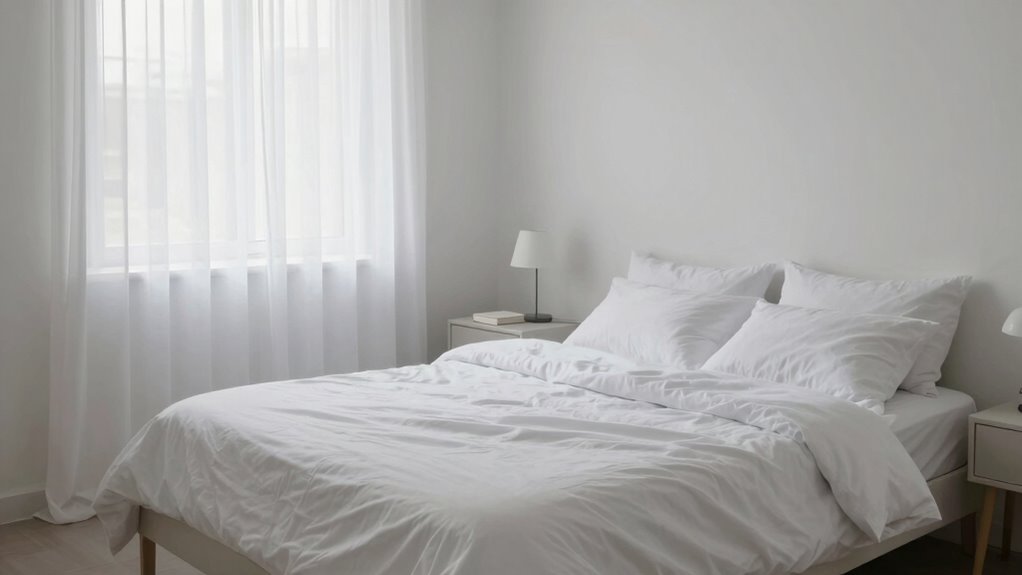

Even in a clean bedroom, stale air can linger if there’s poor circulation and limited airflow. Stagnant air traps pollutants, moisture, and odors, making the space feel heavy and stuffy. Cold weather and closed windows worsen this issue, reducing fresh air exchange. Without proper ventilation or humidity control, your room can feel uncomfortable despite cleanliness. To improve freshness, you’ll want to understand how airflow and humidity impact your space’s air quality—more helpful tips await.

Get home appliances delivered free with Prime
- Fast, free delivery on millions of items
- Prime Video, Amazon Music and more included
- Member-only deals all year
Key Takeaways
- Insufficient air circulation causes lingering indoor pollutants, making the air feel stale.
- Lack of fresh air exchange during closed windows leads to stagnant indoor airflow.
- High humidity or inadequate humidity control promotes mold and dampness, contributing to stale odors.
- Advanced filtration systems alone don’t guarantee fresh air if ventilation and airflow are inadequate.
- Indoor pollutants from sources like furniture or cleaning products can accumulate, causing a stale environment.

Even in clean rooms designed for ideal air quality, the air in your bedroom can still become stale over time. This happens because, despite the presence of advanced filtration systems or pristine conditions, the air isn’t moving enough to prevent stagnation. This lack of movement can cause the same air particles to linger, and odors, pollutants, or moisture don’t disperse effectively. Without proper airflow, your room can feel stuffy, even if it’s technically clean. You might notice this more during colder months when windows stay closed or in rooms with minimal ventilation. To combat this, you need to actively promote air circulation. Opening a window for a few minutes each day can make a significant difference, allowing fresh air to replace the stale indoor air. Using fans or air purifiers with oscillating features also helps keep the air moving, reducing the buildup of indoor pollutants and preventing the room from feeling heavy or suffocating. Proper air circulation is essential for preventing stagnation and maintaining fresh indoor air. Humidity control plays a vital role in maintaining a revitalizing bedroom environment. When humidity levels are too high, moisture can accumulate, creating a damp atmosphere that fosters mold growth and leaves the air feeling heavy. Conversely, too little humidity can cause dryness, leading to discomfort and dry skin or sinuses. Maintaining the right humidity level—ideally between 40% and 60%—ensures your room feels more comfortable and less stale. Using a humidifier or dehumidifier helps regulate these levels, especially in climates with extreme weather. Proper humidity control also reduces static electricity and helps preserve your belongings, but most importantly, it prevents the air from becoming thick and oppressive. Air quality management techniques, such as monitoring humidity and ensuring proper ventilation, can further improve indoor air freshness. Incorporating proper ventilation strategies can significantly enhance air quality and prevent stagnation. Regularly ventilating the space, using fans, and monitoring humidity aren’t just about cleanliness—they’re about creating an environment that promotes healthy, comfortable breathing. When these elements work together, your bedroom transforms from a stale, stuffy space into a revitalizing sanctuary, no matter how pristine your room appears on the surface. Additionally, understanding indoor air pollutants and their sources can help you target specific issues and improve overall air quality more effectively.
air purifier with oscillating fan
As an affiliate, we earn on qualifying purchases.
As an affiliate, we earn on qualifying purchases.
Frequently Asked Questions
Can Indoor Plants Improve Bedroom Air Freshness?
Yes, indoor plants can improve bedroom air freshness. Plant benefits include filtering out toxins and releasing oxygen, which boosts air quality. They also promote better air circulation by adding humidity and movement to the room. However, for ideal freshness, combine plants with proper ventilation. Keep the plants healthy and well-maintained to maximize their air-purifying effects, making your bedroom feel more inviting and less stale.
How Often Should I Replace My Air Filters?
You should replace your air filters every 1 to 3 months, depending on their air filter lifespan and your home’s needs. Regular filter maintenance guarantees your HVAC system runs efficiently and keeps indoor air fresh. Check the manufacturer’s recommendations and consider factors like pets or allergies, which may require more frequent changes. Staying on top of filter replacement helps prevent stale, stuffy air and improves overall indoor air quality.
Does Bedroom Size Affect Air Quality?
Yes, bedroom size impacts air quality because larger rooms may need better ventilation strategies to circulate fresh air effectively. In bigger spaces, stale air can linger without proper airflow, making humidity control and ventilation essential. To improve air quality, open windows regularly, use exhaust fans, and consider air purifiers. These strategies help maintain a comfortable, fresh atmosphere, regardless of your bedroom’s size.
Are Air Purifiers Effective for Stale Bedroom Air?
Air purifiers can be effective for stale bedroom air, but they do have limitations. They mainly target dust, allergens, and odors, but may not remove all volatile organic compounds or moisture issues that cause stale feelings. Consider cost, as good models can be pricey, and ongoing filter replacements add to expenses. To improve air quality, combine an air purifier with proper ventilation and humidity control for the best results.
Can Sleeping Position Impact Air Circulation?
Ironically, your sleeping posture can considerably impact airflow dynamics, making stale air feel even more stagnant. If you sleep in a position that blocks vents or restricts airflow, it hampers proper circulation, trapping air and increasing discomfort. To improve air quality, try adjusting your sleeping posture to promote better airflow, ensuring fresh air reaches all areas of your room. Small changes in your sleeping position can make a surprising difference.
As an affiliate, we earn on qualifying purchases.
Conclusion
So, next time your bedroom feels stuffy despite everything looking spotless, remember—it might just be the coincidence of trapped air and overlooked ventilation. Sometimes, the most invigorating feeling comes from a simple change, like opening a window or adding a plant. It’s funny how small adjustments can make such a difference, turning stale air into a gust of fresh air. After all, in the dance of clean and fresh, sometimes the smallest step makes all the difference.
As an affiliate, we earn on qualifying purchases.
As an affiliate, we earn on qualifying purchases.
Halloween Picks
halloween
As an affiliate, we earn on qualifying purchases.