

White, pink, and brown noise each sound different because of their unique frequency distributions. White noise contains equal energy across all frequencies, creating a sharp, static-like sound that can be overwhelming. Pink noise emphasizes middle and lower frequencies, making it softer and more natural. Brown noise focuses on deep, bass-rich sounds that feel grounding and calm. To discover which suits you best, explore how each impacts your relaxation and focus.

Get home appliances delivered free with Prime
- Fast, free delivery on millions of items
- Prime Video, Amazon Music and more included
- Member-only deals all year
Key Takeaways
- White noise has equal energy across all frequencies, creating a bright, static sound, while pink noise emphasizes mid and lower frequencies for a softer sound.
- Brown noise concentrates energy in low frequencies, producing a deep, rumbling sound that feels grounding and soothing.
- White noise sounds sharp and intense, whereas pink noise is smoother and more natural, and brown noise is deep and bass-heavy.
- Pink noise aligns with human hearing, making it less harsh and more relaxing than white noise, which can be overwhelming for some listeners.
- Brown noise’s deep vibrations promote calmness and relaxation, ideal for creating a tranquil environment.
As an affiliate, we earn on qualifying purchases.
What Are Sound Colors and How Do They Differ?
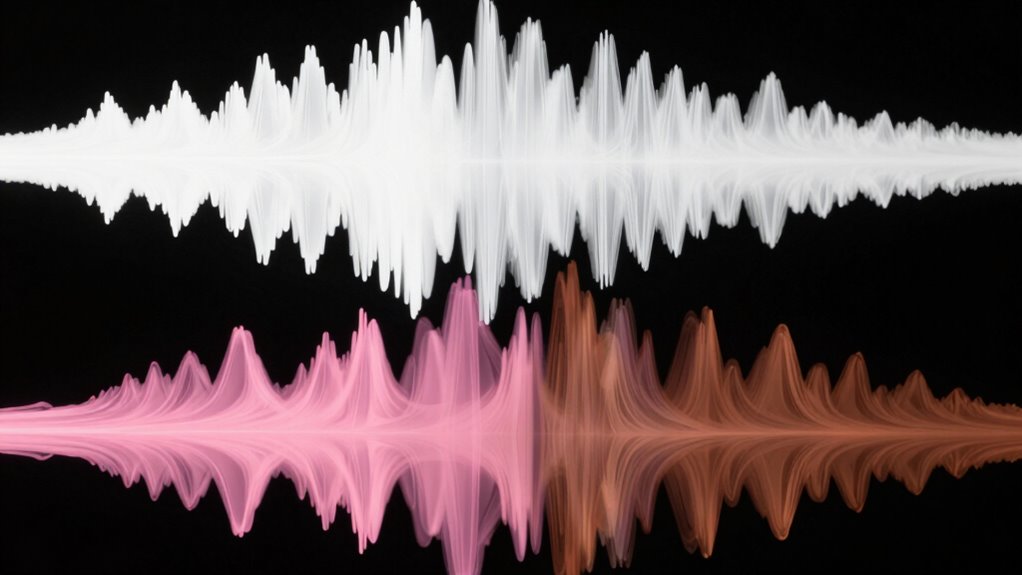
Have you ever wondered what makes different types of noise distinct from one another? Sound colors, like white, pink, and brown noise, are classifications based on their spectral qualities, which influence your auditory perception. These sound colors are used in sound therapy to target specific effects, such as relaxation or focus. Your auditory perception interprets these sounds differently because each has a unique frequency distribution. For example, white noise contains equal energy across all frequencies, creating a static-like sound. Pink noise emphasizes lower frequencies, resulting in a softer, more balanced tone. Brown noise, with even more emphasis on bass, sounds deeper and richer. Understanding these differences helps you choose the right sound for your needs, whether for calming, concentration, or sleep enhancement. Recognizing the spectral qualities of each noise type can improve your overall listening experience. Additionally, being aware of sound frequency distributions can help you select the most effective sound for your personal preferences and goals. Exploring the spectral characteristics further reveals how each sound influences your brain and mood, and incorporating knowledge of sound physics can enhance your understanding of their effects on health and well-being.
pink noise generator for relaxation
As an affiliate, we earn on qualifying purchases.
As an affiliate, we earn on qualifying purchases.
How Does White Noise Sound and What Makes It Unique?

White noise sounds bright and hiss-like, with a consistent, steady quality. It covers a broad range of frequencies, creating a uniform soundscape. This makes it easy to recognize and distinguish from other noise types, giving it a unique and soothing character. Additionally, white noise is often used in sound masking to help improve focus and sleep by reducing the impact of disruptive sounds. Proper air purifier maintenance can ensure that white noise generators or similar devices operate efficiently, providing consistent sound quality. Regular upkeep of equipment helps maintain its sound quality, ensuring the white noise remains effective and reliable. Furthermore, understanding auditory processing techniques can enhance how individuals utilize noise for therapeutic or environmental benefits. Being aware of modern technology integration can also help optimize the use of white noise devices for personalized comfort and effectiveness.
Bright and Hiss-like
White noise sounds bright and hiss-like, often described as a steady, static-like roar that fills the background. You’ll notice a bright hiss that resembles soft static, creating a sharp, crisp quality. This high-frequency content makes it stand out from other noise types, giving it that energetic, almost buzzing feel. The sound is consistent and unchanging, which can feel both soothing and intrusive depending on your preference. The steady, unchanging nature of white noise contributes to its effectiveness in creating a consistent auditory environment. Its bright, crisp quality makes it particularly effective at masking other sounds, helping to drown out distractions or background noise. Additionally, the bright hiss cuts through silence, making it ideal for masking other sounds. It’s like a gentle, constant shimmer of static that envelops your environment. This unique brightness makes white noise effective for focus, relaxation, or sleep, especially when you need a sound that’s both clear and steady, without any deep or muffled tones. The high-frequency content also enhances its ability to improve concentration, making it a popular choice for work or study environments.
Broad Frequency Range
The defining feature of white noise is its broad and even distribution of frequencies across the entire audible spectrum, from deep bass to high treble. This means that every sound within its frequency range is played at equal intensity, creating a uniform sound spectrum. When you listen to white noise, you notice a consistent hiss-like quality that covers the complete range of human hearing. Its wide frequency range guarantees there are no gaps or peaks, making it sound balanced and full. This uniformity makes white noise ideal for masking other sounds, as no particular frequency stands out. The broad sound spectrum provides a constant, neutral background noise that can help improve focus, sleep, or simply create a soothing environment. Additionally, the even frequency distribution can be leveraged in sound masking applications to enhance privacy and reduce distractions in various settings. The comprehensive frequency coverage also means that white noise can effectively distract or soothe the brain, making it a versatile tool for relaxation or concentration. Its ability to create a consistent auditory environment contributes to its widespread use in clinical, office, and personal spaces.
Consistent and Uniform
Because white noise covers the entire audible spectrum evenly, it produces a consistent and uniform sound that remains steady across all frequencies. This auditory consistency creates a smooth sound texture, making it ideal for masking other sounds or aiding focus. You’ll notice that white noise has a steady, unchanging quality, without abrupt shifts or variations. Its uniformity guarantees a reliable background sound, which can help reduce distractions. Additionally, understanding the sound texture of white noise can help users tailor their listening experience for better relaxation or concentration. Here’s a quick look at its features:
| Feature | Description | Effect |
|---|---|---|
| Sound Texture | Smooth, steady, and uniform | Enhanced focus, calming effect |
| Auditory Consistency | Equal energy across frequencies | Reliable background noise |
| Frequency Range | Entire audible spectrum evenly | No frequency stands out |
This consistency makes white noise a popular choice for sleep, work, and relaxation.
brown noise sound therapy device
As an affiliate, we earn on qualifying purchases.
As an affiliate, we earn on qualifying purchases.
What Is Pink Noise and Why Is It the Middle Ground?

Pink noise strikes a balance between the high energy of white noise and the low tones of brown noise, making it a popular choice for relaxation and sound masking. Its equal energy distribution across octaves aligns well with human auditory perception, creating a smoother, more natural sound. In sound therapy, pink noise is often used to promote focus, reduce stress, and improve sleep quality. Unlike white noise, which can feel sharp or harsh, pink noise’s softer, more balanced sound is easier on your ears over extended periods. This middle ground makes it versatile for various environments and preferences. By providing a gentle, consistent background, pink noise effectively engages your auditory perception without overwhelming it, making it ideal for calming and masking unwanted sounds. Additionally, sound perception can help improve the clarity and impact of your writing when describing sound qualities. The balanced nature of pink noise also aligns with principles of energetic alignment, promoting a harmonious state that can enhance mental well-being. Incorporating pink noise into your daily routine can also support stress reduction and mental clarity, further emphasizing its benefits. Furthermore, the use of surrounding sounds in pink noise can create a more immersive and soothing environment for listeners.
What Is Brown Noise and How Does Its Deep Sound Feel?

Brown noise has a deep, rumbling sound that can feel almost soothing or grounding. Its characteristics emphasize lower frequencies, creating a calming effect for many listeners. With a frequency spectrum that spans the bass range, it offers a rich, enveloping sound experience. Additionally, sound frequency ranges play a crucial role in how different noises influence relaxation and sleep quality. The sound wave properties of brown noise contribute to its distinctive, mellow tone, making it a popular choice for relaxation and focus.
Deep Sound Characteristics
Deep sounds have a powerful presence, and brown noise is no exception. Its sound waveforms are characterized by low-frequency energy that creates a warm, rumbling sensation. When you listen to brown noise, you notice the rich, heavy vibrations that resonate deeply within your auditory perception. Unlike higher-pitched sounds, brown noise emphasizes the lower end of the spectrum, giving it a full-bodied, immersive quality. This deep sound feels grounding, almost like a gentle vibration that envelops you without overwhelming. You might sense a soothing, almost tactile experience because of how the sound waveforms distribute energy across the lower frequencies. Overall, brown noise’s deep sound characteristics make it distinct, delivering a sense of stability and calm through its powerful, low-frequency presence.
Calming Effects Explained
Because brown noise emphasizes low-frequency energy, it creates a soothing and grounding auditory experience that many find calming. Its deep sound can promote relaxation by triggering positive emotional responses and supporting sound therapy practices. You might notice it feels like a gentle rumble, helping you disconnect from stress and anxiety. This calming effect stems from its ability to mimic natural sounds, such as distant thunder or rushing waterfalls, which evoke feelings of safety and tranquility. Here’s a visual comparison:
| Aspect | Effect |
|---|---|
| Low-frequency focus | Deep, grounding sound |
| Emotional response | Promotes calmness and relaxation |
| Sound therapy use | Facilitates stress relief |
| Psychological impact | Eases anxiety and improves focus |
| Natural sound mimic | Enhances soothing environment |
Frequency Spectrum Range
If you listen closely, you’ll notice that brown noise occupies a unique position in the audio spectrum, characterized by its emphasis on low-frequency energy. Its frequency spectrum ranges mainly from 20 Hz to around 500 Hz, with most sound energy concentrated at the deep bass end. Unlike white noise, which spreads sound evenly across all frequencies, brown noise’s energy diminishes as frequency increases, creating a deep, rumbling sound. This broad low-frequency range produces a rich, enveloping auditory experience that can feel soothing and grounding. The sound energy in brown noise is more focused on the bass spectrum, giving it its signature deep, warm tone. Understanding this frequency spectrum range helps you grasp why brown noise feels so different and immersive compared to other noise types.
How Do the Frequency Ranges of White, Pink, and Brown Noise Compare?

White, pink, and brown noise differ markedly in their frequency ranges, shaping how each sound interacts with your ears and brain. Their position within the frequency spectrum influences sound perception and the overall experience. White noise covers the full spectrum evenly, from low to high frequencies, making it sound sharp and consistent. Pink noise emphasizes lower frequencies, creating a balanced, softer sound that’s easier on your ears. Brown noise focuses heavily on bass, with deep, rumbling tones dominating the spectrum.
- White noise has equal energy across all frequencies
- Pink noise emphasizes mid to high frequencies more evenly
- Brown noise concentrates energy in the low, bass-heavy range
Understanding these differences helps you choose the right sound for relaxation, focus, or sound masking.
How Do White, Pink, and Brown Noise Affect Your Hearing and Perception?
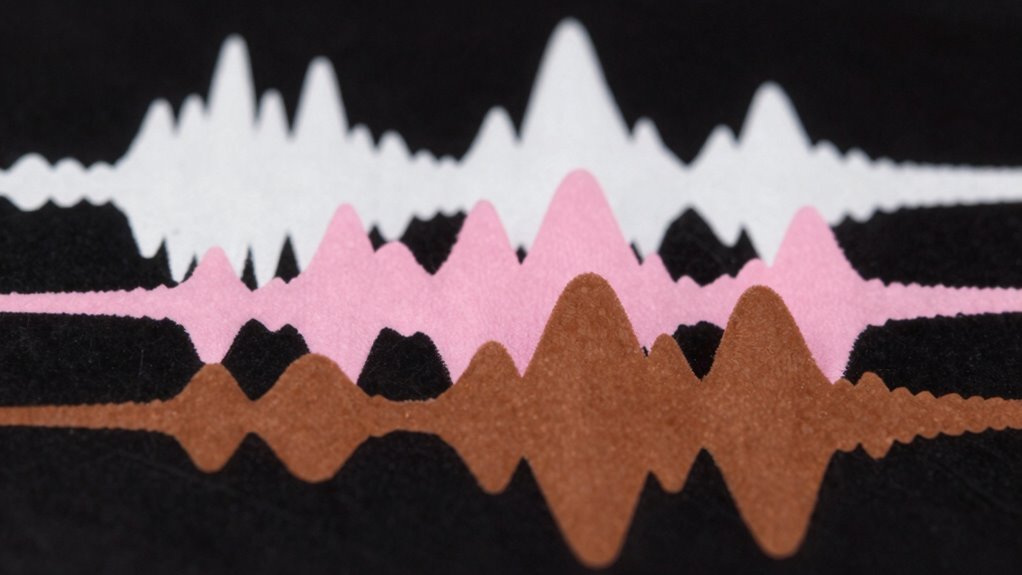
The way white, pink, and brown noise influence your hearing and perception depends largely on their distinct frequency profiles. White noise, with its broad spectrum, can mask other sounds and improve auditory perception by reducing distractions. Pink noise, with balanced power across frequencies, tends to feel more natural and less harsh, making it effective in sound therapy for relaxation and focus. Brown noise, emphasizing lower frequencies, creates a deep, soothing sound that can help calm your mind and enhance concentration. Each type affects your auditory perception differently, shaping how you interpret sounds and sensations around you. Using these noises in sound therapy can help you manage stress, improve sleep, or sharpen focus, depending on which noise profile suits your needs best.
What Are the Main Uses and Benefits of Each Noise Type?

White, pink, and brown noise each offer unique benefits for your sleep and focus. You might find that one type helps you fall asleep faster or stay alert longer. Understanding their main uses can help you choose the best sound environment for your needs.
Sleep Enhancement Benefits
Different types of noise can considerably improve your sleep by masking disruptive sounds and calming your mind. Each noise type offers unique benefits for sleep enhancement through sound therapy and noise customization. White noise creates a consistent sound blanket that helps you fall asleep faster and stay asleep longer. Pink noise’s balanced sound spectrum promotes deeper, more restorative sleep cycles. Brown noise, with its deeper tone, is especially effective for relaxation and reducing anxiety.
- White noise masks sudden noises and promotes sleep continuity
- Pink noise enhances the quality of REM sleep
- Brown noise aids in relaxation and can soothe racing thoughts
Choosing the right noise type depends on your preferences and sleep needs. Proper noise customization can optimize your sleep environment and improve overall rest.
Focus and Concentration Support
Building on how noise helps improve sleep, it also plays a significant role in boosting focus and concentration during work or study sessions. Different noise types, like white, pink, and brown noise, are used in sound therapy to enhance mental clarity. Noise customization allows you to select sounds that mask distracting background noise and create an environment conducive to productivity. For example, pink noise’s balance of frequencies can improve focus over extended periods, while brown noise’s deeper tones may help reduce anxiety and mental clutter. Each sound type offers unique benefits, making it easier to tailor your environment to your needs. By incorporating these noises into your routine, you can optimize your concentration and sustain attention longer.
How Do White, Pink, and Brown Noise Differ in Calmness and Intensity?
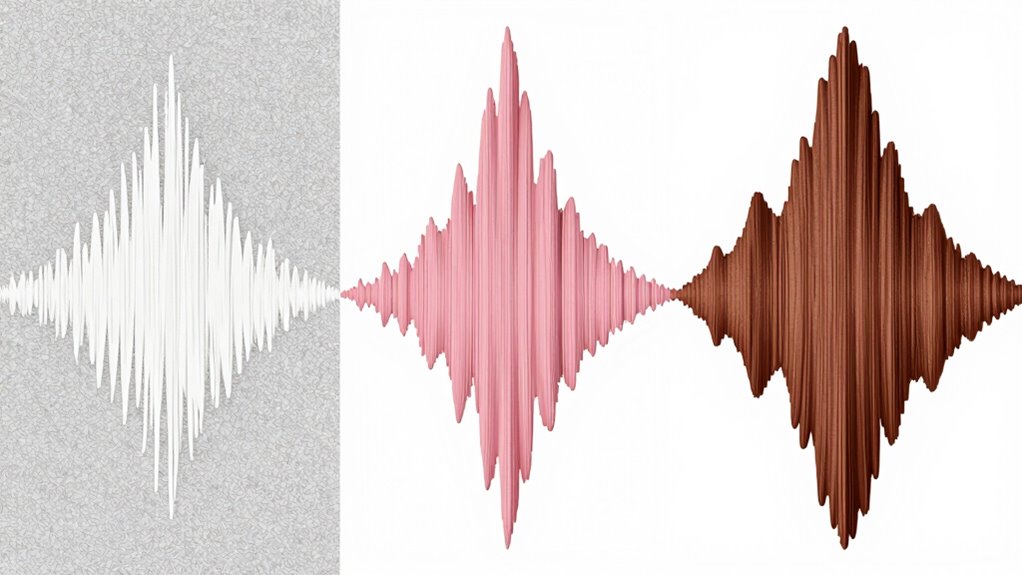
Understanding how white, pink, and brown noise differ in calmness and intensity can help you choose the right sound for relaxation or focus. White noise feels more intense and less calming because it contains equal energy across all frequencies, which can sometimes amplify noise pollution. Pink noise offers a more balanced, soothing experience by reducing high-frequency sounds, making it feel calmer and softer. Brown noise is even deeper and richer, with a gentle, bass-heavy quality that promotes relaxation and reduces stress.
- White noise can mask noise pollution effectively but may feel overwhelming.
- Pink noise provides a smoother, more calming background for sound therapy.
- Brown noise’s deep tones foster a sense of calm and tranquility.
Choosing the right noise depends on your desired level of calmness and intensity for relaxation or focus.
How Can You Choose the Best Noise for Sleep, Focus, or Relaxation?
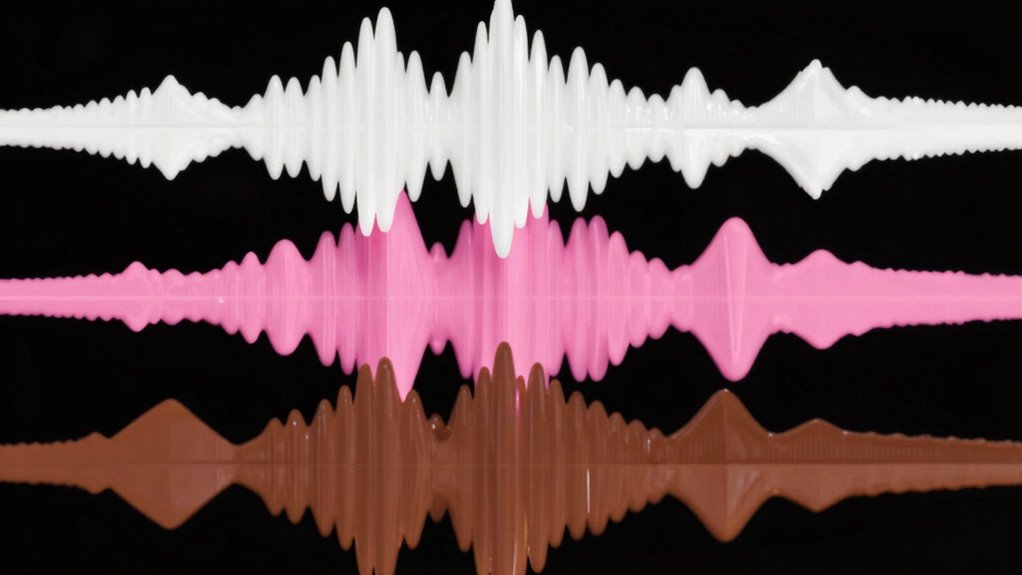
Choosing the best noise for sleep, focus, or relaxation depends on your personal preferences and the specific calming effects you seek. Sound therapy offers a range of options, so experiment with different noise types to find what works best for you. Noise customization allows you to tailor soundscapes to match your needs—whether it’s white, pink, or brown noise—by adjusting volume or blending sounds. For sleep, you might prefer softer, more uniform sounds that promote relaxation. For focus, sharper or more structured noises can enhance concentration. Pay attention to how each noise type impacts your mood and alertness. Ultimately, selecting the right sound is about creating an environment that feels comfortable and supports your desired state of mind.
What Science Explains How Sound Colors Impact Sleep and Focus?

Scientific studies reveal that different sound colors influence brain activity and physiological responses, shaping how effectively they promote sleep or focus. Sound therapy leverages these effects by targeting auditory processing pathways to improve mental states. For example, pink noise’s balanced spectrum can enhance relaxation, aiding sleep quality. Brown noise’s deep frequencies may reduce distractions, boosting focus. White noise, with its broad spectrum, masks external sounds, creating a consistent background. The science shows that:
- Sound colors affect neural synchronization, promoting relaxation or alertness
- Auditory processing adapts differently to each sound type, influencing focus
- Specific sound frequencies can stimulate or inhibit brain waves linked to sleep or concentration
Understanding these mechanisms helps you choose the right sound color for your needs.
Frequently Asked Questions
Can White, Pink, or Brown Noise Be Harmful to Hearing With Prolonged Exposure?
White, pink, and brown noise can be harmful to your hearing if you’re exposed for too long or at high volumes. To protect your hearing safety, keep noise duration limited and volume at safe levels. Prolonged exposure, regardless of the noise type, can cause damage. Use ear protection if you need to listen for extended periods, and take breaks to minimize the risk of hearing loss.
How Do Individual Preferences Influence the Choice of Noise Type?
Think of choosing noise like picking a favorite coffee—personal comfort and cultural perceptions guide you. You might find white noise too harsh, while pink or brown noise feels soothing. Personal preferences are shaped by past experiences, sensitivities, and even cultural backgrounds. For example, some cultures associate certain sounds with relaxation or alertness. Your choice reflects what resonates with you, making your listening experience more enjoyable and tailored to your needs.
Are There Specific Health Conditions That Benefit More From Certain Noise Colors?
You might find that certain health conditions respond better to specific noise colors in sound therapy. For example, white noise can help those with tinnitus by masking ringing sounds, while pink noise may improve sleep quality for individuals with insomnia. Clinical benefits vary, so you should experiment with different sounds to see which promotes relaxation or focus. Consulting a healthcare professional can help tailor sound therapy to your specific needs for ideal results.
How Do Sound Colors Affect Children or Pets Differently?
Imagine sound colors as different playgrounds for your children and pets. Pink noise, gentle and steady, can soothe sensitive ears, helping reduce sound sensitivity and supporting healthy development. Brown noise, deeper and more enveloping, might comfort pets by mimicking natural environments, but overly intense sounds can overwhelm them. Understanding these differences helps you choose the right soundscape, positively influencing their developmental impact and emotional well-being.
Can Mixing Different Noise Colors Enhance Relaxation or Focus?
Mixing different noise colors through sound therapy can enhance relaxation and focus. By blending white, pink, and brown noise, you create a more balanced and soothing sound environment that caters to your specific needs. Noise blending helps reduce distractions and promotes calmness, making it ideal for meditation or concentration. You might find that customizing your soundscape with mixed noise colors improves your overall mental clarity and stress relief effectively.
Conclusion
Think of white, pink, and brown noise as different paths through a forest. White noise is like a bustling trail, full of energy and variety. Pink offers a gentle, shaded canopy, calming and balanced. Brown is a deep, quiet stream winding through, soothing and grounding. Choosing the right sound is your journey—find the trail that leads you to better sleep, focus, or relaxation, and enjoy the peaceful escape it provides.
Cold & flu season Picks
humidifiers
As an affiliate, we earn on qualifying purchases.