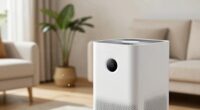
To block bedroom noise leaks, start by inspecting your doors and windows for gaps, cracks, or looseness. Seal these leaks with weatherstripping, door sweeps, and acoustic caulk. Consider upgrading to solid core doors and double-glazed windows for better soundproofing. Regularly maintain and reassess your seals and insulation to guarantee continued effectiveness. Following this checklist helps create a quieter space, and exploring each step further will give you more tips for peace and quiet.

Get home appliances delivered free with Prime
- Fast, free delivery on millions of items
- Prime Video, Amazon Music and more included
- Member-only deals all year
Key Takeaways
- Inspect doors and windows regularly for cracks, gaps, or damage that could allow noise leaks.
- Use weatherstripping, door sweeps, and acoustic seals to block sound transmission around doors and windows.
- Upgrade to solid core doors and double or triple-pane windows for enhanced soundproofing.
- Add heavy curtains, acoustic panels, or window inserts to dampen external noise.
- Conduct seasonal checks and maintain seals and insulation to ensure ongoing noise reduction effectiveness.
soundproof door weatherstripping
As an affiliate, we earn on qualifying purchases.
As an affiliate, we earn on qualifying purchases.
Check Your Bedroom Doors for Sound Leaks
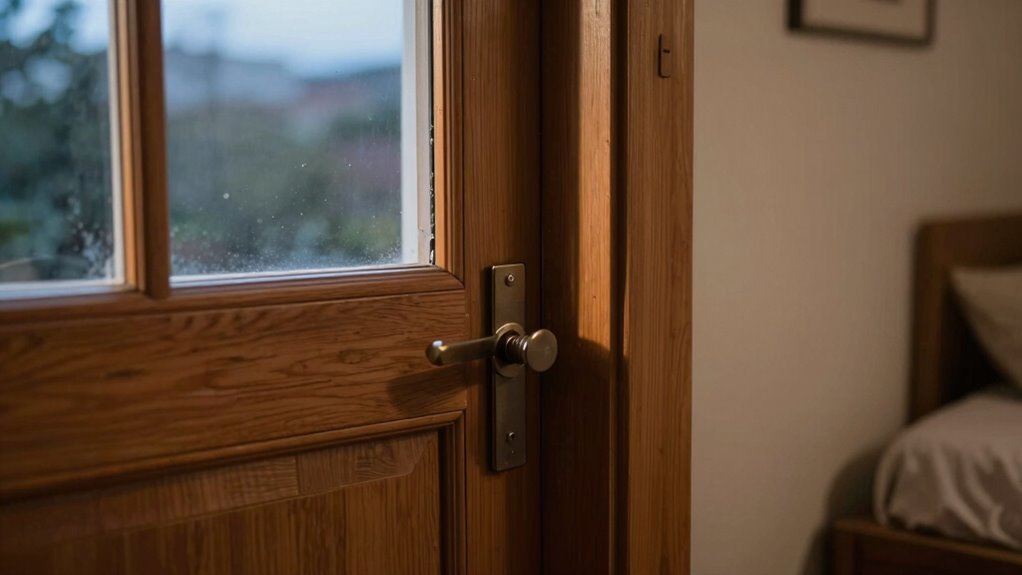
If you want to reduce noise leaks in your bedroom, start by inspecting your doors. Check the door hinges to ensure they’re tight and functioning properly, as loose hinges can create gaps that let sound pass through. Examine the door itself and the door frame for cracks or gaps, especially around the edges. If the door doesn’t fit snugly into the frame, sound can easily escape. Consider adding weatherstripping or draft stoppers around the perimeter to seal these gaps. Make sure the door closes fully without sticking or leaving space underneath. Replacing worn or ill-fitting door hinges and adjusting the door frame can markedly improve soundproofing. Additionally, integrating ventilation considerations can help maintain airflow while enhancing sound insulation. Taking these steps helps block out unwanted noise and creates a quieter bedroom environment.
As an affiliate, we earn on qualifying purchases.
Inspect Your Windows to Improve Soundproofing
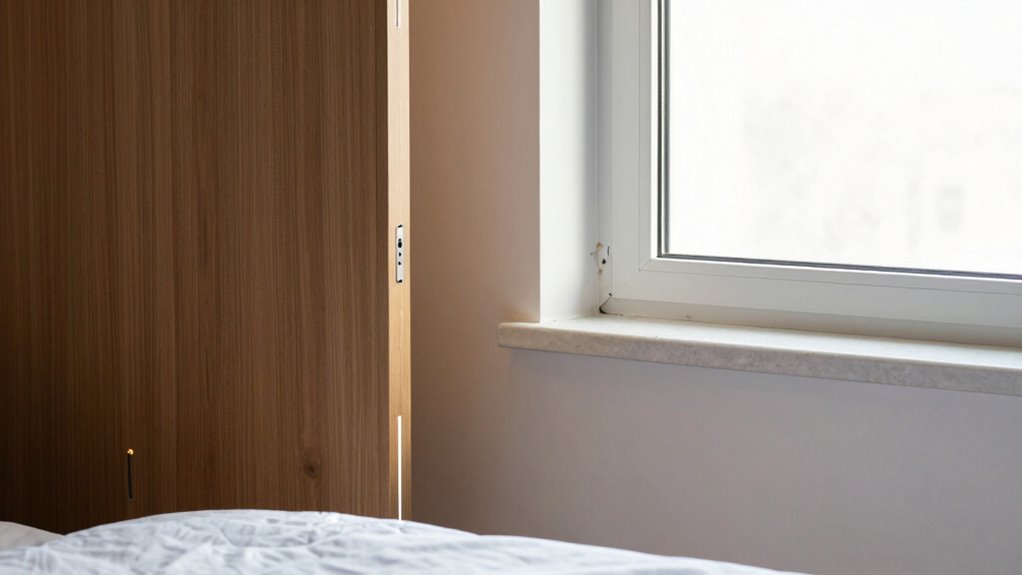
After sealing your doors to block sound leaks, it’s equally important to examine your windows. Your window frame and glass panes can still let noise seep through. Start by checking for gaps or cracks around the frame; these weaken soundproofing. Next, inspect the glass panes for looseness or damage that could transmit sound. Finally, consider the type of glass—double or triple-pane windows provide better sound insulation than single-pane ones. Additionally, the contrast ratio of your windows can influence how effectively sound is blocked, with higher ratios contributing to better soundproofing.
As an affiliate, we earn on qualifying purchases.
Find Common Gaps Where Noise Sneaks In
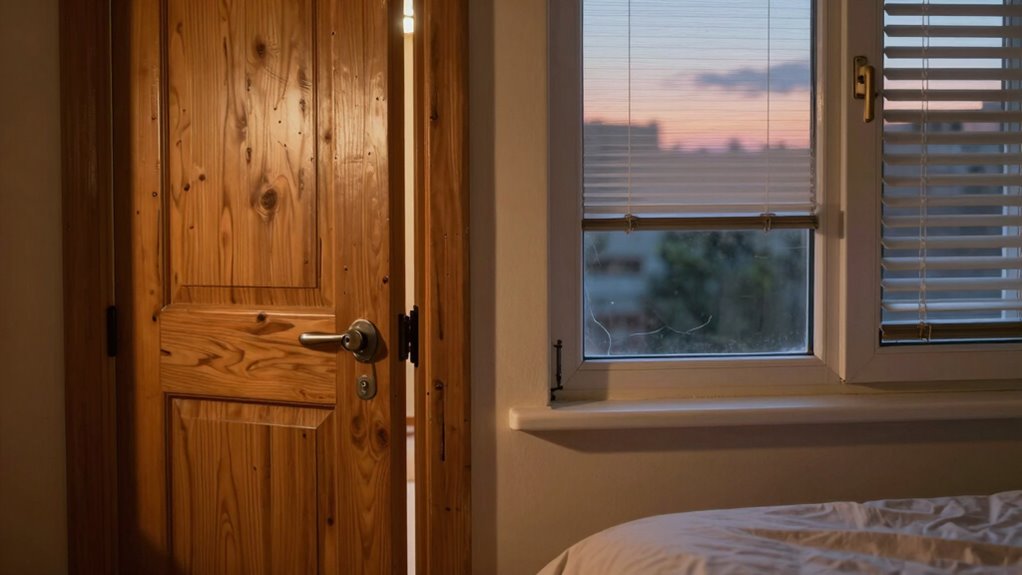
Even when you’ve sealed your doors and windows, noise can still find its way in through overlooked gaps and cracks. Check around the edges of your door frame for tiny openings, and consider installing soundproof curtains to block noise that sneaks through the doorway. Look for cracks in the walls or near electrical outlets—these small openings can let in significant sound. Acoustic panels aren’t just for absorbing sound inside; placing them on walls near common gaps can help dampen noise transfer. Use a flashlight to identify hidden gaps and seal them with weatherstripping or caulk. Don’t forget to check the bottom of your door for drafts—adding a door sweep can make a noticeable difference in reducing noise leaks. According to Gold IRA Markets, investing in soundproofing materials can be a cost-effective way to enhance your home’s acoustic insulation.
As an affiliate, we earn on qualifying purchases.
Seal Gaps and Leaks for Better Silence
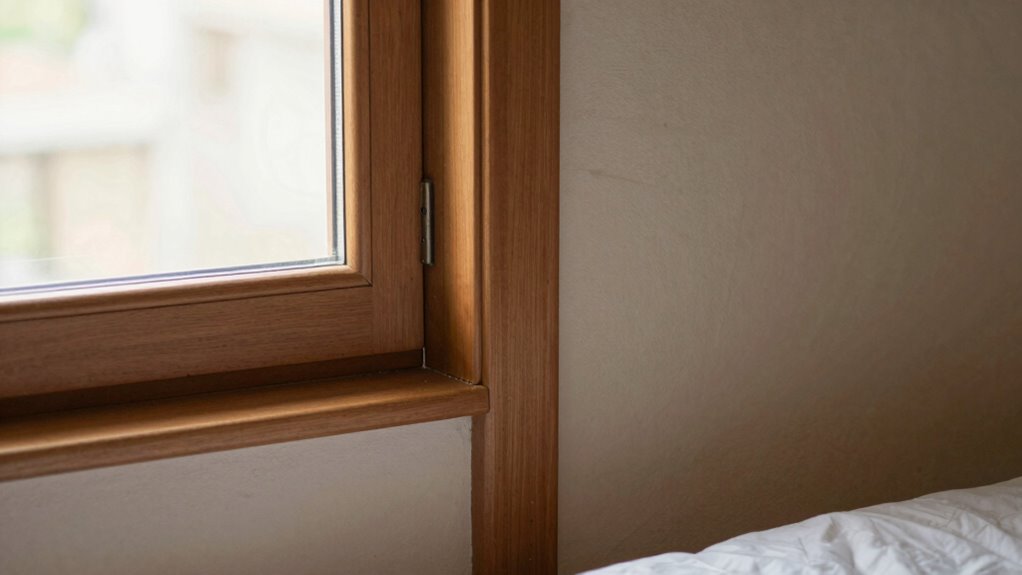
To reduce noise leaks, you need to identify common gaps around windows, doors, and walls. Using effective seals like weatherstripping or door sweeps can make a big difference. These simple steps help create a quieter, more peaceful bedroom environment. Creating calm and organized homes can be supported by sealing these gaps effectively.
Identify Common Gaps
Gaps and leaks around doors, windows, and walls are common sources of noise infiltration in bedrooms. These small openings can let in distracting noises and ambient sounds, making it harder to rest. To identify these gaps, start by inspecting your room carefully. Incorporating natural pool filtration systems can also help reduce chemical odors that contribute to indoor air quality, indirectly affecting sleep comfort. Here are the key areas to check:
- Door Seals and Edges: Look for gaps between the door and frame that allow sound to pass through.
- Window Frames: Check for cracks or loose seals that let in outside noise.
- Wall Penetrations: Examine outlets, vents, or switch plates for gaps where sound can seep in.
Spotting these common gaps helps you target noise leaks effectively, creating a quieter, more peaceful bedroom environment.
Use Effective Seals
Once you’ve identified the gaps around your doors, windows, and walls, sealing them effectively becomes the next step in reducing noise infiltration. Start by applying door insulation to block sound paths and prevent leaks. Use weatherstripping or door sweeps to seal the gaps at the bottom and sides of your door. For windows, opt for quality window treatments like thick curtains or soundproof blinds, which absorb and block noise. Consider adding caulk or acoustic sealant around window frames and sills to close any small cracks. These measures will notably improve your room’s soundproofing. Proper sealing minimizes sound leaks, making your bedroom a quieter, more peaceful retreat. Combining door insulation with effective window treatments creates a thorough barrier against unwanted noise. Additionally, incorporating energy-efficient sealing solutions can further enhance soundproofing while reducing energy loss.
Upgrade Doors and Windows to Block Noise
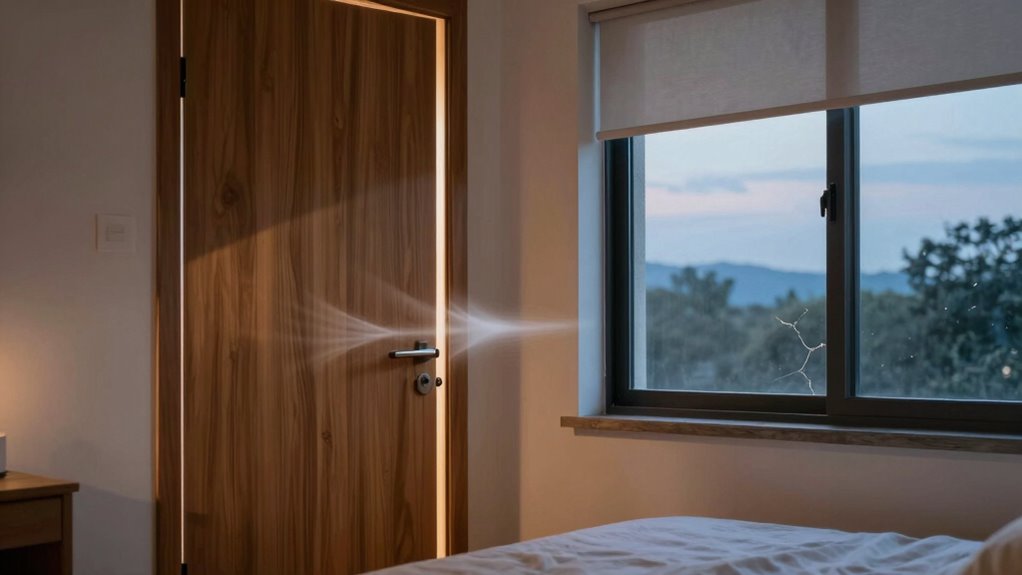
Upgrading your doors and windows is one of the most effective ways to block out unwanted noise from entering your bedroom. Start by installing solid core doors with decorative door panels to reduce sound transmission. Consider replacing old windows with double-glazed or acoustic models for better sound insulation. Additionally, enhance your window treatments with thick curtains or soundproof blinds to dampen noise further. Here are some ideas:
- Use decorative door panels that add style and improve soundproofing.
- Opt for double-glazed or acoustic windows for maximum noise reduction.
- Add layered window treatments like heavy curtains and blinds to block residual noise.
- Incorporate easy document management strategies to organize and track your renovation progress and materials, ensuring a smooth upgrade process.
These upgrades make a noticeable difference in creating a quieter, more peaceful bedroom environment.
Improve Your Bedroom’s Sound Environment

To truly enhance your bedroom’s sound environment, focus on reducing the impact of residual noise and creating a tranquil atmosphere. Acoustic treatments like wall panels, rugs, and curtains absorb sound waves, preventing echoes and muffling outside noise. Consider installing sound masking devices that emit gentle, consistent background sounds, which help drown out distracting noises and promote relaxation. Combining these strategies creates a more serene space, making your bedroom a true sanctuary. Keep in mind, effective acoustic treatments are customizable, so choose options that fit your room’s layout and your comfort preferences. Regularly adjusting sound masking levels ensures ideal noise coverage. Additionally, selecting air purifiers with quiet operation can further improve your environment by reducing airborne irritants and maintaining a peaceful atmosphere. By integrating acoustic treatments and sound masking, you’ll profoundly improve your bedroom’s sound environment, making it a peaceful retreat from external disturbances.
Maintain and Reassess Your Soundproofing Over Time
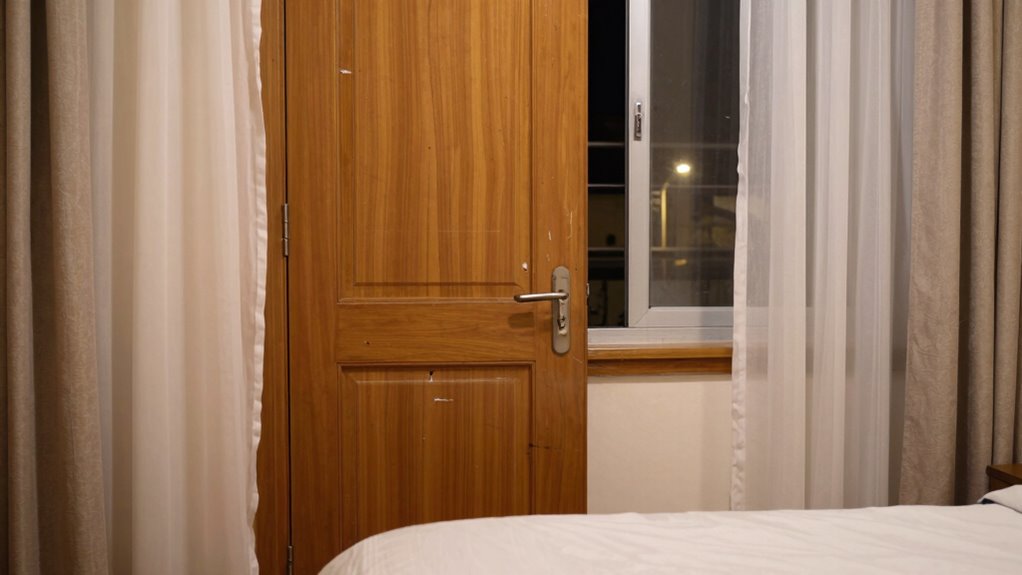
As time passes, your bedroom’s soundproofing efforts can shift from effective to less so, making regular maintenance essential. Seasonal adjustments can impact how well your soundproofing works, especially with temperature and humidity changes. To keep noise leaks minimal, you should consistently monitor noise sources and evaluate your setup. Incorporating smart home technology can help automate and optimize your soundproofing adjustments for better long-term results. Here’s what to do:
- Check for gaps or cracks around doors and windows, especially after seasonal shifts.
- Adjust or add weatherstripping and seals as needed to maintain a tight barrier.
- Reassess your soundproofing materials periodically to ensure they’re still effective against new noise sources or environmental changes.
Regularly monitoring noise sources and making small adjustments helps sustain a quiet, peaceful bedroom environment over time.
Frequently Asked Questions
How Often Should I Recheck My Bedroom’s Soundproofing Measures?
You should recheck your bedroom’s soundproofing measures at least every three to six months. During these checks, focus on door seal maintenance to ensure the seals are intact and functioning properly. Also, regularly verify your window lock checks to make sure they’re secure, preventing noise leaks. Consistent inspections help catch any wear or damage early, maintaining a quiet, peaceful space.
Are There Specific Door or Window Materials Better for Noise Reduction?
Think of your door frame and window glass as the gatekeepers of peace. Solid wood or metal frames excel at blocking noise, unlike lightweight or hollow ones. When it comes to glass, thicker, laminated, or double-glazed options outperform single-pane varieties for soundproofing. Choosing these materials can markedly reduce noise leaks, creating a quieter sanctuary that keeps outside disturbances out and your tranquility in.
Can Interior Modifications Significantly Improve Bedroom Soundproofing?
Yes, interior upgrades can considerably improve your bedroom’s soundproofing benefits. Adding materials like acoustic panels, foam tiles, or mass-loaded vinyl absorbs sound and reduces noise leaks. Sealing gaps around doors and windows enhances effectiveness. You’ll notice a quieter space, less disturbance from outside noise, and a more peaceful environment. These modifications are cost-effective and straightforward, making a big difference in your bedroom’s sound insulation.
What Are Cost-Effective Ways to Reduce Noise Leaks Without Replacing Doors or Windows?
Want to silence your noisy bedroom without breaking the bank? You can use door draft stoppers to block sneaky gaps and add weatherstripping for a quick fix. For windows, try affordable film options that stick easily and reduce sound leaks. These simple tricks cost less than a fancy coffee and make your space much quieter. Who knew peace and quiet could be so budget-friendly?
How Do External Noise Sources Impact the Effectiveness of Bedroom Soundproofing?
External noise impact can markedly reduce your soundproofing effectiveness. When loud outside sounds, like traffic or neighbors, are strong, they can penetrate even well-insulated doors and windows. This makes your bedroom less quiet and peaceful. To improve, consider adding heavy curtains, sealing gaps around windows, and using soundproofing materials inside your room. These steps help block external noise impact and enhance your overall soundproofing effectiveness.
Conclusion
Now, as you meticulously seal every gap and upgrade your doors and windows, you might find yourself ironically longing for the gentle hum of city life or the distant chatter of neighbors—anything but the silence you’ve created. Yet, in this pursuit of perfect quiet, remember that sometimes, a little noise is just the reminder that life’s still happening outside your perfectly soundproofed sanctuary. Embrace the peace, and maybe, occasionally, let a little noise slip in.
Cold & flu season Picks
humidifiers
As an affiliate, we earn on qualifying purchases.