
To interpret CO2, VOC, and PM levels confidently, start by understanding what each indicator means and consult established standards as benchmarks. Keep calm and recognize that minor fluctuations are normal, focusing on gradual improvements. If levels remain high despite ventilation or cleaning, consider seeking professional help. Staying informed and using trustworthy tools helps prevent panic, and if you keep reading, you’ll discover simple ways to manage your indoor air safely.
Key Takeaways
- Understand that elevated CO2 indicates ventilation issues, not toxicity; focus on improving airflow rather than alarm.
- Use established guidelines to interpret VOC and PM levels as normal, moderate, or high, avoiding overreaction to minor changes.
- Regularly calibrate and maintain sensors to ensure accurate readings, preventing misinterpretation due to faulty data.
- Recognize that small fluctuations are normal; assess trends over time instead of reacting to single measurements.
- When in doubt, consult professionals if levels remain high or symptoms appear, rather than self-diagnosing or panicking.

BREATHE Airmonitor Plus: Smart Air Quality Monitor Indoor – 8-in-1 CO2 Meter, Formaldehyde Detector, VOC Meter, PM1/2.5/10, Temperature & Humidity – Air Quality Tester for Home with App
PROFESSIONAL INDOOR AIR QUALITY MONITORING: Accurately track CO₂, PM1, PM2.5, PM10, TVOC, Formaldehyde (HCHO), Temperature and Humidity in…
As an affiliate, we earn on qualifying purchases.
As an affiliate, we earn on qualifying purchases.
What Do CO2, VOC, and PM Levels Tell You About Your Indoor Air
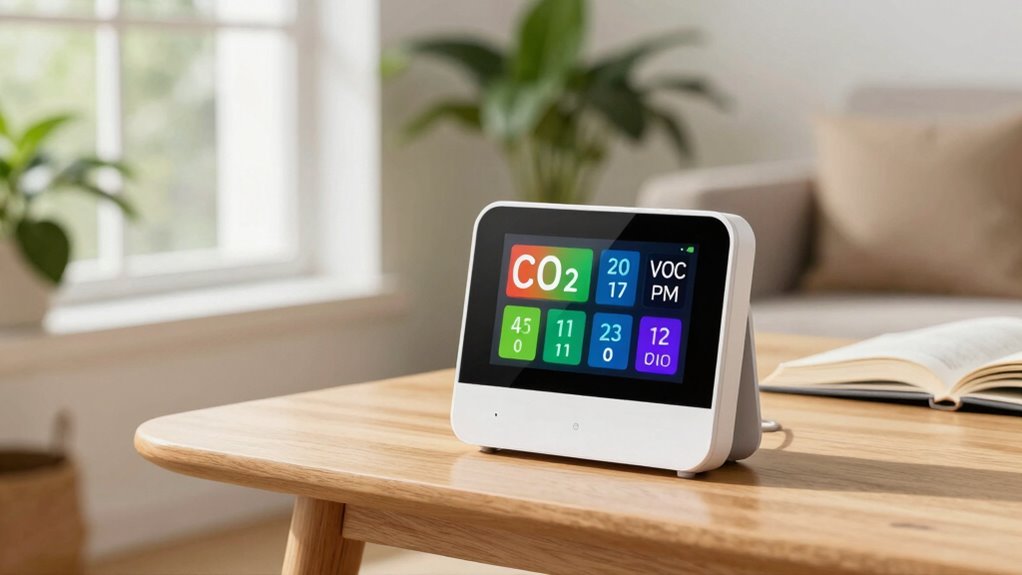
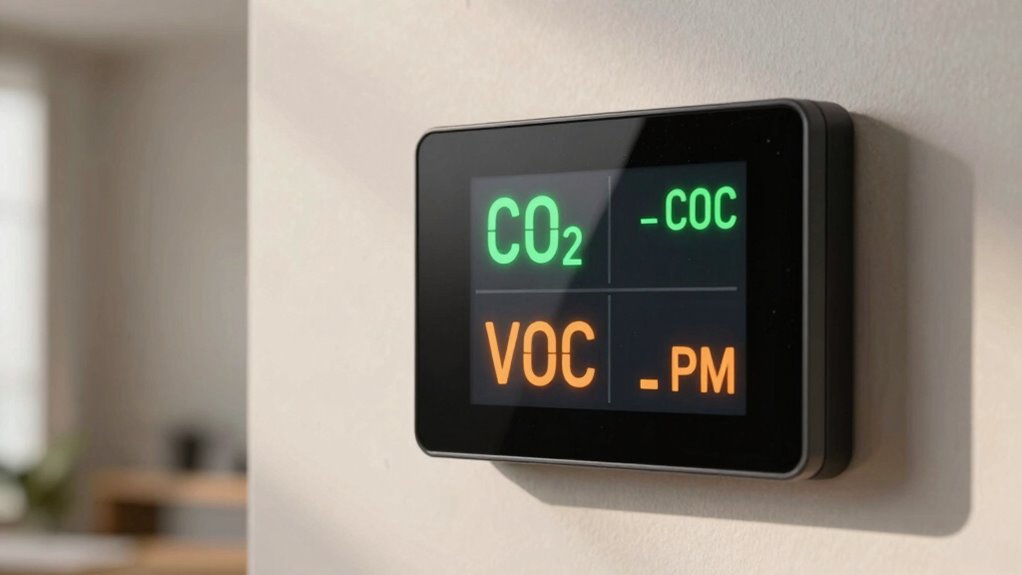
Understanding what CO2, VOC, and PM levels reveal about your indoor air can help you identify potential health risks and improve your environment. Many air quality myths suggest that high readings always mean immediate danger, but context matters. For example, elevated CO2 levels often indicate poor ventilation rather than toxic pollution. VOC and PM levels can point to indoor sources like cleaning products or dust. Accurate readings depend on proper sensor calibration, so verify your devices are correctly set up for reliable data. Recognizing what these numbers mean helps you make informed decisions about ventilation or air purification. Proper monitor calibration is essential for ensuring your readings are accurate and meaningful. Regular sensor maintenance can prevent drift and ensure your data remains reliable. Remember, a high number isn’t inherently alarming—it’s about understanding what the readings indicate and acting accordingly to maintain a healthy indoor environment. Additionally, understanding Free Floating particles can help you better interpret PM measurements and manage indoor air quality effectively. Being aware of Indoor air dynamics can also enhance your ability to respond to changing air quality conditions. Moreover, understanding how air circulation patterns influence pollutant distribution can help optimize your indoor environment.

16 in 1 Air Quality Monitor Indoor 7" Large Display 9 AQI+7 Alerts, CO2 Monitor Air Quality Tester for CO2, TVOC, PM2.5 PM1.0 PM10, HCHO Temperature Humidity AQI & Time Air Quality Meter for Home
【16-in-1 Air Quality Monitor Indoor】Experience the ultimate indoor air quality monitoring with our 16-in-1 Air Quality Monitor, offering…
As an affiliate, we earn on qualifying purchases.
As an affiliate, we earn on qualifying purchases.
How to Interpret Your Air Quality Readings Calmly and Accurately

When you check your air quality readings, it’s important to stay calm and avoid jumping to conclusions. Many air quality myths can lead you astray, making you worry unnecessarily. Remember, sensors need regular calibration to provide accurate readings; a high VOC number doesn’t always mean immediate danger. To interpret your data accurately, consider this table:
| Reading Level | Interpretation | Action Needed |
|---|---|---|
| Normal | No cause for concern | Maintain current habits |
| Moderate | Slightly elevated, monitor | Increase ventilation |
| High | Potential health risk | Investigate sources, consider calibration |
Understanding these points helps you stay grounded and prevents panic, ensuring you respond effectively without overreacting. Also, keep in mind that sensor accuracy can vary, so understanding how your device functions is key to making informed decisions. Additionally, recognizing that air quality standards are guidelines rather than strict thresholds can help you interpret readings more calmly. Being aware of sensor calibration needs can further improve your confidence in the data you receive. Moreover, knowing that external factors like wave and wind can influence sensor readings allows for better contextual understanding of your air quality data. It’s also helpful to remember that external environmental factors can cause fluctuations in sensor readings, so consider this when evaluating your air quality.

CO2 Meter Portable CO2 Detector Digital CO2 Monitor with Alarm Function Carbon Dioxide Temperature and Humidity Meter, NDIR CO2 Sensor Indoor Air Quality Monitor for Home Office Grow Room
HIGH PRECISION: The CO2 Detector is euipped with high accurate sensative chip, the accuracy of CO2 level is:…
As an affiliate, we earn on qualifying purchases.
As an affiliate, we earn on qualifying purchases.
Simple Steps to Improve Your Indoor Air Based on Your Readings
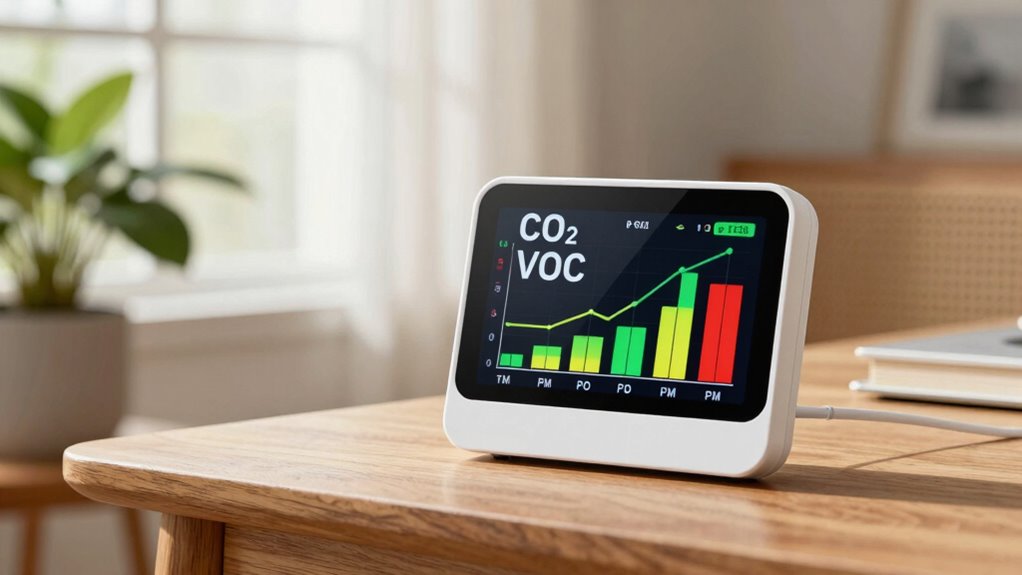
If your air quality readings show elevated levels of CO2, VOCs, or PM, taking targeted steps can considerably improve your indoor environment. Start with air filter maintenance by replacing or cleaning filters regularly to trap pollutants effectively. Implement ventilation strategies like opening windows or using exhaust fans to reduce indoor contaminants and increase fresh air circulation. Consider using air purifiers with HEPA filters to capture fine particles and VOCs. Keep indoor spaces clutter-free to minimize dust buildup. Avoid stagnation by scheduling regular airflow exchanges, especially in rooms with high occupancy or pollutant sources. Additionally, understanding the importance of whole-house filtration systems can help you address multiple pollutants efficiently. Regular maintenance and monitoring of your air quality devices can further optimize your efforts. Proper air purifier placement around your home can improve overall effectiveness and prevent airflow obstructions. Using air quality monitors to track changes over time helps you gauge the effectiveness of these steps, ensuring your indoor air quality remains safe and comfortable. Incorporating smart ventilation controls can further automate and optimize airflow based on real-time readings. These simple actions make a significant difference in creating a healthier indoor environment.
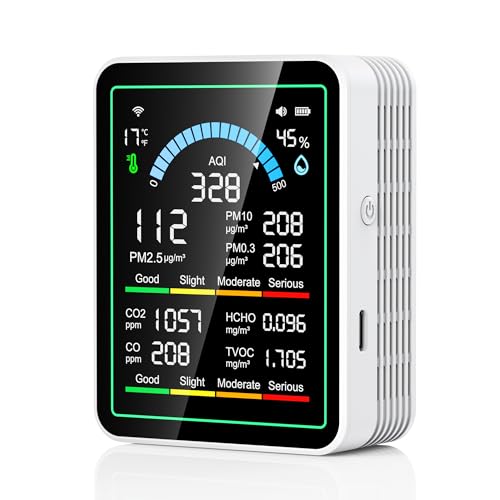
Air Quality Monitor Indoor, 10 in 1 Portable Smartair Quality Tester for CO2 | CO | TVOC | HCHO | Temp | AQI | PM0.3-1 Detection Hum for Home Cars Plants, Pets, Car, Hotel
【10-in-1 Smart Air Quality Monitor: Your All-Round Environmental Guardian】 This portable intelligent air quality tester delivers ultra-precise multi-gas…
As an affiliate, we earn on qualifying purchases.
As an affiliate, we earn on qualifying purchases.
Tips for Using Air Quality Monitors Without Stress
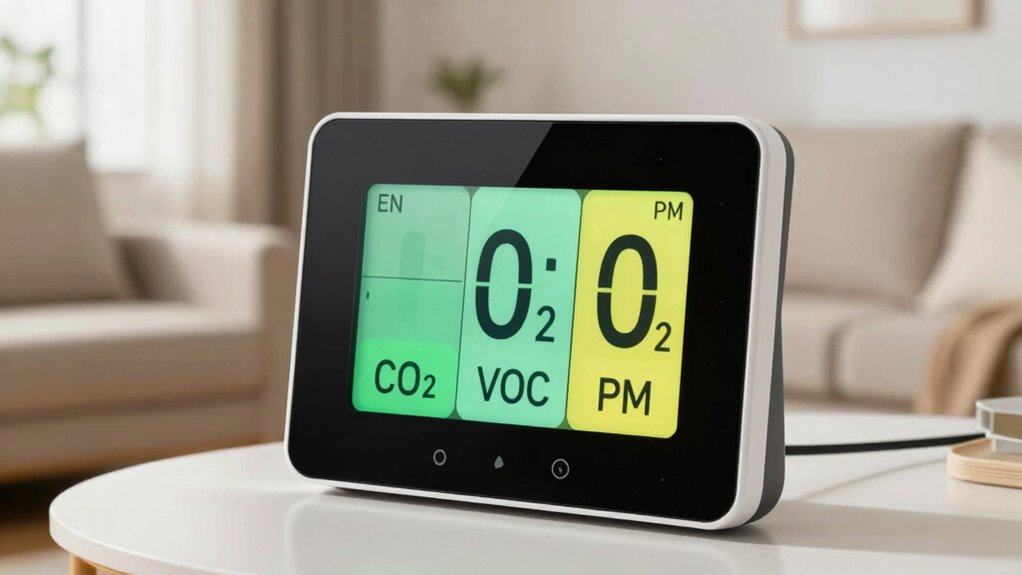
Using air quality monitors can feel overwhelming, but you can keep stress at bay by focusing on simple, consistent habits. Regular sensor calibration guarantees your device provides accurate readings, so you don’t second-guess the data. Set a routine for checking your monitor, rather than obsessing over every fluctuation. Data logging helps you track trends over time, giving you a clearer picture of your indoor air quality without reacting to short-term spikes. Remember, minor variations are normal; don’t panic over every number. Instead, use the data as a guide to make gradual improvements. Staying calm and consistent with calibration and logging helps you interpret your readings accurately and confidently, reducing unnecessary stress and empowering you to maintain healthier indoor air. Clear, trustworthy information can help you feel more confident in understanding what your monitor is telling you. Additionally, understanding energy efficiency in ceiling fans can contribute to overall comfort and air quality improvements in your space. Incorporating Indigenous wellness practices into your routine can also support a holistic sense of well-being, reinforcing a balanced approach to health and environment. Being aware that ear wax odor can vary and sometimes signal health issues encourages you to stay attentive without panic. Recognizing the importance of local environmental factors can further help interpret your air quality data more accurately.
When to Seek Professional Help or More Advanced Testing
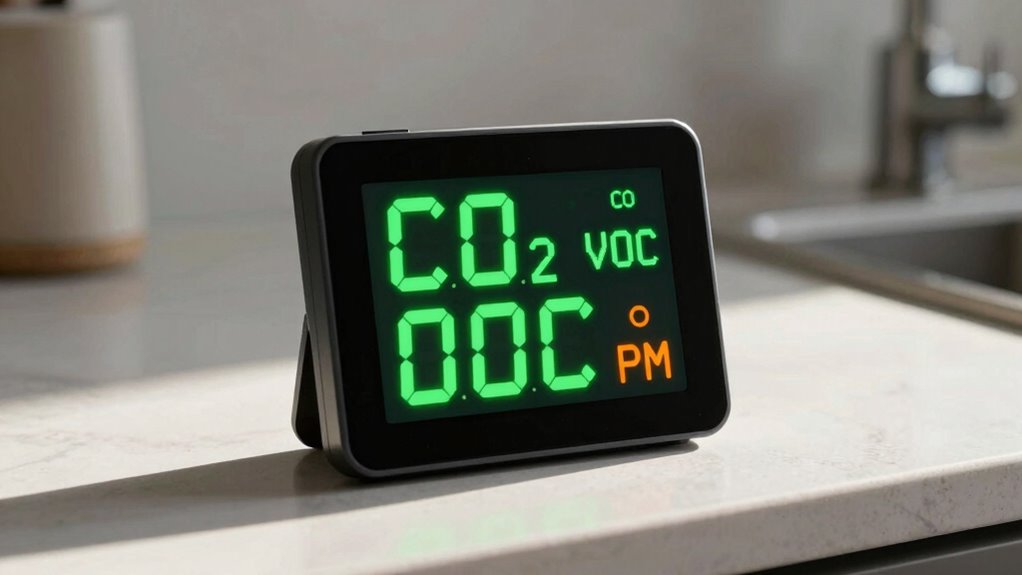
While home air quality monitors provide valuable insights, there are times when their readings may indicate the need for professional help or more advanced testing. If you notice consistently high levels of CO2, VOCs, or PM that don’t improve with ventilation or cleaning, it’s time to seek a professional assessment. Trusted experts can perform advanced testing to identify hidden sources of pollutants and assess your indoor environment more accurately. Additionally, if symptoms like headaches, dizziness, or respiratory issues persist despite improving air quality, professional help becomes essential. Relying on trained specialists ensures you get a thorough analysis and targeted solutions. Don’t ignore persistent or alarming readings—comprehensive indoor air testing is vital for ensuring a safe, healthy home. For enhanced accuracy, cybersecurity measures can also protect your data during remote assessments or digital monitoring. Being aware of indoor air quality standards can also guide you in recognizing when levels are dangerously high and require intervention.
Frequently Asked Questions
How Often Should I Check My Indoor Air Quality Levels?
You should check your indoor air quality levels at least once a month to spot air quality trends and catch any potential issues early. Regular monitoring helps you notice changes that might require adjusting ventilation or cleaning. Also, make certain your monitor stays accurate by calibrating it periodically, following the manufacturer’s instructions. Consistent checks and proper calibration keep you informed and in control of your indoor environment.
Can Low CO2 Levels Still Indicate Poor Air Quality?
Like the myth of the shining knight, low CO2 levels can sometimes mislead you into thinking the air is perfect, but that’s an air quality misconception. Monitoring limitations mean that solely tracking CO2 doesn’t reveal all pollutants, so poor air quality can still exist despite low readings. Always consider other measurements like VOCs and PM, and maintain good ventilation to truly assess and improve your indoor environment.
Are There Specific Times of Day When Readings Are More Accurate?
You’ll get the most accurate readings early in the day, typically before outdoor influence increases. To guarantee accuracy, calibrate your sensor regularly and avoid taking measurements during extreme outdoor pollution or weather changes. Midday readings can be affected by outdoor influence like traffic or weather, so for best results, measure indoors when outdoor conditions are stable. Proper sensor calibration helps maintain consistent, reliable readings throughout different times of the day.
How Do Weather Conditions Affect Indoor Air Quality Readings?
They say “a chain is only as strong as its weakest link,” and weather conditions can weaken your indoor air quality readings. Humidity impact and temperature fluctuations influence CO2, VOC, and PM levels, making readings less reliable during extreme weather. High humidity can boost VOCs and PM, while temperature swings may cause sensor inaccuracies. Keep windows closed during storms and monitor weather forecasts to better interpret your air quality data.
What Common Household Items Can Skew Air Quality Monitor Results?
Household chemicals and personal care products can skew your air quality monitor results. When you use air fresheners, cleaning sprays, or lotions, they release VOCs that may temporarily raise VOC readings. Burning candles or using aerosol sprays can also affect PM levels. To get accurate results, ventilate your space before testing and avoid using these products right before or during your measurements.
Conclusion
Remember, your air quality readings are like a weather forecast for your home—they guide you, not dictate your mood. With a calm mind and a clear plan, you can navigate these numbers like a seasoned sailor steering through a gentle breeze. Don’t let the figures become storms in your mind; instead, see them as signals guiding you toward a healthier, more comfortable space. Trust your actions, and breathe easy knowing you’re in control.