The ideal bedroom humidity is between 40% and 60%, creating a comfortable and healthy environment. This range helps prevent dry skin, respiratory irritation, and mold growth while making the room feel just right—neither too damp nor too dry. Keeping humidity within this spectrum improves sleep quality and supports overall well-being. If you want to find out how to maintain this balance effortlessly, there’s plenty more to explore.
Key Takeaways
- The ideal bedroom humidity range for comfort and health is between 40% and 60%.
- Maintaining this range helps prevent dryness, irritation, mold, and dust mites.
- Proper humidity enhances sleep quality by regulating body temperature and keeping air moist.
- Use hygrometers to monitor humidity levels and adjust with humidifiers or dehumidifiers.
- Consistently maintaining 40-60% humidity creates a healthier, more comfortable sleeping environment.

TempPro TP50 Digital Hygrometer Indoor Thermometer Room Thermometer and Humidity Gauge with Temperature Humidity Monitor(Previously ThermoPro)
Wellness Indicator: This humidity meter with humidity level icon indicates air conditions – DRY/COMFORT/WET, allowing this humidity sensor…
As an affiliate, we earn on qualifying purchases.
As an affiliate, we earn on qualifying purchases.
Why Humidity Matters in Your Bedroom Environment
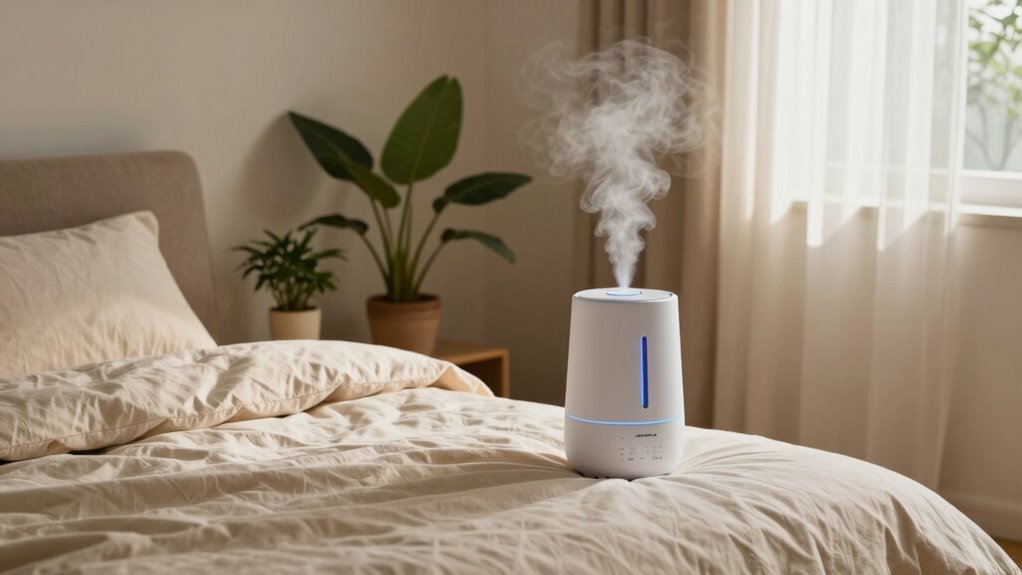
Maintaining the right humidity level in your bedroom is essential for a comfortable and healthy environment. Proper humidity improves air quality by reducing airborne allergens, dust, and mold growth. When humidity is too low, your air becomes dry, leading to irritation of your respiratory system and skin. Conversely, high humidity can cause excess moisture, encouraging mold and dust mites, which can worsen allergies. Humidity directly influences temperature control; dry air feels cooler, while moist air feels warmer. By managing humidity levels, you enhance overall air quality, making your room more comfortable. Indoor humidity levels play a crucial role in maintaining a healthy bedroom environment. Keeping humidity in check is a key step toward creating an ideal sleeping environment, especially with smart humidity control devices that help maintain optimal levels automatically. Additionally, using humidifiers and dehumidifiers can help you achieve and sustain the perfect balance. Proper ventilation and air circulation are also important factors in maintaining stable humidity levels.

DREO Humidifiers for Bedroom, 3L Top Fill 30H & 26dB Quiet Runtime for Large Room, Cool Mist Ultrasonic Humidifier with Humidity Sensor, Night Light for Home, Baby, Nursery, Plants, 360° Nozzle, Black
𝐅𝐨𝐫𝐠𝐞𝐭 𝐚𝐛𝐨𝐮𝐭 𝐜𝐨𝐧𝐬𝐭𝐚𝐧𝐭 𝐫𝐞𝐟𝐢𝐥𝐥𝐬: With a 3L tank and convenient top-fill design, this humidifier large room for baby…
As an affiliate, we earn on qualifying purchases.
As an affiliate, we earn on qualifying purchases.
What Is the Ideal Range of Humidity for Better Sleep?
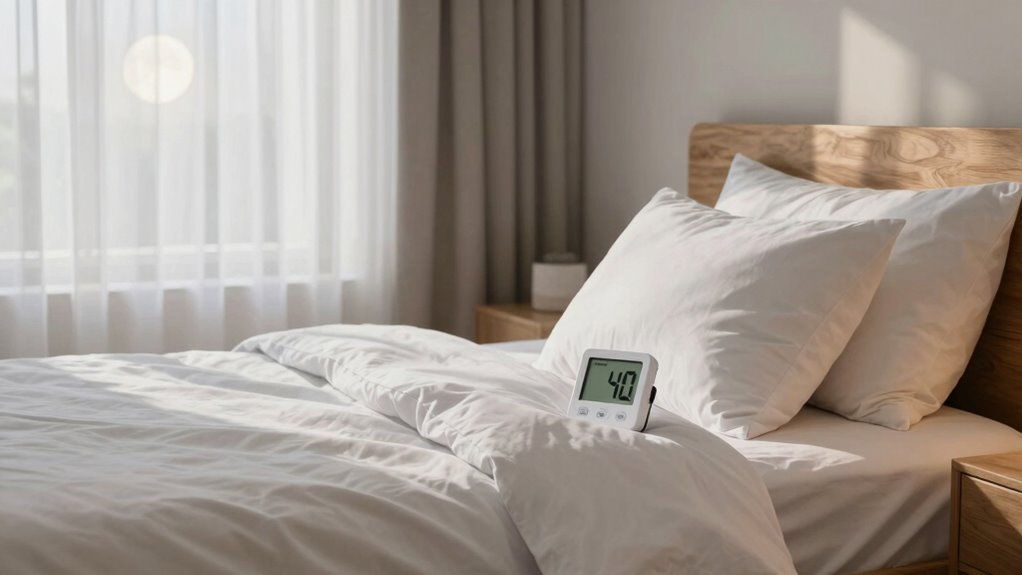
To achieve better sleep, keeping your bedroom humidity between 40% and 60% is essential. This range helps optimize sleep quality by preventing dryness that can cause discomfort and irritation. When humidity is too low, you might wake up with a sore throat or dry skin, disrupting restful sleep. Conversely, excessive humidity can promote mold growth and dust mites, which negatively impact respiratory health. Maintaining this balance supports clear breathing and reduces allergy symptoms, making it easier to fall asleep and stay asleep. Using a hygrometer can help you monitor humidity levels accurately. Adjust your environment with a humidifier or dehumidifier as needed. Staying within this ideal range guarantees your sleep environment promotes both comfort and respiratory well-being. Additionally, controlling indoor air quality can be significantly improved by managing humidity levels, which is crucial for indoor environmental health. Proper humidity control methods can help maintain this balance effectively. Monitoring indoor humidity is a key part of indoor air quality and everyday safety and health.

PSOS Dehumidifier, Dehumidifiers for Home, 98 OZ Water Tank, (1000 sq.ft) Quiet Dehumidifier for Basement Bedroom Bathroom with Humidity Display, Auto Shut Off, Relaxing 7 Color Ambient Light(Gray)
【Upgrade High Efficient Home Dehumidifier】PSOS dehumidifier utilize dual semiconductor condensation technology, ensuring quiet operation while effectively extracting moisture…
As an affiliate, we earn on qualifying purchases.
As an affiliate, we earn on qualifying purchases.
How Does Humidity Influence Your Sleep and Well-Being?
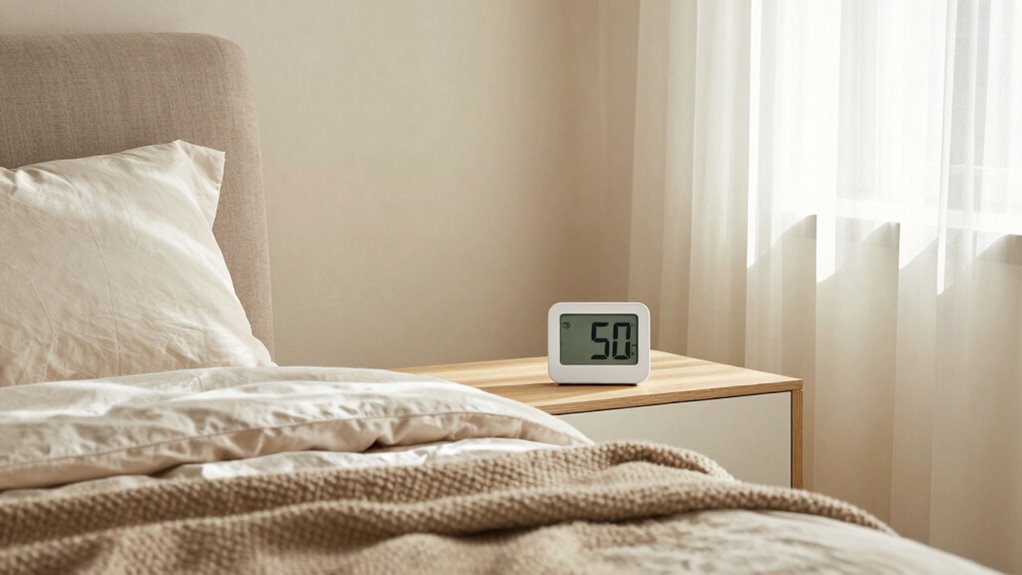
Humidity levels directly impact your sleep quality and overall well-being by influencing your body’s comfort and respiratory health. When humidity is too low, your skin and mucous membranes dry out, making it harder to breathe comfortably and increasing the chances of waking up feeling dehydrated. Conversely, high humidity can cause your breathing to become labored and promote mold or dust mites, which can irritate your respiratory system. Proper humidity helps regulate your body temperature and keeps your airway passages moist, leading to more restful sleep. Maintaining the ideal range ensures you breathe easier throughout the night, reduces disruptions, and supports better respiratory health. When your environment hits the right humidity, your sleep becomes deeper, more restorative, and your overall well-being improves. Understanding humidity is essential for creating a sleep-friendly environment that promotes comfort and health.
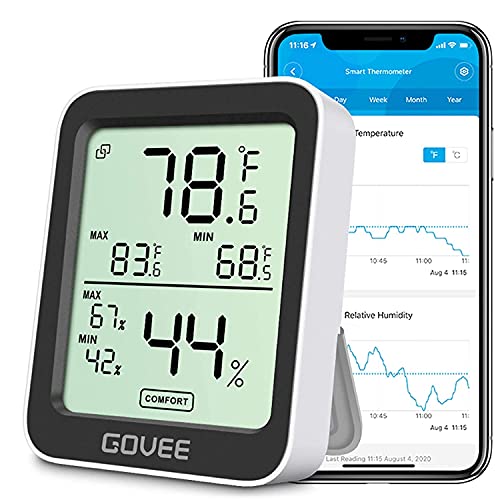
Govee Digital Hygrometer Indoor Thermometer Room H5075, Bluetooth Temperature Humidity Meter with 164ft Remote App Control, Notification Alerts, 2 Years Data Storage Export for Bedroom, Wine Cellar
Smart Features: The Govee Wireless Thermometer Hygrometer supports all basic functions as well as smart functions such as…
As an affiliate, we earn on qualifying purchases.
As an affiliate, we earn on qualifying purchases.
How Can You Tell If Your Bedroom’s Humidity Is Too Low or Too High?
You can often feel if your bedroom’s humidity is off, like noticing static electricity or dry skin. Monitoring with hygrometers or other devices helps you get precise readings of your humidity levels. Recognizing these signs and measurements guarantees your room stays comfortable and healthy. Regularly checking and maintaining your air purifier can also help optimize air quality and humidity levels in your space. Additionally, understanding the humidity range that promotes comfort can guide you in making adjustments to achieve the ideal environment. For example, maintaining a comfortable horsepower level in your room can influence overall air moisture and temperature balance.
Recognizing Physical Signs
When your bedroom’s humidity levels are off, your body often gives clear signals. If you notice dry skin, chapped lips, or a sore throat, your moisture levels might be too low. Conversely, if you’re experiencing stuffiness, mold, or lingering dampness, humidity could be too high. Physical discomfort like frequent nasal congestion or itchy eyes also indicates imbalance. Here’s a quick guide:
| Sign | Too Low Humidity | Too High Humidity | Ideal Range |
|---|---|---|---|
| Skin & Lips | Dry, cracked | Oily, clammy | Smooth, well-hydrated |
| Breathing | Sore throat, congestion | Stuffy, dampness | Comfortable, clear |
| Allergies & Mold | Increased allergy symptoms | Mold growth, musty odor | Minimal allergens, fresh air |
| Overall Comfort | Physical discomfort | Sweaty, sticky | Balanced, cozy |
Recognizing these signs helps you maintain optimal comfort and moisture levels.
Monitoring With Devices
To accurately determine if your bedroom’s moisture levels are off, using a hygrometer or other monitoring devices provides clear, objective data. Smart sensors are especially helpful, offering real-time readings and alerts if humidity falls outside the ideal range. When using a hygrometer, verify proper calibration to maintain accuracy; this involves adjusting it according to manufacturer instructions or comparing it to a known accurate device. Regular calibration helps prevent misleading readings that could cause unnecessary concern or neglect. Monitoring devices make it easy to track fluctuations over time, allowing you to adjust humidifiers or dehumidifiers accordingly. Additionally, understanding household humidity levels and how they impact comfort can help you maintain an optimal environment. Recognizing humidity fluctuations can alert you to potential issues before they affect sleep quality. Properly managing indoor environmental conditions ensures your space remains healthy and comfortable year-round. By consistently checking your bedroom’s humidity with reliable tools, you can maintain a comfortable, healthy environment and avoid the discomfort of too low or too high moisture levels.
What Tools Help You Measure Bedroom Humidity Accurately?
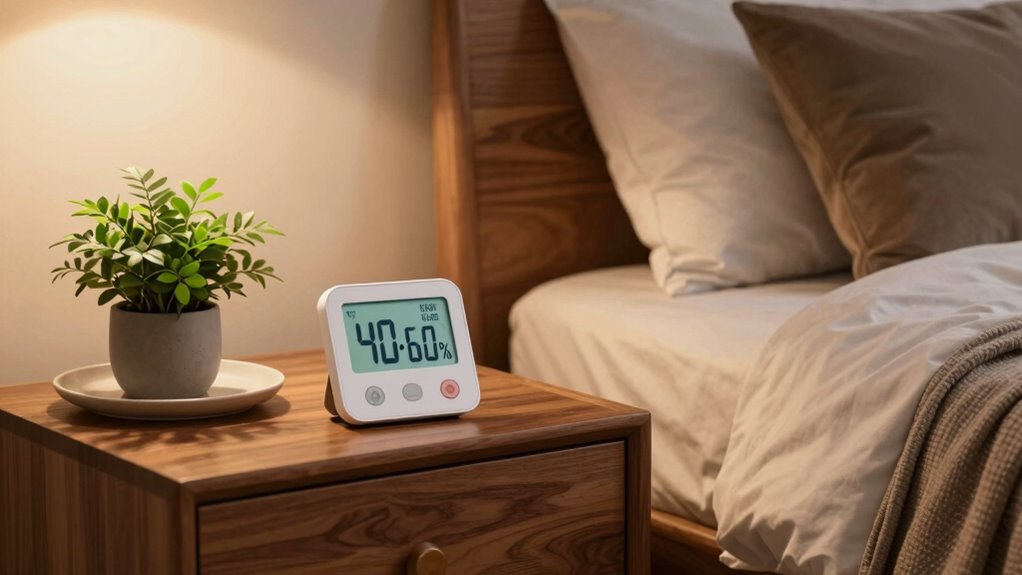
Accurately measuring bedroom humidity is essential for maintaining ideal comfort and health. To do this effectively, you need a reliable hygrometer. When choosing one, consider hygrometer accuracy, as some models provide more precise readings than others. Digital hygrometers typically offer higher accuracy and easy-to-read displays, making them a popular choice. Analog hygrometers, on the other hand, are straightforward and don’t require batteries but can be less precise and harder to read at a glance. Whichever type you select, guarantee it’s calibrated correctly for the most accurate measurements. Using a quality hygrometer helps you monitor humidity levels consistently, allowing you to make informed adjustments for a comfortable and healthy bedroom environment. Proper calibration ensures your readings remain reliable over time. Additionally, understanding humidity levels can help prevent issues like mold growth or dry skin, contributing to overall wellbeing. Regularly checking air quality indicators can further support maintaining a healthy sleeping environment. Incorporating humidity control devices such as humidifiers or dehumidifiers can help you maintain these optimal levels more effectively. Monitoring air quality can also provide insight into other environmental factors affecting sleep quality and health.
How Can You Increase Humidity When the Air Is Too Dry?
When the air feels too dry, you can boost humidity by using a humidifier to add moisture directly to the room. Incorporating indoor plants or drying clothes indoors also helps release additional humidity naturally. These simple methods can quickly improve your bedroom’s comfort level.
Use Humidifiers Effectively
If the air in your bedroom feels dry and uncomfortable, using a humidifier can quickly restore the proper moisture level. To use it effectively, place the humidifier on a flat surface away from your bed, and keep it clean to prevent mold or bacteria growth. Use distilled or filtered water to improve air quality and avoid mineral buildup. Monitor humidity levels with a hygrometer, aiming for 40-60%. Proper humidity enhances sleep quality and reduces respiratory irritation.
| Tip | Benefit |
|---|---|
| Keep humidifier clean | Prevents bacteria and mold |
| Use distilled water | Improves air quality |
| Maintain 40-60% humidity | Optimizes sleep and comfort |
| Position away from bed | Ensures even moisture distribution |
Incorporate Indoor Plants
Incorporating indoor plants is an effective natural way to boost humidity levels in your bedroom. As plants release moisture through a process called transpiration, they naturally increase plant humidity in your space. Choose varieties like pothos, ferns, or peace lilies, which thrive indoors and help maintain a balanced environment. Placing several plants in your room can create a noticeable difference in moisture levels, making the air feel fresher and more comfortable. Regular watering is key to maximizing this effect, but avoid overwatering to prevent mold. Not only do indoor plants improve humidity, but they also add aesthetic appeal and improve air quality. By integrating plants into your bedroom, you create a more inviting, healthier space with naturally enhanced humidity.
Drying Clothes Indoors
Drying clothes indoors is a simple and effective way to boost humidity levels in your bedroom, especially during dry seasons or in spaces with low moisture. When you hang clothing to dry inside, the moisture from the fabric evaporates into the air, naturally increasing humidity. This method not only saves energy but also helps with moisture control in your room. To maximize humidity, spread out clothing so it dries faster and releases more moisture. Keep windows slightly open if possible, to allow fresh air circulation and prevent excess dampness. Be mindful not to over-dry clothes, which can lead to too much humidity and mold. Using indoor clothing drying strategically helps maintain a comfortable, balanced environment in your bedroom.
What Are the Best Ways to Lower Excess Humidity in Your Bedroom?
Excess humidity in your bedroom can lead to discomfort and potential health issues, but there are effective ways to reduce it quickly. Ventilation strategies are your first line of defense; opening windows or using exhaust fans helps exchange moist indoor air with drier outdoor air. Seasonal adjustments also matter: during humid months, run the air conditioner or dehumidifier more frequently, and in cooler months, ensure proper airflow to prevent moisture buildup. Keep doors open to promote air circulation, and consider using moisture-absorbing products like silica gel or activated charcoal. Regularly monitor your humidity levels with a hygrometer to stay within the ideal range. These steps swiftly lower excess moisture, making your bedroom more comfortable and healthier.
How Do You Keep Your Bedroom’s Humidity Levels Consistent?
Maintaining consistent humidity levels in your bedroom requires ongoing monitoring and adjustments. To ensure good air quality and preserve your bedroom decor, consider these tips:
- Use a hygrometer to track humidity levels regularly.
- Adjust your ventilation by opening windows when needed.
- Keep plants that naturally regulate humidity nearby.
- Manage your thermostat and avoid rapid temperature swings.
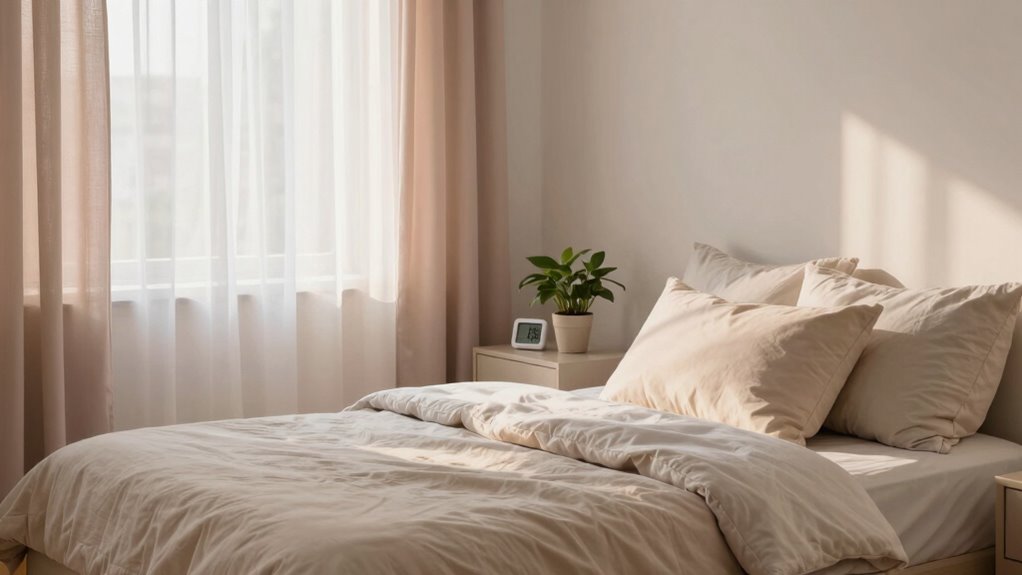
- Incorporate breathable bedding and curtains to support stable humidity.
These small steps help you maintain a comfortable environment, prevent mold or dryness, and keep your bedroom decor looking fresh. Monitoring humidity guarantees your air quality stays ideal, which directly impacts your comfort and health. Regular adjustments keep your bedroom feeling just right, no matter the season.
Do You Need a Humidifier or Dehumidifier? Choosing the Right Device
Choosing between a humidifier or dehumidifier depends on your bedroom’s current humidity levels and your comfort needs. If the air feels dry, a humidifier adds moisture, which can help with breathing and comfort. Conversely, if the air is too moist, a dehumidifier reduces excess humidity, preventing mold and musty odors. Consider how your air purifier fits into this setup; some models include humidity control features, simplifying device management. Additionally, your mattress selection influences comfort—selecting a breathable mattress can complement humidity regulation by preventing moisture buildup. Assess your room’s humidity regularly to determine which device best suits your needs. Properly balancing humidity guarantees a healthier, more comfortable sleep environment tailored to your preferences.
What Are Simple Tips for a Comfortable, Healthy Sleep Environment
Creating a comfortable, healthy sleep environment starts with paying attention to your bedroom’s humidity levels. Proper humidity enhances sleep comfort and makes your room more inviting. To improve your space, consider these simple tips:
- Keep your room well-ventilated to promote fresh air and better room aesthetics.
- Use soft, breathable bedding to regulate moisture and temperature.
- Minimize clutter to create a calming atmosphere that promotes relaxation.
- Adjust lighting to match your sleep routine, enhancing comfort.
- Incorporate soothing colors and decor that foster a peaceful vibe.
These small adjustments can make a big difference in how you feel when you wake up, helping you enjoy a restful night in a space that’s both functional and visually pleasing.
Frequently Asked Questions
Can High Humidity Cause Mold Growth in Bedrooms?
Yes, high humidity can cause mold growth in bedrooms. When humidity levels stay above 60%, mold spores thrive and spread, risking your health and damaging your space. To prevent mold, focus on humidity control by using dehumidifiers and ensuring proper ventilation. Regularly check for dampness or condensation, and clean any mold spots promptly. Keeping humidity balanced helps protect your bedroom and promotes a healthier environment.
How Does Seasonal Change Affect Ideal Bedroom Humidity?
Seasonal fluctuations markedly impact your bedroom’s humidity levels. In winter, you might need a humidifier to add moisture, while summer may require a dehumidifier or increased ventilation to reduce excess humidity. To maintain comfort, use humidity control methods like a hygrometer to monitor levels and adjust your devices accordingly. Staying aware of seasonal changes helps you keep your bedroom within the ideal humidity range for better sleep and health.
Is There a Risk of Dust Mites at Specific Humidity Levels?
Think of humidity levels as a dance floor—too humid, and dust mites thrive; too dry, and they’re less active. At humidity thresholds above 60%, the dust mite risk skyrockets, increasing allergy symptoms. Maintaining your bedroom between 40-50% keeps these pests at bay, creating a healthier environment. So, keep an eye on those levels to prevent dust mites from turning your space into their favorite hangout.
Can Plants Help Regulate Bedroom Humidity Naturally?
Yes, plants can help regulate your bedroom humidity naturally. As they grow, they release moisture through a process called transpiration, which helps maintain humidity balance. Just make certain your plants are healthy, as stressed or overwatered plants won’t function well. Choose humidity-loving plants like ferns or pothos for better moisture levels, and regularly monitor plant health to support a comfortable, balanced environment.
How Long Does It Take to Adjust Bedroom Humidity Levels Effectively?
Ever wonder how long it takes to balance your bedroom’s humidity? It usually takes about a few hours to a day, depending on factors like room size and airflow. Using humidity sensors helps you monitor levels precisely, while good air circulation speeds up the process. Keep adjusting your humidifier or dehumidifier accordingly, and you’ll notice a comfortable environment in no time, like a invigorating gust of fresh air.
Conclusion
Keeping your bedroom humidity just right is key to restful sleep and overall health. Use the right tools, stay vigilant, and make adjustments as needed. Remember, a healthy environment is the foundation for a good night’s sleep—after all, “A stitch in time saves nine.” When you prioritize your comfort, you’ll wake up feeling refreshed and ready to face the day. Your best sleep begins with a balanced, cozy space.