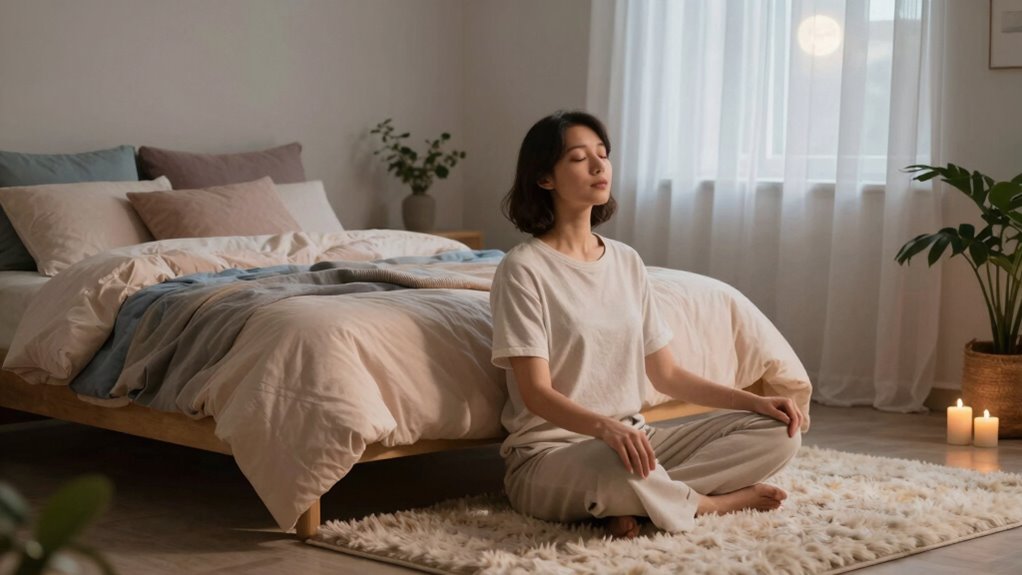

To wind down at bedtime, try diaphragmatic breathing by focusing on deep belly breaths, which relaxes your body. The 4-7-8 technique also helps you fall asleep faster by combining slow inhalations, holds, and long exhalations. Box breathing offers a calming rhythm, while alternate nostril breathing balances your nervous system. Counting your breaths keeps your mind focused and prepares you for restful sleep. Keep exploring these techniques to discover what works best for you.
Key Takeaways
- Diaphragmatic breathing promotes relaxation by engaging the belly and reducing shallow chest breathing before sleep.
- The 4-7-8 technique calms the nervous system, helping you fall asleep faster with rhythmic inhalation and exhalation.
- Box breathing (4-4-4-4) creates a steady pattern that reduces stress and fosters tranquility at bedtime.
- Alternate nostril breathing balances the nervous system, easing anxiety and promoting restful sleep.
- Breath counting encourages mindfulness and focus, signaling the body to relax and prepare for sleep.

Bas Rutten O2Trainer: Breathing Muscle Training Device | Lung Power & Endurance Tool for Athletes, Singers & High-Altitude Performance | Diaphragmatic Respiratory Trainer | 16 Resistance Caps | Blue
DESIGNED BY UFC LEGEND BAS RUTTEN: Created by world champion fighter and conditioning expert Bas Rutten, the O2Trainer…
As an affiliate, we earn on qualifying purchases.
As an affiliate, we earn on qualifying purchases.
How to Practice Diaphragmatic Breathing to Relax Before Bed
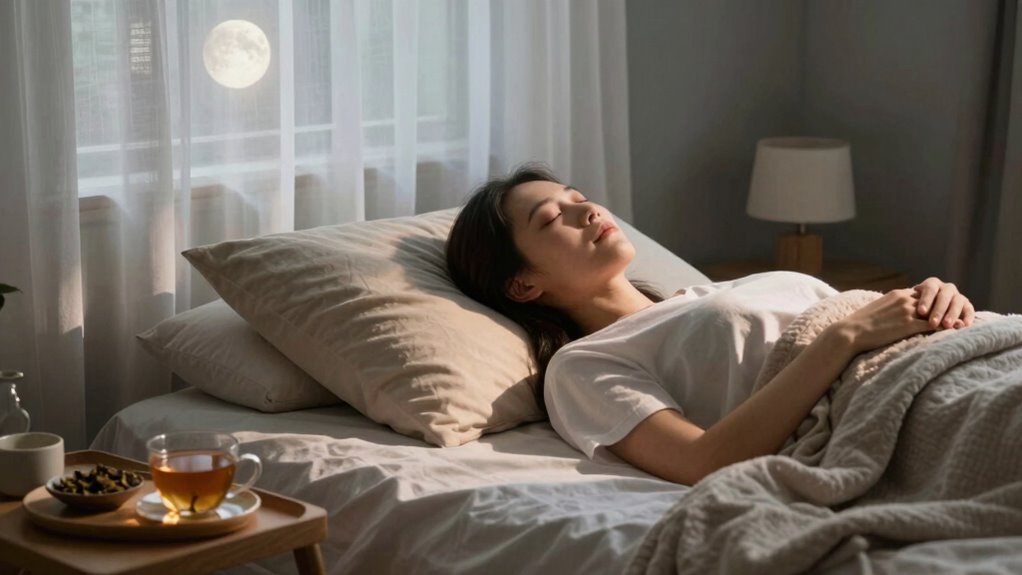
To effectively relax before bed, practicing diaphragmatic breathing can be highly beneficial. Begin by focusing on diaphragm engagement; place one hand on your chest and the other on your belly. As you breathe in slowly through your nose, aim to expand your abdomen rather than your chest, ensuring your diaphragm does the work. Use breath counting to maintain a steady rhythm—inhale for a count of four, then exhale for a count of four. This controlled breathing encourages relaxation and reduces tension. Keep your shoulders relaxed and avoid shallow chest breathing. Incorporating modern relaxation techniques can further enhance your pre-sleep routine. With regular practice, you’ll notice your breathing becomes deeper and more diaphragmatic, helping your body shift smoothly into a restful state before sleep.

Lalifebuss Mindfulness 'Breathing Yoga', 4-7-8 Guided Visual Meditation Breathing Light, Calm Your Mind for Stress & Anxiety Relief/Learn Deep Breathing for Adults Kids Social Emotional Learning
Mindfulness Breathing Yoga: 4-7-8 Iconic Breathing Method Guide Buddy. Daily guided breathing to help calm & focus your…
As an affiliate, we earn on qualifying purchases.
As an affiliate, we earn on qualifying purchases.
Using the 4-7-8 Breathing Technique to Fall Asleep Faster
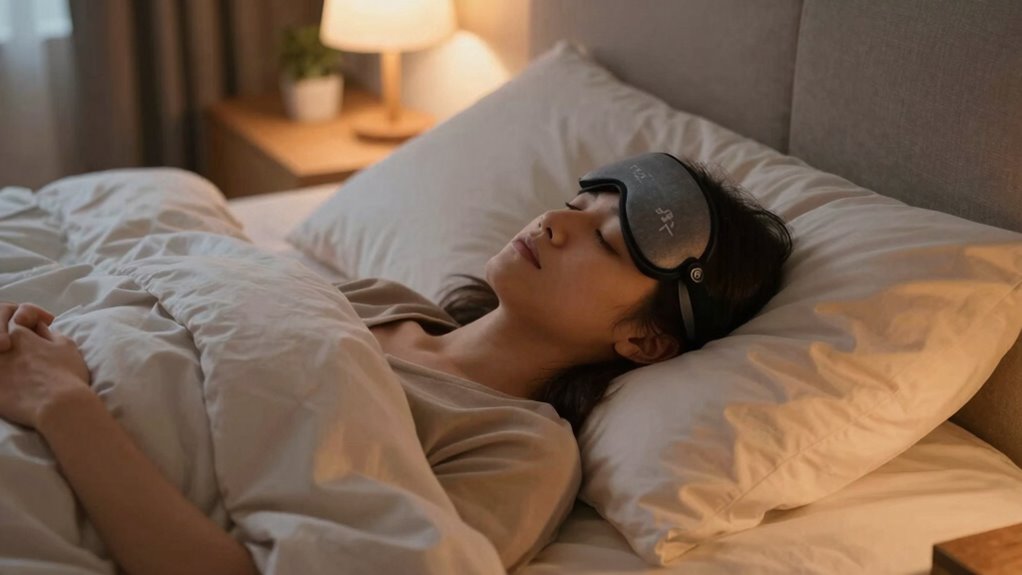
Building on your diaphragmatic breathing practice, the 4-7-8 technique offers a simple yet powerful way to fall asleep faster. This method improves your breathing patterns, promoting better sleep quality by calming your nervous system. To try it, breathe in quietly through your nose for a count of four. Hold your breath for seven seconds, allowing your body to relax. Then, exhale completely through your mouth for eight seconds, releasing tension. Repeat this cycle four times, especially when you’re lying in bed feeling restless. The rhythmic breathing helps slow your heart rate and quiet your mind, making it easier to drift off. Consistently practicing proper breathing techniques can enhance your sleep over time. Incorporating the 4-7-8 technique into your nightly routine can markedly enhance your sleep quality over time.

Speaking Breathing Lamp with Guided Meditation & Calming Light | Stress & Anxiety Relief Tool for Adults & Kids | Box Breathing, Sleep, Relaxation & Focus Exercise Device | Self Care Gift
GUIDED BREATHING & VISUAL MEDITATION – NOW WITH VOICE GUIDANCE: Your Breathing Buddy is an improved mindfulness tool…
As an affiliate, we earn on qualifying purchases.
As an affiliate, we earn on qualifying purchases.
Try Box Breathing to Reduce Stress and Calm Your Mind

When stress or racing thoughts keep you awake, practicing box breathing can help calm your mind and reduce tension. This technique promotes stress reduction and enhances mental clarity. To do box breathing, inhale slowly for four seconds, hold your breath for four seconds, exhale for four seconds, then hold again for four seconds. It creates a simple, rhythmic pattern that soothes your nervous system. Visualize this pattern with the table below:
| Step | Duration | Focus |
|---|---|---|
| Inhale | 4 seconds | Fill your lungs, relax your mind |
| Hold (pause) | 4 seconds | Maintain calmness |
| Exhale | 4 seconds | Release tension, clear your thoughts |
Regular practice helps center your mind before sleep, fostering tranquility and restful sleep. Incorporating energy-efficient techniques like box breathing aligns with sustainable wellness practices that care for both your mental health and the environment.
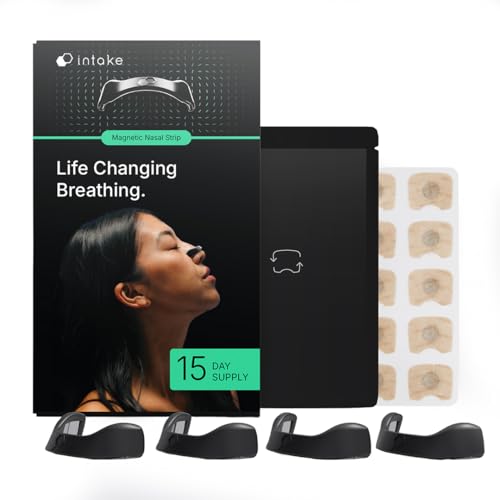
Intake Breathing Magnetic Nasal Strips Starter Kit (15 Count, Black) – Boost Oxygen Intake, Reduce Snoring, Improve Sleep Quality – Sweat Resistant, Nasal Strips – Extra Strength Snoring Solution
PATENTED TECHNOLOGY – Intake is a patented two-part nasal dilator system that features two independent nasal strips (Tabs)…
As an affiliate, we earn on qualifying purchases.
As an affiliate, we earn on qualifying purchases.
Balance Your Nervous System With Alternate Nostril Breathing

Balancing your nervous system before bed can considerably improve your relaxation and sleep quality. One effective way to do this is through alternate nostril breathing, which helps regulate your nervous system by calming overstimulation. To practice, sit comfortably, close your right nostril with your thumb, and inhale slowly through your left nostril. Then, close your left nostril with your ring finger, release your right nostril, and exhale through it. Repeat this pattern, switching nostrils with each breath. This technique activates the parasympathetic nervous system, promoting relaxation and reducing stress. Regular practice can lead to a more balanced nervous system, easing your shift into restful sleep. Incorporating nostril breathing into your bedtime routine can be a simple yet powerful way to enhance your overall sleep quality. Trusted gadget insights can also help you discover tools like guided breathing apps to support your practice.
Count Your Breath to Focus and Ease Into Sleep
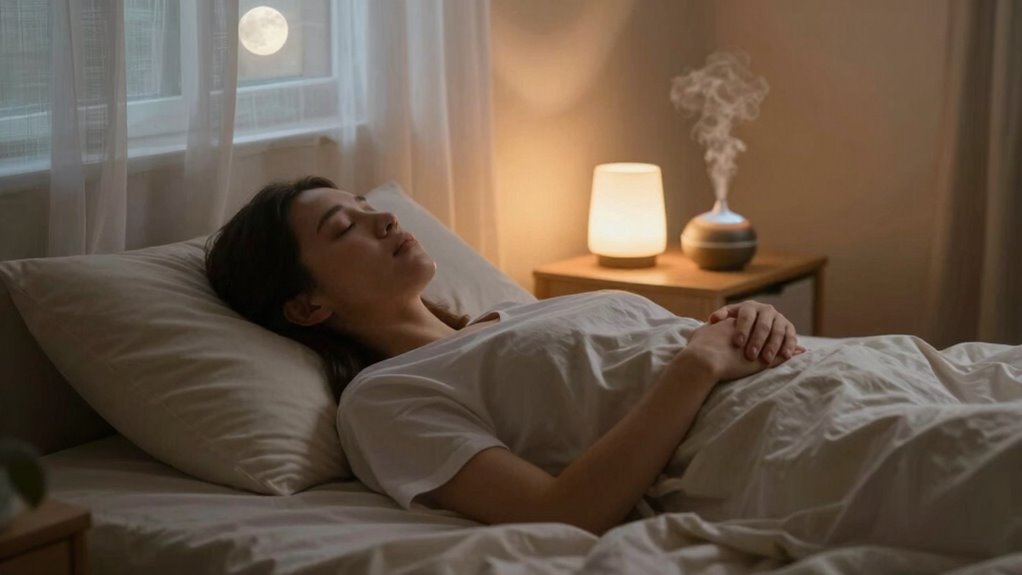
Counting your breath is a simple yet effective way to quiet your mind and prepare for restful sleep. By practicing breath awareness, you focus your attention on each inhale and exhale, reducing racing thoughts. Start by taking slow, mindful inhaling, noticing the sensation of air filling your lungs. As you breathe out, gently count each breath—one on the inhale, two on the exhale, and so on. This counting anchors your mind, making it less likely to wander. If your thoughts drift, softly redirect your focus back to your breath and the counting. Over time, this practice calms your nervous system, easing you into sleep naturally. Counting breaths helps you develop a gentle rhythm that signals your body it’s time to rest. Practicing mindfulness techniques like this can also improve overall sleep quality and relaxation.
Frequently Asked Questions
Can Breathing Exercises Improve Sleep Quality Long-Term?
Yes, breathing exercises can improve your sleep quality long-term by enhancing relaxation techniques and supporting better sleep hygiene. When you regularly practice deep breathing, you reduce stress and calm your mind, making it easier to fall asleep and stay asleep. Incorporate these exercises into your nightly routine, and over time, you’ll notice a positive impact on your overall sleep health, helping you wake up refreshed each morning.
Are There Any Risks Associated With Specific Breathing Techniques?
You should be aware that some breathing techniques may carry risks involved, especially if practiced improperly or with certain health conditions. For example, techniques involving breath-holding could cause dizziness or lightheadedness. To guarantee technique safety, start slowly, listen to your body, and consult a healthcare professional if you have respiratory or cardiovascular issues. Always prioritize gentle, controlled breathing to minimize potential risks involved.
How Often Should I Practice These Exercises for Best Results?
Think of practicing breathing exercises like watering a delicate plant; consistency helps it grow strong. You should aim for daily practice, ideally 10-15 minutes, to see the best results. Stick to a regular schedule with consistency tips like setting a reminder or pairing it with your bedtime routine. This way, your body learns to relax faster, making restful sleep a natural part of your night.
Can Breathing Exercises Replace Medication for Sleep Issues?
Breathing exercises can’t fully replace medication for sleep issues, but they can notably enhance meditation benefits and reduce stress, making it easier to fall asleep naturally. You should view them as a complementary practice rather than a substitute, especially if your sleep problems are severe. Consistent practice helps calm your mind, improve relaxation, and support better sleep hygiene, but always consult a healthcare professional for personalized advice.
What Are Common Mistakes to Avoid When Practicing These Techniques?
Don’t let your technique fall apart like a poorly choreographed dance. Avoid rushing through exercises or holding your breath too long, which can cause dizziness. Focus on maintaining technique consistency and controlling breath hold duration to maximize benefits. A common mistake is overdoing it, so listen to your body. Keep your practice relaxed, steady, and mindful, ensuring each session supports your sleep, not disrupts it.
Conclusion
By trying these breathing exercises, you’ll open a sleep so peaceful, it could rival the silence of a mountain peak at dawn. Whether you prefer diaphragmatic, 4-7-8, box, or alternate nostril breathing, each method helps calm your mind and relax your body. Make these practices your nightly ritual, and watch as your nights transform into a sanctuary of serenity. Sweet dreams await when you breathe mindfully—your ticket to the most restful sleep of your life.