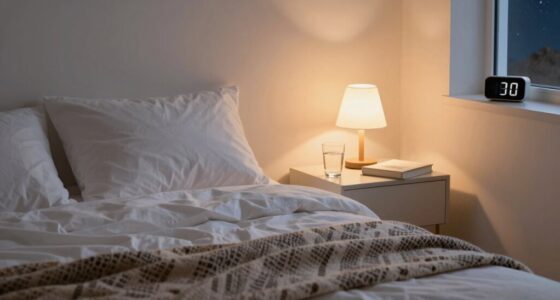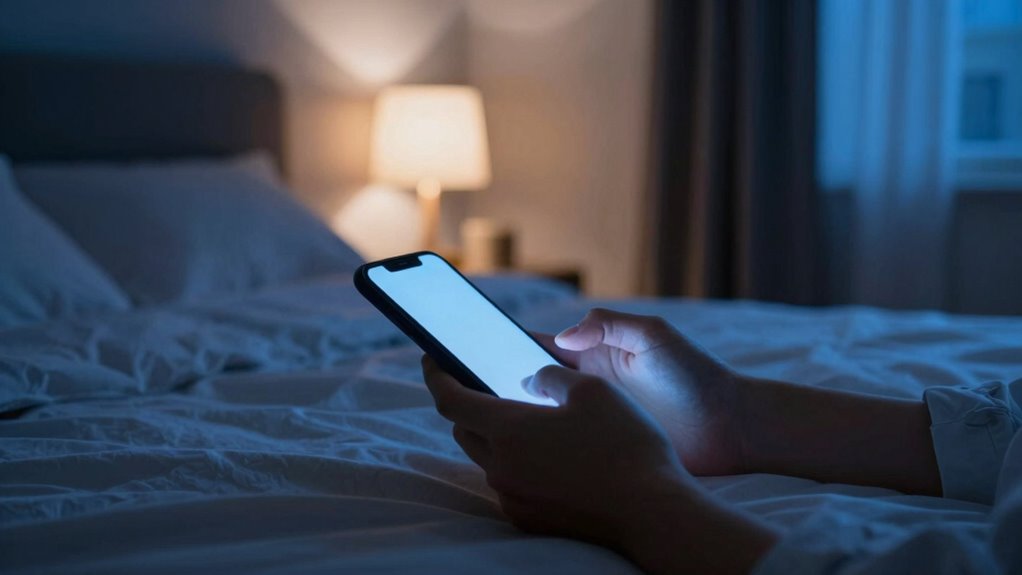

Blue light from screens and artificial sources can disrupt your sleep by suppressing melatonin and delaying sleep onset. While it’s true that limiting screen time before bed and using filters or glasses helps, the overall impact varies based on your habits and sensitivity. Excessive exposure might cause eye strain but is unlikely to cause permanent damage. To learn simple ways to protect your sleep and understand what really matters, keep exploring the details.
What Is Blue Light, and Where Does It Come From?

Blue light is a type of high-energy visible light with a short wavelength, typically between 380 and 500 nanometers. It plays a pivotal role in regulating your circadian rhythms, the internal clock that controls your sleep-wake cycle. When exposed to blue light during the day, your body stays alert and awake. However, excessive exposure at night, especially from artificial sources like screens, can confuse these rhythms. Light pollution from streetlights and electronic devices increases blue light in your environment, making it harder for your body to recognize when it’s time to sleep. Understanding where blue light comes from helps you manage your exposure and protect your sleep patterns. It’s essential to be mindful of these sources, especially in our modern, illuminated world. Additionally, using energy-efficient lighting solutions can help reduce unnecessary blue light exposure and support healthier sleep habits.
How Does Blue Light Disrupt Sleep? The Science Explained
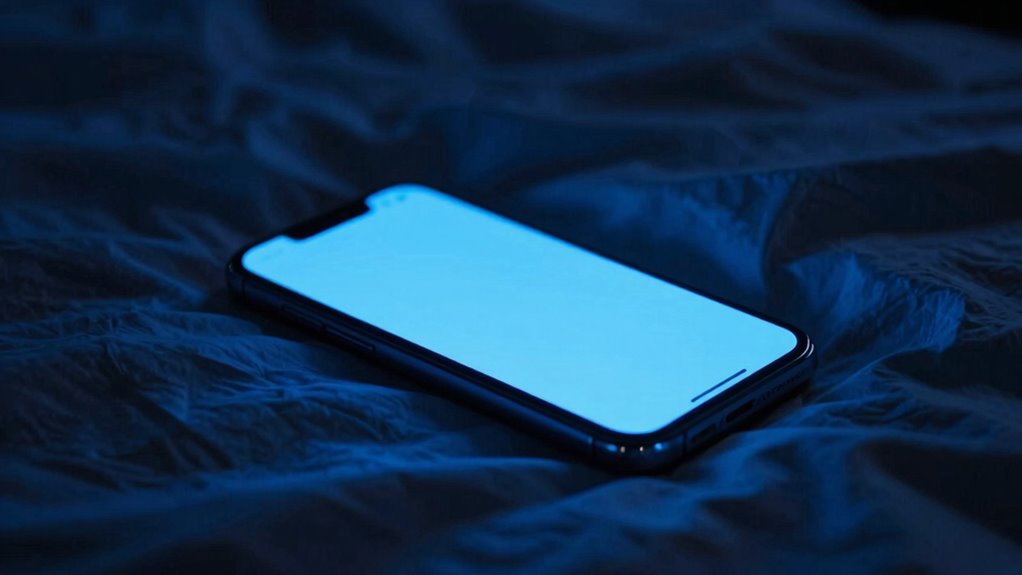
When you’re exposed to blue light at night, it interferes with your body’s natural sleep signals by affecting the production of melatonin, the hormone responsible for making you feel sleepy. This disruption causes circadian misalignment, making it harder to fall asleep and wake up refreshed. Blue light also penetrates your eyes and can cause retinal damage over time, especially with prolonged exposure. To understand this better, consider the following:
| Effect | Cause | Result |
|---|---|---|
| Circadian disruption | Suppressed melatonin | Sleep difficulties |
| Melatonin suppression | Blue light exposure | Reduced sleep quality |
| Retinal damage | High-energy blue light | Eye health risks |
| Sleep cycle shift | Disrupted circadian rhythm | Inconsistent sleep patterns |
Additionally, understanding retinal damage is crucial for protecting long-term eye health. Studies indicate that blue light exposure from screens can accumulate and pose risks to retinal integrity over time, emphasizing the importance of protective measures. Moreover, the intensity of blue light emitted by various devices can vary, affecting the degree of risk involved. New research also suggests that blue light filters and screen time management can mitigate some of these effects, highlighting the value of protective strategies for maintaining eye health.
Why Does Blue Light Suppress Melatonin? The Biological Link

Blue light directly affects your body’s ability to produce melatonin, the hormone that helps you sleep. The specific light spectrum of blue light signals your brain to suppress melatonin production. Understanding this biological link reveals why blue light exposure can interfere with your sleep cycle. Cut Through Tech Clutter helps clarify which technologies truly impact your sleep health.
Melatonin Production Suppression
Research shows that exposure to blue light directly influences your body’s production of melatonin, the hormone responsible for regulating sleep. Blue light impacts your circadian rhythms by signaling that it’s daytime, which suppresses melatonin secretion. Your light sensitivity varies, making you more or less affected by this process. When blue light hits your eyes, it activates photoreceptors that send signals to your brain’s suprachiasmatic nucleus, disrupting melatonin production. This suppression can lead to difficulty falling asleep and poorer sleep quality. To understand how blue light affects you, consider these points:
- It tricks your brain into thinking it’s daytime
- Disrupts your natural circadian clock
- Alters melatonin levels during evening hours
- Increases your light sensitivity at night
- Prolongs wakefulness and delays sleep onset
Light Spectrum Impact
The specific wavelength of blue light makes it particularly effective at suppressing melatonin because it interacts directly with the body’s photoreceptors responsible for regulating sleep-wake cycles. The light spectrum plays a vital role, as blue light’s shorter wavelengths are more readily absorbed by these photoreceptors, especially intrinsically photosensitive retinal ganglion cells (ipRGCs). When exposed to blue light, photoreceptor activation signals your brain that it’s daytime, inhibiting melatonin production. This biological link explains why blue light from screens and artificial lighting can disrupt your sleep, even if you’re not consciously aware of the exposure. Understanding the light spectrum’s impact helps you grasp how specific wavelengths influence your circadian rhythm and sleep quality. Additionally, the light spectrum varies across different sources, which can influence how much melatonin suppression occurs, emphasizing the importance of choosing appropriate lighting in your environment. Recognizing the biological mechanisms behind light’s effect on sleep can empower you to make informed choices about your exposure levels. Furthermore, research indicates that light intensity also plays a role in the degree of melatonin suppression, underscoring the importance of managing both wavelength and brightness in your lighting choices.
Does Screen Time Before Bed Really Affect Sleep? What the Evidence Says

Many people wonder if scrolling through screens before bed really disrupts sleep. Evidence shows that screen exposure before sleep can impact your sleep quality, but the effects vary. Some studies suggest that blue light suppresses melatonin, making it harder to fall asleep, while others find minimal effects. Factors like screen brightness, duration, and individual sensitivity matter. Keep in mind, it’s not just about blue light—overall screen time and your pre-sleep routines also play a role. To clarify:
- Short-term screen use may have little impact for some
- Longer exposure might delay sleep onset
- Blue light is a key factor in melatonin suppression
- Sleep quality can be affected differently from person to person
- Other habits can mitigate or worsen effects of screen exposure before bed
- Proper screen management strategies can help reduce potential sleep disturbances. Additionally, understanding blue light effects and how they interact with your sleep cycle can help you develop better habits. Being aware of light exposure during evening hours can also influence your overall sleep health, as it’s a complex interplay of various factors. Emerging research also suggests that personal differences in sensitivity to light can significantly alter how screen time affects sleep, emphasizing the importance of tailored approaches to sleep hygiene.
How Can You Reduce Blue Light’s Impact on Sleep? Practical Tips
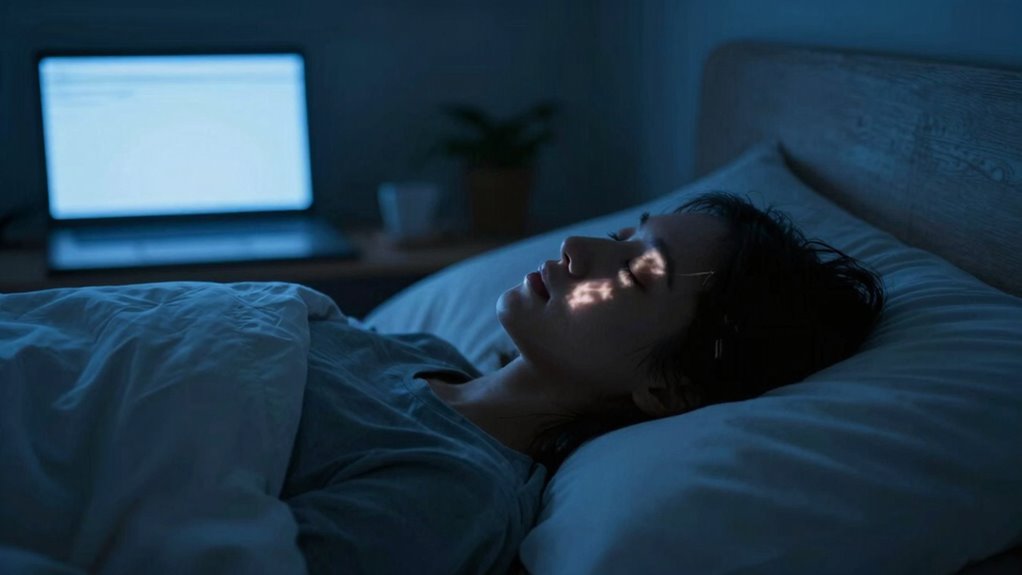
To reduce blue light’s effect on your sleep, start by adjusting your screen settings to lower blue light exposure in the evening. Establishing a consistent bedtime routine can also signal to your body that it’s time to wind down. Small changes like these can make a big difference in improving your sleep quality. Additionally, using screen filters or blue light glasses can further minimize exposure during evening hours. Incorporating smart home lighting that adjusts brightness and color temperature in the evening can also support better sleep patterns. Being mindful of light exposure timing helps your circadian rhythms stay aligned and promotes healthier sleep. Understanding blue light’s impact can help you make informed choices to protect your sleep health.
Adjust Screen Settings
Wondering how to minimize blue light’s interference with your sleep? Adjusting your screen settings can make a big difference in your sleep hygiene. Start by enabling built-in night modes or blue light filters on your devices, which reduce blue light emission during evening hours. You can also manually lower screen brightness to lessen strain. Consider using third-party apps that customize blue light reduction further. Don’t forget to set screens to warmer color temperatures in the evening. Proper screen setup can significantly improve your sleep quality. Additionally, preventative maintenance of your devices, such as keeping software up to date, ensures that blue light filters function optimally. Maintaining device health can also help prevent issues that impair filter performance. Finally, avoid using screens close to bedtime—less blue light exposure helps your body prepare for sleep. Incorporating Free Floating principles into your technology use can also promote healthier habits. These small changes help protect your circadian rhythm, promoting better sleep hygiene and reducing blue light’s impact on your ability to fall asleep peacefully.
Establish Bedtime Routine
Creating a consistent bedtime routine can substantially reduce blue light’s impact on your sleep. Establishing calming bedtime rituals signals your body that it’s time to wind down, helping you fall asleep faster. Avoid screens and bright lights at least an hour before bed, and instead focus on relaxing activities like reading a book or listening to soothing music. Your sleep environment also plays a crucial role; keep the room dark, cool, and quiet to enhance sleep quality. Consider dimming household lights or using blackout curtains to minimize light exposure. By sticking to these routines and optimizing your sleep environment, you create a cue for your body to prepare for restful sleep, reducing the disruptive effects of blue light and promoting better overall sleep health.
Why Is Sleep Hygiene Important for Restful Nights? Beyond Blue Light
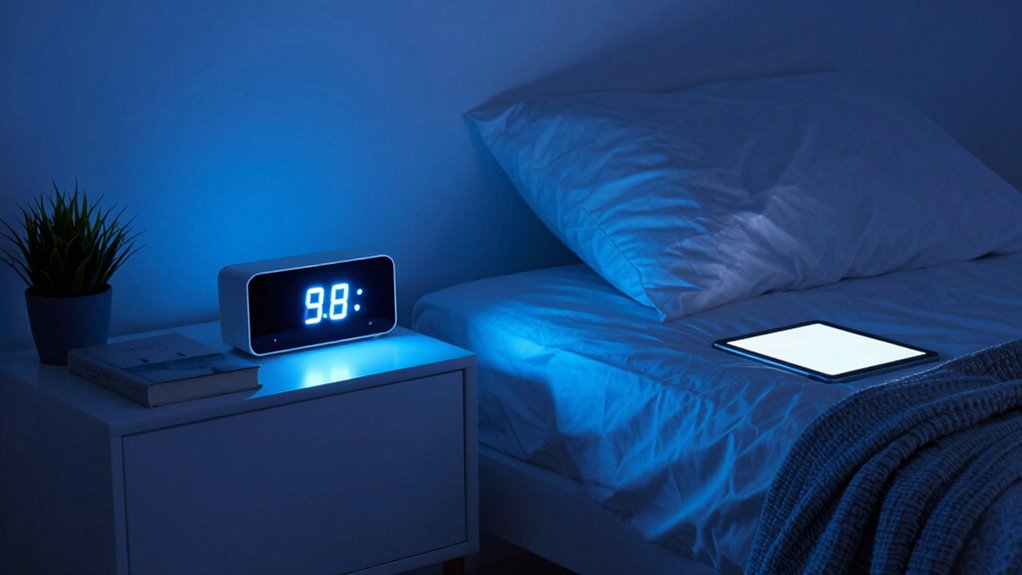
Good sleep depends on more than just limiting blue light exposure; maintaining proper sleep hygiene is essential for achieving restful nights. Your sleep environment influences how easily you fall asleep and the quality of your dreams. To improve your sleep hygiene, focus on:
- Keeping your bedroom cool, dark, and quiet.
- Using a comfortable mattress and pillows.
- Establishing a consistent sleep schedule.
- Avoiding heavy meals or caffeine before bed.
- Creating a relaxing pre-sleep routine.
These habits help signal to your body that it’s time to wind down, enhancing your sleep environment and boosting dream quality. Good sleep hygiene reduces disruptions and helps you wake up refreshed, ensuring your nights are truly restorative beyond just managing blue light exposure.
Should You Be Concerned About Blue Light? Knowing When to Worry
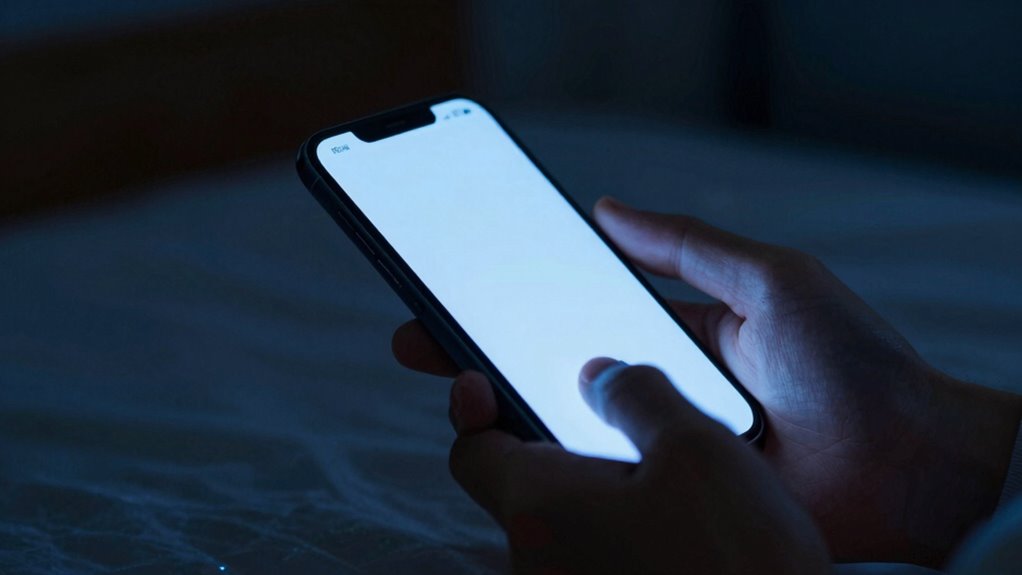
While blue light is a natural part of sunlight and plays a role in regulating your circadian rhythm, concerns about its impact from screens often lead to questions about whether you should worry. Excessive screen brightness can increase eye strain, causing discomfort and temporary vision issues. However, current research suggests that blue light exposure from screens isn’t likely to cause permanent eye damage or significant sleep disruption for most people. To reduce concerns, you can lower your screen brightness, use blue light filters, or take regular breaks. If you experience persistent eye discomfort or sleep problems, consult an eye care professional. Overall, while some precautions help, blue light from screens isn’t something to panic over—mindful usage is enough.
Frequently Asked Questions
Can Blue Light Exposure Vary by Age or Gender?
Yes, blue light exposure can vary by age and gender. Age-related sensitivity means younger people might be less affected, but older adults often experience more disruption to sleep. Gender differences also play a role—research suggests women could be more sensitive to blue light’s effects. You should consider these factors when managing your screen time, especially before bed, to protect your sleep quality.
Are There Any Long-Term Health Effects From Blue Light Exposure?
Long-term health effects from blue light exposure aren’t fully clear yet, but some studies suggest it could cause eye strain and potential damage over time. You might also experience disrupted circadian rhythms, affecting sleep quality and overall well-being. To protect yourself, limit screen time before bed and consider using blue light filters. Staying mindful of blue light’s impact can help you reduce potential risks and maintain better long-term health.
How Do Different Types of Screens Compare in Blue Light Emission?
Different screen technology emits varying levels of blue light within the blue light spectrum. LCD screens generally emit more blue light than e-ink or OLED displays, which tend to produce less. You might notice that LED screens, common in smartphones and computers, emit significant blue light, but newer models often include blue light filters. To protect your eyes and sleep rhythm, consider using screens with reduced blue light emissions or enable built-in filters.
Is Blue Light Exposure Harmful During Daytime Activities?
Blue light exposure during daytime activities isn’t generally harmful and can actually help boost alertness. However, it can cause eye strain and headaches if you spend long hours staring at screens. To reduce discomfort, take regular breaks, adjust screen brightness, and use blue light filters or glasses. Doing so can provide headache relief and protect your eyes without sacrificing productivity or focus during the day.
Are There Specific Devices Designed to Filter Blue Light Effectively?
Think of blue light filtering devices like shields for your eyes. Yes, there are specific devices designed to filter blue light effectively. Blue light glasses with specialized lenses and screen filter apps can reduce exposure during screen time. These tools act like sunglasses for your digital devices, helping you protect your eyes and improve comfort. Using them can make a noticeable difference, especially if you spend long hours in front of screens.
Conclusion
Understanding blue light helps you protect your sleep like a shield. While it does impact melatonin, not all screens or exposure are harmful. Think of blue light as a double-edged sword—you need some for daytime alertness, but too much at night can throw your sleep off course. By practicing good habits and limiting evening screen time, you can keep your sleep in harmony and wake up feeling refreshed, ready to face the day.