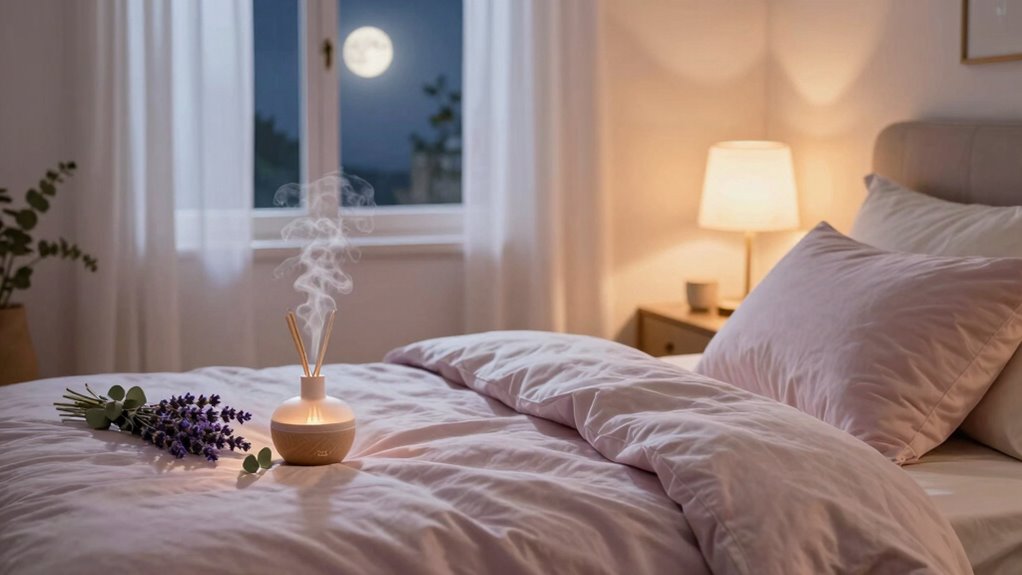

Choosing calming scents like lavender or chamomile can help you relax and fall asleep more easily, while strong or unfamiliar fragrances might irritate your senses and cause disruptions. Personal sensitivities vary, so it’s essential to pick scents that feel soothing for you and avoid overpowering or synthetic scents that can trigger allergies or alertness. If you want to discover more tips on creating the perfect sleep environment, keep exploring how scents influence your rest.
Key Takeaways
- Calming scents like lavender and chamomile promote relaxation and improve sleep quality when used appropriately.
- Overpowering or synthetic fragrances can cause irritation, allergies, or restlessness, disrupting sleep.
- Use diffusers or candles with subtle, familiar scents and limit exposure to prevent olfactory fatigue.
- Avoid scented products if you experience sensitivities, headaches, or respiratory issues near bedtime.
- Personal preferences and sensitivities vary; choose scents that personally promote calmness and avoid irritants.

Majestic Pure Essential Oil with Glass Dropper – 100% Pure and Natural – Essential Oils for Diffuser, Aromatherapy, Soap and Candle Making, Lavender Essential Oil, Lavender Oil, 4 Fl Oz
100% PURE & NATURAL LAVENDER OIL – Majestic Pure Blends oils are exactly that! Many oils being sold…
As an affiliate, we earn on qualifying purchases.
As an affiliate, we earn on qualifying purchases.
How Do Scents Affect Your Sleep?
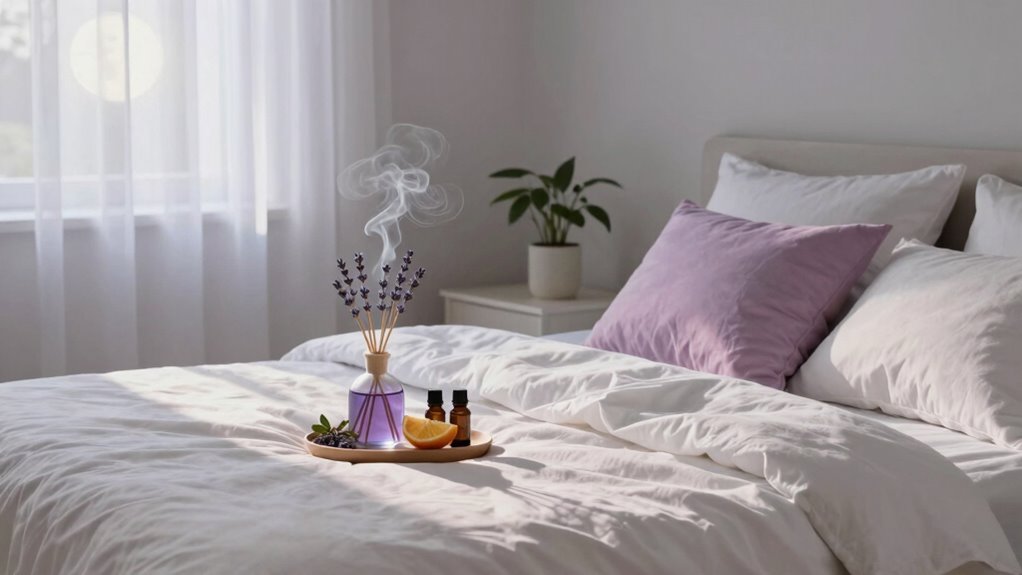
Scents can considerably influence how well you sleep by affecting your brain and nervous system. When you smell a familiar scent, your scent memory triggers emotional responses and relaxation, making it easier to unwind. However, your olfactory system can become desensitized through olfactory fatigue if exposed to a scent for too long, reducing its calming effects. This means that lingering scents might lose their soothing power over time if you don’t change or refresh them. Your brain associates certain smells with comfort or stress, so choosing the right scent can promote better sleep. But be mindful of olfactory fatigue, as it can diminish the scent’s effectiveness, making it harder to relax and fall asleep peacefully. Additionally, understanding filtration systems can help ensure that unwanted odors are minimized, supporting a more restful environment.

Waxcanpy Scented Candle Gift Set, Soy Candles for Women, Sleep Candles for Home Scented, 2 Pack Aromatherapy Candle for Relaxing, Sleep, Stress Relief & Home Decor
【Premium Sleep Aromatherapy Blends】 This candle set includes two calming scents: the white-label “Calm Sleep” candle features a…
As an affiliate, we earn on qualifying purchases.
As an affiliate, we earn on qualifying purchases.
Which Scents Help You Sleep Better?
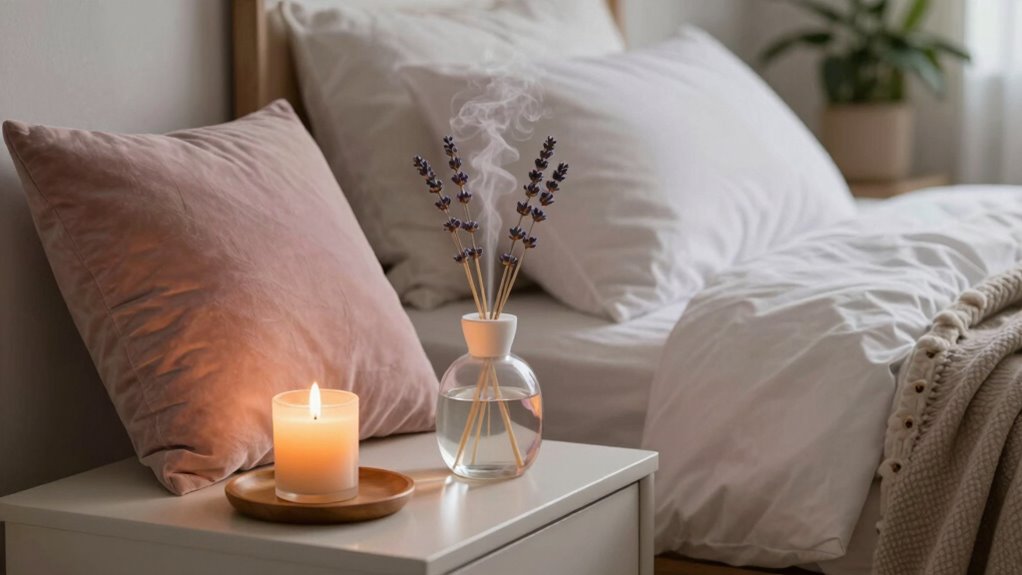
If you want to sleep better, try using calming aromas like lavender or chamomile in your bedroom. Essential oils can create a relaxing environment that signals your mind it’s time to unwind. Incorporating these scents may make falling asleep easier and improve your overall rest. Additionally, avoiding irritating scents such as strong synthetic fragrances can further enhance your sleep quality.
Calming Aromas for Sleep
Many people find that certain aromas can create a calming atmosphere, making it easier to unwind and fall asleep. Aromatherapy plays a key role in enhancing your sleep environment by introducing scents known for their relaxing properties. Lavender is one of the most popular calming aromas, helping to reduce anxiety and promote deeper sleep. Chamomile offers similar benefits, creating a peaceful ambiance that eases your mind. Other scents like vanilla and sandalwood also foster relaxation, helping you wind down after a busy day. Incorporating these aromas into your bedroom, whether through diffusers, candles, or sprays, can transform your sleep environment into a sanctuary of calm. Using at-home skincare devices and diffusers can enhance the effectiveness of these aromas by dispersing them evenly throughout your space. By selecting the right calming aromas, you set the stage for a more restful night.
Essential Oils and Relaxation
Using the right essential oils can considerably boost your relaxation and improve sleep quality. Aroma therapy with scents like lavender, chamomile, and frankincense creates a calming environment that signals your brain to unwind. To maximize their effects, try scent layering—combining complementary oils to deepen relaxation. For example, blend lavender with a touch of bergamot or cedarwood to enhance tranquility. Diffusing these oils before bed or applying them with a diffuser necklace helps establish a soothing atmosphere. Consistent scent layering not only promotes sleep but also helps condition your mind to associate specific aromas with relaxation. Be mindful of the oils you choose, ensuring they’re pure and suitable for sleep, and use them consistently to develop a calming bedtime routine. Additionally, understanding the role of essential oil purity can ensure you experience the full benefits of aromatherapy safely.

ASAKUKI Essential Oils, Essential Oil for Diffusers for Home, Well-Being Kit- Calm Mind, Sweet Dreams, Happy, Relax, Air Freshening, Immunity for Aromatherapy, Humidifiers, Massage, 6x10ml
Essential Oil Blends: Introduce the long-lasting, pleasant, and relaxing aroma to your home with our Well-being aromatherapy diffuser…
As an affiliate, we earn on qualifying purchases.
As an affiliate, we earn on qualifying purchases.
What Scents Could Disrupt Your Sleep?
Certain scents can interfere with your ability to fall asleep and stay asleep through the night. Strong or unfamiliar fragrances might trigger fragrance allergies or cause scent overload, making it harder to relax. Overpowering smells such as synthetic air fresheners or heavily scented candles can create a restless environment. Imagine a bedroom where the air is thick with artificial perfume, cluttered with overwhelming aromas, and your senses are on high alert.
| Fragrance | Effect | Potential Issue |
|---|---|---|
| Synthetic air fresheners | Overstimulation | Scent overload |
| Heavy perfumes | Distraction | Fragrance allergies |
| Strong candles | Restlessness | Scent overload |
| Chemical cleaners | Irritation | Fragrance allergies |

Sleep Essential Oils Set, Natural Essential Oil for Diffusers for Home,6 x 10ml Fragrance Oil Scented Oils, Deep Sleep, Stress Relief, Sweet Dreams, Fresh Breathe,Relaxation Gift for Women and Men
6 Blends for Complete Sleep Wellness: Discover the ultimate solution for restful nights with our sleep essential oil…
As an affiliate, we earn on qualifying purchases.
As an affiliate, we earn on qualifying purchases.
How Do Scents Influence Your Brain and Sleep?
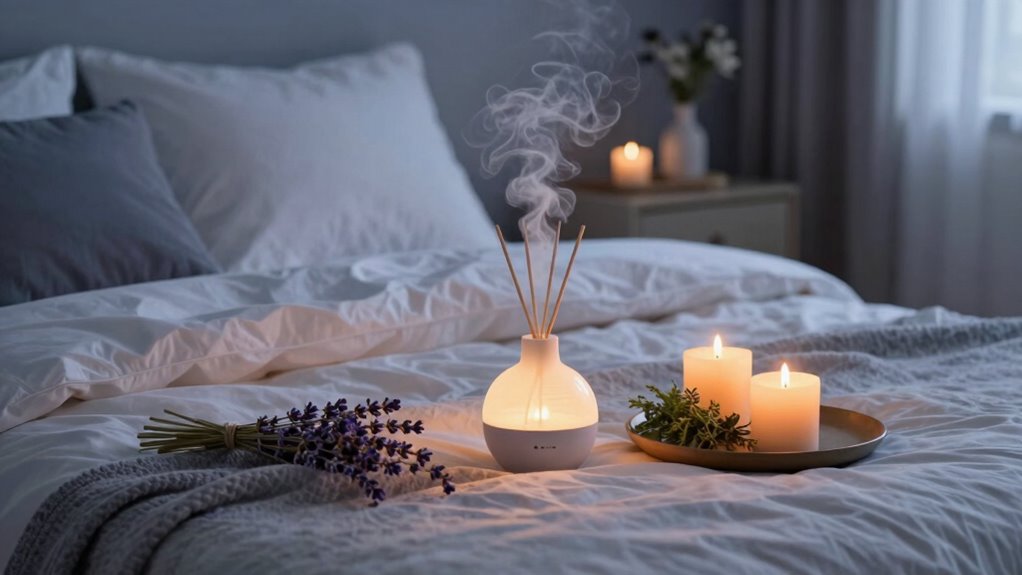
Your sense of smell directly affects your brain’s responses, influencing how relaxed or alert you feel. Certain scents can activate pathways that promote calmness and prepare you for restful sleep. By understanding how these aromas work, you can choose scents that enhance your sleep quality effectively. Incorporating essential oils for sleep like lavender or chamomile into your bedtime routine can further support relaxation and restful nights.
Aromas Trigger Brain Responses
Have you ever wondered how a simple scent can influence your mind? Scents have a powerful way of triggering brain responses that affect your mood and sleep. When you smell a familiar aroma, it activates the limbic system, which controls emotions and memories. This reaction explains why certain fragrances can instantly relax or energize you. Brands often leverage this in fragrance marketing and scent marketing strategies to create specific feelings or associations. For example, calming lavender or peppermint can promote relaxation before bed. Your brain processes these scents instinctively, shaping your emotional state without conscious effort. By understanding how aromas trigger brain responses, you can choose scents that encourage restful sleep and avoid those that stimulate or irritate your mind. Additionally, sustainable scent production is becoming increasingly important as consumers seek eco-friendly and health-conscious options in aromatherapy and fragrance choices.
Sleep-Enhancing Scents Effect
Scents that promote relaxation can substantially influence your brain’s activity, making it easier to fall asleep. Lavender benefits are well-known for their calming effects, helping to reduce anxiety and lower heart rate. When you inhale a soothing scent like lavender, it activates pathways in your brain that signal relaxation, easing your progression into sleep. However, scent sensitivity varies from person to person; some may find certain fragrances overwhelming or irritating, which can disrupt sleep rather than promote it. To maximize the benefits, opt for gentle, natural scents and pay attention to how your body responds. By choosing the right sleep-enhancing scents, you can create a calming environment that encourages restful, uninterrupted sleep.
How to Create a Bedroom Scent That Promotes Sleep
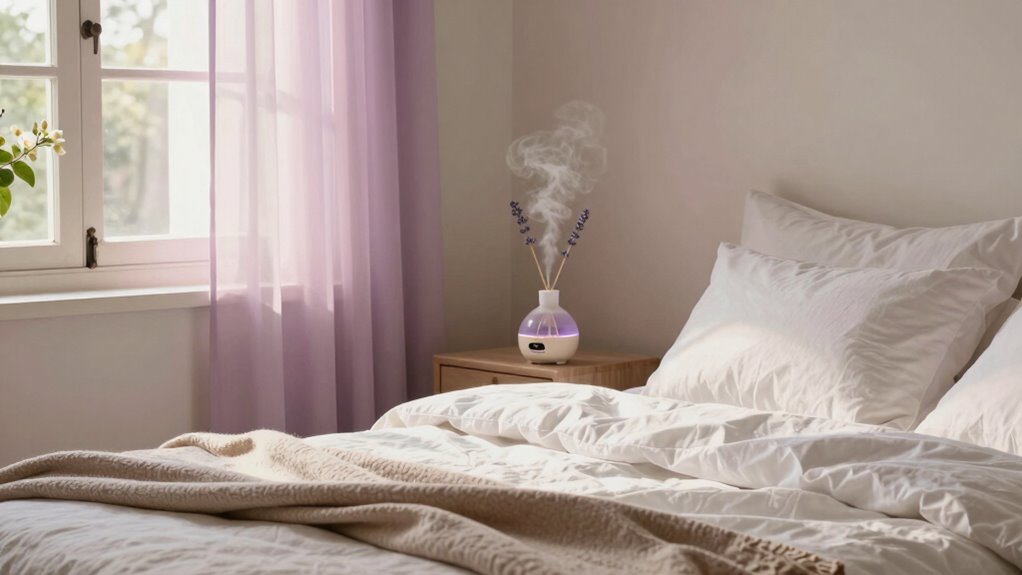
Creating a bedroom scent that encourages restful sleep involves selecting fragrances proven to calm the mind and relax the body. Your goal is to craft a sleep environment that promotes tranquility and minimizes stress. To do this, choose subtle, soothing scents that won’t overwhelm your senses. Consider using essential oils, candles, or diffusers with calming aromas. Focus on creating consistency in your scent to condition your brain for sleep. Keep your bedroom scent gentle and natural, avoiding overpowering fragrances that can cause irritation or alertness. Remember, a well-balanced sleep environment supports better rest and helps you wake up refreshed. Additionally, understanding the regulatory considerations of scent products ensures your choices are safe and compliant. By intentionally designing your bedroom scent, you set the stage for more restful, uninterrupted sleep every night.
Why Personal Preference and Sensitivity Matter for Sleep Scents
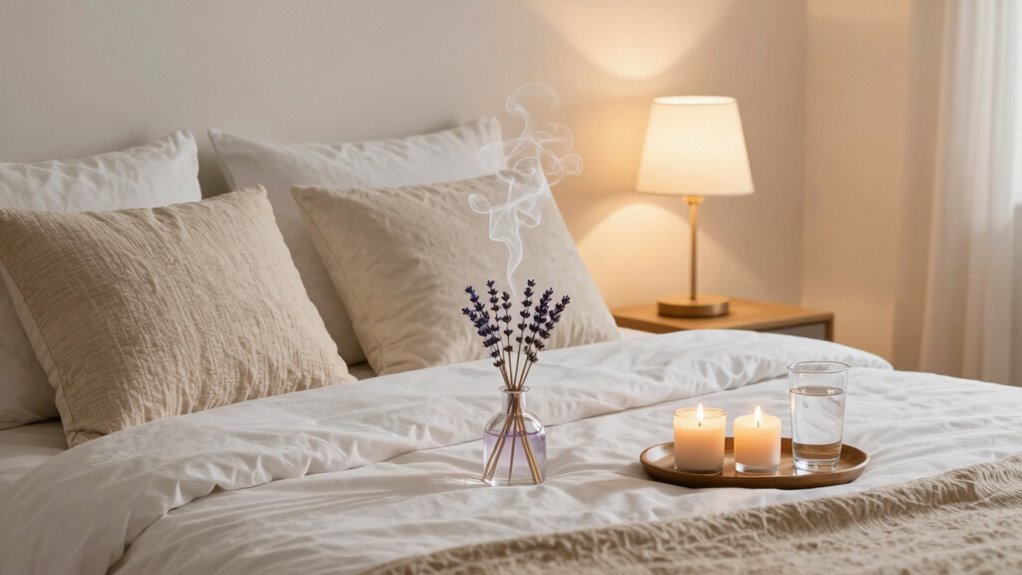
Since everyone’s senses and preferences are unique, what helps you relax may not have the same effect on someone else. Your personal preferences play a big role in choosing sleep scents, as what smells soothing to one person might be irritating or overwhelming to another. Scent sensitivities vary widely; some people may find certain aromas calming, while others experience headaches or allergies. It’s essential to pay attention to your reactions and adjust accordingly. Don’t assume that popular or widely recommended scents will automatically work for you. Experimenting with different options allows you to discover what truly helps you unwind and creates a comfortable sleep environment. Additionally, understanding the scientific effects of scents can help you make more informed choices. Ultimately, your individual preferences and sensitivities are key to selecting scents that promote restful sleep.
When Should You Avoid Scented Products at Bedtime?
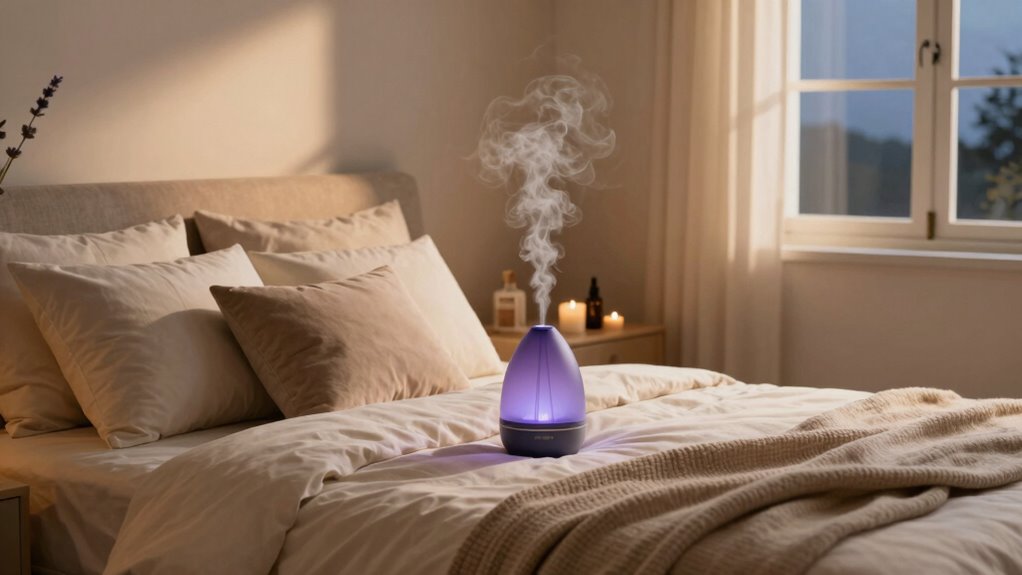
There are times when avoiding scented products before bed becomes especially important, such as if you notice irritation, headaches, or difficulty breathing after exposure. Certain factors can make scents more irritating or disruptive to your sleep. For example, consuming alcohol or spicy foods close to bedtime can increase sensitivity, making your body more reactive to fragrances. Additionally, if you’re feeling congested or have allergies, scents might worsen your symptoms. Using scented products when you’re stressed or fatigued can also lead to headaches or irritation. Be cautious if you’ve recently experienced respiratory issues or skin sensitivities. Recognizing these signs helps you decide when to skip scented products for a more restful night.
Being aware of vintage or cruiser-style motorcycles and how they respond to environmental factors can help you create a more comfortable sleep environment.
Additional Tips for Using Scents Safely and Effectively
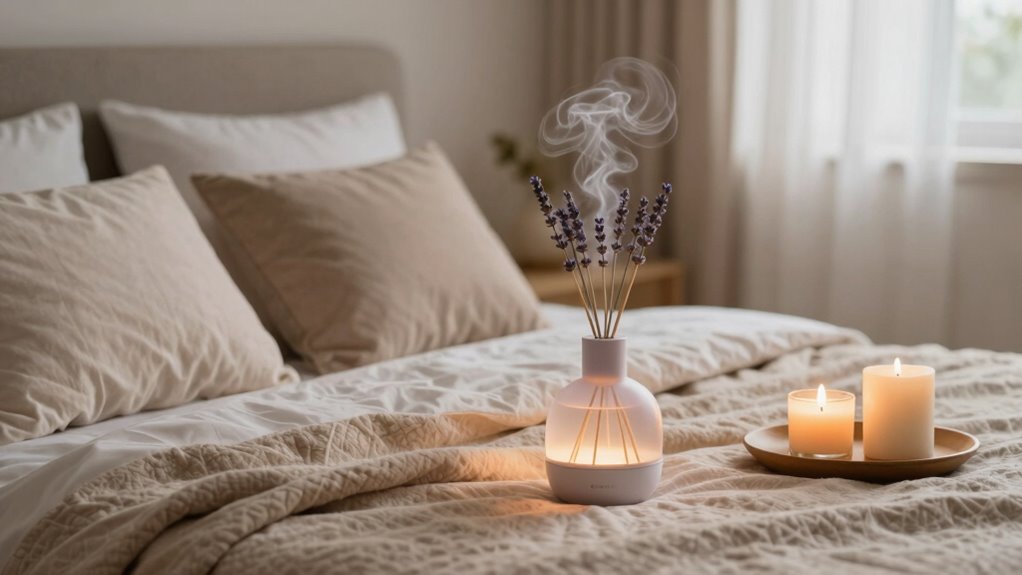
To enjoy the benefits of scents without risking irritation, it’s important to use them thoughtfully and safely. Start with proper diffusing techniques—use a diffuser in a well-ventilated room and avoid overloading it with essential oils. Limit diffusion sessions to 30-60 minutes to prevent overwhelming your senses. Scent layering can enhance your sleep environment, but do so cautiously: combine calming fragrances like lavender with subtle hints of chamomile or vanilla, but avoid mixing too many strong scents. Always perform a patch test before applying any new scent directly to your skin. Keep scents at a moderate level and observe how your body responds. Additionally, choosing safe and appropriate scent products can help minimize indoor air quality concerns. Following these tips helps create a soothing atmosphere without irritation, ensuring your sleep remains peaceful and restorative.
Frequently Asked Questions
Can Certain Scents Cause Allergic Reactions or Respiratory Issues During Sleep?
Certain scents, especially strong or unfamiliar ones, can trigger allergic reactions or respiratory issues during sleep. To stay safe, follow essential oil safety guidelines and be aware of scent allergy awareness. You should test new scents in small amounts first and avoid diffusing heavily scented oils if you have sensitivities. By doing so, you reduce the risk of irritation and guarantee a more comfortable, restful sleep environment.
Are There Specific Scents Recommended for Children or Elderly Individuals?
Imagine a gentle breeze guiding your loved ones to restful sleep. For children, opt for child-safe aromas like chamomile or lavender, known for calming effects. Elderly-friendly fragrances include vanilla or citrus, which are pleasant without overwhelming senses. Studies show these scents can promote relaxation and improve sleep quality. Always test new aromas first, and consult a healthcare professional if your loved ones have sensitivities or respiratory issues.
How Long Before Bedtime Should I Apply or Diffuse Sleep-Promoting Scents?
You should apply or diffuse sleep-promoting scents about 30 minutes before bedtime. This timing allows the scent to fill your space and create a calming atmosphere. Keep the duration of scent diffusion between 30 to 60 minutes to maintain a gentle, soothing environment without overwhelming your senses. Adjust the timing based on how quickly you feel relaxed, ensuring the scent enhances your wind-down routine effectively.
Do Scent Preferences Change With Seasons or Weather Conditions?
As seasons change, your scent preferences shift like the breeze through autumn leaves or spring blooms. You might crave warm, spicy aromas in winter to cozy up, while summer days call for fresh, citrusy scents to invigorate. Weather-influenced aroma choices become instinctive, aligning with your mood and surroundings. Embrace these seasonal scent preferences, allowing your environment to adapt naturally, guiding you toward restful sleep no matter the time of year.
What Are the Best Natural Versus Synthetic Scent Options for Bedtime?
You should choose natural alternatives like lavender or chamomile for bedtime, as they’re gentle and less likely to cause irritation. Synthetic fragrances, on the other hand, often contain chemicals that can disrupt your sleep or irritate your skin. Opt for essential oils or natural-scented candles to create a calming environment. Avoid synthetic fragrances if you want a more soothing, irritation-free sleep experience.
Conclusion
By choosing the right scents and understanding your personal preferences, you can set the stage for a restful night. Remember, not all scents are created equal—what helps one person sleep might irritate another. It’s a delicate balance, so don’t be afraid to experiment and find what works best for you. After all, when it comes to creating a peaceful sleep environment, it’s worth going the extra mile—because a good night’s sleep is priceless.