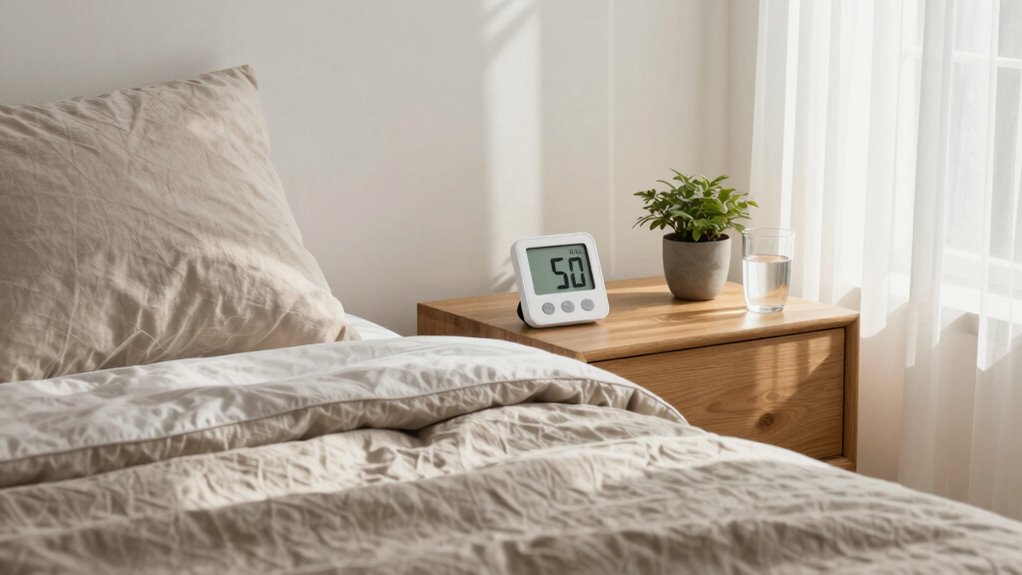

For most sleepers, maintaining your bedroom humidity between 40% and 60% creates the best environment for restful sleep. This range helps prevent dryness, irritation, and mold growth, making your space more comfortable and healthier. If humidity drops too low, your skin and respiratory system may become dry and irritated. Too high, and you risk mold and allergy issues. Keep an eye on your room’s moisture levels to find your ideal balance—there’s more to discover if you keep exploring.

Get home appliances delivered free with Prime
- Fast, free delivery on millions of items
- Prime Video, Amazon Music and more included
- Member-only deals all year
Key Takeaways
- Most sleep experts recommend maintaining bedroom humidity between 40% and 60% for optimal comfort.
- Humidity within this range improves air quality, reducing allergens and airborne pollutants.
- Proper humidity levels prevent dryness, irritation, and congestion that disrupt sleep.
- Imbalanced humidity—either too low or too high—can cause discomfort, skin dryness, or mold growth.
- Using a hygrometer, humidifier, or dehumidifier helps maintain the ideal humidity range for better sleep.
Have you ever wondered how the humidity levels in your bedroom impact your sleep? The right humidity range can significantly influence your overall sleep quality and comfort. When humidity is too high or too low, it can deteriorate your sleep environment, making it harder to fall asleep or stay asleep through the night. One of the key factors affected by humidity is air quality. Proper humidity levels help keep dust, allergens, and airborne pollutants at bay, ensuring you breathe cleaner, healthier air while you rest. Conversely, poor humidity can lead to dry air, which irritates your respiratory system, exacerbates allergies, and creates a stuffy or stale sleep environment.
Most sleep experts agree that maintaining a humidity level between 40% and 60% offers the best conditions for restful sleep. Within this range, your air quality improves because the air isn’t too dry to cause dryness in your nasal passages, throat, and skin, nor is it humid enough to promote mold, dust mites, or bacteria growth. When your sleep environment maintains this balance, you’re less likely to wake up feeling stuffy, congested, or dehydrated, which are common issues caused by improper humidity. Additionally, the right humidity level helps keep your skin hydrated and prevents eye irritation, further enhancing your comfort during sleep. Maintaining proper humidity can also prevent mold growth and other moisture-related issues that compromise your sleep quality. Ensuring good ventilation is essential in supporting these optimal conditions and preventing excess moisture buildup. Proper air circulation further assists in maintaining a stable humidity level and improving overall indoor air quality.
Monitoring your room’s humidity with a hygrometer can give you precise data to help you make adjustments and maintain ideal conditions. You should pay attention to how your body responds to different humidity levels. If your skin feels dry or cracked, or if you wake up with a sore throat or congestion, your bedroom’s humidity might be too low. On the other hand, if you notice a damp smell, mold growth, or increased allergy symptoms, the humidity could be too high. These issues directly impact your sleep environment, reducing sleep quality and making it more difficult to feel refreshed in the morning. Using a humidifier or dehumidifier can help you achieve and maintain the optimal range, ensuring your air quality stays balanced and your sleep environment remains inviting. Proper ventilation also plays a crucial role in maintaining indoor air quality and humidity levels. Regularly monitoring humidity with a hygrometer can help you make informed adjustments to your room’s environment.
Ultimately, controlling your bedroom humidity isn’t just about comfort; it’s about creating an environment where your body can rest and recover properly. When you keep the humidity within the recommended 40-60%, you promote better air quality, reduce allergens, and foster a sleep environment conducive to deep, uninterrupted sleep. Pay attention to your body’s signals and use the right tools to maintain this balance. Doing so makes a noticeable difference in how refreshed and energized you feel during the day.
As an affiliate, we earn on qualifying purchases.
Frequently Asked Questions
How Does Humidity Affect Allergy Symptoms During Sleep?
Humidity levels directly impact your allergy symptoms during sleep. When it’s too humid, airborne allergens like dust mites and mold growth thrive, worsening allergy symptoms. Conversely, low humidity can dry out your nasal passages, making you more sensitive to allergens. Maintaining a ideal humidity range helps keep airborne allergens in check and prevents mold growth, creating a healthier sleeping environment and reducing allergy discomfort throughout the night.
Can Low Humidity Cause Skin Dryness Overnight?
Ever wonder why your skin feels tight in the morning? Low humidity can cause overnight dryness by stripping away your skin’s natural oils, leading to decreased skin hydration. When the air lacks moisture, your skin loses its suppleness and becomes flaky or itchy. To prevent this, maintain a balanced humidity level in your bedroom, and consider using a humidifier. This helps keep your skin hydrated and comfortable all night long.
What Are the Signs of Too High Bedroom Humidity?
If your bedroom humidity is too high, you’ll notice signs like mold growth on walls or furniture and musty odors lingering in the air. You might also experience increased dust, condensation on windows, and difficulty breathing during sleep. High humidity creates a cozy environment for mold and mildew to thrive, which can affect your health and comfort. Keeping humidity balanced helps prevent these issues and promotes better sleep.
Does Humidity Impact Sleep Quality in Winter Versus Summer?
Humidity impacts sleep quality differently across seasons, like a rollercoaster ride. In winter, lower humidity can cause dry skin and irritation, disrupting sleep. Summer’s higher humidity may make you feel sticky and uncomfortable, also affecting rest. Seasonal humidity fluctuations challenge your sleep comfort, but maintaining a consistent humidity level helps. Adjusting your environment with a humidifier or dehumidifier guarantees steady conditions, so you sleep soundly no matter the season.
How Often Should I Monitor My Bedroom Humidity Levels?
You should monitor your bedroom humidity levels at least once a week to maintain *best* comfort and health. Good air circulation helps keep humidity balanced, preventing it from becoming too damp or dry. Regular checks also help you catch excess moisture early, reducing the risk of mold growth. Use a hygrometer to track levels easily, ensuring your bedroom stays within the *perfect* range for better sleep and mold prevention.
As an affiliate, we earn on qualifying purchases.
Conclusion
Finding the right humidity in your bedroom is like tuning a musical instrument—you need just the right note for perfect harmony. Aim for a range between 40-60% to feel most comfortable and sleep soundly through the night. When your environment is in sync, you’ll wake up refreshed, as if you’ve just played a beautiful melody. Keep an eye on your humidity levels, and let your sleep space be a sanctuary of comfort and peace.
As an affiliate, we earn on qualifying purchases.
As an affiliate, we earn on qualifying purchases.
Fall yard work Picks
leaf blowers
As an affiliate, we earn on qualifying purchases.