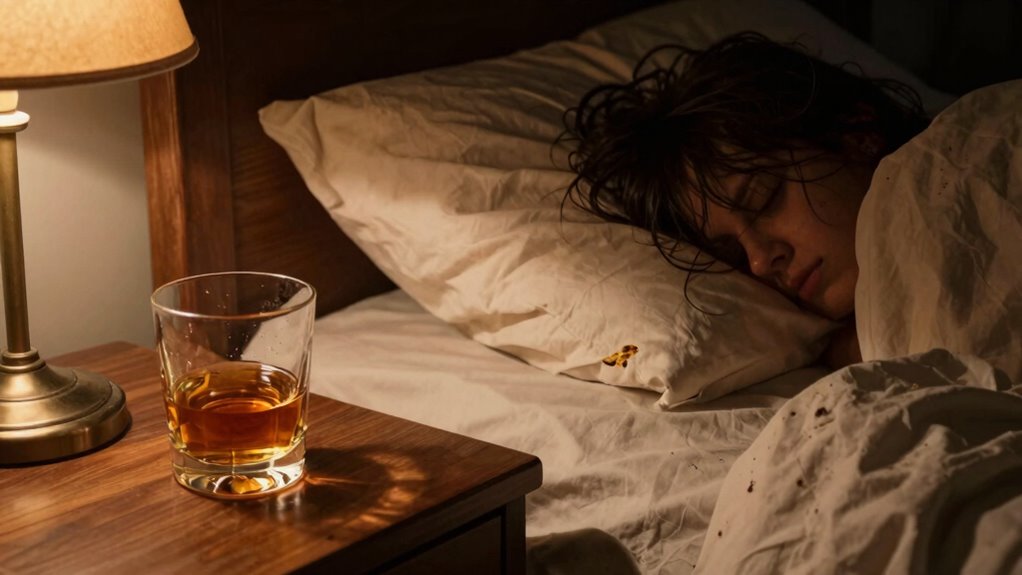

Alcohol may help you fall asleep quickly by acting as a sedative, but it disrupts your sleep cycles and reduces REM sleep, leaving you feeling tired. It causes frequent awakenings, lighter sleep, and can interfere with your body’s internal clock. Dehydration from alcohol and hangovers further fragment sleep and make you wake up more often. If you want to understand how to minimize these effects and improve your rest, keep exploring these topics.
How Does Alcohol Make You Sleep Faster at First?
When you drink alcohol, it initially acts as a sedative, helping you fall asleep faster. This effect occurs because alcohol impacts your brain’s chemistry, making you feel relaxed and drowsy. During social drinking, your body begins metabolizing alcohol quickly, causing a temporary feeling of sleepiness. Alcohol metabolism involves enzymes breaking down the substance in your liver, and as levels rise in your bloodstream, your sleep onset speeds up. That’s why many find it easier to drift off after a few drinks. However, this initial sedative effect is short-lived. Once your body processes the alcohol, its stimulating effects can kick in, disrupting your sleep later. So, alcohol might help you fall asleep faster, but it doesn’t guarantee restful or uninterrupted sleep. Understanding alcohol metabolism is key to recognizing how alcohol’s effects on sleep are temporary and complex. Additionally, individual differences in alcohol tolerance can influence how pronounced these effects are. For example, metabolic rate can vary greatly among individuals, affecting how quickly alcohol is processed and its subsequent impact on sleep patterns. Furthermore, alcohol can interfere with REM sleep, which is essential for restorative rest, leading to poorer sleep quality even if you fall asleep quickly.
How Does Alcohol Affect Your Sleep Cycles and Rest?
When you drink alcohol, it can disrupt your REM sleep, which is essential for restorative rest. Your sleep architecture shifts, causing lighter sleep stages to dominate and making it harder to get deep, restful sleep. As a result, your overall sleep quality suffers, leaving you feeling less refreshed in the morning. Additionally, alcohol can interfere with proper ventilation, potentially leading to breathing disruptions during sleep. This interference can also contribute to sleep apnea symptoms, further impacting your rest. Alcohol may also alter your body’s natural sleep-wake cycle, making it harder to maintain consistent sleep patterns over time. Moreover, research indicates that alcohol’s influence on neurotransmitters can further impair sleep regulation and quality. Changes in brain chemistry caused by alcohol can exacerbate these effects, making recovery even more difficult.
Disruption of REM Sleep
Alcohol can markedly disrupt your REM sleep, the stage essential for mental restoration and memory consolidation. When alcohol interferes with REM, you may experience sleep deprivation without realizing it, making you feel tired and unfocused the next day. During REM, your brain processes emotions and consolidates memories; alcohol’s interference hampers these functions. You might notice dream disruption, as vivid or bizarre dreams become less frequent or more fragmented. This disruption prevents you from reaching the restorative benefits of REM sleep, leaving you feeling less refreshed. Over time, repeated REM suppression can impair cognitive function, mood, and overall health. Additionally, alcohol can affect sleep architecture, altering the normal progression of sleep stages and further diminishing sleep quality. This alteration can lead to fragmented sleep and reduced deep sleep stages, compounding the negative effects on overall rest. So, even if alcohol helps you fall asleep faster, its interference with REM sleep ultimately compromises the quality of your rest.
Altered Sleep Architecture
Alcohol’s impact on sleep goes beyond disrupting REM; it also alters the overall structure of your sleep cycles. When you consume alcohol, your body begins alcohol metabolism, which affects your sleep hormone balance. Initially, alcohol may make you feel sleepy, but it interferes with the normal progression of sleep stages, leading to fragmented, less restorative sleep. As your body processes alcohol, sleep becomes lighter, and deep sleep stages decrease. This disruption prevents your body from completing full sleep cycles, leaving you tired despite seeming to sleep for hours. Moreover, the alteration in sleep architecture can impair your sleep quality, making it harder to wake up feeling refreshed. Understanding this can help you realize why alcohol hampers genuine rest, even if it initially helps you fall asleep faster. The disruption of sleep architecture can also affect your overall restorative sleep, impacting daytime alertness and cognitive function. Additionally, alcohol’s interference with sleep regulation mechanisms can prolong the time needed to reach deep, restorative sleep stages. This ongoing disturbance can also negatively influence your sleep patterns over time, leading to chronic fatigue.
Why Does Alcohol Disrupt REM Sleep and Restorative Rest?
Although it might seem like having a drink helps you relax, alcohol actually interferes with your sleep cycles, especially the restorative REM stage. When you consume alcohol, your body starts to metabolize it quickly, which initially makes you feel sleepy. However, alcohol’s effect on sleep architecture reduces REM sleep, the stage crucial for memory, learning, and emotional health. This disruption occurs because alcohol alters neurotransmitter activity, making it harder to reach and sustain REM. Additionally, if you take sleep medication, it can compound alcohol’s effects, further impairing REM sleep. The combination can lead to fragmented, less restorative rest. So, even if alcohol helps you fall asleep faster, it ultimately prevents you from experiencing the deep, rejuvenating sleep your body needs. Proper air quality considerations can also influence sleep quality, as pollutants and allergens in the environment can further impact rest.
Why Do You Wake Up More During the Night After Drinking?
Even though alcohol may help you fall asleep initially, it can lead to more frequent awakenings throughout the night. As your body metabolizes alcohol, its sedative effects fade, often causing you to wake up. Additionally, alcohol can disrupt your sleep environment, making it harder to stay asleep. Factors that contribute include:
- Fluctuations in alcohol metabolism that trigger arousal during sleep cycles
- Reduced REM sleep, which causes lighter sleep stages and more awakenings
- Altered sleep environment, such as increased body temperature or dehydration, that can wake you up
- Disruptions to sleep architecture, which can interfere with your body’s natural sleep cycles, leading to fragmented sleep. These interruptions can also cause you to experience sleep fragmentation, resulting in a less restorative rest. Furthermore, alcohol’s impact on circadian rhythms can disturb your overall sleep pattern, making it even more difficult to achieve restful sleep. Changes in sleep stages can also be influenced by sleep homeostasis, which regulates sleep pressure based on prior wakefulness. Additionally, alcohol can interfere with the body’s ability to regulate body temperature, further impacting sleep quality.
How Does Dehydration From Alcohol Keep You Awake?

Dehydration caused by alcohol can keep you awake by disrupting your body’s natural balance and comfort during sleep. When you drink, alcohol metabolism produces diuretic effects, increasing urine production and leading to dehydration. This loss of fluids affects your hydration effects, making you feel thirsty and uncomfortable. As your body fights dehydration, your brain signals wakefulness to seek water, disturbing your sleep cycle. Here’s a quick overview:
| Effect of Alcohol Metabolism | Impact on Sleep |
|---|---|
| Produces diuretic effect | Leads to dehydration and wakefulness |
| Disrupts hydration balance | Causes discomfort and alertness |
| Affects hydration effects | Keeps you from staying asleep |
| Interferes with sleep cycles | Results in fragmented sleep |
Dehydration from alcohol keeps you awake by making you feel thirsty and uncomfortable, preventing restful sleep. Additionally, dehydration can impair sleep quality, making it harder to achieve restorative rest. Poor hydration levels can also affect sleep cycles, further contributing to fragmented sleep and wakefulness throughout the night. Maintaining proper hydration levels can mitigate alcohol’s effects on sleep, promoting more restful and uninterrupted rest.
How Do Hangovers Affect Your Sleep Quality?
When you have a hangover, your sleep quality often suffers considerably. You may notice your sleep cycles are disrupted, making it harder to reach deep rest. Additionally, you might experience less REM sleep and wake up more frequently during the night.
Disrupted Sleep Cycles
Hangovers can substantially disrupt your sleep cycles, making it harder to get restful, restorative sleep. Alcohol metabolism causes your body to process alcohol unevenly, leading to frequent awakenings. This process results in sleep fragmentation, where your sleep becomes broken into shorter, less restorative episodes. As your body struggles to clear alcohol, your natural sleep architecture is thrown off, preventing you from entering deeper stages of sleep.
- Increased awakenings throughout the night
- Reduced duration of deep sleep stages
- Altered progressions between sleep cycles
These disruptions leave you feeling tired and unrested, even after what seems like enough sleep. The effects of alcohol metabolism and sleep fragmentation interfere with your body’s ability to maintain consistent, high-quality sleep, making recovery from alcohol consumption difficult.
Reduced REM Sleep
Have you noticed how your dreams become less vivid or feel more fragmented after a night of drinking? That’s because alcohol reduces REM sleep, which is essential for dreaming and memory consolidation. This reduction leads to sleep deprivation, leaving you tired and unfocused. Your brain struggles to process emotions and memories, causing dream disruption. To help visualize this, consider the following:
| Effect of Alcohol on Sleep | Impact on REM | Resulting Feelings |
|---|---|---|
| Suppresses REM sleep | Less dreaming | Fatigue, grogginess |
| Causes fragmented sleep | Interrupted REM cycles | Reduced alertness |
| Leads to sleep deprivation | Poor memory consolidation | Mood swings |
This pattern hampers overall sleep quality, making recovery harder and leaving you feeling drained.
Increased Wakefulness
Even after the alcohol leaves your system, your sleep often becomes more fragmented due to increased wakefulness. This heightened alertness can lead to frequent awakenings, making it harder to reach restorative sleep stages. As a result, you experience sleep deprivation, which hampers your overall rest and recovery. Your alcohol tolerance can also influence this effect; frequent drinking may blunt initial sedation but worsen wakefulness later in the night. You might notice:
- Elevated levels of stress hormones disrupting your sleep cycle
- Impaired regulation of body temperature and circadian rhythms
- Increased likelihood of movement or restlessness during sleep
These factors contribute to poorer sleep quality, leaving you feeling exhausted despite spending enough time in bed. The cycle of wakefulness and fragmented sleep diminishes not just sleep quantity, but also its restorative quality.
How Does Alcohol Change Melatonin and Your Body’s Clock?
Alcohol directly impacts your body’s internal clock by altering melatonin production, the hormone responsible for regulating sleep-wake cycles. When you drink, alcohol can suppress melatonin levels, making it harder for your circadian rhythm to stay aligned with the environment. This disruption tricks your body into thinking it’s earlier or later than it truly is, throwing off your natural sleep signals. As a result, your internal clock becomes out of sync, leading to difficulties falling asleep or waking up feeling unrefreshed. Even if alcohol helps you fall asleep initially, its interference with melatonin production means your sleep cycle won’t follow its normal pattern. Over time, these changes can markedly affect your overall sleep quality and how rested you feel during the day.
What Are Some Simple Tips to Protect Your Sleep When Drinking?
To protect your sleep when drinking, it’s helpful to plan ahead and be mindful of your consumption. Understanding how alcohol metabolism affects your body can help you make smarter choices. When engaging in social drinking, try these tips:
- Limit your alcohol intake to avoid overwhelming your system and disrupting your sleep cycles.
- Drink water between alcoholic beverages to stay hydrated and reduce sleep disturbances.
- Avoid drinking too close to bedtime, giving your body time to process alcohol before you sleep.
These strategies help minimize the negative effects of alcohol on sleep quality. Being aware of how your body metabolizes alcohol and moderating your intake can make a significant difference, allowing you to enjoy social drinking without sacrificing restful sleep.
How Can You Balance Drinking and Sleep for Better Rest?

Balancing drinking and sleep requires mindful planning and moderation. To improve your rest, be aware of how alcohol metabolism affects your body; drinking too much slows down your ability to process alcohol, leading to disrupted sleep. Aim to drink earlier in the evening, giving your body time to metabolize alcohol before bedtime. Practicing good sleep hygiene, like maintaining a consistent sleep schedule and creating a relaxing bedtime routine, can also help counteract alcohol’s effects. Limit alcohol intake to avoid excessive sleep disruption, and stay hydrated to reduce hangover symptoms that interfere with sleep quality. By managing when and how much you drink, and prioritizing sleep hygiene, you can enjoy social drinking without sacrificing restful, restorative sleep.
Frequently Asked Questions
Can Alcohol Consumption Improve Sleep Quality for Certain Individuals?
Alcohol’s sedative effects can help some individuals fall asleep faster initially. However, if you have alcohol tolerance, these effects diminish, and your sleep quality may worsen over time. While a small amount might seem to improve sleep for certain people, excessive consumption often leads to disrupted sleep cycles and waking up feeling unrefreshed. Use alcohol cautiously, and don’t rely on it as a sleep aid, as it can do more harm than good.
How Long Does Alcohol’s Sleep-Disrupting Effect Last?
You wonder how long alcohol’s sleep-disrupting effects last. Once you drink, alcohol metabolism kicks in, typically clearing from your system in a few hours. But during that time, it disrupts your sleep cycle, causing fragmentation and lighter sleep stages. Even after metabolism finishes, residual effects can linger, making you wake up feeling unrefreshed. So, expect disruptions to persist for several hours, impacting your sleep quality well into the night.
Does Alcohol Affect Sleep Differently for Men and Women?
Yes, alcohol affects your sleep differently based on hormonal differences between men and women. Women often experience more disrupted sleep architecture, leading to lighter, fragmented sleep after drinking. This occurs because hormonal variations influence how alcohol interacts with your brain and body. As a result, women may wake up more frequently and have less restorative sleep, making alcohol’s impact on sleep more pronounced compared to men.
Are There Health Conditions Worsened by Alcohol-Related Sleep Issues?
You might not realize it, but alcohol-related sleep issues can worsen serious health conditions. Your liver damage risk increases as alcohol strains your liver, potentially leading to cirrhosis. Meanwhile, your mental health suffers, with heightened anxiety and depression. Ignoring these sleep disturbances could silently accelerate these problems, making them more severe. Pay attention to how alcohol affects your sleep—your health depends on it, and the consequences could be more damaging than you think.
What Are Alternative Methods to Improve Sleep Without Alcohol?
To improve sleep without alcohol, focus on good sleep hygiene by sticking to a consistent sleep schedule and creating a calming bedroom environment. Incorporate relaxation techniques like deep breathing, meditation, or gentle stretching before bed to signal your body it’s time to rest. Avoid screens and caffeine close to bedtime. These strategies help you fall asleep faster and stay asleep longer, promoting healthier, more restorative sleep naturally.
Conclusion
Did you know that just one night of drinking can reduce your REM sleep by up to 20%? To protect your rest, try to limit alcohol intake close to bedtime and stay hydrated. Remember, while alcohol might help you fall asleep faster, it considerably disrupts your sleep quality and recovery. By making small adjustments, you can enjoy social moments without sacrificing restful, restorative sleep. Your body will thank you for it.