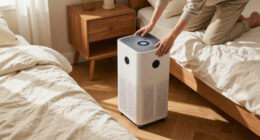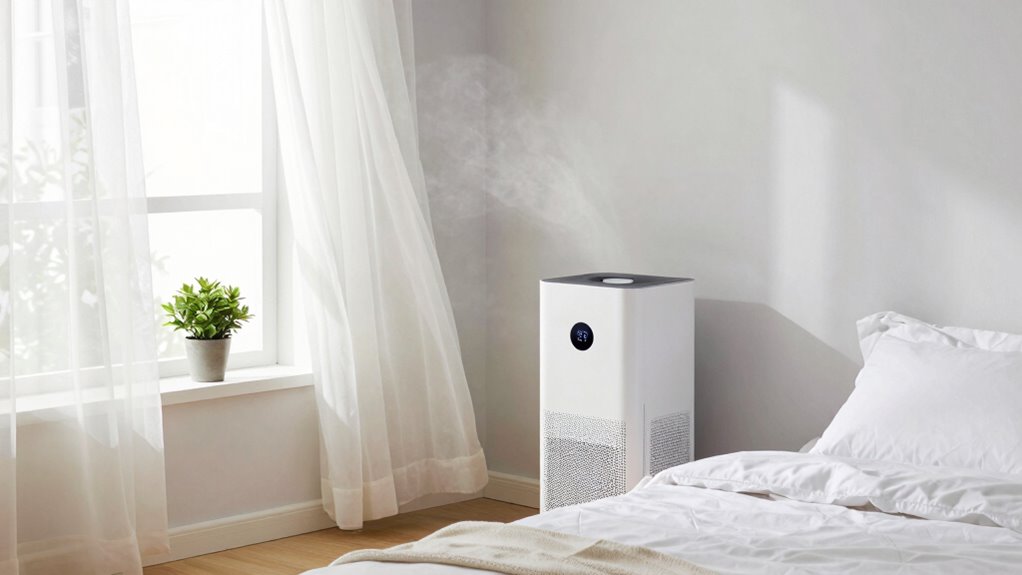

If your bedroom feels stuffy or has lingering odors, start by testing the air quality for pollutants, humidity, and particulate matter. If you notice high dust, pet dander, or VOCs, your filtration may need improvement, like better filters or air purifiers. On the other hand, if air circulates poorly or humidity is off, airflow issues are likely the cause. Understanding these signs helps you decide what to fix first—more insights are just ahead.

Get home appliances delivered free with Prime
- Fast, free delivery on millions of items
- Prime Video, Amazon Music and more included
- Member-only deals all year
Key Takeaways
- Conduct air quality testing to identify pollutants, humidity, and particulate levels indicating filtration issues.
- Notice if odors or stuffiness persist despite ventilation, suggesting filtration may need improvement.
- Check for airflow problems by observing stagnant air, poor circulation, or uneven temperature distribution.
- Upgrade filters and add purifiers if dust, pet dander, or VOCs remain high despite good airflow.
- Use air quality monitors to track changes and determine whether airflow or filtration improvements are more effective.
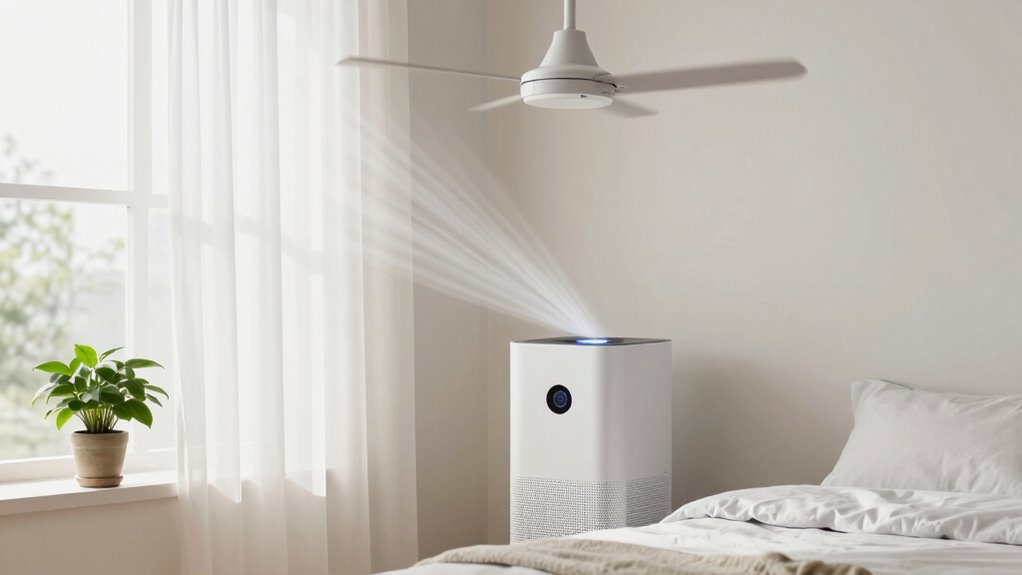
When you’re waking up feeling stuffy or noticing lingering odors in your bedroom, it can be hard to tell whether the issue stems from poor airflow or inadequate filtration. The distinction matters because addressing each problem requires different solutions. To figure out what’s causing your discomfort, start with air quality testing. This process involves measuring pollutants, humidity levels, and particulate matter in your room. If testing reveals high levels of dust, pet dander, or volatile organic compounds, poor filtration could be the main culprit. Conversely, if air quality testing shows that air isn’t circulating well or humidity is off, then airflow might be to blame.
Once you’ve identified the root issue, you can take targeted steps. If airflow seems limited—perhaps the air feels stagnant or warm air isn’t moving—consider airflow improvement techniques. These might include opening windows to increase natural ventilation, ensuring your vents aren’t blocked, or adding fans to promote better circulation. Sometimes, simply adjusting the placement of your furniture can improve air movement, making the space feel fresher and reducing stuffiness. In more stubborn cases, upgrading your ventilation system or installing exhaust fans can make a significant difference. The goal is to create a steady flow of fresh air that replaces stale, polluted air with cleaner, more oxygen-rich air. Proper ventilation is essential for maintaining a healthy indoor environment. Additionally, ensuring your ventilation system is properly maintained can prevent future issues with airflow and air quality. Proper air exchange is also vital for removing indoor pollutants effectively.
Enhance airflow with natural ventilation, fans, and furniture placement for a fresher, less stuffy bedroom environment.
On the other hand, if air quality testing indicates that pollutants are high despite good airflow, filtration becomes your priority. Upgrading your air filter is a good starting point—look for filters with a higher MERV rating that can trap smaller particles. Regularly replacing or cleaning your filters is essential because a clogged filter not only reduces airflow but also allows pollutants to recirculate. Adding an air purifier with HEPA filtration can further reduce allergens and airborne particles, especially if you have pets or allergies. To optimize filtration, keep your room dust-free by vacuuming regularly and washing bedding frequently, as these are common sources of indoor pollutants. Incorporating indoor plants can also help naturally improve air quality by removing certain toxins. Additionally, using air quality monitors can help you track improvements and ensure your efforts are effective.
In many cases, a combination of both approaches yields the best results. Improving airflow ensures pollutants don’t just settle and stagnate, while better filtration captures what’s already in the air. By understanding the specific issues through air quality testing and applying the appropriate airflow improvement techniques or filtration upgrades, you can transform your bedroom into a healthier, more comfortable space.
Products Worth Considering

LEVOIT Vital 100S-P Smart Air Purifier with Washable Pre-Filter

Levoit Core 600S-P Smart Air Purifier for Large Rooms

Blueair Blue Pure 211i Max Air Purifier
As an affiliate, we earn on qualifying purchases.
Frequently Asked Questions
Can Poor Airflow Cause Allergies in the Bedroom?
Yes, poor airflow can cause allergies in your bedroom. When air circulation is limited, dust and allergens tend to accumulate more, leading to increased allergy symptoms. Stagnant air allows dust mites, pet dander, and other particles to settle and linger, which can trigger sneezing, congestion, or itchy eyes. Improving airflow helps disperse these allergens and reduces dust buildup, creating a healthier sleeping environment and alleviating allergy symptoms.
How Often Should I Replace My Air Filters?
You should replace your air filters every 1 to 3 months, depending on usage and filter type. Did you know that neglecting air filter maintenance can reduce efficiency by up to 15%? Regular replacement supports better ventilation troubleshooting and keeps indoor air clean. Check your filters monthly; if they look dirty or clogged, replace them sooner. Proper maintenance guarantees healthier air and improves airflow in your bedroom.
What Are Signs of Inadequate Ventilation?
You might notice signs of inadequate ventilation if indoor humidity levels feel consistently high or stuffy, causing discomfort or mold growth. Dust accumulation on surfaces and in the air also increases, making it harder to breathe and triggering allergies. If you see persistent foggy windows or experience lingering odors, these are additional clues that your bedroom isn’t getting enough fresh air, and improving airflow or filtration could help.
Does Sleep Quality Improve With Better Air Filtration?
Think of your bedroom as a garden; better air filtration acts like a gentle gardener, removing pollutants and allergens to improve air quality. When you enhance air quality with good filtration, sleep quality naturally improves, making your nights more restful and rejuvenating. Cleaner air reduces breathing struggles and allergy symptoms, helping you relax fully. So, yes—upgrading your air filtration considerably promotes sleep enhancement by creating a healthier, more comfortable environment.
Are Air Purifiers Effective for Improving Airflow?
Air purifiers are effective for improving airflow, especially when you maintain them properly. Regular air purifier maintenance, like cleaning filters or replacing them, guarantees peak performance. Comparing filter types helps you choose the best one for your needs—HEPA filters provide thorough particle removal, while activated carbon filters handle odors. Using the right purifier with proper upkeep boosts airflow and purifies your bedroom air, enhancing your sleep quality.
Conclusion
In the end, finding the right balance between airflow and filtration is like tuning a delicate instrument—you might need to gently adjust one to see how it sings. If your room still feels stuffy or you notice lingering odors, it’s a subtle hint that a little more attention to airflow or filtration could make a world of difference. Sometimes, a gentle nudge in the right direction is all it takes to create a more comfortable, welcoming space.