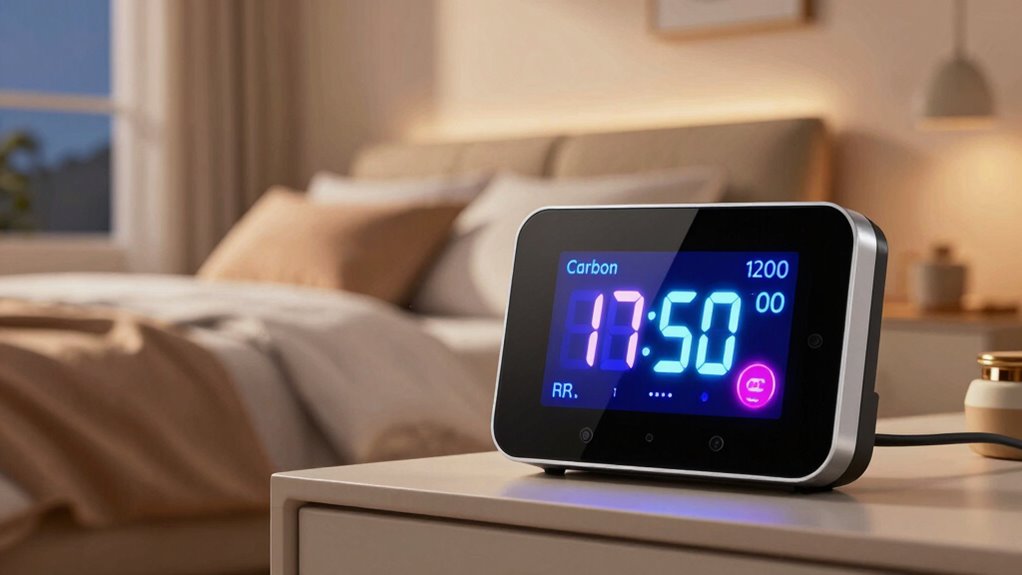

If you want better sleep comfort, pay close attention to your indoor CO2 levels. Elevated CO2 indicates poor ventilation, which can make you feel drowsy, cause headaches, and reduce alertness. Controlling CO2 helps maintain a fresh, well-ventilated environment that promotes restful sleep. Monitoring this key air quality factor allows you to make simple adjustments, like opening a window or using an air purifier. Keep reading to discover more about optimizing your sleep environment through air quality insights.

Get home appliances delivered free with Prime
- Fast, free delivery on millions of items
- Prime Video, Amazon Music and more included
- Member-only deals all year
Key Takeaways
- PM2.5 levels indicate airborne particulate pollution that can disrupt sleep and affect respiratory health.
- CO2 levels reflect ventilation quality; high levels can cause drowsiness and reduce sleep quality.
- Humidity readings influence comfort; extremes can lead to dryness or moisture-related discomfort during sleep.
- Monitoring indoor pollutants helps identify sources impacting sleep environment and guides improvements.
- Overall, maintaining optimal air quality, especially low PM2.5 and CO2 levels, enhances sleep comfort and health.
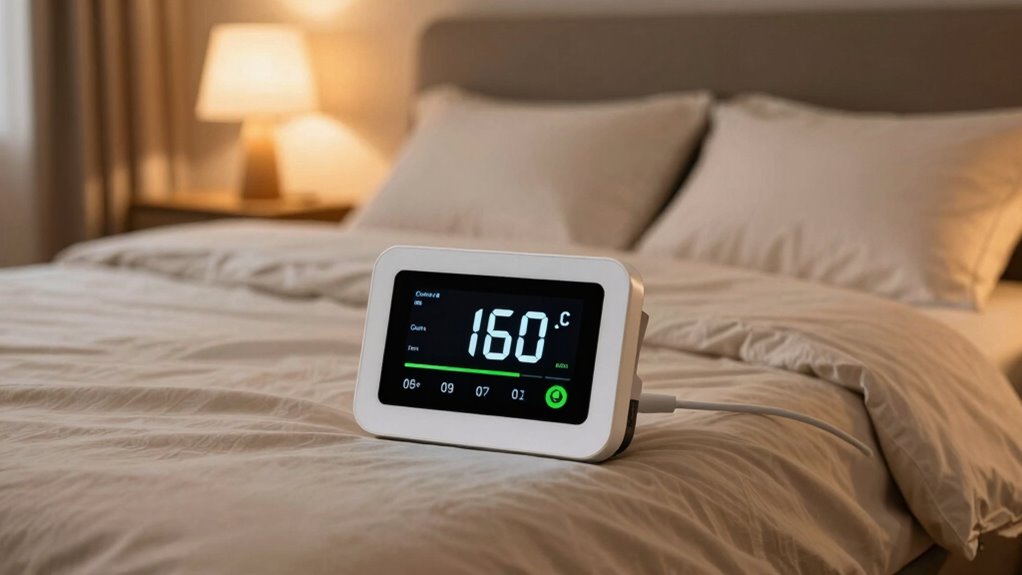
Ensuring a good night’s sleep starts with understanding your environment, and an air monitor can be a valuable tool in achieving that. When you’re trying to optimize your sleep environment, paying attention to air quality trends is essential. These trends reveal patterns over time, showing you when your air quality dips or improves, helping you identify sources of pollution or allergens that could be disturbing your rest. By monitoring these shifts, you can take targeted steps to improve your bedroom’s air, ultimately creating a healthier sleep space.
The key reading you should focus on from your air monitor is the level of airborne particles, particularly particulate matter (PM). High PM levels—especially fine particles like PM2.5—are linked to respiratory irritation, allergies, and even sleep disruptions. If your monitor indicates elevated levels during the night, it’s a clear sign that your sleep environment isn’t as clean as it could be. You might notice that your sleep quality suffers on days when outdoor pollution is high or when indoor sources like cooking, smoking, or dust are prevalent. Recognizing these patterns allows you to make adjustments, like improving ventilation or investing in air purifiers, which can drastically enhance your sleep environment optimization efforts.
Beyond particulate matter, other readings are just as important. Humidity and CO2 levels, for example, influence sleep comfort more than you might realize. High humidity can promote mold growth and dust mites, both of which cause discomfort and allergies. Conversely, low humidity can lead to dry skin and nasal irritation, disturbing your rest. Elevated CO2 levels, often a sign of poor ventilation, can cause drowsiness and headaches, making it harder to fall asleep or stay asleep through the night. Keeping these measurements within recommended ranges helps ensure your sleep environment remains conducive to restful sleep.
Ultimately, the air monitor reading that matters most for sleep comfort isn’t just a number; it’s a guide to understanding and controlling your environment. Tracking air quality trends over time empowers you to make informed decisions—whether it’s opening a window, running an air purifier, or adjusting your bedroom’s layout. By staying vigilant and proactive, you can optimize your sleep environment, minimize irritants, and enjoy more restorative sleep. Remember, a well-monitored space isn’t just about comfort; it’s about supporting your overall health and well-being every night.
Being aware of air quality trends can also help you understand the impact of outdoor pollution and indoor activities on your sleep environment, making your efforts more targeted and effective.
Indoor air quality monitor for sleep
As an affiliate, we earn on qualifying purchases.
As an affiliate, we earn on qualifying purchases.
Frequently Asked Questions
How Often Should I Calibrate My Air Monitor?
You should calibrate your air monitor at least once every three to six months to guarantee sensor accuracy. Regular calibration helps maintain accurate readings, which is essential for understanding your sleep environment. If you notice inconsistent or unexpected results, calibrate more frequently. Follow your device’s instructions for calibration processes, and consider professional calibration if the monitor is used in sensitive or critical environments. Consistent calibration keeps your air quality data reliable.
Can Air Monitors Detect Allergens Like Pollen?
Yes, some air monitors can detect allergens like pollen through advanced sensors designed for allergen monitoring. These devices can help you identify pollen levels in your environment, giving you real-time data on allergen presence. If pollen detection is a priority, choose an air monitor with allergen-specific sensors. Regular use allows you to manage indoor air quality better, particularly during allergy seasons, helping you create a more comfortable, allergen-free space.
Are There Specific Air Quality Levels for Children’s Bedrooms?
Yes, there are specific air quality levels for children’s bedrooms to guarantee child safety. You should aim for low levels of pollutants like PM2.5, VOCs, and allergens. Proper bedroom ventilation helps maintain healthy air quality, reducing risks for respiratory issues. Regularly monitor these levels with an air monitor, especially if your child has allergies or asthma. Keeping air quality in check promotes safer, more comfortable sleep for your kids.
Do Air Monitors Measure Humidity Accurately?
Air monitors can measure humidity accurately if they’re equipped with a reliable humidity sensor. You should check the device’s specifications for measurement accuracy details. Proper air quality monitoring includes humidity levels, as they impact comfort and health. When selecting an air monitor, look for one with a high measurement accuracy rating for humidity. This ensures you get precise readings, helping you maintain ideal indoor air quality and a comfortable sleeping environment.
Can Air Monitors Detect Carbon Dioxide Levels?
Yes, air monitors can detect carbon dioxide levels, helping you identify indoor pollutants that affect air quality. By monitoring CO2, you can assess how well your air filtration system works and whether ventilation needs improvement. High CO2 levels often indicate poor airflow, which might compromise sleep comfort. Using an air monitor guarantees you maintain ideal indoor conditions, promoting better sleep and healthier living environments.
As an affiliate, we earn on qualifying purchases.
Conclusion
Remember, it’s not just about the numbers your air monitor displays; it’s about how you feel when you sleep. While perfect readings might seem ideal, comfort comes from a balance—fresh air, calm environment, and your own well-being. Aim for harmony, not perfection. After all, a good night’s sleep isn’t just about data—it’s about waking up refreshed, ready, and truly at ease. Focus on what helps you sleep best, and let the monitor guide you there.
As an affiliate, we earn on qualifying purchases.
As an affiliate, we earn on qualifying purchases.
Halloween Picks
halloween
As an affiliate, we earn on qualifying purchases.