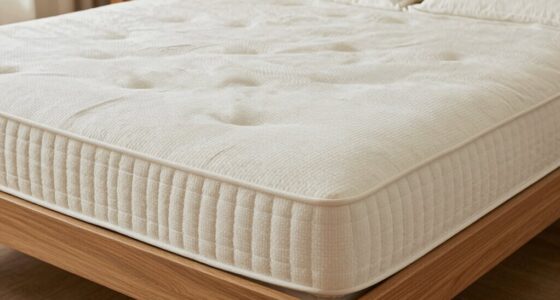
To sleep better as a taller person, focus on choosing a longer mattress—at least 6 inches over your height—and supportive pillows that align your neck and spine. Adjust your bed height for comfort and consider extra-long bedding to prevent bunching. Elevate your legs and use supports between knees or under the arms to maintain proper posture. If lingering discomfort persists, exploring professional guidance can help guarantee you’re maximizing your sleep support—more helpful tips follow.
Key Takeaways
- Use a mattress at least 6 inches longer than your height (80-84 inches) for proper limb support.
- Choose supportive, contouring bedding like memory foam or latex to maintain spinal alignment.
- Select extra-long pillows to support neck, head, and between the knees for optimal posture.
- Adjust bed height or use risers to enhance comfort and spinal support during sleep.
- Avoid stomach sleeping; sleep on your back or side with proper limb support to prevent misalignment.
What Are the Unique Sleep Needs of Taller People?

Tall people often face unique sleep challenges because their longer limbs and increased body mass can make finding a comfortable position more difficult. Height-related sleep issues stem from how taller bodies fit into standard mattresses and pillows, affecting your overall sleep quality. Taller body ergonomics require extra support for your limbs and spine to prevent aches and discomfort. You might experience cramped limbs or difficulty stretching out fully, which can lead to tossing and turning. Maintaining proper alignment is vital to avoid strain on your neck, shoulders, and hips. Understanding these needs helps you identify the right strategies, like adjusting your sleep environment or choosing supportive bedding, so you can wake up refreshed and free from discomfort. Proper ergonomics tailored to your height make a significant difference. Additionally, selecting a high-quality mattress that accommodates your body type can significantly improve sleep comfort and support.
How Do You Pick the Perfect Mattress for a Longer Body?
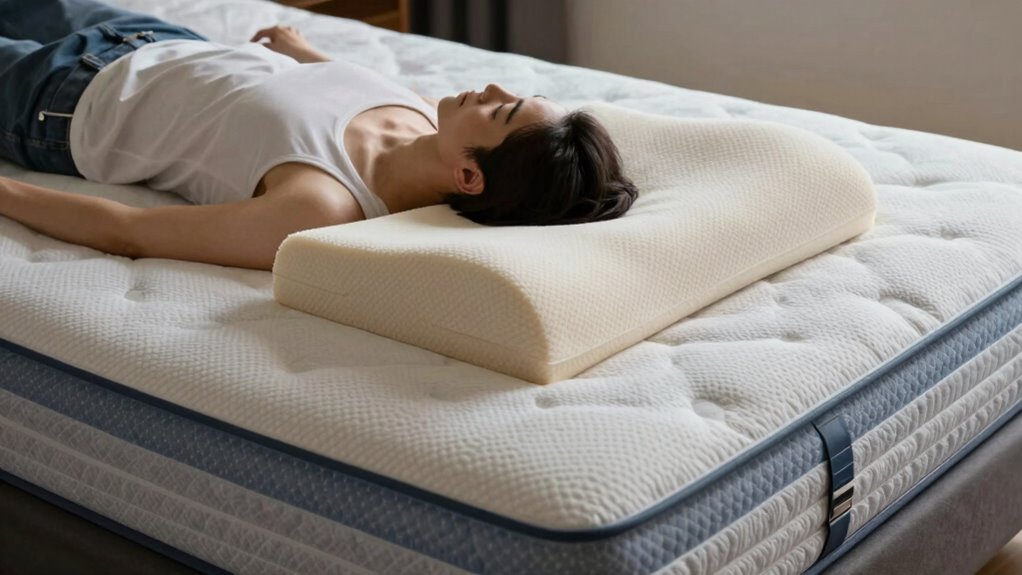
To find the perfect mattress for your longer body, start by considering mattress length to make certain you have enough space. Next, focus on supportive materials that keep your spine aligned and comfortable throughout the night. Finally, choose a firmness level that suits your sleeping position and personal preference for ideal rest. Remember to also assess safety and support features to ensure your mattress provides reliable comfort and durability over time.
Mattress Length Considerations
Choosing the right mattress length is essential for taller individuals to sleep comfortably. If your mattress is too short, you’ll constantly feel cramped, disrupting your sleep posture and making it harder to relax. Look for mattresses that are at least 6 inches longer than your height—ideally 80 to 84 inches—to ensure you have enough space to stretch out fully. Proper length helps maintain healthy breathing techniques, preventing your body from twisting into awkward positions that can hinder airflow. When selecting a mattress, consider how your body length affects your sleep posture, especially when sleeping on your side or back. A longer mattress promotes better alignment, reducing strain and helping you wake up refreshed and ready to face the day. Additionally, understanding field‑of‑view and imaging‑scale examples can help you appreciate the importance of space and proper dimensions for optimal comfort.
Supportive Mattress Materials
Finding the right mattress materials is essential for supporting a longer body, as your weight and pressure points require durable, responsive, and contouring options. Memory foam offers excellent body contouring, relieving pressure on hips and shoulders, while its durability supports your extended frame. Latex support provides a resilient, buoyant feel that adapts to your movements and maintains shape over time. Both materials distribute weight evenly, reducing strain on key areas for taller sleepers. When choosing, consider a mattress with a high-density memory foam layer or natural latex, as these materials offer longevity and reliable support. Incorporating outdoor-ready materials like natural latex can also enhance durability and support for your body. Combining these options ensures you get a supportive surface that accommodates your length, minimizes pressure points, and promotes better sleep quality throughout the night.
Firmness Level Selection
Selecting the right firmness level is key to ensuring your mattress supports your longer frame comfortably throughout the night. A firmer mattress offers better spinal alignment and prevents sagging, while a softer one molds to your body’s contours. To find your ideal firmness, consider your sleep environment and bed accessories. Visualize:
- Lying flat with your hips and shoulders supported evenly
- Feeling stable without excessive pressure points
- Moving easily without feeling stuck
- Maintaining proper alignment with your pillow and sheets
- European cloud innovation can influence the overall quality and sustainability of your sleep setup.
Choose a firmness that balances support and comfort, especially if you use extra bed accessories like toppers or body pillows. The right level enhances your sleep environment, encouraging restful, uninterrupted sleep as a taller person.
Which Extended-Size Pillows Offer the Best Neck Support?
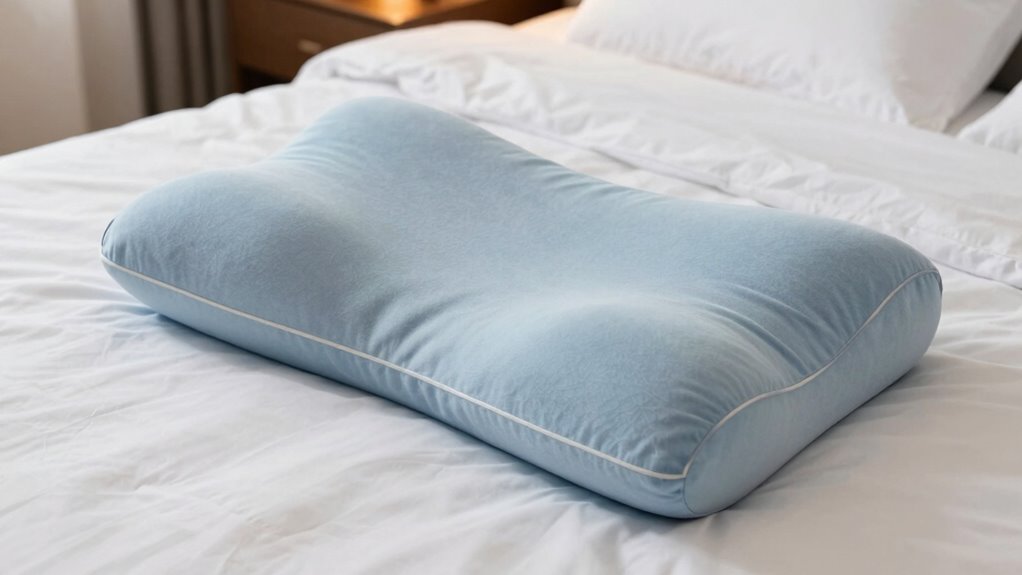
When it comes to extended-size pillows that provide the best neck support, your goal should be to find options that maintain proper spinal alignment while accommodating your height. Look for pillows with medium to firm pillow firmness, which help keep your neck supported without collapsing under pressure. The pillow material also matters: memory foam or latex are excellent choices because they contour to your neck and head, offering customized support. Avoid overly soft pillows that can cause your head to sink and misalign your spine. Additionally, choose a pillow that’s designed specifically for taller individuals, offering extra length and height. This ensures your neck and shoulders stay properly aligned throughout the night, reducing strain and improving sleep quality. Incorporating home décor tips like adjustable pillow heights or ergonomic designs can further enhance your sleep environment and support.
How Can I Adjust My Bed Height for Better Alignment?

Adjusting your bed height can markedly improve your spinal alignment and overall sleep quality. The key is setting the right sleeping surface elevation to support a natural posture. Here are four ways to do it:
Raising or lowering your bed enhances spinal alignment and improves sleep quality naturally.
- Use adjustable bed frames to fine-tune bed frame height for ideal comfort.
- Add or remove risers under the bed legs to raise or lower the sleeping surface.
- Choose a platform bed with a built-in height that suits your stature.
- Incorporate a mattress foundation that complements your bed frame height, ensuring your spine stays aligned. Modern bed technology can also include features like adjustable firmness and integrated support systems to further enhance comfort and support.
Where Can I Find Extra-Long Bedding and Linens?

Finding extra-long bedding and linens can be challenging, but many specialty retailers and online stores now offer options designed for taller individuals. These linens options include sheets, comforters, and duvet covers that accommodate longer beds. To guarantee a proper fit and better comfort, look for brands that specify extra-long or oversized dimensions. You can find a variety of options on popular e-commerce sites, specialty bedding stores, and even directly from manufacturers. Here’s a quick guide to where you can shop:
| Retailer Type | Linen Options Available |
|---|---|
| Online Specialty Shops | Extra-long sheets, duvet covers |
| Big Box Stores | Extended-length bedding sets |
| Custom Bedding Makers | Made-to-measure linens for taller beds |
| Luxury Brands | Premium extra-long bedding collections |
| Direct from Manufacturers | Personalized linen options |
Additionally, body support basics can help ensure a more restful sleep experience for taller individuals.
What Body-Positioning Tips Help Taller People Sleep Comfortably?

Sleeping comfortably as a taller person often depends on adopting the right body positions that support overall alignment and reduce strain. Proper sleep posture guarantees your spine stays neutral and minimizes pressure points. Here are four tips to improve your body-positioning:
- Keep your head aligned with your spine, using a pillow that supports your neck’s length.
- Sleep on your back with a pillow under your knees to maintain lumbar support.
- If sleeping on your side, place a pillow between your knees to keep hips aligned.
- Avoid curling into fetal positions that can twist your spine and disrupt body alignment.
- Choosing the right supportive pillow can help ensure proper alignment and comfort throughout the night.
Focusing on these body-positioning tips helps you maintain proper sleep posture, reducing discomfort and promoting restful sleep. Adjust your position as needed to stay comfortable throughout the night.
Should I Use an Adjustable Bed Frame for Better Support?

Using an adjustable bed frame can considerably enhance your comfort and support, especially if you’re taller. Adjustable frames allow you to customize your sleeping position, providing better alignment for your spine and joints. This flexibility helps reduce pressure points that can cause discomfort overnight. For taller individuals, traditional beds may lack the height or support needed for proper sleep posture. An adjustable frame offers tailored sleep customization, letting you elevate your head or legs as needed. This can alleviate issues like acid reflux, snoring, or circulation problems, improving overall sleep quality. Plus, many adjustable beds are designed to accommodate larger mattresses, making them a practical choice for taller sleepers seeking enhanced support and a more restful night. Incorporating a supportive foundation can also extend the lifespan of your mattress and improve overall stability.
How Can I Support My Legs and Arms During Sleep?
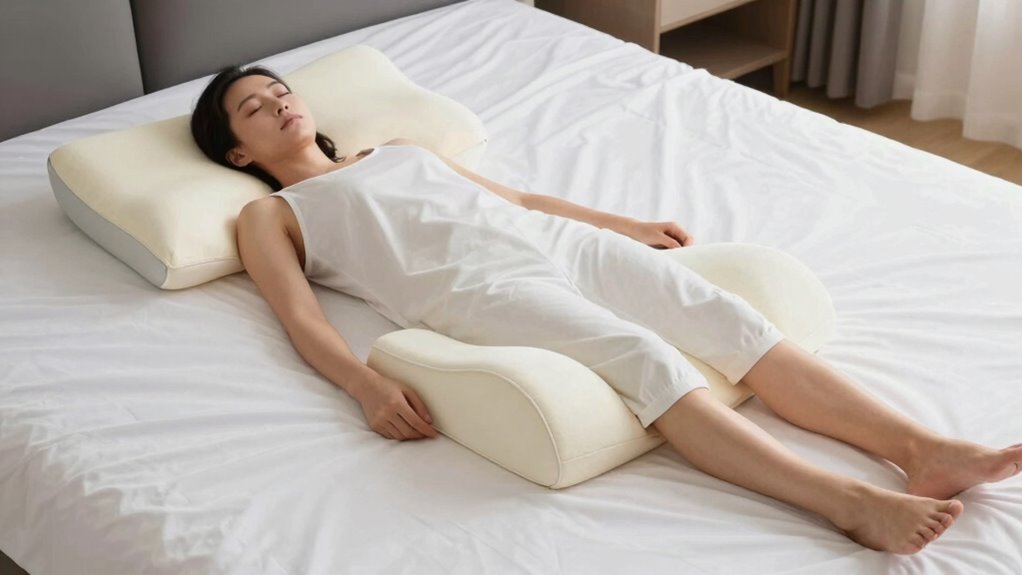
To support your legs and arms comfortably during sleep, try elevating your legs to reduce pressure and improve circulation. Using supportive pillows can help keep your limbs aligned and prevent discomfort. These simple adjustments can make a significant difference in your overall sleep quality.
Elevate Legs for Comfort
Have you ever noticed how your legs and arms feel restless or sore after a night of improper support? Elevating your legs can provide much-needed relief and improve circulation. To achieve effective leg support and leg elevation, consider these options:
- Use a wedge pillow under your calves to lift your legs comfortably.
- Place your legs on a stack of firm pillows to reduce pressure.
- Elevate your legs slightly above heart level to promote blood flow.
- Avoid placing pillows directly under your knees to prevent strain.
Use Supportive Pillows
Supportive pillows can considerably enhance your comfort during sleep by properly cushioning your legs and arms. Using a body pillow allows you to maintain a better sleeping posture, especially if you’re taller. Place the pillow between your legs to align your hips and reduce pressure on your lower back. For your arms, consider hugging a pillow or positioning one under your shoulder to prevent strain and improve circulation. These supportive pillows help keep your limbs in a natural, relaxed position, reducing discomfort and stiffness in the morning. Adjust the height and firmness to suit your body, ensuring your shoulders, hips, and legs are well-supported. Proper use of supportive pillows makes a significant difference in achieving restful, pain-free sleep.
How Do I Keep My Spine Properly Aligned All Night?

Maintaining proper spine alignment throughout the night is essential for comfort and reducing pain, especially for taller individuals. Good sleep posture keeps your spine in a neutral position, preventing strain. To achieve this, consider these tips:
- Use a supportive pillow that aligns your neck with your spine.
- Sleep on your back with a pillow under your knees to reduce lower back stress.
- If you prefer side sleeping, place a pillow between your knees to maintain hip and spine alignment.
- Avoid stomach sleeping, which twists your spine and causes misalignment.
When Is It Time to Seek Professional Sleep or Ergonomic Advice?

Knowing when to seek professional sleep or ergonomic advice is essential, especially if you notice persistent discomfort or pain despite following proper sleep practices. If your sleep hygiene and bedtime routines aren’t improving your comfort or if you experience ongoing neck, back, or joint pain, it’s time to consult a specialist. Poor sleep posture or inadequate support can cause long-term issues, particularly for taller individuals. A professional can evaluate your sleeping environment and suggest tailored ergonomic solutions or adjustments to your mattress, pillows, and sleep setup. Don’t ignore persistent discomfort, as it can impact your overall health and sleep quality. Seeking expert advice guarantees you’re taking the right steps toward better sleep, especially when simple adjustments no longer suffice.
Frequently Asked Questions
Are There Specific Sleep Routines Recommended for Taller Individuals?
Yes, as a taller individual, you should establish sleep routines that prioritize body alignment and good sleep hygiene. Aim to go to bed and wake up at consistent times to regulate your internal clock. Use supportive pillows to keep your spine aligned, and avoid screens before bed. Incorporate relaxing activities like stretching or reading, and verify your sleep environment is cool and dark to promote restful sleep.
How Can I Prevent Sinking Into the Mattress Due to Height?
To prevent sinking into the mattress, choose a firm pillow that provides solid head and neck support, keeping your spine aligned. Opt for a mattress with a sturdy edge to prevent sagging when you sit or sleep near the sides. You can also add a mattress topper for extra firmness and support. These steps help you stay elevated and comfortable, reducing the chances of sinking into the mattress overnight.
Can Specialized Sleep Accessories Improve Comfort for Tall Sleepers?
Specialized sleep accessories can truly enhance your comfort. You might find that choosing a pillow with the right height provides better neck support, while adjusting mattress firmness ensures ideal spinal alignment. These tailored options help prevent discomfort and sinking, making your sleep more restful. Experimenting with different pillow heights and firmness levels allows you to create a personalized sleep environment, so you wake up feeling refreshed and ready for the day.
What Are Signs My Current Bedding Setup Isn’t Supporting My Height?
If your pillow comfort feels inadequate or your mattress firmness leaves you feeling unsupported, these are signs your bedding setup isn’t suited to your height. You might notice persistent neck or back pain, or your legs and arms feeling cramped or strained. For taller sleepers, standard pillows and mattresses often fall short. Upgrading to a taller pillow and a firmer, more supportive mattress can profoundly improve your sleep quality and overall comfort.
How Does Sleep Position Impact Spinal Health for Taller People?
Imagine your spine as a delicate bridge, needing perfect support overnight. Your sleep position directly impacts spinal health; lying flat or twisted can misalign your spine. To protect your taller frame, choose a mattress with the right firmness that supports your body’s natural curves. Maintaining good spinal alignment guarantees you wake refreshed, avoiding aches and promoting healthier posture. Prioritize comfort and positioning to keep your bridge steady through the night.
Conclusion
So, here you are, taller than most, still dreaming of perfect sleep. Ironically, finding the right support might turn out to be your biggest challenge yet—like fitting a skyscraper into a tiny room. But with the right mattress, pillows, and tweaks, you’ll finally get the rest you deserve. Who knew that being tall would mean mastering the art of sleeping comfortably? Sweet dreams, giant—you’ve got this!