
To prevent neck pain, start by choosing a pillow that supports your sleep position—medium-firm for back sleepers, thicker for side sleepers, and soft for stomach sleepers. Keep your head aligned with your spine and avoid high or low pillow placement. Adjust the pillow height and position as needed for comfort, and support natural curves. For more tips on optimizing your sleep setup and staying pain-free, explore further guidance below.
Key Takeaways
- Choose a pillow that supports your sleep position: medium-firm for back, thicker for side, softer for stomach sleepers.
- Ensure the pillow maintains your neck’s natural curve, preventing unnatural angles and misalignment.
- Adjust pillow height to keep your head level with your spine, reducing strain and discomfort.
- Use supportive, ergonomic pillows like memory foam or latex for personalized pressure relief and breathability.
- Proper pillow placement and support help relax neck muscles and promote healthy spinal alignment in just two minutes.
How Pillow Position Affects Neck Pain

Your pillow position plays a crucial role in either alleviating or worsening neck pain. The pillow’s firmness directly impacts neck alignment; too soft, and your head sinks, causing strain. Excessively firm pillows can push your neck into an unnatural position, leading to discomfort. Ideally, your pillow should support the natural curve of your neck, keeping your head aligned with your spine. When choosing pillow firmness, consider your sleep position: softer pillows work well for side sleepers, while firmer ones suit back sleepers. Proper neck alignment reduces muscle tension and promotes better sleep. Using a correct pillow type can help maintain proper spinal alignment and prevent discomfort. Adjusting your pillow’s firmness and position ensures your neck stays in a neutral, comfortable posture throughout the night, preventing unnecessary pain and stiffness in the morning.
Is Your Sleep Setup Causing Neck Discomfort?

If your pillow height or sleep position isn’t right, it can cause neck discomfort overnight. Adjusting your pillow and adopting better sleep habits might make a big difference. Let’s look at how proper pillow height and sleep tips can help prevent neck pain. Ensuring your sleep environment provides proper sleep comfort can significantly impact your neck health.
Proper Pillow Height
Choosing the right pillow height is essential for preventing neck discomfort during sleep. The ideal height supports your neck’s natural curve without forcing it into an awkward position. Your pillow’s firmness and the sleep surface you choose play key roles in achieving this. A pillow that’s too high or too low can strain your neck muscles, leading to pain. If your sleep surface is soft, you might need a firmer pillow to maintain proper alignment. Conversely, a firmer sleep surface may require a lower pillow to avoid elevating your head excessively. The goal is to keep your head and neck in a neutral position, reducing stress on your cervical spine. Adjusting pillow height based on these factors can make a significant difference in your sleep comfort and neck health. Considering pillow ergonomics can help you select the most supportive setup for restful, pain-free sleep.
Sleep Position Tips
Proper pillow height helps maintain neck alignment, but how you sleep on your mattress also influences neck comfort. Your sleep surface and pillow firmness affect whether your neck stays neutral overnight. To prevent neck discomfort, consider these tips:
- Sleep on your back or side, avoiding stomach sleeping, which strains the neck.
- Use a pillow with the right firmness—firm enough to support your neck’s natural curve.
- Ensure your mattress provides proper support, keeping your spine aligned.
- Adjust your pillow height if you notice your neck is bent or strained during sleep.
- Contrast ratio in your bedding setup can subtly influence sleep quality and comfort.
Find the Perfect Pillow for Your Sleep Style

To find the right pillow, consider your sleep position and how it aligns with your comfort needs. Different materials offer varying support and breathability, so pick what suits your preferences best. Choosing the right combination can markedly reduce neck pain and improve your sleep quality. Being aware of personal debt forgiveness options can also help you manage your overall financial health, ensuring peace of mind that contributes to restful sleep.
Sleeping Position Compatibility
Your sleep position plays a crucial role in determining the ideal pillow for neck support. Different positions require different levels of firmness and thickness to maintain proper neck alignment. For back sleepers, a medium-firm pillow with memory foam helps support the natural curve of your neck. Side sleepers benefit from a thicker pillow that fills the space between your shoulder and head, ensuring proper alignment. Stomach sleepers need a softer, thinner pillow to prevent neck strain. Consider these tips for compatibility:
- Back sleepers: Medium firmness, memory foam for neck support
- Side sleepers: Thicker pillow, optimal neck alignment
- Stomach sleepers: Thin, soft pillow to prevent strain
- All positions: Prioritize neck support and comfort for better sleep quality
- Remember that proper pillow selection can also help prevent or alleviate neck pain from sleeping positions.
Pillow Material Choices
Choosing the right pillow material can considerably impact your neck support and overall sleep quality. Memory foam molds to your neck’s shape, providing personalized support that reduces pressure points. Latex, on the other hand, offers resilience and breathability, keeping you cool throughout the night. Imagine these options as different comfort zones:
| Material | Feel | Best For |
|---|---|---|
| Memory Foam | Contours your neck tightly | Those needing firm support |
| Latex | Bouncy and airy | Sleepers who prefer responsiveness |
Visualize a memory foam pillow gently cradling your neck or a latex pillow bouncing back to shape with every move. Both materials can help you find a supportive, comfortable sleep suited to your neck needs. Additionally, understanding sound healing science can inspire a calming bedtime environment, promoting better rest.
How to Position Your Pillow as a Back Sleeper
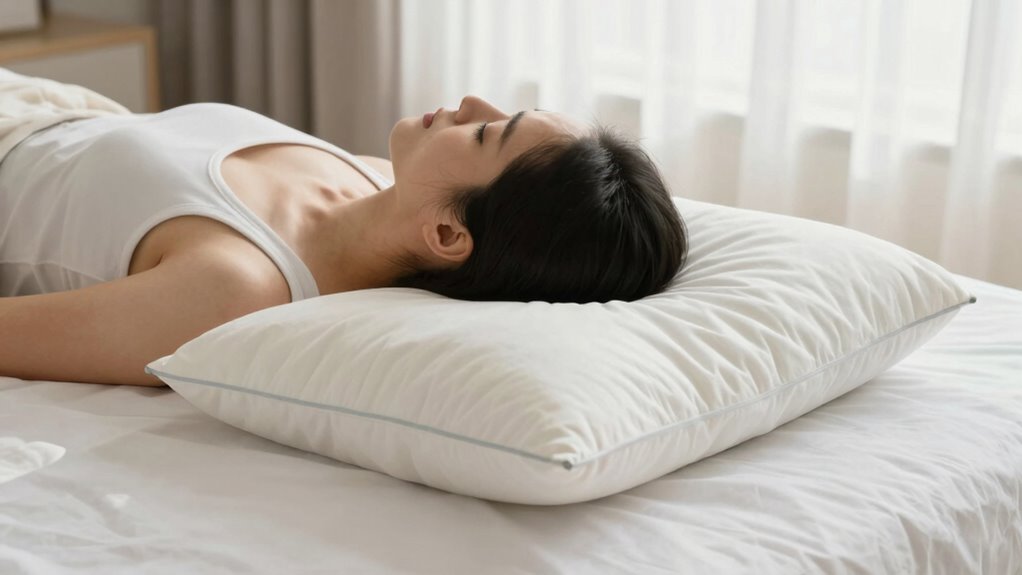
Sleeping on your back requires a pillow that supports the natural curve of your neck without pushing your head too high or letting it sink too low. To achieve this, focus on pillow firmness and your sleep surface. A medium-firm pillow helps maintain proper alignment without causing strain. Follow these tips:
- Choose a pillow with enough loft to fill the space between your neck and mattress.
- Ensure the pillow supports the entire neck and head evenly.
- Adjust the pillow position to keep your head level with your spine.
- Use a supportive sleep surface that prevents sinking or excessive elevation.
- Consider the overall bed setup to optimize comfort and spinal alignment.
Best Pillow Placement for Side Sleepers
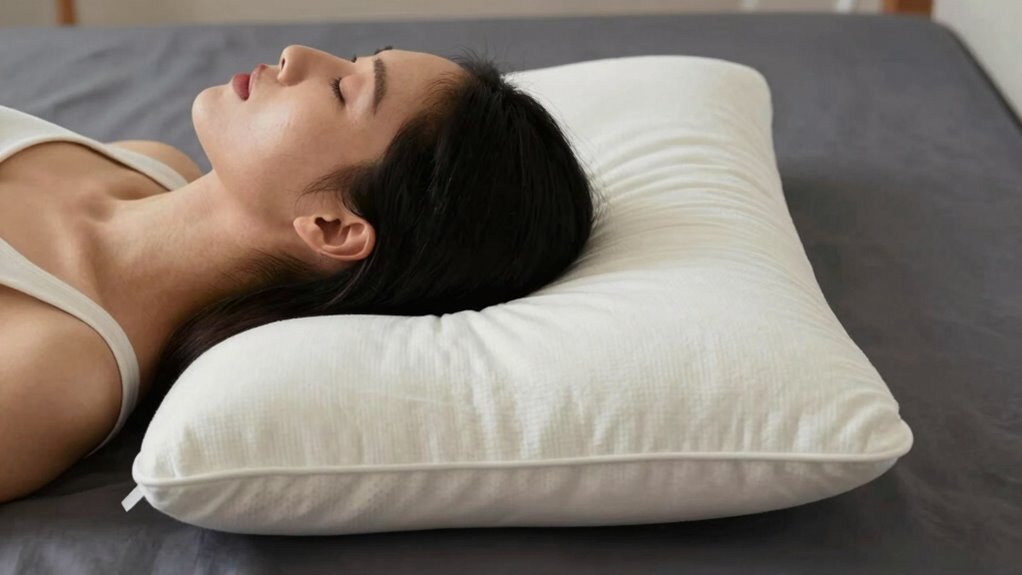
To guarantee proper neck alignment when side sleeping, placing your pillow correctly is essential. Choose a pillow with the right firmness—firm enough to support your head and neck without collapsing under pressure. Your sleep surface also matters; a firm mattress helps keep your spine aligned, reducing strain. Position the pillow so it fills the space between your shoulder and head, keeping your neck straight and in line with your spine. Avoid placing the pillow too high or too low, as this can cause neck twisting or sagging. Ensure the pillow supports the entire width of your neck and head, preventing gaps that lead to discomfort. Proper placement combined with suitable pillow firmness and a supportive sleep surface can considerably reduce neck pain during side sleep. Additionally, being mindful of your sleep environment can enhance overall comfort and support proper neck positioning.
Adjust Pillow Height to Ease Neck Strain

Adjusting your pillow height can markedly reduce neck strain by ensuring proper alignment. When your pillow is too high or too low, it forces your neck into awkward positions, increasing discomfort. To find the right height, consider the following:
- Choose a pillow with adjustable firmness to support your neck properly.
- Ensure the pillow maintains neck alignment by filling the space between your head and shoulder.
- Test different heights by lying down and checking if your neck feels relaxed.
- Use a thicker pillow if you sleep on your side, and a thinner one for back sleeping.
Proper pillow height promotes better neck alignment, reducing strain and preventing pain. Tailoring your pillow to your preferred sleep position and firmness needs makes a significant difference in comfort.
Keep a Good Sleep Posture All Night Long
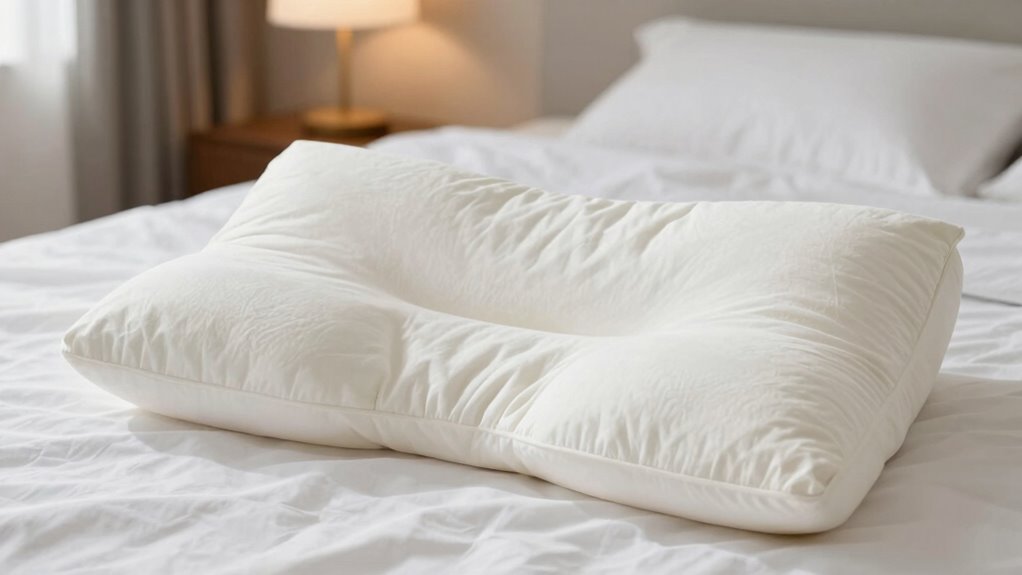
Maintaining a good sleep posture throughout the night helps keep your neck and spine properly aligned, preventing discomfort and stiffness. To do this, focus on ergonomic support by choosing a pillow that supports natural neck curves and maintains alignment. Good sleep hygiene also plays a role—avoid sleeping in positions that twist or strain your neck, and keep your sleeping environment comfortable and quiet. Proper pillow support can significantly reduce neck tension and improve sleep quality. Consistency is key; sticking to a regular sleep schedule reinforces healthy habits and reduces tension. Ensure your mattress isn’t too soft or firm, supporting your body evenly. By combining proper ergonomic support with sound sleep hygiene, you can minimize neck pain and wake up feeling refreshed, ready to tackle the day with less stiffness and discomfort.
Quick Pillow Tips for Instant Neck Relief

When you need quick relief from neck pain, choosing the right pillow position can make an immediate difference. Focus on supporting your neck muscle properly by adjusting your pillow firmness. A medium-firm pillow offers the best balance, preventing your neck from sinking too low or elevating too high. Here are some quick tips:
- Use a pillow that supports your natural neck curve.
- Adjust pillow height to keep your head aligned with your spine.
- Avoid overly soft pillows that lack support.
- Consider a cervical pillow for targeted neck muscle relief.
These small changes can reduce strain, ease tension, and provide instant neck relief without overcomplicating your sleep setup. Proper pillow position instantly helps your neck muscles relax.
When Should You See a Professional for Neck Pain?
Neck pain that persists beyond a few days, worsens over time, or is accompanied by other concerning symptoms warrants professional evaluation. If simple neck stretches or posture correction techniques don’t bring relief, it’s time to see a healthcare provider. Ongoing pain could indicate an underlying issue that needs targeted treatment. A professional can assess your posture and recommend specific exercises or therapies to improve alignment. They might also identify nerve issues or other conditions requiring medical intervention. Don’t ignore persistent pain—early diagnosis can prevent it from worsening. If your discomfort interferes with daily activities or is combined with symptoms like numbness, tingling, or weakness, seek help promptly. Addressing these signs quickly ensures you get the proper care and relief you need.
Frequently Asked Questions
Can Pillow Materials Impact Neck Pain?
Yes, pillow materials can impact neck pain by influencing neck comfort. If your pillow material is too firm or too soft, it can cause misalignment and strain. Materials like memory foam or latex offer better support and contour to your neck, promoting comfort. Choosing the right pillow material helps maintain proper neck alignment, reduces tension, and can prevent or alleviate neck pain. Always select a material that suits your sleep position and personal comfort needs.
How Often Should I Replace My Pillow?
Think of your pillow like a trusty bike chain—over time, it wears out. You should replace your pillow every 1 to 2 years, depending on its pillow lifespan and how well you care for it. Frequent replacement keeps your neck supported and reduces pain. If you notice lumps, loss of shape, or increased discomfort, it’s time to swap it out. Regular updates improve sleep quality and prevent unnecessary strain.
Do Ergonomic Pillows Prevent Neck Issues?
Ergonomic pillows can help prevent neck issues by providing proper support, but they aren’t a guarantee. You should also consider factors like pillow temperature and color, as they affect comfort and allergy sensitivity. A cooler pillow with breathable fabrics and calming colors can improve sleep quality, reducing neck strain. Remember, using the right pillow for your needs is key to avoiding neck pain and promoting better rest.
What Sleep Positions Are Best for Neck Health?
Did you know that sleeping in a proper posture can reduce neck pain by up to 60%? The best sleep positions for neck health promote proper neck alignment and minimize strain. Sleeping on your back with a supportive pillow or on your side with a pillow that keeps your neck aligned helps maintain good sleep posture. Avoid stomach sleeping, as it twists your neck and can cause discomfort.
Are There Specific Pillow Shapes for Neck Support?
Yes, there are specific pillow shape varieties designed for neck support, like cervical or contour pillows. These shapes promote proper spinal alignment by fitting the natural curve of your neck. The ergonomic design benefits include reducing strain and preventing neck pain. Choosing a pillow with the right shape can markedly improve your sleep quality and alleviate discomfort, especially if you often wake up with neck stiffness or soreness.
Conclusion
Did you know that poor pillow positioning can increase neck pain by up to 60%? By taking just two minutes to adjust your pillow’s height and placement, you could profoundly reduce discomfort and improve sleep quality. Remember, your sleep setup matters—find what works best for your sleep style and stay mindful of your posture all night. Small tweaks can make a big difference, so don’t hesitate to prioritize your neck health tonight.