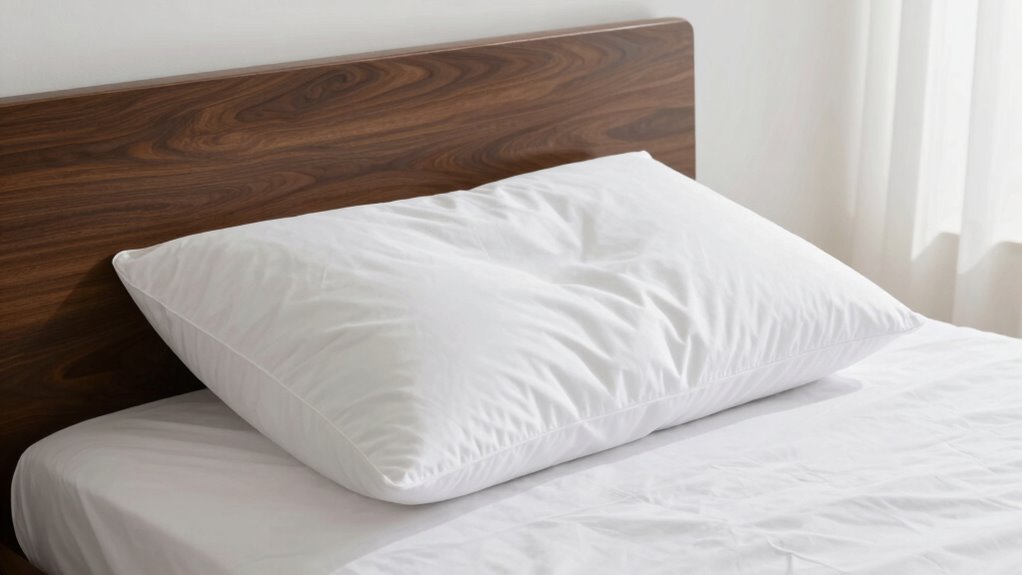

Your pillow loft, or height, plays a vital role in keeping your neck aligned and reducing discomfort while you sleep. If it’s too high or too low, it can cause neck strain, stiffness, or restless nights. The right loft depends on your sleep position and personal comfort, helping you maintain natural spinal curves. To find the best fit, you should pay attention to your body’s signals. Discover more tips to improve your sleep posture and support.
Key Takeaways
- Proper pillow loft maintains neutral neck alignment, reducing strain and preventing discomfort during sleep.
- The ideal pillow height varies by sleep position: medium for back sleepers, taller for side sleepers, flatter for stomach sleepers.
- Incorrect loft causes misalignment, leading to neck stiffness, headaches, and restless sleep.
- Adjustable pillows help customize height to match individual needs and sleeping habits for optimal support.
- Recognizing signs like waking with neck pain or frequent repositioning indicates a need to adjust pillow loft.
What Is Pillow Loft and Why Does It Matter for Your Neck?

Pillow loft refers to the thickness or height of your pillow, which plays a crucial role in supporting your neck properly. The right loft depends on your preferred pillow materials, such as memory foam, latex, or down, each offering different levels of support and firmness. Choosing the correct loft improves your sleep hygiene by maintaining proper spinal alignment, reducing strain, and preventing discomfort. When your pillow height is too high or too low, it can cause neck pain and disrupt restful sleep. Proper pillow loft helps maintain a neutral neck position, which is essential for preventing muscle strain and promoting optimal recovery during sleep. Additionally, selecting a pillow with an appropriate loft can influence your overall sleep posture, leading to fewer aches and pains. By selecting a pillow with an appropriate loft, you help your neck stay neutral throughout the night, which promotes better sleep quality and overall health. Proper pillow loft is essential for creating an ideal sleep environment tailored to your body and sleep habits. Additionally, understanding sleep environment essentials can further enhance your overall sleep quality and health. Ensuring that your sleep environment is free from distractions can also contribute significantly to restful, uninterrupted sleep. Being aware of how pillow loft interacts with other sleep factors can help you optimize your entire sleep setup for improved comfort.
How Does Your Sleep Position Influence the Ideal Pillow Height?
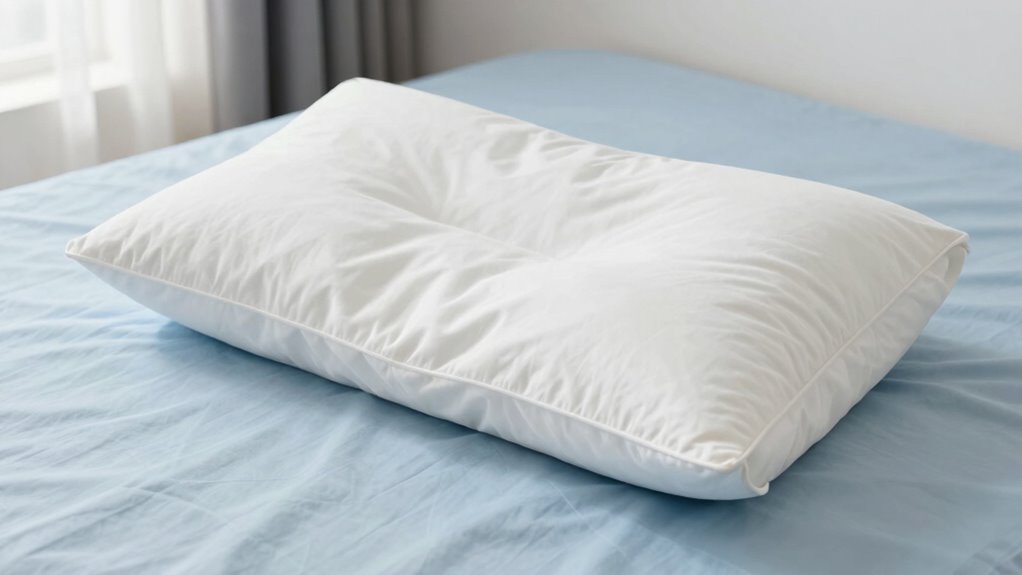
Your sleep position greatly affects the ideal pillow height for you. In terms of sleep ergonomics, your body’s alignment during sleep determines how thick or firm your pillow should be. If you sleep on your back, a medium loft helps maintain proper neck alignment without lifting your head too high. Side sleepers need a taller pillow to fill the gap between your shoulder and head, ensuring neutral spine positioning. Stomach sleepers require a flatter pillow or no pillow at all to prevent neck strain. Proper pillow selection based on your sleep position helps reduce strain and promotes better posture throughout the night. Additionally, body alignment principles highlight the importance of choosing the right pillow to support natural posture and reduce discomfort. Ensuring your pillow supports spinal alignment can significantly improve sleep quality and reduce aches. Adjusting your pillow height accordingly guarantees maximum comfort while supporting proper neck and spine alignment. Choosing the right pillow can significantly influence your overall sleep quality and long-term posture health. Incorporating smart sleep technology such as adjustable pillows or sleep monitors can help optimize your sleep environment for better alignment and comfort. Recognizing the impact of sleep position on pillow height ensures you select the most supportive and comfortable option for your individual needs.
What Happens When Your Pillow Is Too High or Too Low?
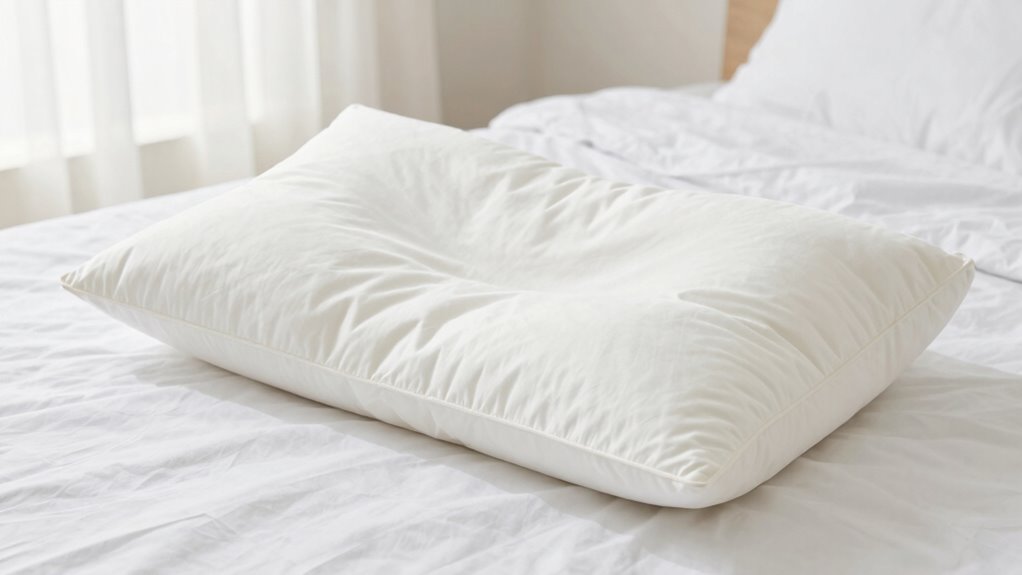
When a pillow is too high or too low, it can cause misalignment in your neck and spine, leading to discomfort and potential pain. An improper loft disrupts your natural posture, affecting sleep quality. The pillow material influences how well it maintains its height, while your sleep environment—such as temperature and humidity—can impact how your pillow retains its shape. Additionally, selecting a pillow with the appropriate contrast ratio can help improve overall sleep comfort by ensuring the pillow’s support and stability throughout the night. Proper pillow support is also essential for spinal alignment, reducing strain on your neck muscles and promoting better rest. Using a pillow with the correct loft helps prevent neck strain and supports proper posture. Consider these effects:
- Strained neck muscles, causing stiffness
- Numbness or tingling in arms or shoulders
- Increased tossing and turning
- Headaches upon waking
- Chronic discomfort if misalignment persists
Understanding how pillow support influences your sleep can help you make better choices for long-term comfort. Additionally, the material properties of your pillow play a crucial role in maintaining its loft and overall supportiveness, which directly impacts spinal health.
How Can You Tell If Your Pillow Loft Isn’t Right for You?

If you wake up with persistent neck pain or find yourself adjusting your pillow constantly, your loft might not be right. An uneven sleep posture or difficulty keeping your head aligned could also signal a mismatch. Pay attention to these signs—they’re clues that your pillow’s height might need adjusting. Ensuring your pillow has the appropriate pillow loft can help maintain proper neck and spine alignment during sleep. Additionally, selecting a supportive pillow designed for your sleeping position can further improve comfort and alignment throughout the night. Using the correct pillow material can also influence how well your pillow maintains its loft and provides consistent support. Choosing a pillow with adjustable loft allows you to customize the height for optimal support and comfort. Properly choosing and adjusting your pillow can also contribute to healthier sleep posture, reducing discomfort and improving sleep quality.
Persistent Morning Neck Pain
Persistent morning neck pain often signals that your pillow loft might not be supporting your neck properly. If you wake up with stiffness or soreness, it could be due to poor sleep ergonomics. An improper pillow height causes neck strain, forcing muscles to work harder overnight. To assess if your pillow is the culprit, consider these signs:
- You feel tension or tightness upon waking
- Pain worsens with prolonged use of the same pillow
- Your neck feels misaligned or out of place
- You experience frequent headaches linked to neck discomfort
- Your discomfort persists despite trying different sleep positions
- Proper Pillow loft and its proper adjustment play a crucial role in maintaining neck alignment and reducing discomfort. Proper support ensures your neck stays aligned, reducing pain and promoting restful mornings. Additionally, understanding the ergonomics of sleep can help you choose the right pillow height for optimal support. Ensuring the correct sleep posture can further alleviate neck strain and improve overall sleep quality. Recognizing the relationship between pillow height and neck health can guide you in making informed adjustments for better sleep.
Uneven Sleep Posture
Uneven sleep posture often reveals that your pillow loft isn’t providing proper support. When your head and neck aren’t aligned, you might notice discomfort or waking up with stiffness. This misalignment can compromise sleep quality, causing tossing and turning throughout the night. If your shoulders are uneven or if one side of your neck feels more strained, your pillow may be too high or too low. An ergonomic support that matches your sleep position helps maintain proper alignment, reducing pressure points and encouraging restful sleep. Pay attention to how you feel upon waking—persistent aches or a crooked posture can signal your pillow isn’t right. Adjusting your pillow loft to better support your natural neck curve can considerably improve sleep quality and prevent uneven sleep posture.
Difficulty Maintaining Alignment
How can you tell if your pillow loft isn’t right for you? If you struggle to maintain proper neck alignment during sleep, your pillow may not be providing adequate ergonomic support, affecting sleep comfort. You might wake up with neck pain or stiffness, or find yourself adjusting your pillow frequently. Other signs include restless sleep, headaches, or waking up feeling unrefreshed. Consider these indicators:
- Persistent neck or shoulder pain
- Frequent repositioning during sleep
- Feeling too high or too low in the pillow
- Disrupted sleep due to discomfort
- Morning stiffness or headaches
These issues suggest your pillow isn’t supporting your natural sleeping posture, making it difficult to maintain alignment. Choosing the right loft is essential for ergonomic support and a restful, comfortable sleep.
How Do You Choose the Best Pillow Height for Your Sleep Style?

Choosing the right pillow height is essential for a good night’s sleep because it supports your neck and spine properly. To find the best fit, consider your sleep style—whether you sleep on your back, side, or stomach—as each requires different lofts for ideal alignment. Your pillow firmness also plays a role; firmer pillows often support higher lofts, while softer ones may need to be lower. Additionally, your sleep environment influences your choice—if you tend to sleep hot, breathable materials can affect how the pillow feels and performs. Experiment with different heights and firmness levels to see what keeps your neck aligned without causing discomfort. The goal is to find a balance that offers support and comfort tailored to your unique sleep habits.
How Can You Keep Your Neck Aligned for Better Sleep and Less Discomfort?

Proper neck alignment during sleep can markedly reduce discomfort and prevent long-term issues. To maintain this, focus on sleep ergonomics and prevent neck tension. Use a pillow that supports your neck’s natural curve and keeps your head aligned with your spine. Adjust your sleeping position to avoid twisting or bending your neck unnaturally. Consider ergonomic pillows designed for your preferred sleep style. Keep your head and neck supported without elevating or lowering too much. Regularly stretch your neck muscles and stay mindful of posture during the day.
- Choose a pillow with suitable loft for your sleep position
- Maintain a neutral spine alignment throughout the night
- Avoid sleeping on your stomach, which strains your neck
- Use a supportive pillow that reduces neck tension
- Adjust your sleep environment for ideal sleep ergonomics
Frequently Asked Questions
Can Changing Pillow Loft Improve Chronic Neck Pain?
Changing your pillow loft can definitely improve chronic neck pain. You should consider your sleep position and pillow materials to find the right height that keeps your neck aligned. For side sleepers, a firmer, thicker pillow works best, while back sleepers benefit from medium lofts. Using a pillow with appropriate materials, like memory foam or latex, provides better support, reducing strain and alleviating pain over time.
Does Pillow Loft Affect Sleep Quality Long-Term?
Did you know that poor sleep posture affects 70% of adults? Pillow loft plays a vital role in sleep quality long-term, as it influences your neck alignment and comfort. When you choose the right loft, it supports proper spinal alignment, reducing discomfort. Pillow materials also matter—they impact breathability and pressure distribution. By selecting your pillow wisely, you can enjoy better sleep posture and improve your sleep quality over time.
Are Adjustable Pillows Better for Personalized Loft?
Yes, adjustable pillows are better for personalized loft because they give you ergonomic support tailored to your sleeping posture. By customizing the height, you can maintain proper neck alignment, reducing strain and discomfort. This flexibility helps you find the perfect loft for your body, promoting better sleep quality and long-term comfort. With an adjustable pillow, you actively support healthy sleep habits and prevent issues caused by improper pillow height.
How Often Should I Reassess My Pillow Height?
You should reassess your pillow height every few months, especially if your pillow materials or sleeping positions change. Over time, foam or memory foam can compress, affecting support, and shifts in sleep posture can lead to discomfort. Regular checks ensure your pillow maintains the correct loft, keeping neck alignment ideal. Adjusting your pillow based on these factors helps prevent pain and promotes better sleep quality.
Does Pillow Loft Influence Shoulder Comfort During Sleep?
Yes, pillow loft influences shoulder comfort during sleep. When your pillow has the right height, it provides proper neck support, which helps maintain shoulder alignment and reduces strain. If the loft is too high or too low, it can cause your shoulders to tense or sag, leading to discomfort. Make sure your pillow supports your neck comfortably, so your shoulders stay relaxed and properly aligned throughout the night.
Conclusion
Finding the right pillow loft is like discovering the holy grail of good sleep. When your pillow supports your neck properly, you wake up refreshed, not like a character from a Dickens novel suffering from the night’s rigmarole. Pay attention to how your sleep position and comfort tell you if your loft needs a tweak. With a little trial and error, you’ll find that perfect height—making every night feel like a restful slumber in a cozy castle.