

Sleeping with a pillow between your arms can support shoulder health by maintaining proper alignment and reducing muscle strain, especially if you sleep on your side. It helps keep your arms and shoulders in a natural position, which can ease discomfort and improve sleep quality. However, selecting the right pillow firmness and positioning is key to avoiding strain or discomfort. If you want to guarantee you’re doing it safely and effectively, there’s more helpful guidance to explore.
Key Takeaways
- Using a pillow between the arms can support shoulder alignment and reduce muscle strain during sleep.
- Proper pillow firmness and support help maintain natural arm and shoulder positions, preventing discomfort.
- Avoid overly soft or thick pillows that may restrict movement or cause unnatural shoulder angles.
- Persistent shoulder pain or limited mobility should prompt consultation with a healthcare professional.
- Adjusting sleep posture and choosing supportive pillows can enhance shoulder comfort and prevent long-term issues.
What Are the Benefits of Sleeping With a Pillow Between Your Arms?

Sleeping with a pillow between your arms can provide significant benefits for your comfort and posture. This position helps improve sleep posture by supporting your shoulders and aligning your spine properly. Using a pillow with good pillow ergonomics distributes pressure evenly, reducing strain on your neck and back. It encourages a natural, relaxed position for your arms, preventing them from falling into awkward angles that cause discomfort. This can also alleviate shoulder tension and promote better circulation. Additionally, the pillow acts as a barrier, helping you maintain your chosen sleep position throughout the night. Proper spinal alignment is essential for reducing discomfort and preventing long-term issues. Overall, this simple adjustment enhances your sleep quality by ensuring proper support and reducing the risk of aches and pains caused by poor sleep posture.
What Concerns Should You Watch Out for With This Sleep Position?

While placing a pillow between your arms can improve comfort and posture, it’s important to be aware of potential concerns. First, if the pillow isn’t soft enough, it may cause discomfort or restrict arm movement, leading to stiffness. Second, poor arm positioning could strain your shoulders or neck, especially if the pillow pushes your arms into awkward angles. Third, an overly thick or firm pillow might create unnatural alignment, increasing pressure on joints and muscles. Be mindful of pillow softness to avoid unnecessary pressure points. Also, ensure your arm positioning is natural and relaxed to prevent muscle strain. Additionally, paying attention to Free Floating principles can help maintain proper body alignment during sleep, reducing discomfort. Paying attention to these factors can help you enjoy the benefits without risking discomfort or tension.
How Can a Pillow Improve Your Shoulder Alignment and Comfort?
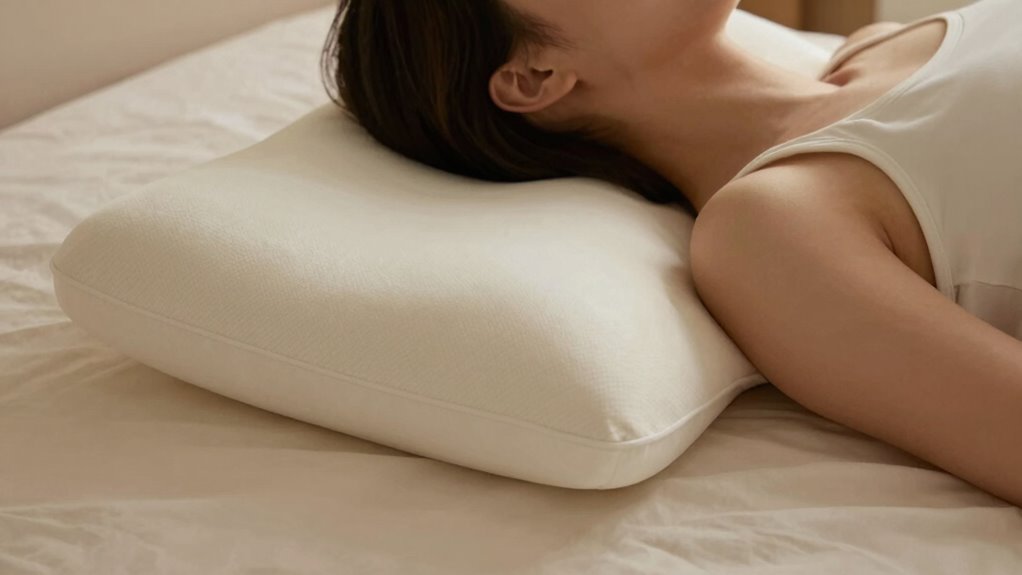
Using a pillow between your arms can considerably enhance shoulder alignment by supporting proper posture during sleep. The right pillow firmness assures your arms stay comfortably supported without sinking too deeply or feeling too stiff, which helps maintain natural arm positioning. A firmer pillow can keep your arms in a relaxed, slightly elevated position, reducing strain on your shoulders. Proper arm positioning is key to preventing misalignment and discomfort. When your shoulders are aligned correctly, you reduce tension and avoid stiffness or pain. This setup encourages your shoulders to stay in a neutral position throughout the night. By choosing a pillow that offers appropriate firmness and supports good arm placement, you can wake up feeling more refreshed with less shoulder soreness. Ensuring the pillow’s support and firmness match your needs is essential for optimal comfort and alignment.
Could Sleeping With a Pillow Between Your Arms Harm Your Shoulders?

Sleeping with a pillow between your arms might cause shoulder strain if it puts your joints in an awkward position. Over time, this misalignment could affect your shoulder’s health and comfort. It’s important to contemplate whether this sleeping habit might lead to long-term damage or pain. Incorporating smart appliance technology or ergonomic supports could help optimize sleep posture and reduce potential strain.
Potential Shoulder Strain Risks
Although placing a pillow between your arms might seem comfortable, it can sometimes lead to shoulder strain. The pillow materials and your sleep posture play significant roles in this risk. If the pillow is too firm or too soft, it can cause unnecessary pressure or lack of support. Similarly, poor sleep posture—such as twisting your shoulders or keeping your arms at awkward angles—can exacerbate discomfort.
Potential shoulder strain risks include:
- Increased muscle tension from improper pillow support.
- Nerve compression if the pillow shifts during the night.
- Aggravation of pre-existing shoulder conditions due to sustained awkward positions.
Being mindful of pillow materials and maintaining a neutral sleep posture can help prevent these issues and promote healthier shoulder muscles overnight.
Impact on Shoulder Alignment
Placing a pillow between your arms can alter your shoulder alignment, potentially leading to misalignment over time. Your sleep posture plays a key role in how your shoulders rest during the night. If the pillow is too thick or made from firm materials, it might push your shoulders into unnatural positions, causing strain. Conversely, softer pillow materials may allow better alignment without forcing your shoulders out of their natural position. Additionally, high-quality pillows designed for proper support can help maintain natural shoulder and neck alignment. Consistently sleeping with a pillow between your arms could, over time, contribute to uneven shoulder positioning, which might lead to discomfort or imbalance. To minimize these risks, choose a pillow material that offers gentle support and promotes a natural sleep posture, ensuring your shoulders stay aligned and reducing the chance of long-term issues.
Long-Term Damage Possibility
While using a pillow between your arms may feel comfortable initially, it can pose long-term risks to your shoulder health. Over time, improper support or frequent use may lead to issues like muscle strain or joint discomfort. The durability of your pillow plays a role here—cheap or poorly made pillows can lose their shape quickly, reducing effective arm support. Additionally, the materials used in your pillow matter; softer or less supportive arm support materials might cause your shoulders to settle into unnatural positions. Incorporating connected equipment or wellness-focused pillows designed for proper support can help mitigate these risks and promote better shoulder health.
How Do You Choose the Best Pillow for Arm Support?

Choosing the right pillow for arm support starts with understanding your sleeping position and personal comfort preferences. If you sleep on your side, opt for a pillow with medium firmness that provides support without pushing your shoulder too high. For back sleepers, a softer pillow helps maintain proper sleep posture without straining your shoulders. Stomach sleepers should choose a very soft or thin pillow to avoid unnecessary pressure. Consider the pillow’s firmness because it influences how well your arm and shoulder stay aligned. A pillow that’s too firm can cause discomfort, while one that’s too soft won’t provide enough support. Additionally, selecting a pillow that complements your overall living space design can enhance your sleep environment. Ultimately, your goal is a pillow that keeps your shoulder in a neutral position, reducing strain and promoting better sleep.
What Are Some Alternative Sleep Positions for Shoulder Health?

If you find that sleeping on your side or back strains your shoulders despite selecting the right pillow, exploring alternative positions might help. Adjusting your sleeping posture can reduce shoulder stress and improve comfort. Consider these options:
- Fetal Position: Curling into a loose fetal position minimizes shoulder rotation and pressure, easing strain.
- Stomach Sleeping with Support: If you prefer stomach sleeping, place a thin pillow under your pelvis to maintain spinal alignment and reduce shoulder tension.
- Semi-Fetal or Side-lying with Arm Support: Use a supportive pillow between your arms or under your shoulder to keep your sleeping posture aligned and reduce strain.
Choosing the right pillow for each position is essential to supporting shoulder health and maintaining proper pillow selection. Incorporating at-home sleep technology such as adjustable pillows or posture monitors can further optimize your sleep setup and enhance shoulder comfort.
When Is It Time to Talk to a Healthcare Professional?

If you experience ongoing discomfort or pain, it’s a sign you should see a healthcare professional. Similarly, if your shoulder’s range of motion is limited and doesn’t improve, professional advice is necessary. Don’t ignore these symptoms—they could signal a more serious issue.
Persistent Discomfort or Pain
Persistent discomfort or pain while sleeping with a pillow between your arms isn’t something to ignore. It could signal that your sleep posture or pillow selection isn’t suitable, leading to strain on your shoulder or neck. If pain persists beyond a few nights, it’s time to consult a healthcare professional. Consider these factors:
- Severity and duration of pain, especially if it worsens or lasts several days.
- Whether your sleep position consistently causes discomfort, indicating a need to adjust your sleep setup.
- If recent changes in pillow type or height seem to correlate with increased pain, suggesting you need a different pillow choice to better support your shoulder.
Ignoring persistent pain can worsen underlying issues, so listen to your body and seek expert advice when needed.
Limited Range of Motion
A limited range of motion in your shoulder or arm can be a clear sign that it’s time to consult a healthcare professional. If your sleep posture has led to ongoing difficulty moving your shoulder, it indicates that something more serious may be happening. Reduced shoulder mobility, especially if it worsens or persists, can signal injury, inflammation, or nerve issues that need medical attention. Don’t ignore these signs, as delaying treatment might prolong discomfort or cause further damage. Pay attention to how your shoulder feels during daily activities and when sleeping. If you notice a noticeable decrease in movement or stiffness that doesn’t improve, it’s best to seek professional advice to address underlying issues early. Recognizing shoulder function and changes in mobility can help you determine when to seek help.
Frequently Asked Questions
Can Sleeping With a Pillow Between My Arms Worsen Shoulder Pain?
Sleeping with a pillow between your arms can worsen shoulder pain if the pillow’s thickness disrupts proper arm alignment. An overly thick pillow may push your arms into unnatural positions, increasing strain on your shoulder. To avoid this, choose a pillow that supports your arms comfortably without forcing them into awkward angles. Proper arm alignment helps reduce shoulder pain and promotes better sleep.
Is There an Ideal Pillow Firmness for Shoulder Support?
You should choose a medium-firm pillow for ideal shoulder support. Too soft, and your shoulder sinks, causing strain; too firm, and it can create pressure points. Think of it like balancing between cloud-like softness and firm comfort. The right pillow firmness cradles your shoulder without forcing it or leaving it unsupported, helping reduce pain and improve sleep quality. Find that sweet spot, and your shoulder will thank you.
How Long Should I Maintain This Sleep Position for Benefits?
You should maintain this sleep position for at least 20 to 30 minutes to experience its benefits. During this time, guarantee your pillow hygiene by washing pillowcases regularly and keeping your sleep environment clean. This helps prevent bacteria buildup and allergies. Keep the position comfortable and supportive, and listen to your body. Consistently practicing this can improve shoulder alignment, but avoid staying in one position too long to prevent stiffness.
Are There Specific Pillow Shapes Better for Arm Support?
Like Goldilocks searching for just right, you want a pillow shape that offers perfect arm support. Look for contoured or ergonomic pillows designed for ideal arm alignment, made from soft, breathable materials like memory foam or hypoallergenic fiberfill. These shapes cradle your arms comfortably, preventing strain and promoting better sleep. Choosing the right pillow material guarantees lasting comfort, while the shape keeps your arms aligned, helping you wake up refreshed.
Can This Sleep Position Help Prevent Shoulder Injuries?
Sleeping with a pillow between your arms can help prevent shoulder injuries by providing ergonomic benefits. It maintains proper shoulder alignment and reduces strain, which supports muscle and joint health. This position can also improve your sleep quality by offering comfort and reducing discomfort during the night. By keeping your shoulders supported, you lower the risk of strain, stiffness, and injury, ensuring a more restful and safe sleep experience.
Conclusion
Sleeping with a pillow between your arms might just be the secret weapon your shoulders need—it’s like giving them a gentle hug that keeps them happy all night long. But beware, ignoring discomfort could turn your peaceful sleep into a shoulder nightmare. Choose the right pillow, stay mindful of your body signals, and don’t hesitate to seek help if pain persists. Your shoulders deserve a night’s rest that’s as perfect as a dream—so treat them right!