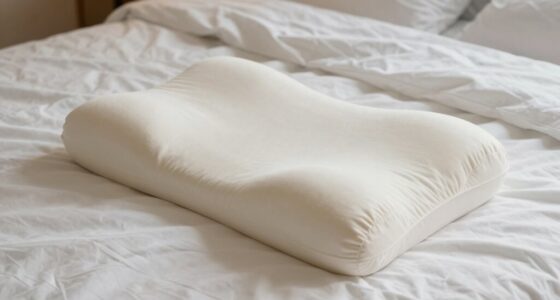

The gap under your knees when sleeping on your back happens because of your body’s anatomy, posture, and mattress support, which can affect your spine alignment and comfort. When unsupported, it can cause misalignment, leading to pain in your neck, back, or hips. To reduce this gap, try pillow support, adjusting your sleep position, and choosing a supportive mattress. Keep going, and you’ll discover more ways to improve your sleep and comfort.
Key Takeaways
- The knee gap in back sleepers is caused by muscle tone, joint shape, and sleep posture, influenced by body support and positioning.
- An excessive knee gap can misalign the spine and hips, leading to back, neck, and hip discomfort.
- Placing pillows or supports between the knees helps maintain proper leg and spine alignment.
- Choosing medium-firm mattresses and contouring bedding promotes proper support and reduces knee gaps.
- Proper knee support during sleep enhances overall comfort, reduces pain, and improves sleep quality.
What Is the Anatomy Behind the Gap Under Your Knees?
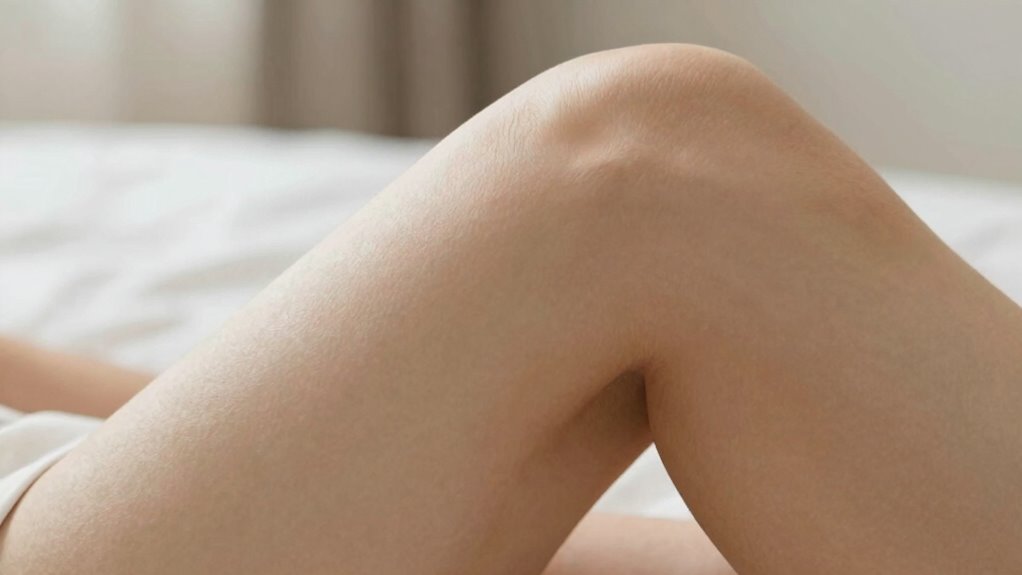
The gap under your knees is primarily caused by the natural anatomy of your leg muscles and joints. Your knee joint is a hinge joint that allows bending and straightening, while the surrounding leg anatomy influences how your knees rest when you’re lying down. When you lie on your back, the shape and length of your thigh and calf muscles create space beneath your knees. The way your muscles and ligaments are positioned affects how much your knees bend and how they settle into the mattress. Additionally, the natural curve of your leg bones can contribute to this gap. It’s a normal part of your leg anatomy, and it varies from person to person based on muscle tone and joint flexibility. Understanding joint flexibility can help explain why some individuals experience a more pronounced gap than others.
How Does the Knee Gap Affect Your Spinal Alignment and Sleep?

When there’s a noticeable gap under your knees while lying on your back, it can influence your spinal alignment in subtle but significant ways. Without proper knee cushioning, your lower back might arch excessively, straining your spine and disrupting sleep ergonomics. This gap can cause your pelvis to tilt forward, leading to misalignment that may result in discomfort or pain over time. Properly supporting this space helps maintain the natural curve of your lower back, promoting better spinal posture. When your knees are supported correctly, your entire back stays in a neutral position, reducing pressure points and encouraging restful sleep. Addressing the knee gap is a simple yet effective way to improve sleep quality and protect your spinal health during the night. Using an appropriate pillow or cushion can help optimize air quality and comfort, further enhancing your sleep environment.
What Causes the Excessive Space Beneath Your Knees?

An excessive gap beneath your knees often results from the way your body is positioned or the support you’re using. Your knee anatomy and sleep posture play vital roles in this. When you sleep on your back, improper alignment or lack of proper support can cause your knees to drift apart, creating that unwanted space. Additionally, ergonomic considerations like supportive sleep environments can significantly influence knee positioning and overall sleep quality. Here are common causes: 1. Using a pillow that’s too high or too low, disrupting natural knee alignment. 2. Poor sleep posture that doesn’t support your lower limbs properly. 3. Weak or tight muscles around the knee, impacting its natural position. 4. Insufficient mattress support, leading to sagging and misalignment.
Understanding these factors helps you target the root cause of the gap and improve your sleep comfort.
How Can Poor Sleep Posture Widen the Knee Gap?
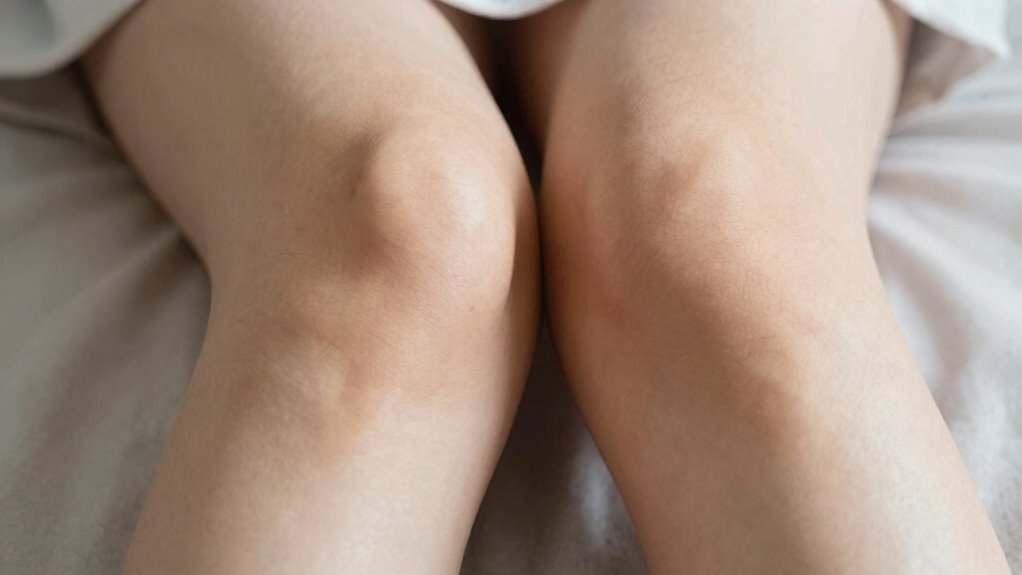
Poor sleep posture can cause misaligned hips, which pushes your knees apart and widens the gap. When you sleep with excessive knee flexion, it puts extra strain on your joints, making the gap even larger. Addressing these issues helps keep your knees closer together and reduces discomfort. Additionally, maintaining a healthy sleeping position can prevent misalignment and promote better joint health.
Misaligned Hip Positioning
Misaligned hip positioning during sleep can cause your knees to drift apart, widening the knee gap over time. Poor hip rotation or an uneven pelvic tilt forces your hips out of alignment, which then affects your knees. This misalignment leads to increased stress on joint cartilage and ligaments, risking long-term discomfort and injury. Incorporating proper projector setup techniques can significantly improve your viewing experience and reduce physical strain during long sessions. Consider these emotional impacts: 1. Feeling constant discomfort that disrupts your rest 2. Worrying about developing chronic joint issues 3. Frustration over persistent sleep problems 4. Fear of long-term mobility loss When your hips aren’t properly aligned, your body compensates by unevenly distributing weight, further exaggerating the knee gap. Correcting pelvic tilt and hip rotation during sleep can help prevent this misalignment from worsening.
Excessive Knee Flexion
When your sleep posture involves excessive knee flexion, it can cause your knees to stay bent more than they should be, which gradually widens the space between them. This position puts unnecessary strain on your knee joints, leading to knee swelling and increased joint stiffness over time. The constant flexed position prevents proper alignment, contributing to discomfort and making it harder to straighten your legs in the morning. As your knees stay in this bent state, the soft tissues and ligaments become overstretched, exacerbating the gap under your knees. Over days or weeks, this poor posture can reinforce the widened gap, making it uncomfortable to sleep flat on your back. Maintaining proper sleep posture is essential to prevent joint misalignment and avoid long-term discomfort. To avoid this, aim for a neutral knee position to minimize swelling and stiffness.
How Does the Knee Gap Lead to Neck, Back, or Hip Pain?

When your knee gap is uneven, it can disrupt your spinal alignment, causing your neck, back, or hips to compensate. This misalignment leads to muscle strain and tension, making pain worse over time. Recognizing this connection helps you address the root cause of your discomfort. Using orthopedic supports or proper sleeping positions can help maintain the natural alignment of your knees and spine, alleviating these issues.
Spinal Alignment Disruption
A gap between your knees while sleeping can throw off your spinal alignment, leading to discomfort and pain in your neck, back, or hips. When your knees aren’t supported, your spine may twist or sag, causing misalignment. This misalignment can interfere with your body’s natural posture, similar to how modern kitchen technology aims to optimize efficiency and function. Using a knee cushion or leg elevation helps maintain proper alignment, preventing this disruption.
Consider these points:
- Misaligned spines increase nerve pressure, igniting pain signals.
- Poor alignment strains muscles, leading to soreness and tension.
- Disruption can cause long-term postural issues.
- Proper support restores balance, reducing chronic discomfort.
Ensuring your knees are supported keeps your spine in its natural position, easing pain and promoting better sleep.
Muscle Strain and Tension
If your knees aren’t supported, the misalignment can cause your muscles to overcompensate, leading to increased tension and strain. When the knee gap under your back sleeper position isn’t filled, your hip flexibility gets compromised, forcing muscles around your hips, back, and neck to work harder. This heightened effort prevents proper muscle relaxation, which is essential for relief and recovery. Over time, this sustained tension can contribute to neck, back, or hip pain, as strained muscles pull on surrounding tissues and joints. Addressing the gap helps restore proper alignment, reducing muscle strain and promoting relaxation. Ensuring your knees are supported supports your muscles’ natural state, easing tension and preventing pain caused by overcompensation. Incorporating proper support solutions can further enhance muscle relaxation and overall comfort during sleep.
What Are the Best Ways to Reduce the Knee Gap and Sleep Comfortably?

To reduce the knee gap and sleep more comfortably as a back sleeper, try placing a pillow or a rolled towel between your knees. This knee support helps align your hips and relieves pressure, minimizing discomfort. Additionally, elevating your legs with a pillow under your calves can promote better circulation and reduce swelling. Here are some effective tips:
- Use a firm pillow or knee support to keep your knees aligned.
- Incorporate leg elevation to ease tension and improve blood flow.
- Choose a supportive mattress that maintains proper spinal alignment.
- Avoid twisting your legs or forcing them into unnatural positions during sleep.
Implementing support networks for new fathers and understanding their importance can also contribute to overall comfort and well-being during sleep. These simple adjustments can make a significant difference, helping you sleep more soundly and wake up refreshed, free from the hidden gap that causes discomfort.
Which Sleep Positions and Pillows Help Back Sleepers Keep the Knees Aligned?
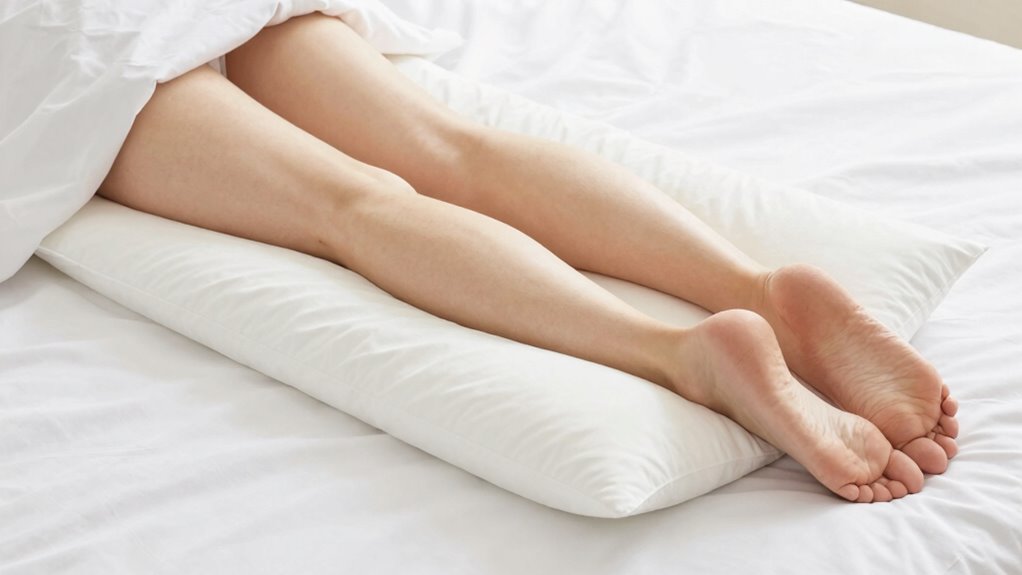
Sleeping on your back with proper alignment requires choosing the right position and supporting your knees effectively. Using a knee cushion can help maintain natural leg curvature and prevent the knees from collapsing inward or outward. Placing a small pillow or knee cushion under your knees provides gentle sleep elevation, reducing pressure on your lower back and keeping your knees aligned with your hips. This simple adjustment minimizes the gap under your knees, promoting better circulation and comfort. Make sure your pillow isn’t too high, as excessive sleep elevation can cause discomfort. Proper knee support encourages a neutral spine position, alleviating strain and improving sleep quality. Incorporate a knee cushion into your sleep routine to keep your knees properly aligned and wake up feeling more refreshed.
How Do You Choose a Mattress and Bedding That Support Knee and Leg Alignment?

Choosing the right mattress and bedding is crucial for maintaining proper knee and leg alignment during sleep. Your goal is to find support that keeps your knees elevated and aligned naturally. Consider these key factors:
- Opt for medium or medium-firm mattresses that balance support and comfort, preventing sagging under your knees.
- Look for bedding that provides gentle contouring, offering knee support without restricting movement.
- Use pillows or knee supports designed to fill the gap under your knees, reducing strain.
- Ensure your mattress maintains consistent firmness throughout, so your legs stay aligned and pressure-free.
Selecting the right combination can greatly improve sleep quality and reduce knee pain, ensuring restful nights and healthier mornings.
Frequently Asked Questions
Can Knee Gaps Indicate Underlying Health Issues?
Knee gaps can sometimes indicate underlying health issues, especially if they cause pain or discomfort. Your sleep position, like sleeping on your back, may influence the knee joint’s alignment and comfort. If you notice swelling, persistent pain, or unusual gaps under your knees, it’s best to consult a healthcare professional. These signs could point to joint problems or other health concerns that need attention.
Does Age Influence the Size of the Knee Gap?
Yes, age influences the size of your knee gap. As you get older, age-related changes like muscle loss and joint wear can cause your knee gap to become smaller or more irregular. This knee gap significance varies, but it often reflects natural aging processes. Keep in mind, significant changes might signal underlying issues, so staying attentive to your body’s signals and consulting a healthcare professional is always wise.
Are There Specific Exercises to Minimize the Knee Gap?
Think of knee gap exercises like tightening a loose belt. You can do gap minimization techniques such as leg lifts, bridging, and squats to strengthen your thigh and glute muscles. These exercises help support your knees, reducing the gap over time. Focus on consistent practice, and you’ll notice improvements. Remember, patience is key—building muscle takes time, but these targeted moves can make a real difference.
How Does the Knee Gap Impact Circulation During Sleep?
The knee gap can restrict blood flow during sleep, leading to poor circulation and discomfort. When the gap causes knee compression, it may temporarily cut off blood flow, making your legs feel numb or tingly. To improve circulation, try using a pillow or knee brace to keep your knees aligned and reduce compression. Proper support guarantees better blood flow, helping you sleep more comfortably and wake up refreshed.
Is the Knee Gap Different for Men and Women?
Gender differences and anatomical variations can influence the size of the knee gap when you sleep on your back. Men typically have larger or more pronounced gaps due to differences in bone structure and muscle mass, while women may have a smaller or more flexible gap. These variations affect comfort and circulation, so paying attention to your body’s unique shape can help you choose the right pillow or position for better sleep quality.
Conclusion
By paying attention to your sleep posture and choosing the right support, you can close the gap under your knees and wake up feeling refreshed. Don’t let small issues snowball into bigger aches—addressing your sleeping habits today keeps discomfort at bay. Remember, a stitch in time saves nine, so invest in proper pillows, mattress support, and alignment techniques. Sweet dreams are within reach when you prioritize your body’s comfort and alignment every night.