TL;DR

Get home appliances delivered free with Prime
- Fast, free delivery on millions of items
- Prime Video, Amazon Music and more included
- Member-only deals all year
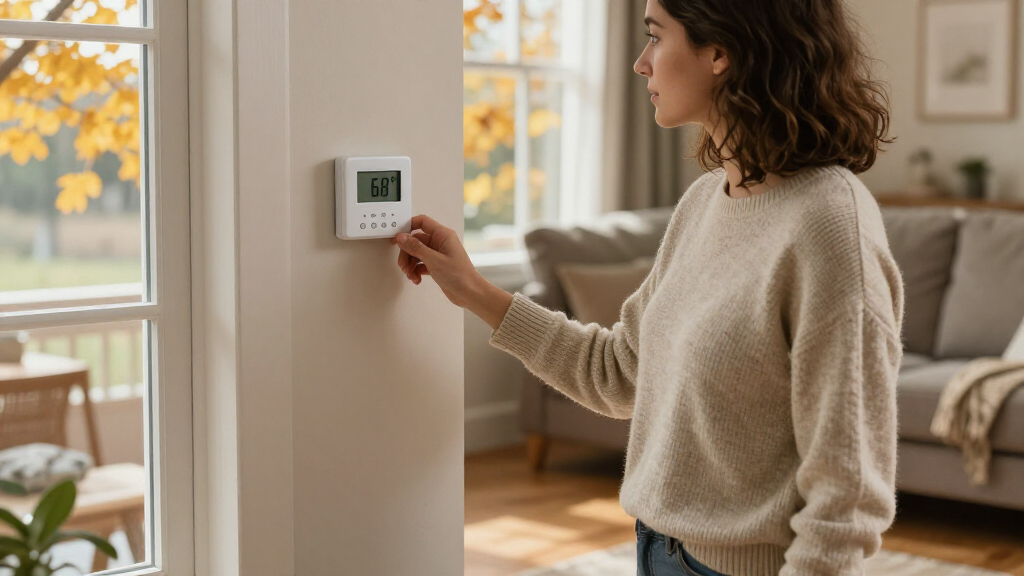
HVAC experts cited in reports for Real Simple and Martha Stewart recommend setting a thermostat near 68°F when fall heating is needed. That is a starting point, not a universal rule: climate, indoor comfort and humidity matter, and scheduled modest setbacks may help reduce heating use.
Heating and cooling experts cited in a Hunker report recommend setting a thermostat near 68°F when fall heating is needed, while making modest adjustments for sleep, time away and local conditions. The advice offers homeowners a practical starting point during autumn’s changing temperatures, but the source does not establish one setting as best for every household.
Kim Lincoln, an HVAC expert quoted by Real Simple, said fall settings should avoid constant, dramatic changes. Lincoln recommended a setting near 68°F when heat is needed, with indoor comfort and humidity helping guide adjustments. The Hunker report says a general suggested range is 64°F to 70°F, though personal preferences and local weather can change what feels comfortable.
For sleeping or an extended absence, the report says homeowners are generally advised to lower the thermostat by 7 to 10 degrees. Mike Naughton, founder and CEO of Integrity Energy, told Martha Stewart that lowering the temperature a few degrees at night or while away can save energy while keeping a home comfortable. The source presents setbacks as general guidance, not a guaranteed amount of savings for every home.
Phil Oliver, co-owner of Air Treatment Heating and Cooling, recommended a programmable or smart thermostat to schedule temperature changes. He told Martha Stewart that automation can maintain a comfortable setting when residents are home and reduce heating while they are asleep or away. The report also notes that some warm-weather areas may need cooling rather than heat early in the season; Joe Haycock, president of Fresh Air Concepts, LLC, suggested 70°F to 78°F for places such as Texas, Florida, Arizona and Georgia, depending on conditions.
A Setting That Can Limit Constant Adjustments
Autumn can bring chilly mornings and warmer afternoons, so a thermostat setting that works at one point in the day may not feel right later. The expert guidance shifts the focus from repeatedly changing the temperature to using a steady starting point, then making smaller adjustments that reflect household routines and comfort.
That approach may also affect energy use: lowering heat while people are asleep or away can reduce the time a home is heated to its daytime setting. A programmed schedule can make those changes without requiring residents to remember them. The source, however, supplies no measured savings figures, so the actual effect on bills will depend on the home, equipment, weather and how its occupants use heating.
Products Worth Considering

LEVOIT Vital 200S-P Smart Air Purifier for Large Rooms

Google Nest Cam Indoor Security Camera, 3-Pack

Philips Hue Large Smart Light Tube, Black – White and Color Ambiance LED Color-Changing Light – 1 Pack
As an affiliate, we earn on qualifying purchases.
Why Autumn Settings Vary by Region
The recommendation is seasonal rather than a new thermostat standard. The Hunker report draws on experts quoted in Real Simple and Martha Stewart, combining general advice about heating settings with suggestions for scheduling and regional variation. It gives no publication date in the supplied material, and it does not cite a controlled study or utility-bill comparison.
Outdoor conditions matter because fall does not bring the same temperatures everywhere. The report says residents in warmer states may still need air conditioning, while people in mild conditions may be comfortable opening windows instead of running heating or cooling. Natural ventilation is an option only when outdoor conditions and indoor temperature and humidity remain comfortable, according to Lincoln’s advice as summarized in the report.
“Fall is a transition season, so the goal is to find a comfortable setting without constantly making dramatic changes to the thermostat.”
— Kim Lincoln, HVAC expert, quoted by Real Simple
No Single Setting Fits Every Home
The source material does not identify a universally correct thermostat temperature or quantify how much money a particular setting will save. It does not specify how insulation, system type, household size or individual health needs affect the recommendations. The 68°F figure is expert guidance reported by Hunker, not a result shown to apply equally to all households.
The report also does not provide a precise threshold for when to use natural ventilation or how low a home can safely be set during a cold spell. It warns that freezing overnight temperatures can put pipes at risk, but gives no detailed pipe-protection procedure. Homeowners should account for local forecasts and their building’s needs rather than treating the suggested temperature range as a safety guarantee.
Adjust the Schedule as Weather Changes
Homeowners can begin near 68°F when heat is needed, then make modest changes based on comfort, humidity and the forecast. A programmable thermostat can apply lower settings during regular sleeping hours or extended absences, while residents in warmer regions may need different settings or cooling instead.
As colder nights approach, residents should check local conditions and avoid assuming that a daytime fall setting will protect the home overnight. The supplied report offers no further announced study or policy update; its advice is seasonal guidance. Whether a particular schedule reduces a household’s energy bill remains dependent on the home and its use.
Key Questions
What temperature do experts recommend for fall heating?
The Hunker report says experts recommend a setting near 68°F when heating is needed. It also gives a general suggested range of 64°F to 70°F, with comfort and local weather affecting the choice.
Should I lower the thermostat at night or when I leave?
The report says a setback of 7 to 10 degrees is generally suggested when a home is empty or at night. Naughton advised lowering the setting by a few degrees; actual comfort and energy savings can vary.
Is 68°F the right setting in every state?
No. The report says warm-weather areas may need cooling in early fall and quotes Haycock suggesting 70°F to 78°F for several Southern and Southwestern states, depending on conditions.
Can I turn off heating and cooling on mild days?
Lincoln said residents can temporarily switch systems off and use natural ventilation when outdoor conditions are comfortable and indoor temperature and humidity remain in a safe, comfortable range. The report cautions that overnight cold can still create concerns, including frozen pipes.
Source: hunker.com