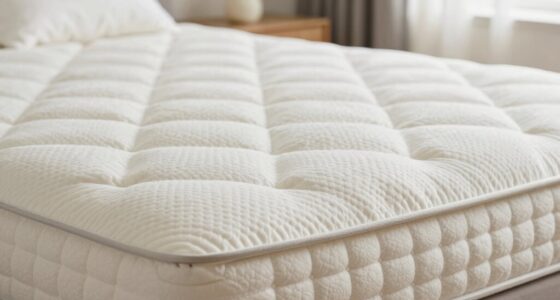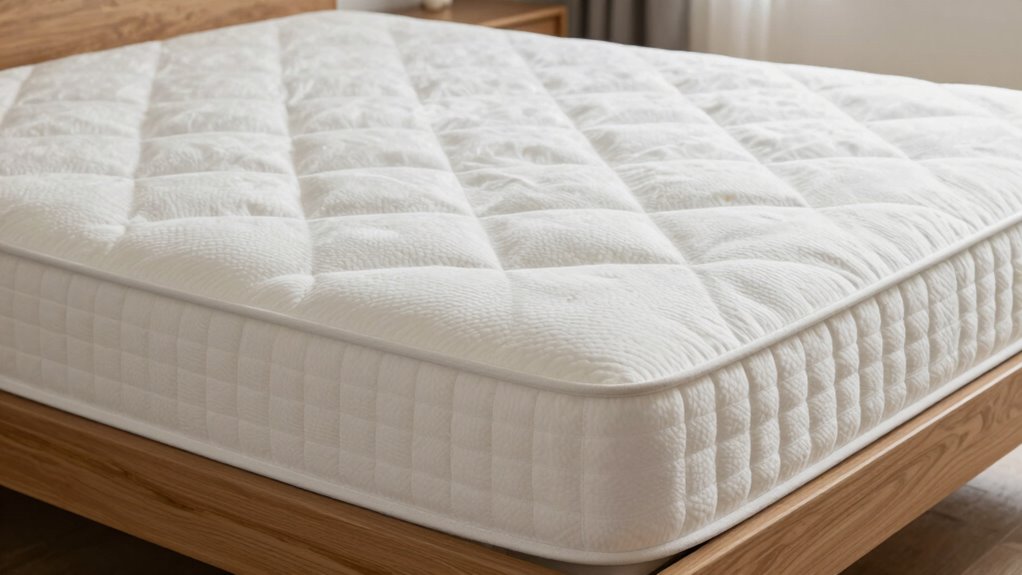

Your mattress weight gives you clues about what’s inside. Heavier mattresses usually have denser foams or thicker coils, which means better support and durability. Lighter models often use less material or softer components, offering a more cushioned feel. By paying attention to weight, you can gauge the internal quality without opening it up. Want to uncover more internal secrets that affect comfort and longevity? Keep exploring to find out how weight reveals these details.
Key Takeaways
- Heavier mattresses often contain denser foam or thicker coils, indicating higher internal material quality.
- Foam density directly correlates with weight; higher density means better support and durability.
- Spring gauge influences weight; thicker coils (lower gauge) make the mattress heavier and more supportive.
- Internal construction and material choices affect the overall weight and longevity of the mattress.
- Weight serves as a quick indicator to assess internal support materials before purchase.
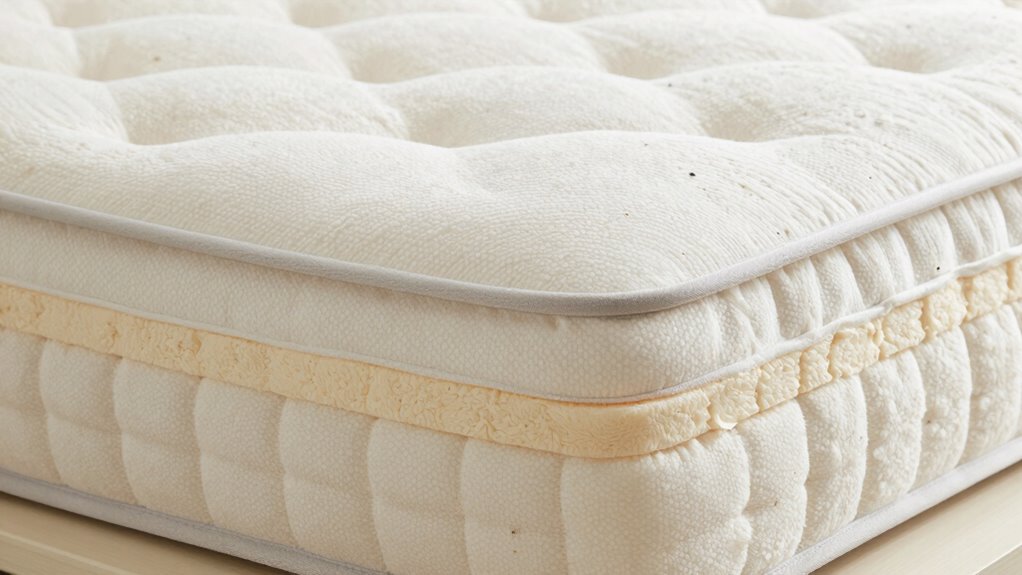
When shopping for a mattress, the weight can reveal more than just its size; it offers clues about what’s inside. You might notice that some mattresses feel surprisingly light, while others are hefty and solid. These differences are often related to the materials used and how they’re constructed. For example, foam density plays an essential role in the overall weight. Higher foam density mattresses tend to be heavier because they contain more material per cubic foot. This means you’re getting a denser, potentially more durable foam that provides better support and longevity. Conversely, mattresses with lower foam density are lighter and may feel softer or less supportive over time. By paying attention to weight, you can get a sense of the quality of the foam inside without even opening the mattress.
Similarly, if the mattress uses a coil or spring system, the spring gauge becomes a vital indicator. Spring gauge refers to the thickness of the wire used in the coils. A lower gauge number means thicker wire, which generally results in a heavier, more robust mattress. Thicker coils provide better support and durability, often making the mattress feel more substantial. Thinner coils, associated with higher gauge numbers, tend to be lighter and may offer a softer feel but could wear out sooner. When you lift or move the mattress, the weight gives you a hint about the gauge of the springs inside. Heavier mattresses usually have a lower spring gauge, indicating sturdy support, while lighter ones might have higher gauge springs that prioritize softness over longevity.
Understanding these weight clues is valuable because material density directly impacts the durability and support of the mattress. Recognizing construction methods can also help you determine how well the mattress might hold up over time. In addition, internal structure influences the overall feel and performance of the mattress, making it an important consideration. This knowledge helps you make more informed choices. If you’re seeking a mattress that offers firm support and durability, look for one that’s heavier, which suggests dense foam or thicker coils. If softness and lightness are more important to you, then a lighter mattress with lower foam density or higher spring gauge might be suitable. Remember, weight isn’t the only factor, but it gives you a tangible way to gauge the quality and construction of a mattress before you buy. When you’re weighing your options, paying attention to these internal clues—foam density and spring gauge—can help guarantee you pick a mattress that aligns with your comfort preferences and supports your sleep needs for years to come.

Novilla Queen Size Mattress 12 Inch, Queen Memory Foam Mattress with Breathable Comfort Layer & High-Density Base Foam for Pressure Relief & Contouring Support, Motion Isolation & Cooling Comfort
【Stress-Relieving System】 The queen memory foam mattress combines a 2-layer foam system for balanced comfort: natural fiber infused…
As an affiliate, we earn on qualifying purchases.
As an affiliate, we earn on qualifying purchases.
Frequently Asked Questions
How Accurate Is Mattress Weight as an Indicator of Quality?
Mattress weight isn’t a reliable indicator of quality because material composition and manufacturing process play bigger roles. A heavier mattress might contain dense foam or thicker coils, but that doesn’t mean it’s better. Conversely, a lightweight mattress could use high-quality materials efficiently. Focus on the materials used and how it’s made, rather than weight alone, to determine if a mattress meets your comfort and durability needs.
Do Heavier Mattresses Always Mean Better Materials?
Heavier mattresses are like a dense forest—impressive, but not always better. They don’t always mean better materials; sleep temperature and mattress aesthetics matter more for comfort. A sturdy build might trap heat, affecting your sleep, regardless of weight. So, focus on how the mattress feels, its cooling features, and design, rather than just weight, to find the best fit for restful nights.
Can Lightweight Mattresses Still Offer Good Support?
Lightweight mattresses can still offer good support if they use high foam density materials or well-designed support layers. The mattress heft, or its overall weight, isn’t the only indicator of support quality. Instead, focus on foam density and construction quality. A lighter mattress with high-density foam can provide excellent support, comfort, and durability, so don’t judge support solely by weight—look at the materials and design.
Does Mattress Weight Impact Durability Over Time?
Yes, mattress weight can impact durability over time. Heavier mattresses often contain denser materials, which resist sagging and maintain support longer. As a result, they tend to be more durable, even with frequent use. Additionally, a heavier mattress can help regulate sleep temperature better and reduce mattress noise, providing a more comfortable sleep environment. Keep in mind, proper care and quality materials also play vital roles in durability.
How Does Mattress Weight Relate to Sleep Comfort?
A heavier mattress often provides better sleep comfort because it offers more support for your sleep posture, helping to keep your spine aligned. It also tends to be more compatible with various pillows, enhancing overall comfort. When you choose a mattress with suitable weight, you’re more likely to experience restful sleep, as it adapts well to your body and pillow needs, reducing discomfort and improving sleep quality.
coil spring mattress with low gauge
As an affiliate, we earn on qualifying purchases.
As an affiliate, we earn on qualifying purchases.
Conclusion
Knowing how much your mattress weighs can reveal a lot about its construction and quality. For example, a heavier mattress often indicates denser, higher-quality materials, which can mean better support and durability. Remarkably, research shows that heavier mattresses tend to last 25% longer than lighter ones, giving you more value over time. So, next time you’re shopping, consider the weight—it’s a simple way to gauge what’s inside and make a smarter choice for your sleep.
supportive and durable mattress
As an affiliate, we earn on qualifying purchases.
As an affiliate, we earn on qualifying purchases.
lightweight soft mattress
As an affiliate, we earn on qualifying purchases.
As an affiliate, we earn on qualifying purchases.