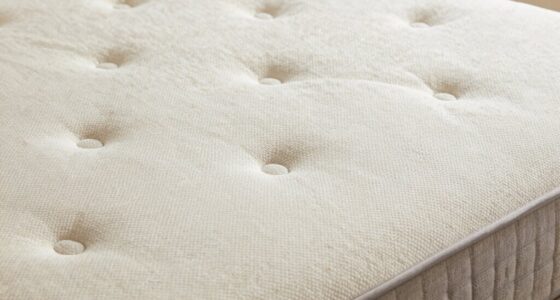
When shopping for a mattress, understanding key terms like foam, innerspring, hybrid, firmness levels, and support systems can change your entire experience. Know what materials suit your sleep style and check labels for certifications like organic or CertiPUR-US. Features like edge support and zone zones boost durability and comfort. Warranties and trial periods protect your investment. If you want to avoid surprises and find the perfect fit, exploring these hidden terms will give you an edge.
Key Takeaways
- Understand mattress types (memory foam, innerspring, hybrid) and how their materials affect support, comfort, and durability.
- Learn about firmness levels and support features like zoned support and edge support to match your sleep preferences.
- Check for certifications (CertiPUR-US, GOLS, GREENGUARD) to ensure safety, eco-friendliness, and low emissions.
- Consider mattress thickness and profile for proper spinal alignment and ease of movement.
- Maintain support systems and choose appropriate materials to extend mattress lifespan and optimize comfort.
Discover Different Mattress Types: Foam, Innerspring, Hybrid, and More

Choosing the right mattress starts with understanding the main types available. Memory foam mattresses contour closely to your body, offering excellent pressure relief and motion isolation. Many memory foam options now come with organic certifications, ensuring they’re made with eco-friendly, non-toxic materials. Innerspring mattresses, on the other hand, feature coils that provide a traditional feel and strong support. Hybrid mattresses combine the best of both worlds, blending foam or latex layers with innerspring cores for comfort and durability. Each type caters to different preferences and sleep needs, so consider how each aligns with your comfort and health priorities. Knowing the differences helps you make an informed decision, especially when choosing products that prioritize organic certifications and sustainable materials. Understanding mattress construction can further assist in evaluating quality and longevity, which are crucial factors influenced by the materials and design used in sustainable and secure cloud solutions. Additionally, paying attention to material composition can help you select a mattress that meets your specific health and comfort requirements, and understanding how different materials impact airflow and temperature regulation can enhance your overall sleep experience.
Understand Mattress Firmness: What Do Soft, Medium, and Firm Really Mean?

Have you ever wondered what mattress firmness levels like soft, medium, and firm really mean? Your sleep posture plays a big role in choosing the right firmness. Soft mattresses contour closely to your body, offering excellent pressure relief for side sleepers who need cushioning for hips and shoulders. Medium firmness strikes a balance, providing enough support for combination sleepers switching positions during the night. Firm mattresses offer minimal give, supporting back and stomach sleepers who require more stability. Keep in mind, firmness isn’t just about feel; it impacts pressure relief and spinal alignment. A mattress that’s too soft or too firm can cause discomfort, so understanding these levels helps you select a mattress that promotes healthy sleep posture and reduces pressure points for better rest. Additionally, Free Floating design principles can influence how the mattress responds to body weight, affecting overall comfort and support. Recognizing how bed construction influences firmness can help you make more informed choices. Considering wiring basics and ventilation options can also improve your sleep environment and mattress longevity, ensuring optimal performance cookies for your sleeping needs. Research shows that material composition also plays a crucial role in how firmness is perceived and maintained over time.
Why Mattress Thickness and Profile Matter for Comfort and Support
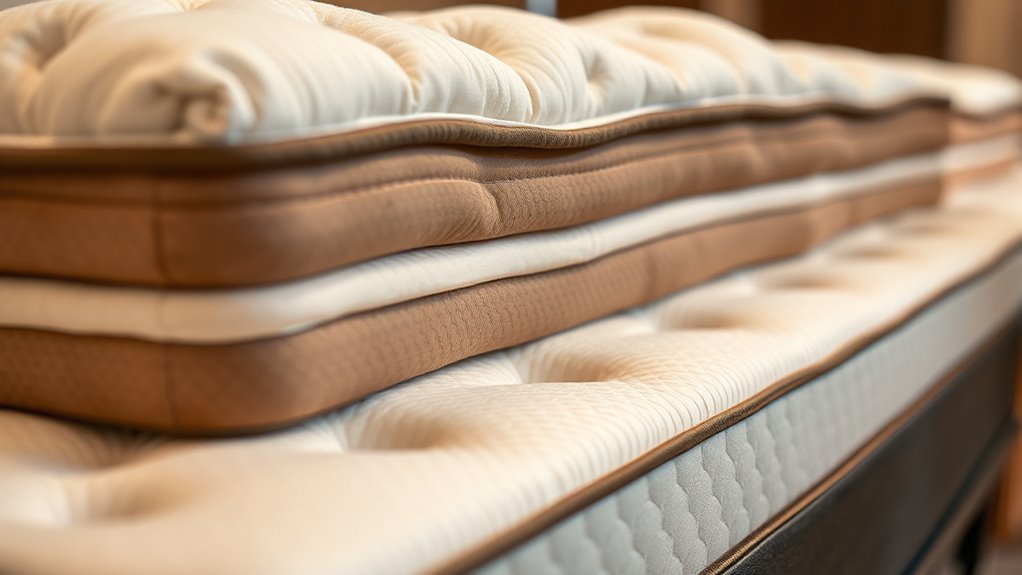
The thickness and profile of a mattress directly influence both comfort and support, shaping how well the mattress aligns your body and alleviates pressure points. Your bed height, or how tall your mattress feels, impacts ease of getting in and out of bed, as well as overall comfort. A thicker mattress often provides a plush sleep surface, enhancing softness, while a thinner profile may feel firmer and more supportive. The right profile ensures your spine stays aligned, reducing strain and discomfort. By choosing a mattress with an appropriate thickness, you’ll create a sleep surface that feels tailored to your preferences and needs. Additionally, understanding regulatory considerations can help you select a mattress that meets safety and quality standards. Being aware of well-sourced coverage can also ensure you’re making an informed decision based on reputable information. Considering material composition can further influence durability and comfort, helping you find the best fit for your sleep habits. Recognizing the importance of bed height can also improve your overall sleep experience and ease of movement. Furthermore, innovations in nanotechnology are beginning to influence mattress manufacturing, potentially offering enhanced durability and comfort through advanced material properties. Remember, the right bed height and profile can make a noticeable difference in how restful and supportive your sleep experience becomes.
Find Out How Mattress Support Systems Keep You Comfortable

Your mattress support system directly affects how comfortable and supportive your sleep feels. Different types, like coils or foam, provide unique benefits that influence your sleep quality. Understanding these options helps you choose a mattress that keeps you well-rested night after night. Additionally, knowing about support system designs can help you optimize your sleep environment for better comfort and durability. Exploring imaging-scale options can also give you insights into how different support structures impact overall comfort and longevity. Recognizing the impact of support materials can further enhance your ability to select the ideal mattress for your needs, especially as advancements in navigation and mapping technology enable smarter sleep solutions. Incorporating support system maintenance practices can extend the lifespan of your mattress and maintain optimal support over time.
Types of Support Systems
Different support systems in a mattress work together to keep your spine aligned and guarantee comfort throughout the night. The support core is the foundation that provides stability and prevents sagging, ensuring even weight distribution. Some mattresses feature adjustable bases, allowing you to customize the angle and firmness for ideal comfort and support. These bases work with the support core to enhance your sleeping experience, especially for those with specific health needs or preferences. Innerspring mattresses rely on coils within the support core to offer resilience and bounce. Memory foam models use dense foam layers to contour to your body, supported by a sturdy core. Understanding these support systems helps you choose a mattress that maintains proper alignment and provides the support you need for restful sleep. Support system types can influence overall comfort and durability. Power tools and heavy-duty equipment can be useful for assembling or maintaining your bed setup, ensuring safety and efficiency. Additionally, incorporating smart home automation can help optimize your sleep environment by controlling lighting, temperature, and other factors to enhance restfulness. For example, selecting appropriate support systems based on your sleeping position and body type can significantly improve your sleep quality. Proper knowledge of mattress construction can also help identify long-term investment pieces that offer enduring comfort.
Impact on Sleep Quality
A well-designed support system directly impacts how comfortably you sleep by ensuring proper spinal alignment and reducing pressure points. When your mattress provides consistent support, it creates a stable sleep environment that promotes deeper, more restorative rest. Without adequate support, you may wake up with aches or stiffness, disrupting your sleep quality. Proper mattress support also makes mattress maintenance easier, as it helps prevent sagging and uneven wear over time. This support system is essential for maintaining mattress integrity and ensuring long-term sleep comfort. Investing in the right support system ensures your mattress maintains its supportive qualities, directly enhancing your sleep quality. Ultimately, a supportive mattress helps you wake up feeling refreshed and ready for the day.
Learn What Mattress Materials Are Best for Your Sleep Style
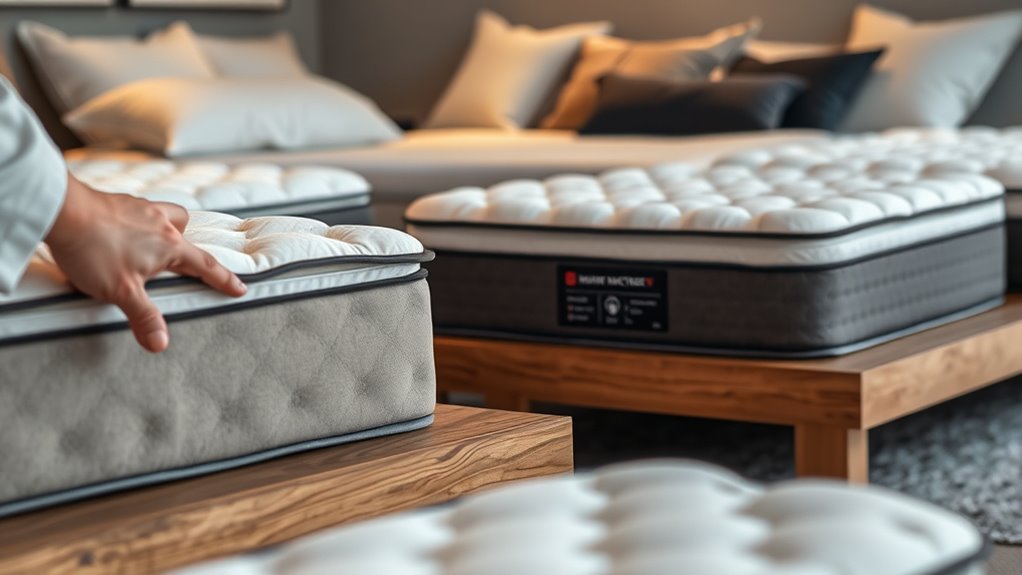
Choosing the right mattress material depends on your sleep style and preferences. Memory foam offers pressure relief, while latex provides a natural feel, and hybrid options combine support and comfort. Understanding the durability of innerspring coils helps you pick a mattress that lasts.
Memory Foam Benefits
Memory foam mattresses conform closely to your body, providing excellent pressure relief and support where you need it most. This material molds to your shape, reducing stress on joints and alleviating aches. If you struggle with pressure points, memory foam can offer significant comfort. It absorbs movement, minimizing disturbances if you share your bed with a partner. The table below highlights key benefits:
| Benefit | Explanation | Ideal For |
|---|---|---|
| Pressure Relief | Mold to your body, easing pressure points | Those with joint pain |
| Motion Isolation | Limits movement transfer | Light sleepers |
| Support | Provides consistent support across body | People with back issues |
| Durability | Lasts many years with proper care | Long-term comfort seekers |
| Customization | Comes in various firmness levels | Personal preferences |
Latex Versus Hybrid
When deciding between latex and hybrid mattresses, understanding how each material interacts with your sleep style can make all the difference. Latex support offers a natural bounce and resilient feel, providing consistent pressure relief and maintaining shape over time. It’s ideal if you prefer a responsive surface that minimizes motion transfer and offers durable comfort. Hybrid construction combines foam or latex layers with innerspring coils, delivering targeted support and enhanced breathability. Hybrids are great if you want the contouring of foam with the added support of springs, especially for back or stomach sleepers who need a balance of softness and stability. Ultimately, your choice depends on whether you prioritize the natural resilience of latex support or the versatile, supportive feel of a hybrid mattress tailored to your sleep preferences.
Innerspring Durability
Innerspring mattresses are known for their durability, but the longevity largely depends on the quality of the materials used. The innerspring lifespan varies based on coil construction and materials, with higher coil counts generally offering better durability. A mattress with a greater number of coils provides more support, reduces sagging, and extends its lifespan. Look for a coil count of at least 300 for a queen-sized mattress, as this indicates a sturdier construction. Additionally, the type of coil, such as tempered steel or pocketed coils, impacts durability. Quality materials and proper manufacturing practices help guarantee your innerspring mattress maintains its support and comfort over time, making it a smarter investment for restful sleep.
Read Mattress Labels and Certifications: What Do Organic, CertiPUR-US, and GREENGUARD Mean?

Understanding mattress labels and certifications can help you make informed choices and guarantee you’re getting a safe, high-quality product. Look for organic certifications on mattress labels to ensure the materials are grown without harmful chemicals or pesticides. Certifications like GOLS (Global Organic Latex Standard) or GOTS (Global Organic Textile Standard) verify organic content and production practices. CertiPUR-US certification indicates foams are tested for low emissions and toxic chemicals, offering peace of mind. GREENGUARD certifies that a mattress meets strict chemical emissions limits, improving indoor air quality. Reading these labels helps you identify mattresses that prioritize safety and sustainability. By understanding what these certifications mean, you can confidently select a mattress that aligns with your health and environmental values.
See How Edge and Zoned Support Improve Mattress Durability and Comfort

Edge and zoned support features are key innovations that enhance both the durability and comfort of your mattress. Edge support strengthens the perimeter, preventing sagging and providing a stable surface for sitting or sleeping near the edges. This means you can use the full surface without worry, extending the mattress’s lifespan. Zoned support, on the other hand, targets specific areas of your body, offering firmer support where you need it most—like your hips and shoulders—and softer zones for pressure relief. Together, these features improve overall comfort, reduce wear and tear, and help your mattress maintain its shape over time. Understanding how edge support and zoned support work can guide you to a more durable, comfortable mattress that lasts longer and supports your sleep needs.
Know What to Expect From Trial Periods, Warranties, and Return Policies

Once you’ve considered features like edge and zoned support for durability and comfort, it’s important to know what protections and assurances come with your mattress purchase. Trial periods, warranties, and return policies vary widely but are indispensable for peace of mind.
Here’s what to expect:
- Many brands offer trial periods of 30 to 100 nights, during which you can test your mattress on an adjustable base or with sleep accessories. If it’s not right, you can usually return or exchange it.
- Warranties typically cover manufacturing defects for 10 years or more, ensuring durability.
- Return policies often include free pickup and refunds if you’re unsatisfied within the trial period, giving you confidence in your investment.
Frequently Asked Questions
How Do I Choose the Best Mattress for Neck and Back Pain?
Think of your mattress as a throne for your spine. To ease neck and back pain, choose one with medium firmness for balanced support. Look for ergonomic support features that align your neck and back properly. Avoid extremes—too soft or too firm—since they can worsen pain. Test different mattresses, focusing on how well they support your natural curve. Your ideal mattress will cradle you like a gentle hug, easing discomfort.
What Are the Environmental Impacts of Different Mattress Materials?
You should consider the environmental impacts of mattress materials by looking for options made through sustainable manufacturing and using eco-friendly materials. Natural latex and organic wool, for example, typically have a lower carbon footprint and biodegrade more easily. Avoid synthetic foams that release harmful chemicals and have a bigger environmental impact. Choosing eco-conscious mattresses helps reduce pollution, conserves resources, and supports a healthier planet for future generations.
How Often Should I Replace My Mattress for Optimal Health?
You should replace your mattress every 7-10 years to maintain ideal health. Regular mattress maintenance, like rotating and cleaning, helps extend its lifespan, but over time, it can accumulate allergens and lose support. Good sleep hygiene also depends on a supportive, clean mattress. If you notice persistent aches, allergies, or sagging, it’s time for a replacement. Prioritize timely updates to guarantee restful sleep and overall well-being.
Are There Specific Mattresses Recommended for Side Sleepers?
Like a trusty knight’s armor, specific mattresses for side sleepers should have the right firmness levels and material options. You’ll want a medium to soft mattress, offering pressure relief for shoulders and hips. Memory foam and hybrid models are popular choices, providing cushioning and support. Don’t settle for a “one-size-fits-all”—test different firmness levels to find what feels best for your side-sleeping comfort and spinal alignment.
What Safety Features Should I Look for in Hypoallergenic Mattresses?
When choosing a hypoallergenic mattress, look for allergen prevention features like tightly woven fabrics and antimicrobial treatments. Make certain it’s certified for chemical safety, meaning it’s free from harmful substances like formaldehyde or volatile organic compounds (VOCs). You want a mattress that minimizes dust mites and mold growth, so always check labels for hypoallergenic and chemical-free assurances. This way, you can sleep safely and comfortably, knowing your mattress supports your health.
Conclusion
Now that you know the hidden terms behind mattress shopping, you can make smarter choices. Did you know that 75% of people who understand mattress labels report greater satisfaction with their purchase? By grasping mattress types, firmness, support systems, and certifications, you’ll find the perfect mattress for your sleep style. Remember, investing time in research guarantees you wake up refreshed and ready to take on the day. Happy shopping!