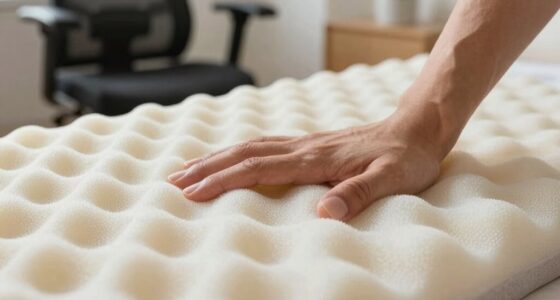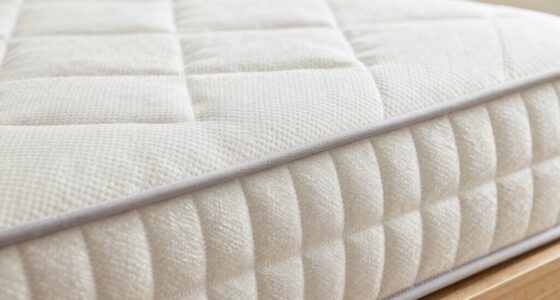
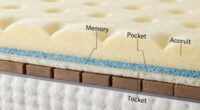
Support in a mattress means how well it keeps your spine aligned, distributes your body weight evenly, and relieves pressure points, helping you stay comfortable and healthy. It’s not the same as firmness, which refers to how hard or soft the mattress feels initially. Even a firm mattress can provide excellent support if it contours properly and maintains proper alignment. To discover what support suits your needs best, keep exploring the details below.
Key Takeaways
- Support refers to a mattress’s ability to maintain proper spinal alignment and evenly distribute body weight.
- Firmness describes the initial feel of a mattress, such as hard or soft, not its long-term support.
- High support ensures pressure relief and reduces discomfort, regardless of whether the mattress feels firm or soft.
- A mattress can feel soft but still provide excellent support through quality materials and design.
- Support depends on structural integrity and material resilience, not just the firmness level.

Novilla Queen Size Mattress, 12 inch Gel Memory Foam Mattress for a Cool Sleep & Pressure Relief, Medium Firm Feel with Motion Isolating, Bliss
General Note: Please allow 24 - 72 hours for your Mattress to regain its full shape. Any memory...
As an affiliate, we earn on qualifying purchases.
What Does Support Really Mean?

Have you ever wondered what support truly entails? Support means more than just feeling comfortable; it’s about how well your mattress maintains proper spinal alignment and distributes your weight evenly. When your mattress provides good support, it enhances your sleep quality by reducing aches and tossing. Proper support also helps prolong your mattress lifespan, preventing sagging and indentations that can develop over time. Additionally, proper support can help minimize motion transfer, ensuring a more restful sleep if you share your bed. Without adequate support, your mattress can wear out faster, leading to more frequent replacements and increased costs. Proper support is also linked to spinal health, which is crucial for overall comfort and health. By choosing a mattress that offers solid support, you ensure better sleep and protect your investment. Remember, support isn’t just about feeling soft or firm—it’s about how your mattress actively maintains your body’s position throughout the night. A supportive mattress also promotes healthy spinal alignment, which is essential for overall comfort and health. Ensuring that your mattress provides proper pressure distribution can significantly reduce discomfort and improve sleep quality. Inadequate support may also cause your mattress to develop sagging, which diminishes its effectiveness over time.

LETMOON California King Mattress, 14 Inch Mattress Cal King Bed in Box, Medium Firm, (Upgrade) Edge Support, Pocket Springs, Pressure Relief
Hybrid Mattress for Back Pain & Spinal Alignment – Combines memory foam & pocket coils in a medium-firm...
As an affiliate, we earn on qualifying purchases.
Support vs. Firmness: What’s the Difference?

Support vs. Firmness: What’s the Difference?
Understanding the difference between support and firmness helps you choose the right mattress for your needs. Support refers to how well a mattress maintains your spine’s proper alignment and distributes your weight evenly, which is essential for overall comfort. Support is also influenced by the quality of materials used, impacting the mattress’s ability to provide lasting support over time. Proper spinal alignment is crucial for reducing aches and promoting restful sleep. Firmness, on the other hand, measures how hard or soft the mattress feels when you lie on it. Your sleeper preferences—whether you prefer a plush or a more solid feel—will influence your choice. Keep in mind that a mattress’s durability also plays a role; a supportive mattress that maintains its structure over time ensures consistent support. While firmness affects the initial feel, support determines how well your mattress adapts to your body’s needs, making it a key factor in long-term comfort. Additionally, high-quality materials contribute to both support and durability, ensuring that your mattress provides consistent comfort over years of use.

California King Mattress, Upgraded 14 Inch Cal King Mattress in a Box, Cooling Gel Memory Foam Hybrid Mattresses with Pocket Springs, Pressure & Pain Relief, Double Additional Support, CertiPUR-US
【Ergonomic Zonal Support System】The california king mattress features multiple layers of premium memory foam and independent support springs...
As an affiliate, we earn on qualifying purchases.
How Does Support Help Your Spine and Posture?
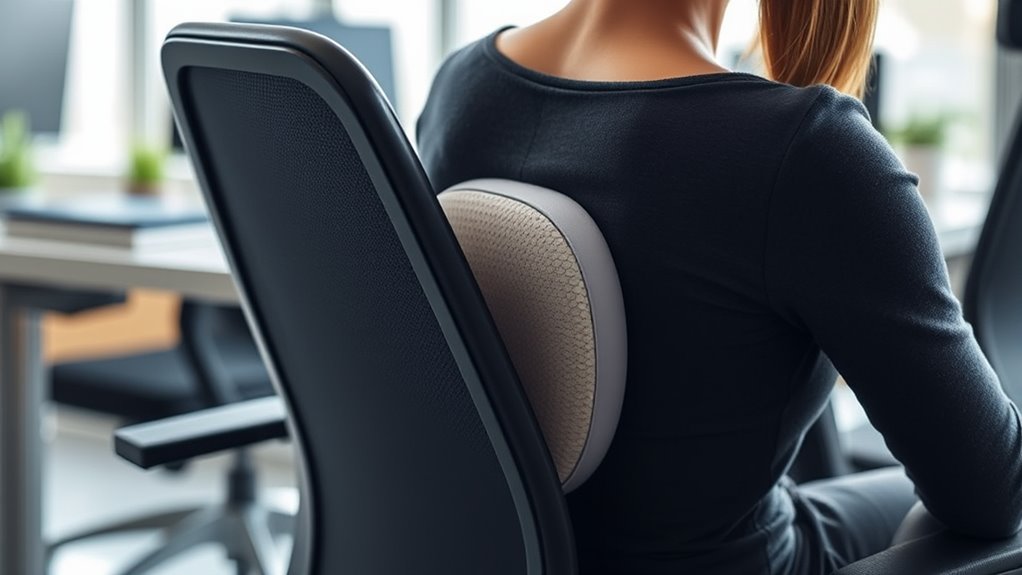
When your support system maintains proper alignment, your spine stays in its natural position, reducing unnecessary strain. This helps prevent discomfort and long-term issues caused by poor posture. With the right support, you can keep your back healthier and move more comfortably throughout the day. Proper air quality can also contribute to overall comfort and well-being, promoting better posture and reducing fatigue.
Maintains Proper Alignment
Support plays an essential role in keeping your spine properly aligned by providing the necessary stability to your muscles and bones. An ergonomic design ensures that your chair, mattress, or cushion conforms to your body’s natural curves, helping maintain alignment during daily activities. Material resilience is critical because it allows support items to rebound and maintain their shape over time, preventing sagging or deformation that could compromise posture. When support is designed with these principles in mind, it encourages your spine to stay in its neutral position, reducing strain and preventing misalignment. This stability helps you avoid discomfort and long-term issues by promoting proper posture, even during extended sitting or standing periods. Incorporating proper sizing and load‑planning tools can further enhance support effectiveness by ensuring your equipment matches your specific needs. Additionally, understanding the material properties of support products can help in selecting options that sustain their supportive qualities under various conditions. Considering long-term durability is also crucial because it ensures that support remains effective over time without frequent replacements. Furthermore, selecting support that accounts for cultural and ergonomic considerations can optimize comfort and effectiveness across different user needs. Recognizing the importance of supporting the body’s natural curves can lead to better overall posture and reduced fatigue. Ultimately, effective support keeps your spine aligned, fostering healthy posture habits.
Reduces Spinal Strain
Proper support directly reduces spinal strain by helping your body maintain correct alignment throughout the day. When your support features an ergonomic design, it adapts to your body’s natural curves, minimizing unnecessary tension. High-quality materials with good elasticity respond to your movements, preventing stiffness and discomfort. Consider these factors:
- The ergonomic shape cradles your spine, reducing pressure points.
- Elastic materials absorb shocks and allow flexibility.
- Proper support prevents slouching, easing muscle fatigue.
- Consistent alignment reduces strain on discs and joints.
Together, these elements ensure that your spine stays supported, reducing the risk of pain and injury. By choosing support with the right ergonomic design and elastic materials, you actively protect your posture and promote overall spinal health.
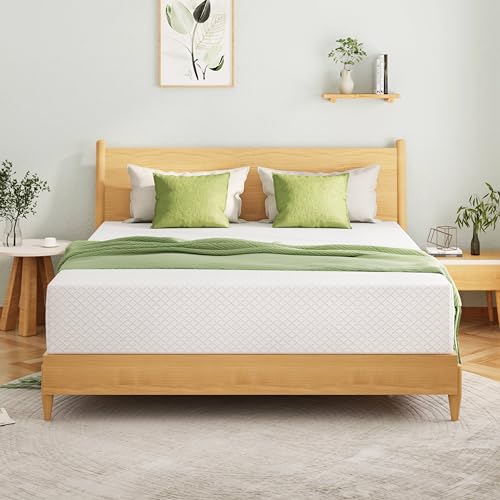
EGOHOME King Size Memory Foam Mattress, 12 Inch Bed Mattress in a Box with Cooling Green Tea Gel, Relieve Pressure with Medium Firm Support, CertiPUR-US Certified, 80''L x 76''W, White
Pressure Relief Memory Foam: This king mattress uses patented premium memory foam material that provides balanced support while...
As an affiliate, we earn on qualifying purchases.
Why Is Support Important for Pressure Relief?

Because adequate support helps evenly distribute your body weight, it plays a crucial role in relieving pressure points. When your mattress provides proper support, it reduces stress on sensitive areas like your hips, shoulders, and lower back. This promotes better spinal alignment and overall comfort during sleep. Proper support also helps prevent uneven wear of the mattress, which can compromise its performance over time. Additionally, consistent support contributes to maintaining the integrity of the mattress’s architectural design, ensuring long-term durability. Over time, supportive mattresses prevent uneven wear, extending mattress longevity. Without proper support, pressure builds in certain areas, leading to discomfort and potential aches. Investing in a mattress with good support ensures that your body remains well-supported throughout the night, reducing pressure-related pain and contributing to restorative sleep. Ultimately, support is indispensable for both comfort and the durability of your mattress.
What Does Firmness Say About a Mattress’s Feel?
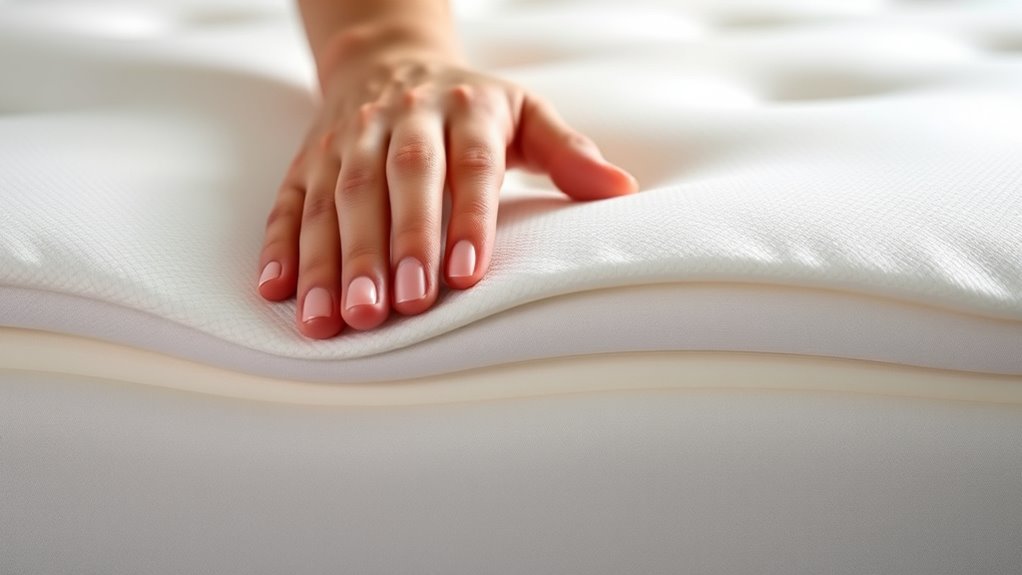
Firmness affects how your body distributes pressure across the mattress, influencing overall comfort. It also shapes the feeling of stability, making you feel more anchored or less supported. Understanding these aspects helps you choose a mattress that matches your preferred sleep experience.
Pressure Distribution Dynamics
When you lie down on a mattress, the way pressure is distributed across your body reveals much about its overall feel. Pressure mapping shows where force is concentrated, helping you understand how well the mattress supports you. A good force distribution means your weight is evenly spread, reducing pressure points. Here’s what to notice:
- Even pressure across shoulders and hips indicates balanced support.
- Localized high-pressure areas suggest firmness that may feel too hard.
- Smooth transitions between pressure zones promote comfort.
- Uneven force distribution can cause discomfort and affect sleep quality.
- The ability of a mattress to provide proper pressure relief depends on both its support system and material composition. Additionally, the pressure distribution dynamics are influenced by factors like mattress contouring and material elasticity, which impact overall comfort. Understanding these pressure distribution dynamics helps you assess if a mattress provides proper support without compromising comfort, highlighting how firmness influences overall feel.
Feel of Stability
The pressure distribution across a mattress also reveals how stable and supportive it feels under your body. When a mattress provides consistent support, it creates a sense of stability that enhances your bedroom ambiance, making your space more relaxing. This stability influences your sleep cycle by reducing tossing and turning, helping you fall asleep faster and stay asleep longer. A firmer feel typically offers a firm, unwavering support that many find reassuring, especially during movement or changing sleep positions. Conversely, a softer mattress may feel less stable but still support your body correctly. Ultimately, the feel of stability depends on how well the mattress distributes pressure evenly, giving you confidence in your sleep environment and promoting restful, uninterrupted sleep.
Can a Firm Mattress Still Provide Good Support?

Many assume that a firm mattress automatically means better support, but that’s not always the case. Support depends on how well the mattress aligns your spine and relieves pressure. A firm mattress can still provide excellent support if it offers:
- Proper weight distribution to prevent sagging
- Adequate gel comfort that contours without sacrificing firmness
- Bounce responsiveness for quick adjustment and pressure relief
- Firmness that maintains shape under your body’s unique curves
- The ability to accommodate natural body movements to ensure consistent support throughout the night
- An understanding of support mechanisms can further help you choose a mattress that truly meets your needs. Additionally, the response to movement is crucial in determining how well support is maintained when shifting positions during sleep.
How to Pick Support That Fits Your Needs

Choosing the right support means evaluating your specific sleep needs and preferences to find a mattress that aligns with your body. Consider support levels, which range from soft to firm, to match your sleeping position and weight. A softer support might suit side sleepers, while back or stomach sleepers often prefer firmer options. Additionally, assess mattress durability, as it affects long-term support quality. A durable mattress maintains proper support over years, preventing sagging that can compromise comfort and health. Testing different support levels in stores or reading reviews can help you determine what feels best. Remember, the goal is to find a mattress that provides consistent, reliable support tailored to your body’s needs, ensuring restorative sleep without discomfort or unnecessary wear. Understanding the importance of support levels helps you make an informed choice for your sleep health. Incorporating supportive features into your selection process can further enhance your overall sleep experience.
Debunking Common Myths About Support and Firmness

Misconceptions about support and firmness often lead people to choose mattresses that don’t meet their needs. Many believe that a firm mattress automatically offers better support, but support actually depends on understanding sleep biomechanics and mattress materials. Here’s what you should know:
- Firmness isn’t the same as support; a mattress can be firm but lack proper support for your spine.
- Support involves how well a mattress aligns your body’s natural curves during sleep.
- Mattress materials like memory foam or latex influence support by contouring to your body.
- Proper support reduces pressure points and maintains spinal alignment, regardless of firmness level.
Knowing the difference helps you select a mattress that promotes healthy sleep biomechanics and comfort.
Frequently Asked Questions
How Do I Know if My Mattress Provides Adequate Support?
You can tell if your mattress provides adequate support by checking its compatibility with your bed frame and considering its firmness rating. A supportive mattress aligns well with your bed frame and keeps your spine aligned in a neutral position. If you wake up with aches or feel like you’re sinking too much, it might be time to evaluate whether your mattress’s firmness rating suits your sleeping style and needs.
Can Support Levels Change Over Time?
Support levels can change over time as your mattress experiences wear and tear, affecting its ability to provide proper comfort. You might notice shifts in support level evolution, especially if your mattress becomes saggy or uneven. To adapt, explore support customization options like mattress toppers or adjustable foundations. Regularly evaluating your comfort helps guarantee you maintain ideal support, making adjustments when necessary to keep your sleep quality high.
Is Support the Same for Side and Back Sleepers?
You’re on the right track, as support varies by sleeping position. For side sleepers, a pillow with proper height keeps your neck aligned, while back sleepers benefit from a lower profile that supports the natural curve. Think of it like fitting a glove—your pillow’s support should match your sleeping position to prevent strain. Adjust your pillow height accordingly for comfort, whether you sleep on your side or back.
How Does Body Weight Affect Support Needs?
Your body weight directly influences your support needs. If you weigh more, you’ll require a mattress that offers higher support to prevent sinking and maintain proper spinal alignment. Conversely, lighter individuals might prefer softer surfaces that contour more easily. To find the right fit, consider your body weight and how it interacts with the mattress’s support system, ensuring comfort and proper pressure relief for a restful sleep.
Are There Specific Materials That Offer Better Support?
Think of choosing support like selecting a sturdy bridge; you want reliable materials. Higher foam density offers better support, much like a strong foundation, while material elasticity allows flexibility without losing shape. Look for dense foam with good elasticity to meet your needs. These materials guarantee your body gets the support it needs, regardless of your weight, providing durability and comfort for long-term use.
Conclusion
Remember, support isn’t just about firmness—it’s about how well your mattress cradles your spine and relieves pressure. Don’t be fooled by old tales that only firm beds support you; a softer mattress can do the trick if it offers proper support. Trust your body’s needs, and choose wisely. After all, even in this modern age, a good night’s sleep still rewards those who understand the true meaning of support—just like a trusty squire guiding a knight.