
Many people confuse mattress profile, height, and thickness, but understanding their differences helps you pick the right bed. Profile refers to the overall shape and plushness, affecting how it fits your bed frame. Height indicates the total measurement from base to top, influencing ease of getting in and aesthetic appeal. Thickness includes layers like foam and coils, impacting comfort and durability. Knowing these distinctions guarantees you find a mattress that supports your sleep needs—keep exploring to learn more.
Key Takeaways
- Mattress profile refers to its overall shape and support level, while height measures the total vertical distance from base to top.
- Thickness often includes all layered materials, impacting comfort and durability, and is distinct from height and profile.
- Profile affects fit with bed frames and user support needs, whereas height influences ease of getting in and out of bed.
- Thickness encompasses the internal layers like foam and coils, contributing to the mattress’s cushioning and longevity.
- Confusing these measurements leads to poor fit, comfort issues, or mismatched bed setups; understanding their differences clarifies selection.
What Is Mattress Profile and Why Does It Matter?

Have you ever wondered why mattress profile matters? Your mattress profile refers to its overall shape and thickness, which influences how it fits with your bed frame and your sleep comfort. A higher profile mattress might offer more plushness and support, but it requires bed frames compatible with thicker mattresses. Conversely, a lower profile mattress is easier to set up on standard frames and often suits firmer mattress firmness levels. Choosing the right profile guarantees proper support, prevents slipping, and enhances your sleeping experience. If your mattress is too thick or thin for your frame, you might struggle with stability or feel discomfort. Understanding mattress profile helps you select a suitable bed setup, so you sleep soundly and wake refreshed. Additionally, considering how bed frame compatibility and support systems interact with mattress profile can prevent future issues.
How Tall Is a Mattress? Understanding Its Height From Base to Top

Understanding a mattress’s height from base to top provides important insight into how it will feel and fit in your bedroom. The mattress height, or how tall your sleep surface is, affects ease of getting in and out of bed and overall comfort. Typically, mattress heights range from 8 to 14 inches, but some can be even taller. Here’s a quick look:
| Mattress Height | Description |
|---|---|
| 8-10 inches | Standard, easy to handle |
| 10-12 inches | Moderate, comfortable height |
| 12-14 inches | Plush, more luxurious feel |
| Over 14 inches | Extra tall, often luxury models |
| Under 8 inches | Slim, minimal profile |
Knowing your mattress height helps guarantee your sleep surface aligns with your preferences and bedroom setup. Additionally, mattress thickness can influence the overall aesthetic of your bed and how well your bedding fits.
What Does Mattress Thickness Include and Why Is It Important?
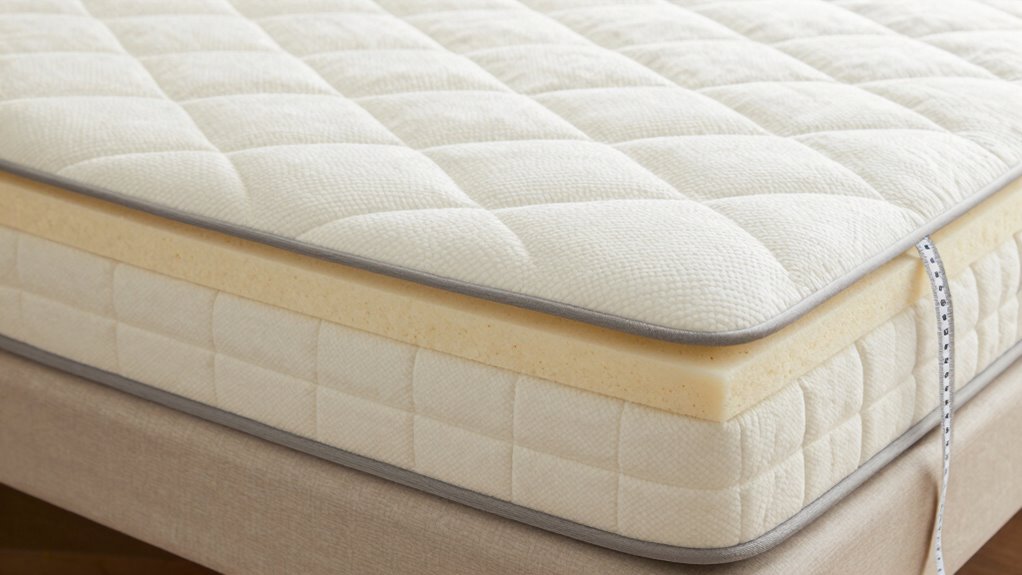
Ever wonder what exactly contributes to a mattress’s overall thickness? It includes several layers that directly impact bed comfort and mattress durability. These layers typically consist of:
- Comfort foam or memory foam
- Support foam or innerspring coils
- Pillow tops or padding
- Base layers for stability
- Additional comfort layers or padding
Understanding what mattress thickness includes helps you choose the right mattress for your needs. Thicker mattresses often provide better cushioning and enhanced support, improving bed comfort. They may also be more durable, lasting longer with proper construction. However, thickness isn’t the only factor—consider your sleeping position and personal preferences. Construction quality plays a crucial role in how well a mattress maintains its thickness and comfort over time. Knowing what contributes to mattress thickness ensures you select a bed that offers maximum comfort and longevity.
Frequently Asked Questions
How Does Mattress Profile Affect Overall Comfort and Support?
Your mattress profile directly influences comfort and support by affecting bed firmness and mattress flexibility. A higher profile often provides more cushioning and better support for side sleepers, while a lower profile offers a firmer feel suited for back or stomach sleepers. When choosing, consider how the profile interacts with your preferred firmness level and desired flexibility, ensuring your mattress supports your body comfortably throughout the night.
Can Mattress Height Influence Bed Frame Compatibility?
Think of your mattress as the crown jewel of your bed, and its height as the regal height that must fit perfectly. A taller mattress can be like a tall tower, making bed frame sizing vital for compatibility. If it’s too thick or too thin, it might not sit right, leading to issues with support and stability. Choose a mattress height that complements your bed frame to guarantee seamless comfort and harmony.
Is Thicker Always Better for Mattress Longevity?
Thicker mattresses aren’t always better for longevity, especially if your bed frame fit isn’t compatible or if the mattress weight becomes too much for the frame. A heavier, thicker mattress can wear out faster if your frame isn’t sturdy enough, leading to sagging or damage. Choose a thickness that balances comfort and durability, ensuring your bed frame can support the weight and size for long-lasting use.
What Materials Impact the Mattress Thickness Measurement?
Think of your mattress as a layered cake; the ingredients matter. Foam density influences thickness by adding plushness or firmness, while coil gauge determines how tightly the springs are wound, affecting overall height. Higher foam density makes it denser and more supportive, whereas a lower gauge coil creates a taller, more resilient surface. Together, these materials shape your mattress’s thickness, comfort, and durability—like the foundation of a cozy sanctuary.
How Do Different Mattress Measurements Impact Sleep Quality?
Different mattress measurements, like firmness and thickness, directly affect your sleep quality. A firmer mattress provides more support, reducing aches, while a softer one offers comfort but may cause misalignment. The sleep environment also matters; a well-chosen mattress aligns with your preferences, ensuring you stay comfortable. When measurements are right for you, you’ll experience better sleep, less tossing, and a more restorative rest overall.
Conclusion
Understanding the differences between profile, height, and thickness helps you pick the perfect mattress. While profile shows the overall shape, height measures from base to top, and thickness focuses on comfort layers. Think of profile as the personality, height as the stature, and thickness as the comfort level. By knowing these distinctions, you avoid confusion and make smarter choices—because in the world of mattresses, clarity is just as important as comfort.