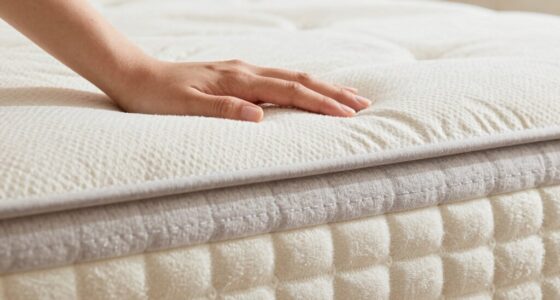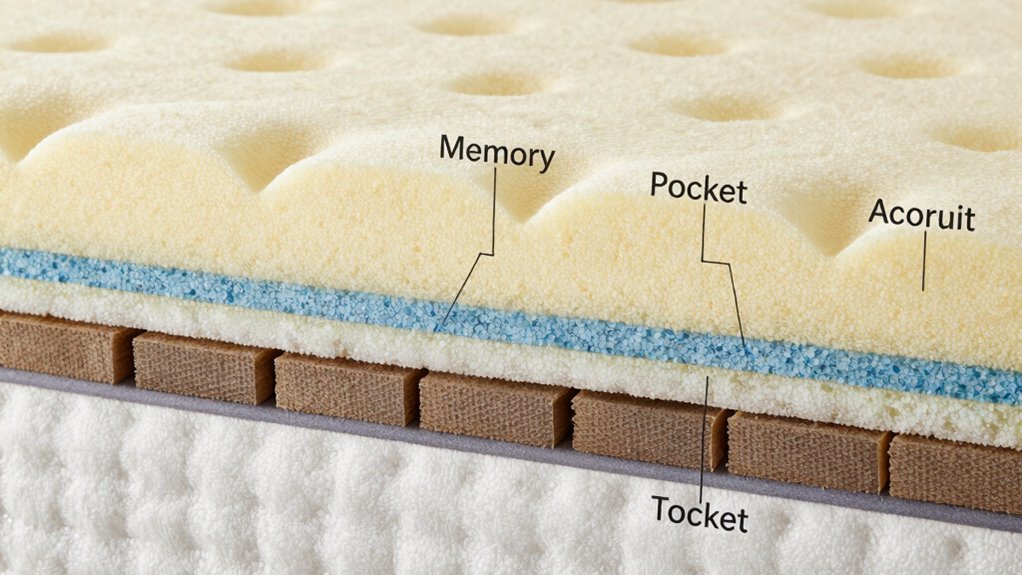
A clear mattress layer diagram shows you how each part — from the plush top comfort layer to the supportive base and coil system — works together to give you better sleep. The top layers comfort your body and control temperature, while support layers distribute weight evenly. Pocketed coils and edge support improve stability and motion isolation. If you want to understand how these layers interact and enhance your sleep, there’s more to discover below.
Key Takeaways
- The diagram clearly illustrates each mattress layer’s function, from comfort to support, simplifying overall understanding.
- It highlights material innovations like memory foam and pocketed coils that enhance durability and support.
- The visual emphasizes features like temperature regulation, moisture wicking, and edge support for a complete sleep experience.
- It explains how layers work together to prevent sagging, reduce motion transfer, and extend mattress longevity.
- The structure makes complex mattress components easy to identify, aiding consumers in informed purchasing decisions.

Novilla Queen Size Mattress, 12 inch Gel Memory Foam Mattress for a Cool Sleep & Pressure Relief, Medium Firm Feel with Motion Isolating, Bliss
General Note: Please allow 24 - 72 hours for your Mattress to regain its full shape. Any memory...
As an affiliate, we earn on qualifying purchases.
What Does the Top Comfort Layer Do to Make Sleep Better?

Have you ever wondered how the top comfort layer of a mattress enhances your sleep? It’s designed to provide immediate relief and support, making you feel cradled as you rest. Memory foam is a popular choice for this layer because it contours to your body’s shape, reducing pressure points and offering personalized comfort. Many mattresses incorporate cooling technology into the comfort layer to prevent overheating, ensuring you stay cool and comfortable throughout the night. This cooling feature helps regulate your body temperature, preventing night sweats and tossing and turning. Foam materials also influence how well the comfort layer responds to movement, contributing to a more restful sleep. By combining responsive support with temperature management, the top comfort layer creates an inviting sleep environment, helping you fall asleep faster and enjoy deeper, more restful sleep every night. Additionally, advancements in material innovation continue to enhance the overall sleep experience by improving durability and comfort, including the development of smart bedding technologies that adapt to your sleeping patterns. Understanding the importance of layer composition can help you choose the best mattress for your needs, especially as technology in sleep products evolves to provide even more personalized comfort.

LETMOON California King Mattress, 14 Inch Mattress Cal King Bed in Box, Medium Firm, (Upgrade) Edge Support, Pocket Springs, Pressure Relief
Hybrid Mattress for Back Pain & Spinal Alignment – Combines memory foam & pocket coils in a medium-firm...
As an affiliate, we earn on qualifying purchases.
How Do Support Layers Keep You Stable and Responsive?
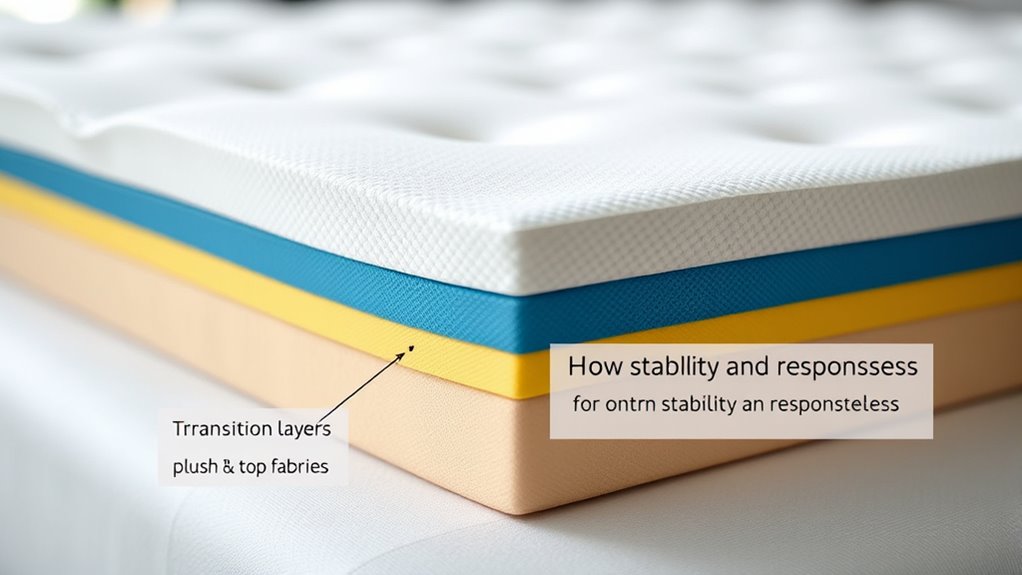
Support layers are essential for maintaining your mattress’s stability and responsiveness. They form the backbone of your support system, ensuring your body stays aligned and comfortable. These layers distribute your weight evenly, reducing pressure points and preventing sagging. They also respond quickly to your movements, providing the right level of support during tossing and turning. Properly designed support layers incorporate safety considerations to prevent material failure and ensure durability over time. Additionally, selecting appropriate materials can enhance the longevity and performance of your mattress. Using high-quality foam or coils can further improve durability and support consistency. Understanding the importance of proper installation practices helps ensure that support layers function optimally, preventing issues like uneven support or early failure. Together, these elements help your mattress deliver both stability and quick response, so you feel secure and comfortable all night.
EGOHOME King Size Memory Foam Mattress, 12 Inch Bed Mattress in a Box with Cooling Green Tea Gel, Relieve Pressure with Medium Firm Support, CertiPUR-US Certified, 80''L x 76''W, White
Pressure Relief Memory Foam: This king mattress uses patented premium memory foam material that provides balanced support while...
As an affiliate, we earn on qualifying purchases.
What Role Do Pocketed Coil Systems Play in Supporting Your Mattress?
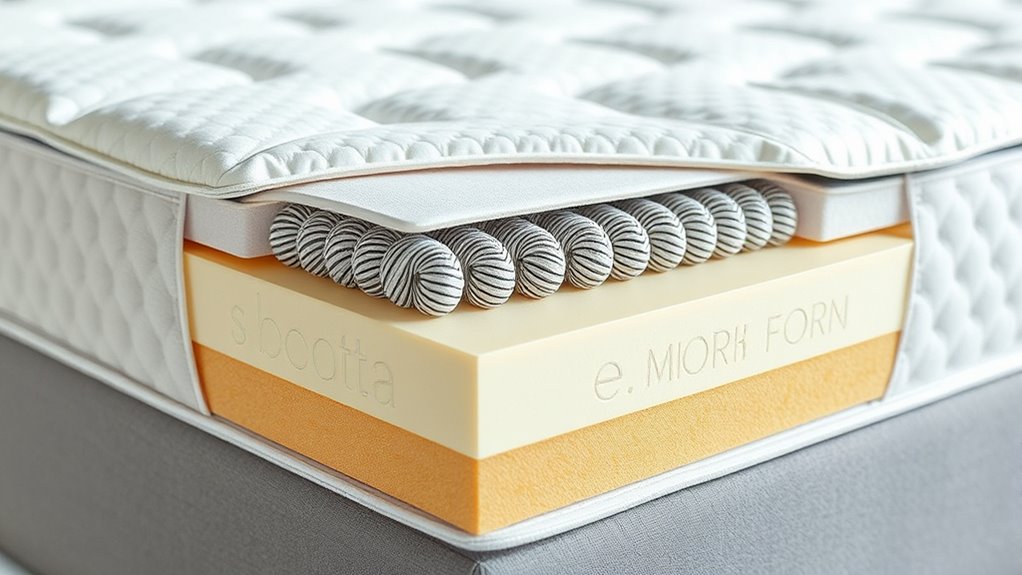
Ever wondered how pocketed coil systems enhance your mattress’s support? These systems consist of individual coils wrapped in fabric pockets, allowing each coil to move independently. This design offers targeted support, conforming to your body’s shape and reducing pressure points. One major benefit is mattress motion isolation; because each coil moves separately, you experience less disturbance from your partner’s movements. This means you won’t be jolted when they shift, leading to better sleep quality. Additionally, pocketed coil systems improve durability and breathability, promoting airflow and reducing heat buildup. The supportive structure provided by these coils helps maintain proper spinal alignment throughout the night. The coil design also contributes to the overall longevity of the mattress by minimizing wear and tear. Moreover, the ventilation benefits of pocketed coils help regulate temperature, keeping you comfortable all night. Incorporating high-quality appliance maintenance plans can further extend the lifespan of your mattress components, ensuring consistent support and comfort over time. Overall, they provide a balanced combination of support and comfort, making your mattress feel more responsive and adaptive to your body throughout the night.

EGOHOME 14 Inch California King Memory Foam Mattress for Back Pain, Cooling Copper Gel Bed in a Box, Foam Made in USA, CertiPUR-US Certified, Therapeutic Medium Firm, 72x84x14 Black
Cooling Fabric Combine with Graphene Technology: In short, this Cool-sensation Cover is designed to regulate your body temperature...
As an affiliate, we earn on qualifying purchases.
Why Is Edge Support Important, and How Does It Improve Your Bed?
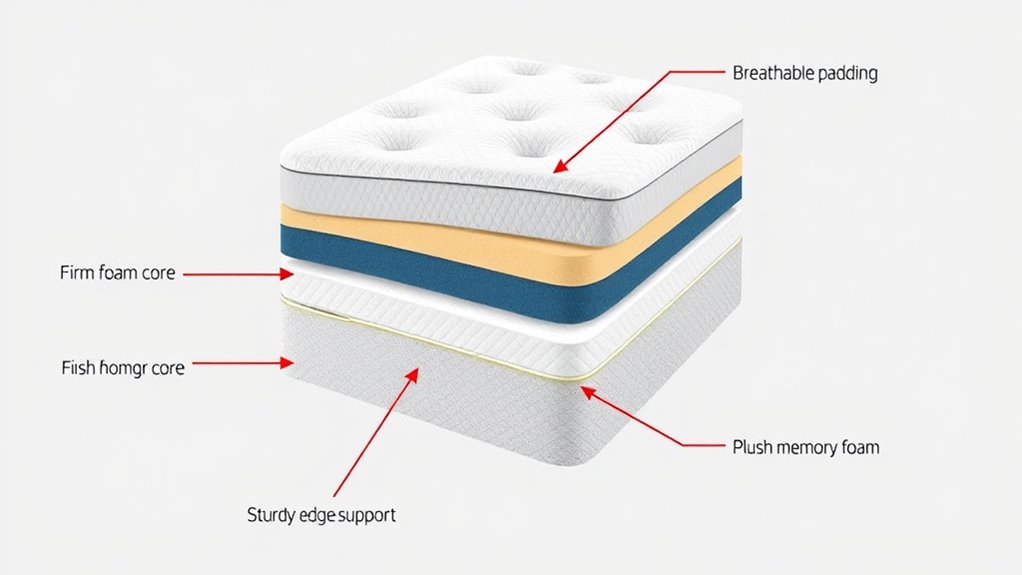
Good edge support keeps your mattress stable and prevents sagging over time. It also gives you more room to spread out comfortably without feeling like you’ll roll off. With better stability, your entire sleep surface gets an upgrade, ensuring lasting comfort. Incorporating high-quality mattress layers can further enhance edge support and overall durability. Additionally, choosing the right support system can make a significant difference in maintaining the integrity of your mattress over its lifespan. Properly designed support structures can distribute weight evenly, reducing pressure points and extending the life of your mattress. Understanding innovative materials used in mattress construction can help you select products that offer improved resilience and longevity. Recognizing passive voice in your writing can help you craft clearer, more direct sentences that engage readers effectively.
Enhanced Edge Stability
Enhanced edge stability is essential because it prevents your mattress from sagging or collapsing at the borders, which can greatly affect your comfort and safety. When the mattress perimeter is reinforced, you gain better support right at the edges, making it easier to sit or lie near the border without feeling like you’re going to roll off. This edge reinforcement helps maintain the mattress’s shape over time and prolongs its lifespan. It also makes getting in and out of bed more comfortable and less disruptive. With improved edge stability, you can utilize the full sleep surface without fear of discomfort or instability. Plus, a well-supported border helps prevent structural damage, ensuring your mattress stays firm and supportive longer. Understanding edge support is essential for managing your personal finances effectively. Additionally, enhanced edge stability can contribute to overall mattress durability by reducing wear and tear at the borders, which helps prevent premature mattress deterioration. Incorporating proper support materials during manufacturing can further enhance these benefits, especially in preventing border collapse under prolonged use.
Increased Sleep Surface
Edge support plays a crucial role in increasing your sleep surface because it allows you to use the full width of your mattress without fear of slipping or rolling off. When edges are reinforced, you can comfortably sit or sleep near the perimeter, maximizing your available space. This not only gives you more room to move but also enhances your overall comfort. A stable edge prevents sagging and creates a consistent surface across the entire mattress, contributing to comfort enhancement. Additionally, proper edge reinforcement helps extend the lifespan of your mattress by reducing uneven wear and tear. When the edges are well-supported, it also promotes better energetic alignment, which can positively influence your overall sleep quality. With improved edge support, you won’t feel confined to the center, making your bed feel larger and more inviting. This added stability ensures that every part of your sleep surface remains supportive and comfortable, helping you wake up refreshed and pain-free. Proper edge support also contributes to sleep safety, especially for seniors or those with mobility concerns, by reducing the risk of falls or injuries.
Reduced Mattress Sag
Have you ever noticed how your mattress begins to sag over time, especially around the edges? This mattress sag results from mattress deformation, reducing support and comfort. Reduced mattress sag improves edge support, preventing the sides from collapsing under your weight. This not only prolongs your mattress’s lifespan but also keeps your bed feeling firm and supportive. When edges stay firm, you can sit or sleep comfortably without worry of falling off or feeling unstable. Good edge support helps distribute weight evenly, reducing mattress deformation and preventing sagging. To enjoy these benefits, look for mattresses with reinforced edges, high-density foam, or pocketed coils designed for stability. These features ensure your mattress maintains its shape, offering consistent support and comfort every night.
What Does the Base Layer Provide as the Foundation?

The base layer gives your mattress support and stability, ensuring it maintains its shape over time. It also absorbs shock, reducing pressure points and enhancing comfort. Understanding its role helps you choose a foundation that keeps your sleep setup solid and reliable.
Support and Stability
Since the base layer forms the foundation of a mattress, it plays a crucial role in providing support and stability. This layer keeps your body properly aligned and prevents sagging over time. Foam density is key here; higher density foam offers better support and durability, ensuring the mattress holds its shape. Material breathability also matters, as it helps regulate temperature and prevents heat buildup, keeping you comfortable throughout the night. A stable base minimizes motion transfer, so you won’t be disturbed by a partner’s movements. Additionally, a well-designed support layer distributes weight evenly, reducing pressure points. To summarize:
- High foam density for longevity and support
- Breathable materials for temperature control
- Even weight distribution for comfort
- Reduced motion transfer for restful sleep
Shock Absorption Capabilities
A strong base layer actively absorbs shocks and impacts, protecting both the mattress structure and your body. Materials like memory foam excel in this role, cushioning against sudden movements and reducing pressure points. Latex comfort also offers excellent shock absorption, providing a resilient yet supportive foundation. This layer minimizes transfer of motion, so your sleep remains undisturbed if your partner moves. It helps prevent sagging and maintains the mattress’s shape over time. By absorbing impacts, the base layer enhances overall durability and comfort. Whether it’s memory foam’s contouring or latex’s responsiveness, this layer plays a vital role in creating a stable, restful sleep environment. Without proper shock absorption, both your mattress’s lifespan and your sleep quality could suffer.
How Do the Cover and Fabric Layer Add Comfort and Durability?
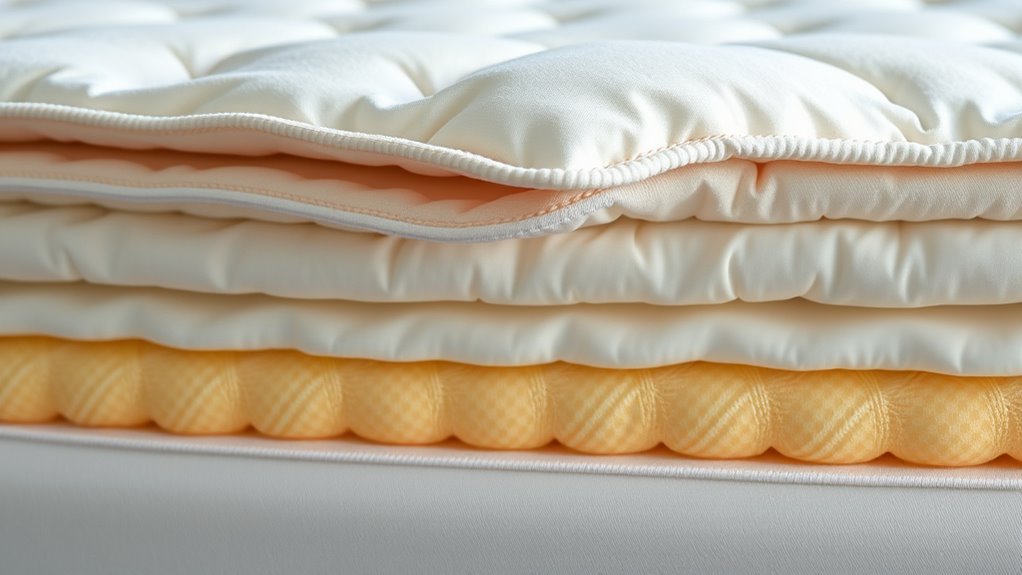
The cover and fabric layer play a crucial role in enhancing both comfort and durability of your mattress. They set the tone for your sleep environment, influencing how comfortable and inviting your bed feels. A high-quality cover helps regulate temperature, wick away moisture, and protect the inner layers from wear and tear. This reduces the need for frequent mattress maintenance, extending its lifespan. Additionally, the fabric layer adds a soft, plush feel, making your sleep surface more inviting. Properly chosen materials can resist stains, dust mites, and allergens, improving overall hygiene. To maximize these benefits, regularly inspect and clean the cover. This simple step keeps your mattress fresh, comfortable, and durable for years to come.
How Do All Mattress Layers Work Together to Create a Comfortable Sleep System?
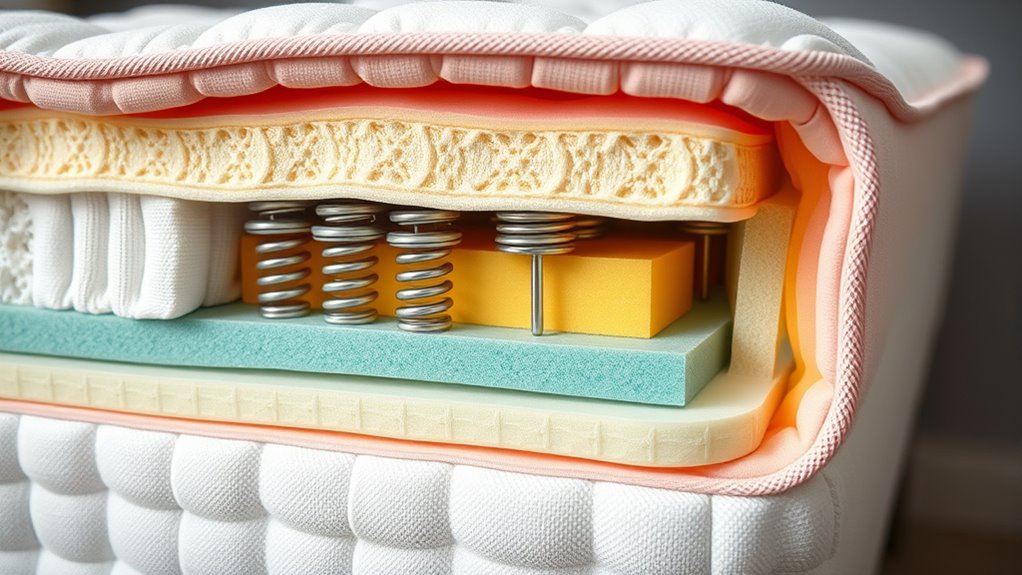
All mattress layers work together to create a balanced and supportive sleep system that adapts to your body’s needs. The comfort layers cushion and relieve pressure points, while the support core maintains proper spinal alignment. Together, these layers ensure you wake up refreshed, with minimal aches. Your bedroom aesthetics matter too, as a well-designed space enhances your sleep environment. Proper mattress maintenance, like rotating or cleaning layers, keeps your mattress in top condition, prolonging comfort and support. When all layers harmonize, your bed feels just right—neither too firm nor too soft. This integration promotes restful sleep, reduces tossing and turning, and helps you start each day energized. Understanding how each layer works together can improve your overall sleep quality and bedroom ambiance.
Frequently Asked Questions
How Do Different Mattress Layers Affect Overall Sleep Temperature?
Different mattress layers directly impact your sleep temperature by influencing temperature regulation and airflow enhancement. Firmer, thicker layers with breathable materials help wick away heat and improve airflow, keeping you cooler. Memory foam layers trap heat, making you warmer. Choosing layers designed for ideal airflow and moisture wicking ensures a more comfortable sleep environment, preventing overheating and promoting better rest through effective temperature regulation.
Can Mattress Layers Be Customized for Specific Sleep Preferences?
Yes, mattress layers can be customized for your specific sleep preferences, allowing you to create a more personalized sleep experience. You can choose different foam, latex, or coil layers that suit your comfort and support needs. Layer customization helps optimize temperature regulation, pressure relief, and overall comfort, ensuring you wake up feeling refreshed. By tailoring your mattress layers, you’re making a smart investment in better, more personalized sleep every night.
What Materials Are Commonly Used in the Support and Comfort Layers?
You might think support and comfort layers are just foam, but different foam types like memory foam, latex, or polyfoam are common, each offering unique feel and support. Fabric choices, such as breathable covers or cooling fabrics, also enhance comfort. These materials work together to guarantee personalized sleep experiences, whether you prefer plush or firm. Choosing the right combination depends on your specific sleep needs and preferences.
How Do Mattress Layers Influence Motion Transfer Between Sleepers?
Mattress layers greatly impact motion transfer between sleepers. If your mattress has good edge support and pressure distribution, you’ll notice less movement transfer, making it ideal for couples. The comfort and support layers absorb and isolate motion, preventing disturbances when one person moves. Choosing a mattress with well-designed layers ensures minimal disruption, so you stay comfortable and undisturbed, even if your partner shifts during the night.
Are Certain Layer Combinations Better for Specific Sleep Positions?
Think of mattress layers as a tailored suit—certain combinations fit better for specific sleep positions. If you sleep on your side, look for softer layers that cushion shoulders and hips. For back sleepers, firmer, supportive layers work best. Achieving ideal combinations depends on layer compatibility, ensuring pressure relief and support. By choosing the right mix, you’ll sleep comfortably, whether you’re a side, back, or stomach sleeper.
Conclusion
Think of your mattress as a well-orchestrated symphony, where each layer plays a essential note. When all parts work together harmoniously, you wake refreshed and ready. Ignoring one layer’s role is like silencing an instrument—disrupting the melody of restful sleep. By understanding how each piece contributes, you can choose a mattress that creates a perfect harmony, turning every night into a peaceful night’s serenade.