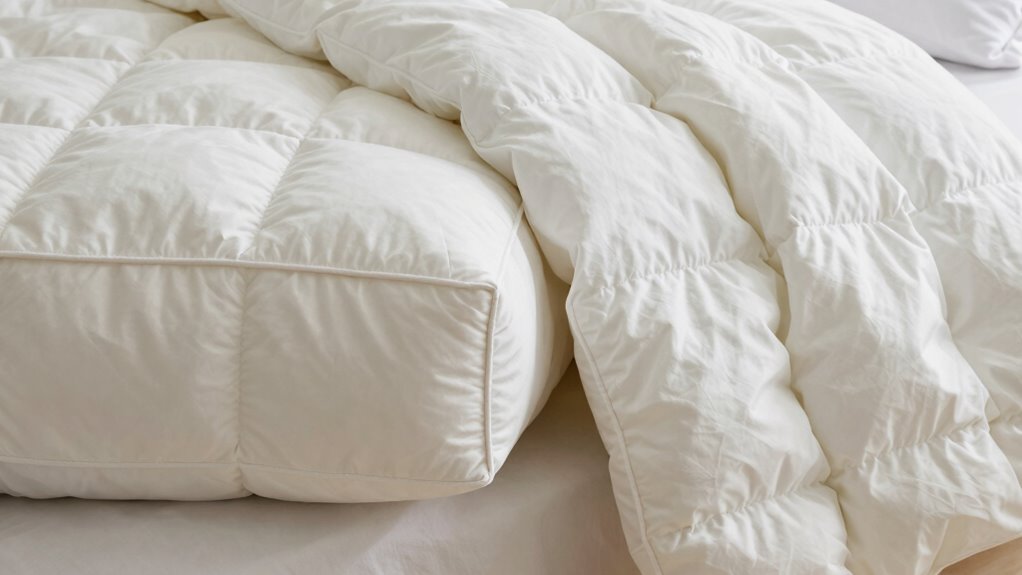

A duvet insert is a lightweight, removable filling placed inside a duvet cover, allowing you to change styles easily and adjust warmth for seasons. A comforter is a thick, sewn blanket ready to use instantly, offering a plush, decorative look but less flexibility. Both need proper care to stay fresh and last long. Keep exploring to discover how each option might suit your bedroom’s style and comfort needs.
Key Takeaways
- Duvet inserts are lightweight, fillable with down or synthetic, and used inside removable covers, while comforters are sewn with their fill and ready to use.
- Duvets offer seasonal flexibility and easy cleaning by swapping covers, whereas comforters are more durable but less adaptable in style.
- Comforters are typically thicker, quilted, and provide immediate warmth without additional covers, unlike duvet inserts that require duvet covers.
- Duvets allow for style changes through covers and are often more expensive, while comforters come in various designs and are usually more affordable.
- Proper maintenance and storage are crucial for both, but duvet inserts need regular fluffing and cover washing, whereas comforters are generally easier to care for.

Serta Goose Feather Down Fiber Cotton Comforter Queen Size – 100% Cotton Duvet Insert – Hotel Luxury Hypoallergenic Bedding Comforter All Season Medium Warmth 90 x 90 Inch White
【Luxury Feather Fiber & Down Fiber Comforter】This duvet features a filling composed of white goose feather fiber and…
As an affiliate, we earn on qualifying purchases.
As an affiliate, we earn on qualifying purchases.
What Is a Duvet Insert and How Does It Work?

Have you ever wondered what exactly a duvet insert is and how it functions? Duvet inserts are essential for bed layering, providing a versatile way to adjust your bedding for seasonal comfort. They are usually filled with down, synthetic fibers, or wool, offering warmth during colder months and lighter options for warmer seasons. You slip the insert into a duvet cover, which protects it and adds style. This setup makes it easy to swap out layers based on temperature changes, ensuring you stay cozy all year. Unlike traditional blankets, duvet inserts are designed to be removable and washable, making maintenance simple. Understanding how a duvet insert works helps you customize your sleep environment for suitable comfort throughout the seasons. Proper filling materials also influence the level of warmth and breathability, enhancing overall sleeping experience.

L LOVSOUL Down Comforter King Size, 850+ Fill Power Hotel Style Bedding Comforter, 1200TC, Fluffy Ultra Soft All Season White Duvet Insert with 8 Corner Tabs
Premium Down Fiber Filling : Our down fiber comforter is fluffy and comfy.Boasting top 75% down fiber filling,possess…
As an affiliate, we earn on qualifying purchases.
As an affiliate, we earn on qualifying purchases.
What Is a Comforter, and When Should You Use One?

A comforter is a thick, quilted blanket designed to add warmth and style to your bed. Its material and design choices make it suitable for different seasons and room aesthetics. Knowing when and how to use a comforter helps you create a cozy, visually appealing bedroom. Additionally, proper ventilation considerations can enhance comfort and maintain the longevity of your bedding. Ensuring your bedroom has good air circulation can prevent moisture buildup and improve overall sleep quality. Considering the contrast ratio of your bedroom lighting setup can also influence how your bedding appears visually. Incorporating proper insulation can further optimize comfort during colder months and extend the lifespan of your bedding.
Material and Design
Comforters are typically made from a soft fabric exterior filled with insulating materials like cotton, down, or synthetic fibers, designed to provide warmth and comfort. When choosing a comforter, you’ll notice a variety of fabric textures, from smooth sateen to cozy flannel, allowing you to match your bedroom decor and personal preferences. Color options are extensive, ranging from neutral tones to vibrant hues, making it easy to coordinate with your bedding set. The design often features box stitching or quilted patterns that keep the filling evenly distributed, preventing shifting. The fabric and filling work together to create a plush, inviting feel that suits all seasons. Selecting the right material and design enhances both comfort and aesthetic appeal in your sleep space.
Seasonal Use Cases
Choosing the right comforter for different seasons guarantees you stay comfortable all year round. During colder months, opt for a thicker, insulated comforter to provide warmth through seasonal layering. It helps with temperature regulation, keeping you cozy without overheating. In spring and fall, a lighter comforter strikes a balance between warmth and breathability, making it versatile for fluctuating temperatures. For summer, a thin or breathable comforter allows heat to escape, preventing night sweats. Adjusting your comforter based on the season guarantees ideal comfort and efficient temperature regulation. seasonal layering is a smart way to adapt your bedding for optimal comfort throughout the year, especially considering how mattress materials can influence overall sleep comfort and temperature control. Additionally, incorporating appropriate bedding materials can further improve your sleep environment by enhancing breathability and moisture-wicking properties. Properly matching bedding to your climate conditions ensures a more restful and comfortable sleep experience year-round. Understanding the importance of layering techniques can help you customize your bedding setup for maximum comfort in any season.
Styling and Aesthetics
Selecting the right comforter isn’t just about temperature regulation; it also plays a key role in enhancing your bedroom’s style and overall aesthetic. You can achieve this by focusing on color coordination, choosing hues that complement your walls, furniture, and bedding. A well-chosen comforter can instantly refresh your space or set a cozy mood. Decorative accents like embroidered patterns, textured fabrics, or contrasting piping add visual interest and personality. Layering your comforter with decorative pillows or throws creates depth and invites a personalized touch. Whether you prefer a sleek, modern look or a more traditional vibe, your comforter serves as a central piece that ties your room’s design together and reflects your style. Paying attention to attention to detail can help you select the perfect comforter that elevates your decor. Additionally, understanding fabric quality ensures durability and comfort for long-term satisfaction.

Bedsure Removable Cover with Comforter Duvet Insert Queen – 4 Pieces White Prewashed Soft Bedding Set for All Seasons Use, Includes 1 Duvet Cover, 1 Comforter, 2 Pillow Shams
Cloud-Soft Feel: Made of prewashed, cotton-like fabric, this bed set wraps you in ultra-soft comfort. Smooth, breathable, and…
As an affiliate, we earn on qualifying purchases.
As an affiliate, we earn on qualifying purchases.
How Do Duvet Inserts and Comforters Differ in Design and Construction?
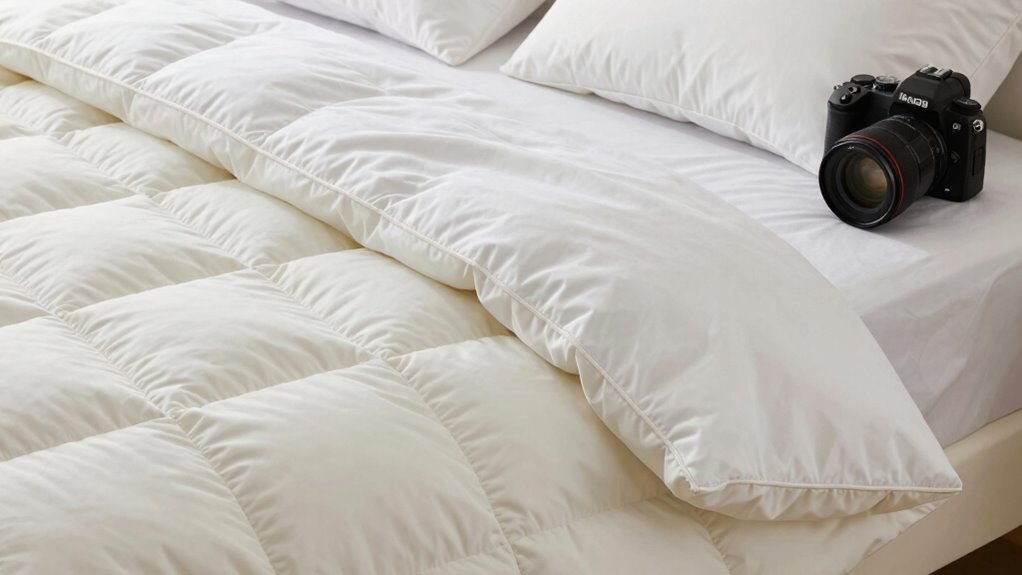
Duvet inserts and comforters differ markedly in their design and construction, affecting how they function and fit into your bedding setup. Duvet inserts are usually lightweight, with a fabric shell that’s soft and breathable, often made of cotton or microfiber, and filled with down, wool, or synthetic fibers. They lack a decorative outer layer, so you typically pair them with a duvet cover that offers various fabric textures and color options. Comforters, on the other hand, are sewn with a decorative fabric exterior, such as patterned cotton or microfiber, that encases the filling directly. This makes comforters ready to use right out of the package, with built-in color and design choices. Their construction is more solid, while duvet inserts are more versatile in terms of style and customization.

HYLEORY Queen Comforter, All Season Down Alternative Duvet Insert, Winter Warm Quilted Bed Comforter with Corner Tabs,Machine Washable, Dark Grey, 88×88 Inch
❤Peach-skin fabric surface – Extremely soft 100% brushed fiber cover made by unique peach-skin processing technology makes the…
As an affiliate, we earn on qualifying purchases.
As an affiliate, we earn on qualifying purchases.
How Do You Use and Install Duvets and Comforters in Your Bedroom?
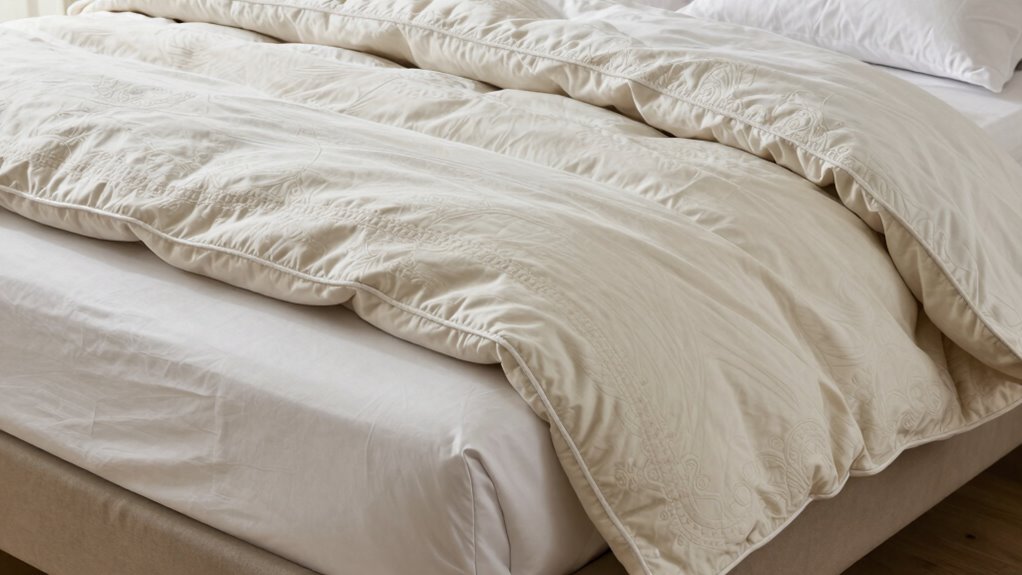
To properly use and install duvets and comforters in your bedroom, start by understanding their basic setup. Duvets typically go inside a duvet cover, which you can easily remove for washing, helping keep your bedroom organized and your sleep comfort high. Simply lay the duvet flat on your bed, place the cover over it, and secure the corners with ties or buttons if available. Comforters usually come ready to use, so just spread them evenly across your bed for a tidy look. Both options should be arranged smoothly to avoid lumps and ensure even coverage. Properly installed, they contribute to bedroom organization and enhance your sleep comfort by providing a clean, inviting sleeping environment.
How Can You Care for and Maintain Your Duvet or Comforter?
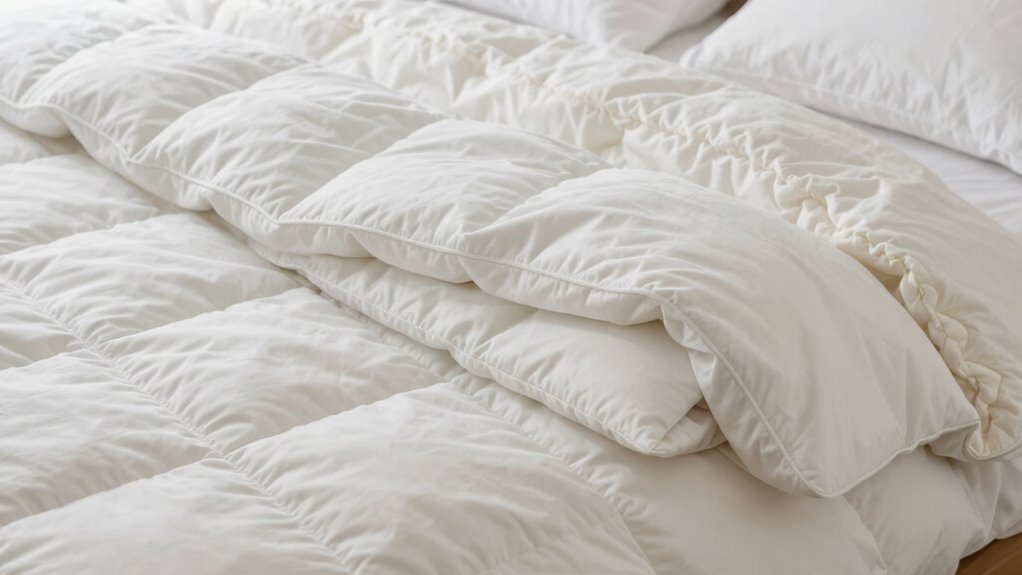
Taking good care of your duvet or comforter keeps it fresh and cozy. You need to follow proper washing instructions, store it correctly, and regularly fluff it up. These simple steps help maintain its comfort and extend its lifespan. Additionally, ensuring your bedding has proper storage and handling can prevent damage and keep it in optimal condition over time. Proper care routines such as airing out your bedding periodically can also help eliminate moisture and odors. Incorporating climate-specific lists into your routine can further optimize how you care for your bedding based on seasonal changes. Considering backup power options can also help you maintain your comfort during power outages, especially when managing electric bedding accessories or heating elements.
Washing Instructions and Tips
Properly caring for your duvet or comforter starts with understanding how to clean and maintain it without causing damage. To do this, always check the care label for specific washing instructions. Fabric durability varies, so some materials can handle more frequent washes, while delicate fabrics need gentler cycles. Higher thread count fabrics tend to be more resilient but may require careful handling to prevent pilling or tearing. Use a gentle cycle with cold water to preserve the fabric’s integrity and avoid shrinking. Consider washing your duvet or comforter separately to prevent overloading your machine. Dry thoroughly on low heat or air dry when possible. Regular maintenance keeps your bedding fresh, extends its lifespan, and preserves the quality of the fabric. Additionally, understanding the fabric types can help you choose appropriate cleaning methods that maintain your bedding’s comfort and durability. To ensure your bedding remains in top condition, it’s also beneficial to monitor your washing machine’s performance and avoid overloading it, which can affect cleaning effectiveness. Being aware of proper washing techniques is essential for maintaining the softness and appearance of your duvet or comforter over time. Incorporating appropriate drying methods can further help prevent damage and maintain the bedding’s plushness. Using proper storage techniques when not in use can also prevent dust accumulation and fabric deterioration, prolonging the life of your bedding.
Proper Storage Techniques
After washing your duvet or comforter, storing it correctly helps maintain its quality and prolongs its lifespan. Proper storage organization is key to preventing damage and keeping it fresh. Use a breathable storage bag or cotton case instead of plastic, which can trap moisture and cause mildew. Make sure your bedding is completely dry before packing it away. For seasonal packing, fold your duvet or comforter neatly and place it in a cool, dry area away from direct sunlight. Avoid compressing it tightly, as this can damage the filling. Consider using storage bins with ventilation or breathable fabric covers to protect against dust and pests. Regularly check your stored bedding to ensure it remains clean and free from moisture, preserving its comfort and longevity.
Maintaining Fluff and Freshness
To keep your duvet or comforter fluffy and smelling fresh, regular care is essential. Start by checking the thread count; higher thread counts help retain the filling material’s loft and prevent it from shifting. Shake your duvet or comforter daily to redistribute the filling evenly and maintain its fluffiness. When washing, use a gentle cycle with mild detergent, ensuring the filling material isn’t clumped or damaged. Dry thoroughly on a low heat setting, adding clean tennis balls or dryer balls to help fluff the filling. Proper ventilation and occasional airing out also keep odors at bay. Regularly inspecting for wear and addressing any lumps promptly will prolong its life and keep your bedding feeling cozy and inviting.
Should You Choose Based on Looks or Practicality?

When choosing between a duvet insert and a comforter, your decision often hinges on whether you prioritize looks or practicality. If you care about aesthetics, comforters offer a wide range of color options and patterns that can instantly refresh your room’s style. They’re usually easier to coordinate with existing decor. However, if durability matters more, duvet inserts often feature better fabric durability, especially when you select high-quality covers. Comforters can fade or wear out faster, requiring replacement more often. On the other hand, duvet covers are removable and washable, making it simpler to maintain their appearance and longevity. Consider how much effort you want to put into upkeep versus visual appeal, and choose what aligns best with your lifestyle and decorating goals. Additionally, the overall quality and material of the fabric durability can significantly impact the longevity of your bedding choice. For those seeking ease of cleaning and versatility, duvet covers provide a convenient solution that allows for frequent updates without replacing the entire bedding. Incorporating natural materials can also enhance comfort and sustainability in your bedding options, making them a practical choice for eco-conscious consumers.
How Much Do Duvet Inserts and Comforters Cost?
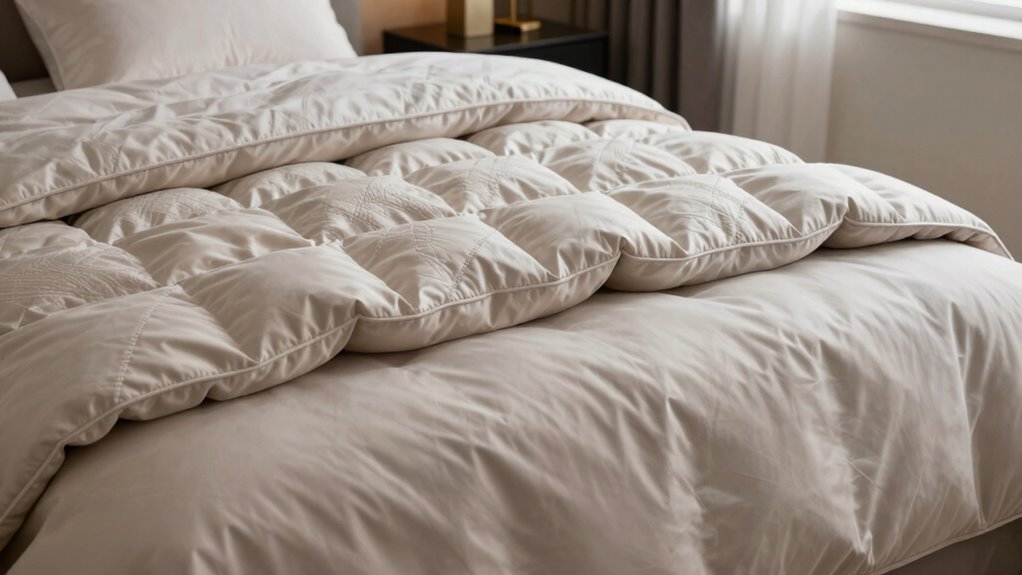
Duvet inserts and comforters vary widely in price, making budget an important factor in your choice. A cost comparison shows that comforters often cost less upfront, with many affordable options available, while duvet inserts can range from budget-friendly to luxury prices depending on materials and brand. If you’re on a tight budget, you’ll find plenty of budget options for comforters that still look good and feel cozy. Duvet inserts tend to be more versatile and durable, but they may require a higher initial investment. Consider how much you’re willing to spend and what features matter most to you. Balancing cost with quality guarantees you get the best value for your money, whether you choose a budget option or a more premium product.
Which Is Better for Your Sleep Style and Room Decor?
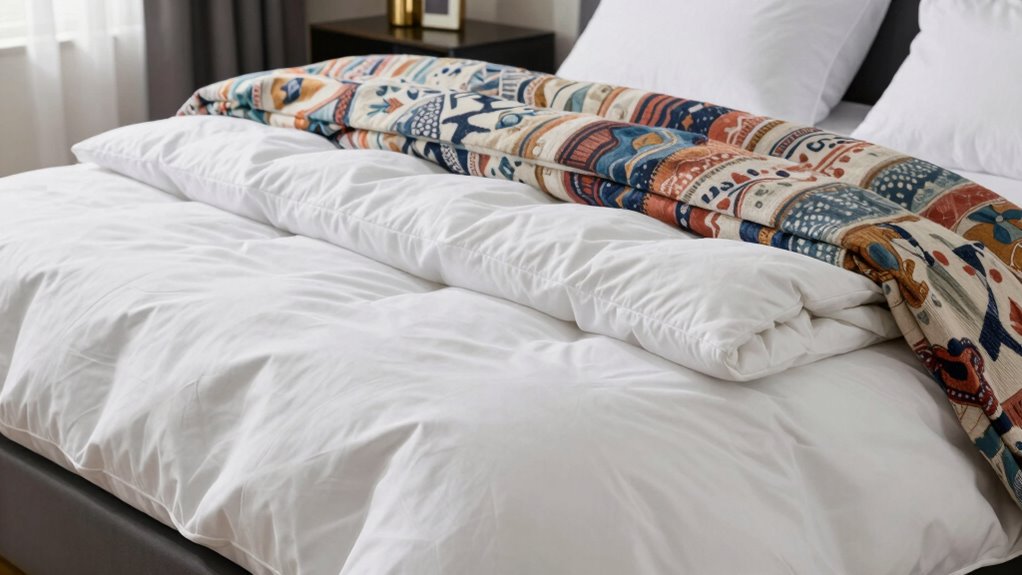
Choosing between a duvet insert and a comforter depends heavily on your sleep style and room decor. If you prefer a sleek, minimalist look, a comforter with a coordinated cover might suit your room color scheme better. Comforters are easy to style and maintain, especially if you like changing your decor often. On the other hand, a duvet insert allows for more customization, letting you switch out covers to match different room colors or themes. Bed size also matters: a larger bed, like a king, may look more balanced with a comforter that drapes evenly, while a duvet insert offers flexibility to create a tailored look. Consider your comfort preferences and decor goals to choose what aligns best with your room and sleeping habits.
Frequently Asked Questions
Can Duvet Inserts Be Used Without a Cover?
Yes, you can use duvet inserts without a cover, but it’s not the most practical bed cover option. Duvet covers come in various styles, making it easy to match your decor and protect your insert. Without a cover, your duvet insert might get dirty or stained easily. If you prefer a different bed cover option, consider choosing a duvet cover style that complements your bedroom decor and keeps your insert clean.
Are Comforters Suitable for All Seasons?
Like a chameleon adapting to its environment, comforters can be suitable for all seasons if you choose wisely. For seasonal bedding, opt for lightweight options in summer and heavier, insulated ones in winter. Climate suitability depends on your local weather and personal comfort preferences. Layering techniques also help, allowing you to adjust your bedding for year-round coziness without sacrificing style or practicality.
How Do I Choose the Right Size for My Bed?
To select the right size for your bed, start by measuring your mattress dimensions, including length and width. Follow bed size guidelines to find the best fit—such as twin, full, queen, or king. You want your comforter or duvet insert to drape evenly on all sides without excessive overhang or tightness. This guarantees a cozy look and proper coverage, making your sleep space both comfortable and stylish.
Are There Hypoallergenic Options for Duvet Inserts and Comforters?
Yes, there are hypoallergenic options for duvet inserts and comforters. You can choose allergy-friendly materials like organic cotton, hypoallergenic down alternatives, or tightly woven fabrics that prevent dust mites and allergens from penetrating. These options help reduce allergy symptoms and improve sleep quality. Always look for products labeled as hypoallergenic, and consider washing them regularly to keep allergens at bay.
What Are the Environmental Impacts of Each Bedding Type?
You should consider that duvet inserts and comforters vary in their environmental impacts, influenced by sustainable materials and eco-friendly manufacturing. Duvet inserts made from organic cotton or recycled fabrics tend to be more eco-friendly, while comforters with synthetic fillings can have a larger carbon footprint. Both options benefit from choosing products made with sustainable materials and eco-conscious manufacturing practices, helping reduce pollution and conserve resources.
Conclusion
Choosing between a duvet insert and a comforter ultimately depends on your style and needs. Did you know that a survey found that 65% of people prefer duvet inserts for their versatility? By understanding the differences, you can pick the one that best suits your sleep habits and decor. Whichever you choose, proper care guarantees it stays cozy and fresh for years to come. Your perfect night’s sleep is just a decision away!