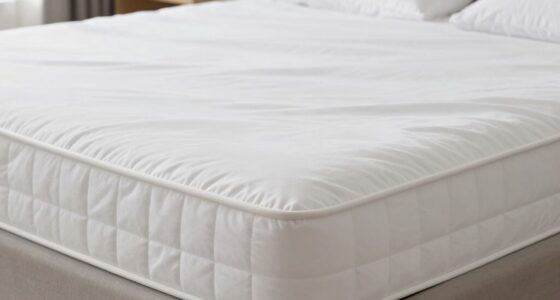
For couples, balancing motion isolation, bounce, and temperature is key to better sleep. Motion isolation minimizes partner disturbances, especially with foam or latex mattresses, while some bounce can add comfort but may transfer movement and cause disruptions. Temperature control, like cooling sheets and room adjustments, guarantees both stay comfortable. Finding the right mix depends on your preferences and needs, and exploring options further can help you create a peaceful, cozy sleep environment together.
Key Takeaways
- Motion isolation minimizes partner disturbance by absorbing and reducing mattress movement, ideal for couples with different sleep patterns.
- Bounce provides responsiveness and comfort but may increase motion transfer, potentially disrupting a partner’s sleep.
- Maintaining an optimal room temperature (60-67°F) enhances sleep quality and comfort for both partners.
- Choosing the right mattress type (memory foam, hybrid, innerspring) impacts motion transfer, bounce, and temperature regulation.
- Using breathable bedding and climate control devices helps create a cooler, more comfortable sleep environment for couples.
How Does Motion Isolation Keep Your Sleep Undisturbed?

Motion isolation works by absorbing and minimizing movement on the mattress, so when your partner shifts or gets up during the night, you’re less likely to feel it. This feature is especially helpful if bed sharing challenges cause frequent sleep disturbances. Without motion transfer, your sleep remains uninterrupted even if your partner tosses or gets out of bed. This means fewer wake-ups and more restful sleep for you. Memory foam and latex mattresses excel at preventing movement from traveling across the surface, making them ideal for couples with different sleep patterns. Additionally, proper mattress construction can enhance motion isolation effectiveness. By reducing the impact of your partner’s movements, motion isolation helps you stay asleep longer and wake up feeling more refreshed, without being disturbed by small movements or restless nights. Incorporating high-quality materials can also improve durability and maintain consistent motion isolation over time. Using layered structures designed for shock absorption can further optimize sleep quality by effectively dampening vibrations.
Does Bounce Help or Hurt Couples? Pros and Cons Explained
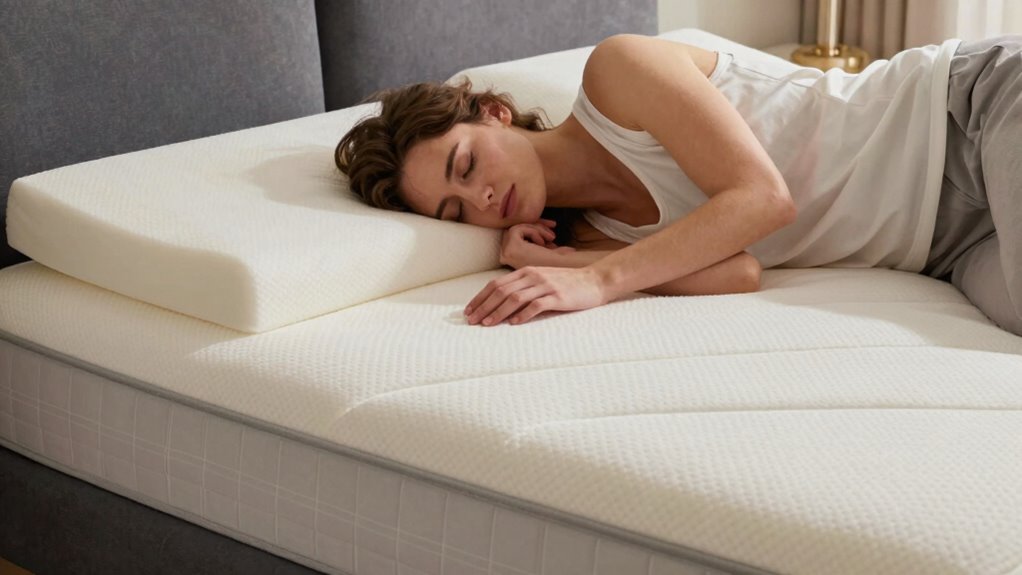
Bounce in your mattress can influence how much motion transfer you feel, affecting both your sleep quality and your partner’s rest. When the mattress responds quickly, it might help you stay comfortable, but it could also disrupt your partner’s sleep if movement is transferred easily. Considering these effects can help you decide if bounce benefits your relationship or creates new sleep challenges. Additionally, understanding how motion transfer impacts sleep can guide you in choosing the right mattress for both comfort and support. The type of mattress and its responsiveness can also affect overall sleep satisfaction and sleep quality, which are crucial for restful nights. Recognizing the influence of mattress responsiveness can help you optimize both comfort and minimized disturbance for couples. Moreover, selecting a mattress with appropriate pressure relief can further improve sleep harmony for both partners.
Motion Transfer Effects
When you share a bed, the movement caused by bouncing can considerably impact both partners’ sleep quality. Excess motion transfer can disrupt sleep, making it hard to stay asleep or fall back asleep. Bouncing might be fun initially, but it can interfere with bed sharing etiquette, especially if one partner is sensitive to movement. Your sleep position compatibility also plays a role; certain positions may reduce or amplify motion transfer. To minimize disturbances:
- Choose a mattress with good motion isolation
- Opt for bed frames that absorb movement
- Communicate about bouncing habits to maintain harmony
- Consider innovative European cloud servers that utilize advanced technology to monitor sleep patterns and reduce motion transfer effects through smart adjustments. Additionally, selecting a mattress with proper material composition can significantly influence how well motion is contained. Understanding how motion transfer affects sleep helps you select the right setup, ensuring both partners rest peacefully. Incorporating sleep environment optimization techniques, such as controlling ambient temperature and reducing noise, can also enhance overall sleep quality. Being aware of natural pool designs and environmentally friendly options can also help create a tranquil sleeping environment that promotes relaxation. Incorporating somatic therapy techniques into your routine may also help couples manage stress and improve sleep quality, especially when addressing underlying tension or trauma. This consideration is crucial for maintaining harmony and quality sleep in your shared bed.
Impact on Sleep Quality
Deciding whether bouncing in bed helps or hurts your sleep depends on your individual preferences and sensitivities. For some couples, gentle bounce can add a playful rhythm, reducing stress and enhancing sleep hygiene. However, excessive movement might disrupt your partner’s rest, affecting overall sleep quality. To visualize, consider this table:
| Effect on Sleep | Pros | Cons |
|---|---|---|
| Enhances relaxation | Boosts intimacy | May cause partner disturbance |
| Improves bedroom decor vibe | Adds comfort | Can increase wakefulness |
| Promotes sleep hygiene | Encourages physical activity | Might lead to restlessness |
Additionally, some research suggests that sleep environment factors like movement can influence sleep quality. For instance, motion transfer from bouncing or tossing can be particularly disruptive for sensitive sleepers. Moreover, smart home devices such as motion sensors can detect and adapt to these movements to optimize sleep conditions. Interestingly, the advancements in nanotechnology are also paving the way for innovative sleep solutions, like smart mattresses that can adjust firmness or temperature in response to movement. Furthermore, understanding how different types of motion isolation mattresses behave can help couples select the best fit for their sleep needs. Ultimately, understanding your comfort levels and bedroom decor style will help you decide if bounce enhances or hampers your sleep quality.
Relationship Dynamics
Whether bouncing in bed helps or hurts your relationship depends largely on your communication and mutual comfort. If bouncing leads to playful interactions, it can strengthen your bond and foster positive romantic communication. However, if it becomes disruptive or causes sleeplessness, it might create tension or frustration. Respecting bed sharing etiquette is key—make certain both partners are comfortable with bouncing and set boundaries if needed. Consider these factors:
- Playful bouncing can boost intimacy if both enjoy it
- Excessive bouncing may disturb sleep and lead to irritation
- Clear communication helps balance fun and rest, improving relationship dynamics
- Understanding the importance of sleep quality and how it impacts overall relationship health can help couples make better decisions about bed activities
- Recognizing the impact of physical activity on sleep patterns can help couples plan their bedtime routines more effectively
- Being aware of AI tools for content creation can enhance how you communicate and share information about your relationship, especially in digital contexts
- Additionally, an awareness of energetic alignment can help couples foster harmony and reduce potential conflicts related to physical activities like bouncing.
Ultimately, understanding each other’s preferences and maintaining open dialogue ensures bouncing enhances rather than harms your connection.
How Can Temperature Control Make Your Bed More Comfortable?
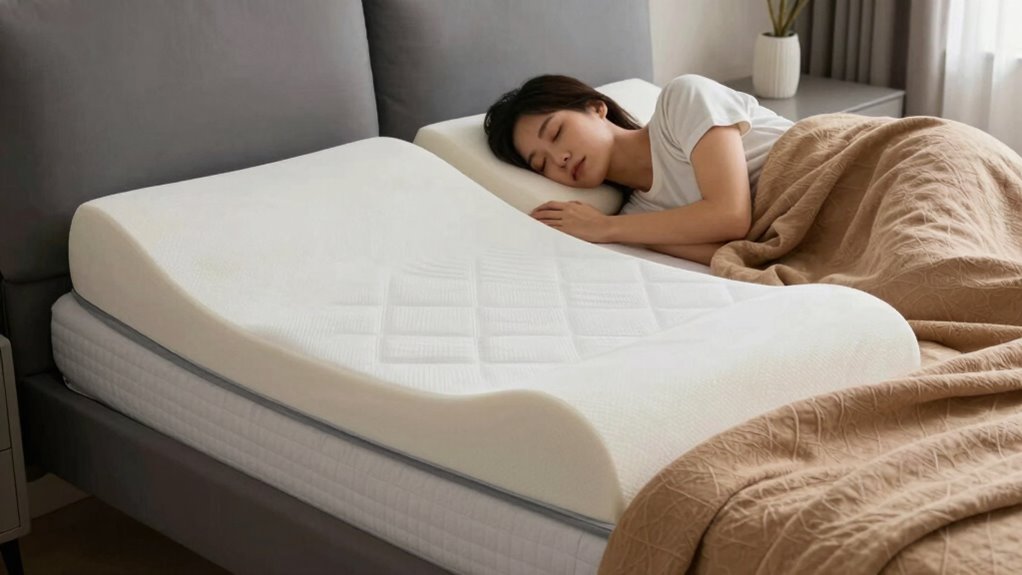
Controlling your bed’s temperature can markedly improve comfort and sleep quality. You can do this by regulating the bed’s temperature, choosing breathable materials, and adjusting the room’s climate. These steps help create a cooler, more comfortable sleeping environment for both of you.
Regulating Bed Temperature
Maintaining the right bed temperature can considerably improve your sleep quality, as too much heat or cold can disrupt rest. Proper thermal regulation helps you stay comfortable throughout the night. To achieve this, consider options like bed cooling systems that actively reduce heat buildup. Adjusting your thermostat or using breathable bedding can also promote better temperature control. These strategies prevent overheating or chilling, ensuring you stay in a comfortable zone. The key is to find a balance that suits both you and your partner, preventing sleep interruptions caused by temperature fluctuations. By focusing on effective thermal regulation, you can create a cooler, more comfortable sleep environment that encourages deeper, more restful sleep.
- Use cooling mattresses or toppers for bed cooling
- Opt for breathable, moisture-wicking bedding materials
- Adjust room temperature to suit your comfort needs
Choosing Breathable Materials
Choosing breathable materials for your bedding is essential because they help regulate your body temperature throughout the night. Breathable fabrics, like cotton, linen, and bamboo, allow air to circulate, preventing heat buildup and moisture retention. Cooling materials, such as gel-infused memory foam or moisture-wicking covers, further enhance temperature control by dissipating heat quickly. When selecting your sheets and pillowcases, opt for these breathable fabrics to stay comfortable and dry. These materials promote better airflow, reducing night sweats and overheating. By prioritizing breathable fabrics and cooling materials, you create a sleep environment that adapts to your body’s needs, ensuring you stay cool and comfortable all night long. This simple choice can noticeably improve your sleep quality and overall comfort.
Adjusting Room Climate
Adjusting your room’s temperature is a simple yet effective way to enhance your sleep comfort. When your bedroom climate aligns with your preferences, it supports better sleep routines and creates a relaxing environment. A cooler room, around 60-67°F, often helps couples sleep more soundly and reduces tossing and turning. Incorporate temperature control into your bedroom decor with blackout curtains, fans, or a programmable thermostat for consistent comfort. These adjustments can prevent overheating or chilliness, making it easier to fall asleep and stay asleep.
- Use a fan or space heater to fine-tune temperature
- Choose bedding that complements your preferred climate
- Adjust window coverings to block heat or cold transfer
How Do You Find the Right Balance Between Comfort and Support?
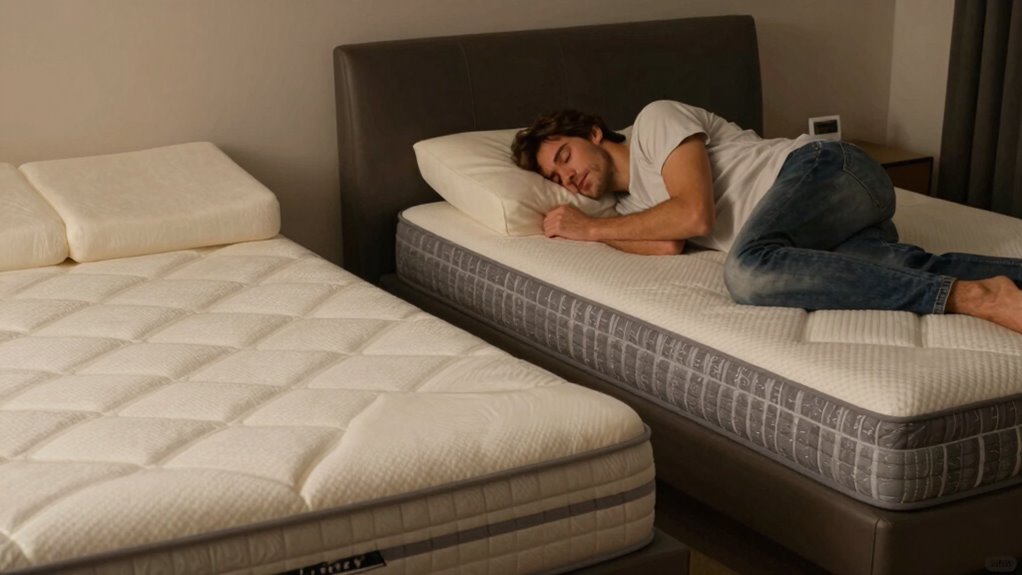
Finding the right balance between comfort and support can be challenging because what feels good initially might not provide the necessary spinal alignment overnight. When bed sharing, your partner’s movements and preferences influence your comfort, making it even trickier to find a mattress that suits both of you. Prioritize sleep compatibility by choosing a surface that offers enough support to keep your spine aligned while still feeling comfortable. You might prefer a medium-firm mattress, which often balances softness and support, or consider adjustable options. Pay attention to how your body feels after a night’s sleep. If you wake up with aches or discomfort, it’s time to reassess your setup to improve both comfort and support for a better night’s rest.
Which Mattress Types Work Best for Couples? Effects and Tips
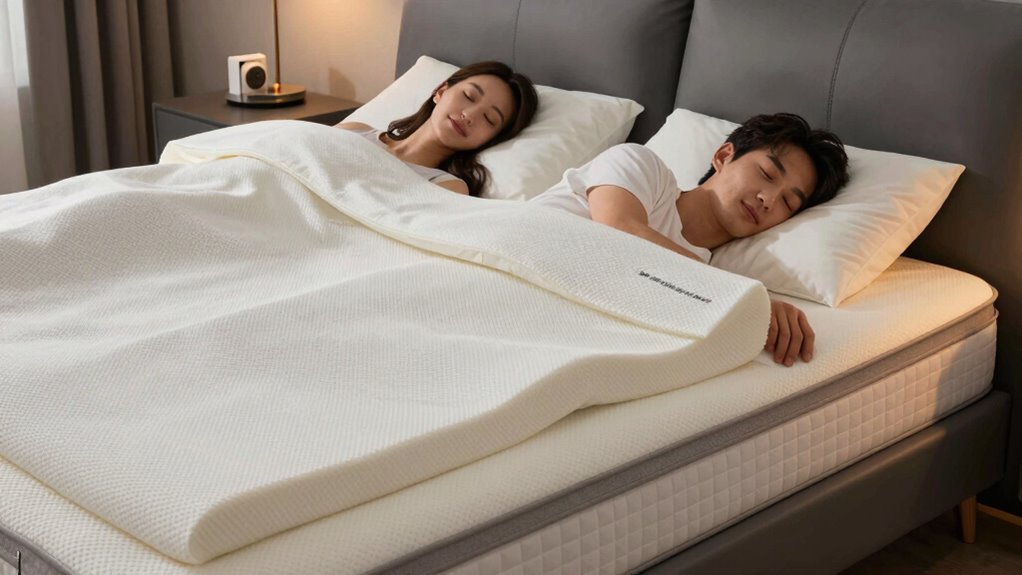
Selecting the right mattress type can considerably influence both comfort and support for couples. Your ideal choice depends on how the mattress’s firmness and sleep surface accommodate both partners’ needs. Memory foam mattresses often excel at motion isolation, reducing disturbances from movement. Hybrid mattresses combine support and bounce, making them versatile for different firmness preferences. Innerspring models typically offer a bouncier feel but may transfer motion more easily. When choosing, consider a sleep surface that minimizes partner disturbance, especially if one person moves frequently or has different firmness preferences.
- Memory foam for excellent motion isolation and pressure relief
- Hybrid mattresses for a balance of support and bounce
- Innerspring for a traditional feel with more bounce
What Sleep Accessories Can Help Couples Sleep Better?
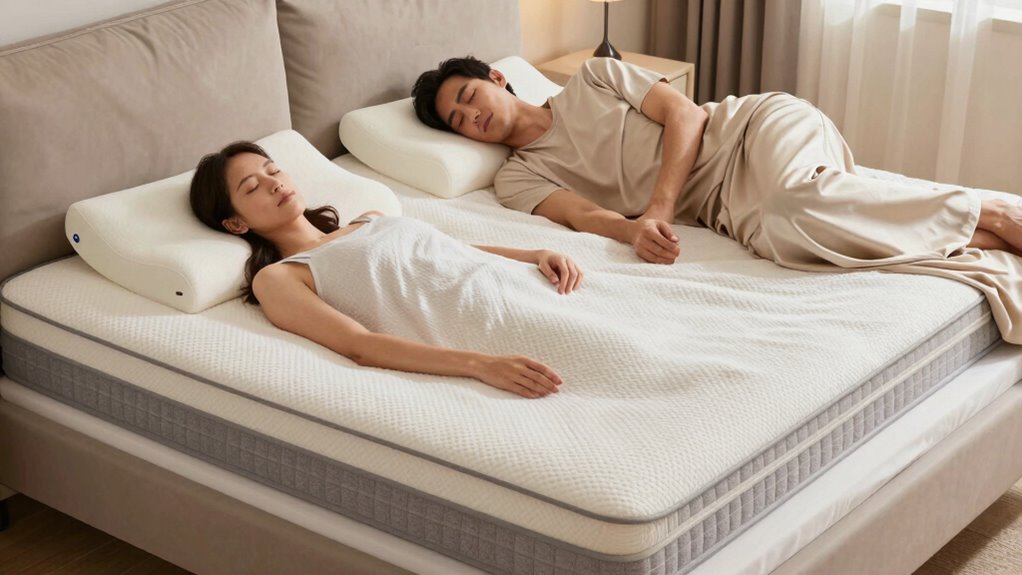
Ever wonder how certain sleep accessories can make sharing a bed more peaceful? Choosing the right pillow firmness can markedly improve your sleep quality. If you tend to shift or toss, a medium-firm pillow offers balanced support, reducing discomfort for both partners. Memory foam or latex pillows can minimize motion transfer, helping you stay asleep even if your partner moves. Additionally, adjustable pillows allow you to customize support for your preferred sleep position, whether you sleep on your side, back, or stomach. Using separate pillows or pillow inserts can also prevent disturbances caused by differing sleep styles. These accessories help accommodate individual needs, reducing friction and promoting better rest for both of you. With the right pillow choices, you can enhance comfort and harmony in your shared sleep space.
How Can You Talk and Test Sleep Preferences With Your Partner?
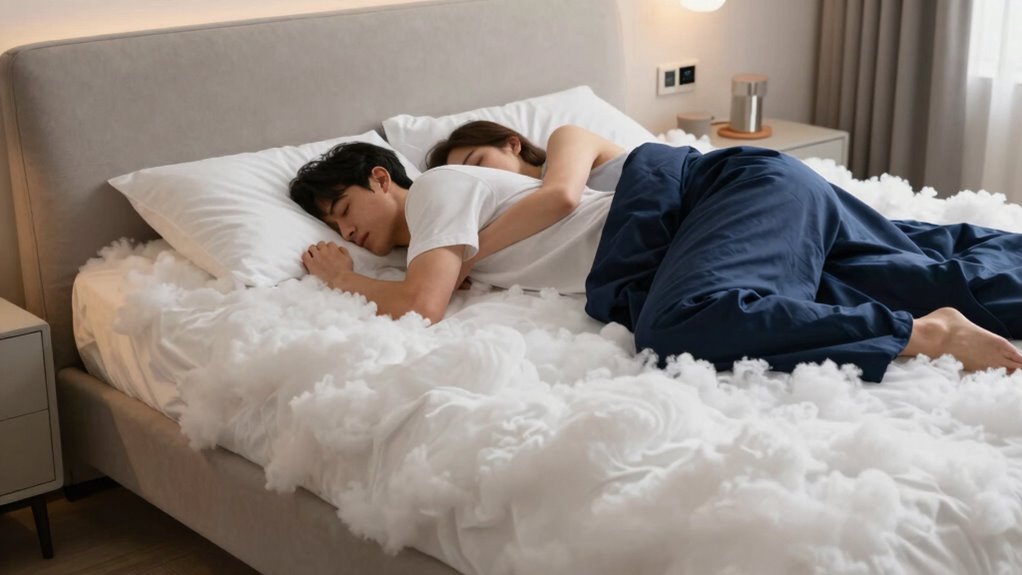
Discussing sleep preferences openly with your partner is essential for a peaceful night’s rest, but it requires patience and clear communication. Start by sharing your individual sleep needs and listening carefully to theirs. Experiment with different mattress types or setups to test sleep comfort and observe dream compatibility—notice which positions or environments promote better rest. Use sleep communication to express what feels comfortable and what doesn’t, fostering understanding.
Consider trying these approaches:
- Keep a sleep journal to track preferences and sleep quality
- Have a trial period with different setups before making decisions
- Use open-ended questions to explore each other’s sleep habits and preferences
Frequently Asked Questions
How Does Sleeping Position Influence Motion Transfer Between Partners?
Your sleeping position directly impacts motion transfer during bed sharing. If you sleep in a side position or keep your limbs close to your body, it reduces movement that can disturb your partner. Proper sleep alignment helps minimize bounce and transfer, ensuring a more restful night. By choosing positions that limit motion, you create a more comfortable environment, allowing both of you to enjoy better sleep quality without disruptions.
Are There Specific Mattress Materials Better for Temperature Regulation?
When it comes to temperature regulation, you’re in the driver’s seat. Memory foam with gel-infused materials is a great choice, as it helps dissipate heat and keeps you cool all night. Look for breathable covers and open-cell designs to enhance airflow. These materials are your best bet for staying comfortable, so you don’t have to sweat the small stuff and can focus on a good night’s sleep.
Can Adjustable Beds Improve Sleep Quality for Couples?
Yes, adjustable beds can considerably improve sleep quality for couples. With adjustable firmness, each partner can customize their side for ideal comfort, reducing disturbances caused by differing preferences. This also enhances bed sharing benefits, as you can modify positions to prevent partner bounce and improve motion isolation. Plus, adjustable beds help regulate temperature, making it easier to stay comfortable throughout the night, leading to better rest for both of you.
How Do Allergies Affect Sleep Comfort for Couples Sharing a Bed?
Did you know that allergies cause sleep disruptions for up to 30% of adults? When sharing a bed, allergies can considerably impact your sleep comfort, leading to congestion and discomfort. To improve sleep quality, focus on allergy management and bedding sanitation. Regularly wash sheets, use hypoallergenic covers, and keep pets out of the bedroom. These steps help reduce allergens, ensuring you and your partner enjoy restful, uninterrupted sleep.
What Are the Long-Term Health Benefits of Optimal Sleep Conditions for Couples?
By maintaining ideal sleep conditions, you improve your sleep hygiene, leading to better overall health. A comfortable sleep environment reduces stress, boosts immune function, and enhances mental clarity over time. When you prioritize these factors, you decrease the risk of chronic conditions like heart disease and diabetes. Consistently good sleep benefits both your physical and emotional well-being, helping you wake up refreshed and ready to face each day.
Conclusion
Now that you know the key factors—motion isolation, bounce, temperature, and more—you’re closer than ever to perfecting your shared sleep space. But the real question remains: which combination will truly transform your nights? The answer might surprise you, and the best part is, you’re in control. Keep exploring, testing, and communicating with your partner. Your ideal sleep setup could be just one decision away—are you ready to find out what that is?