
TL;DR

Get home appliances delivered free with Prime
- Fast, free delivery on millions of items
- Prime Video, Amazon Music and more included
- Member-only deals all year
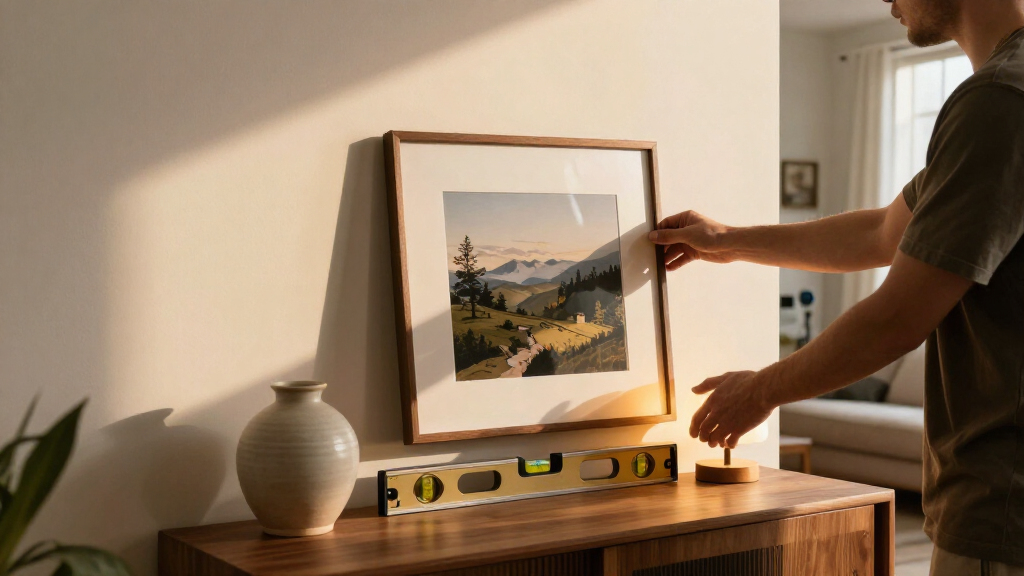
An Ideal Home report describes “mount maxxing,” a framing approach that gives a small image or keepsake a deliberately large surrounding mount. Interior experts say the extra space can make personal objects stand out, though the report presents this as a decorating trend, not a measured change in home values or art sales.
Ideal Home has highlighted “mount maxxing,” a framing style that surrounds a small image or keepsake with a much larger mount, making the surrounding blank space part of the display. The report cites interior expert Lucy Mather of Arighi Bianchi, who says the approach can give meaningful objects more visual presence and draws on a technique used in galleries.
Rather than choosing a frame and mount sized closely around an artwork, mount maxxing deliberately leaves more space around the image. The featured objects need not be conventional art: the report suggests personal items such as a holiday photograph, a child’s drawing, or an old concert ticket. The idea is to emphasize the object’s personal meaning rather than its size or price.
Mather describes the style as “making a big statement out of something small.” The report also outlines variations: placing a small picture off-centre within a large mount, or choosing a mount with a contrasting colour or pattern. Examples include a small black-and-white photo against burgundy or brown, or a colourful image against a bright mount.
The story traces attention to the term to an Instagram reel by Limner founder Saul Gindill. It does not provide sales figures, survey results, or other data establishing how widespread the trend is. Its account is based on the writer’s observations and comments from Mather, alongside examples and product suggestions.
How Oversized Mounts Change a Display
The approach offers a way to make small, personal objects more noticeable without relying on a large image or vivid artwork. By giving an item extra space, the framing can direct attention toward it and make its meaning a topic of conversation. That may appeal to people looking to display memories alongside more conventional wall art.
It also shifts the role of the mount: instead of acting as a narrow border, it becomes part of the composition. Colour, pattern, and placement can change the mood of the piece, according to the report. The practical significance is modest but accessible: people can adapt an existing frame or choose a different mount, although the article does not compare costs or provide professional framing instructions.
The claim that the technique can make walls look “expensive” is a style judgment, not a verified financial result. The report offers no evidence that mount maxxing increases property value or the market value of the framed object.
Products Worth Considering

Philips Hue Smart Light Starter Kit with Bridge and 4 White and Color A19 Bulbs

Samsung 75-Inch Class The Frame QLED 4K Art TV (LS03HE, 2026)

Samsung 55-Inch The Frame QLED 4K TV (2026) Bundle
As an affiliate, we earn on qualifying purchases.
From Gallery Spacing to Home Décor
The report places the trend within a wider interest in more personal home decoration, where walls can display keepsakes and everyday objects as well as artworks. It says the writer had noticed oversized mounts in stylish homes over roughly the past year, before encountering the term “mount maxxing” through Limner’s social media.
Mather links the look to galleries, which she says give small objects considerable breathing room because their stories matter. The article frames bringing that approach into homes as a way to make the display more individual. It does not identify a formal launch date, a single originator of the technique, or evidence that galleries or designers have adopted a new standard.
“It’s all about making a big statement out of something small.”
— Lucy Mather, interiors expert at Arighi Bianchi
How Widely the Style Has Caught On
The source does not establish how many households are using mount maxxing or whether interest has grown beyond the examples described by the writer and experts. It provides no audience research, sales data, or date-specific trend measurements. The phrase “over the past year or so” reflects the writer’s observation, not a quantified period of growth.
It is also unclear whether the look has measurable effects on the perceived value of a room or the price of a home. “Expensive” and “sophisticated” are aesthetic assessments attributed to the article and its expert, rather than independently tested outcomes. The report does not compare the cost of oversized mounts with standard framing.
More Examples, No Formal Milestone
The report points readers toward framing choices and product examples, including oversized, colourful, and patterned mounts, as ways to try the style. It also suggests that an existing frame or mount can be changed with paint or fabric, though it does not give a step-by-step guide.
No launch, industry event, or follow-up date is announced in the source. Whether the term becomes more widely used, or the style develops into a longer-lasting decorating trend, remains to be seen.
Key Questions
What does “mount maxxing” mean?
It is a framing style that gives a small image or keepsake a much larger surrounding mount, making the blank space part of the display.
What can be displayed this way?
The Ideal Home report suggests personal items such as small photographs, children’s drawings, and old gig tickets, as well as conventional artwork.
How can the look be varied?
The article describes placing an image off-centre or using a contrasting, colourful, or patterned mount. These are styling suggestions, not requirements.
Is mount maxxing proven to make a home more valuable?
No such evidence is provided in the report. The idea that it makes a wall look expensive is an aesthetic claim, not a documented effect on property value.
Is this a newly invented framing technique?
The report says the approach resembles a display method used in art galleries, but it does not identify a single inventor or give a date for when the technique began.
Source: idealhome.co.uk