
Indoor air monitors primarily detect VOCs, which are gases from household products, cooking, smoking, and furnishings. These devices use sensors like metal-oxide semiconductors or photoionization detectors to identify broad chemical ranges. However, they have limitations, such as false positives and sensitivity to environmental factors. Understanding what VOCs are, their sources, and how monitors work helps you interpret their signals. If you keep exploring, you’ll discover how to better manage indoor air quality and protect your health.
Key Takeaways
- Indoor air monitors detect total VOC levels using sensors that respond to a broad range of chemical compounds.
- Sensors identify VOCs by reacting to specific gases emitted from household items like paints, cleaners, and furniture.
- Detection accuracy depends on proper calibration, sensor maintenance, and environmental factors like humidity and temperature.
- Most monitors provide overall VOC concentration readings, not specific compounds, indicating general indoor air quality.
- Sensor limitations include false positives, drift over time, and cross-sensitivity to other chemicals like alcohol or formaldehyde.

16 in 1 Air Quality Monitor Indoor 7" Large Display 9 AQI+7 Alerts, CO2 Monitor Air Quality Tester for CO2, TVOC, PM2.5 PM1.0 PM10, HCHO Temperature Humidity AQI & Time Air Quality Meter for Home
【16-in-1 Air Quality Monitor Indoor】Experience the ultimate indoor air quality monitoring with our 16-in-1 Air Quality Monitor, offering…
As an affiliate, we earn on qualifying purchases.
As an affiliate, we earn on qualifying purchases.
What Are VOCs and Why Do They Matter?
Have you ever wondered what VOCs are and why they’re important? Volatile Organic Compounds, or VOCs, are gases emitted from everyday products like paints, cleaning supplies, and furniture. They can linger in your indoor air and cause health issues, especially with prolonged exposure. To combat this, using an air purifier equipped to filter VOCs can make a noticeable difference. Additionally, good ventilation strategies are vital; opening windows or using exhaust fans helps dilute and remove these compounds from your indoor environment. Recognizing the presence of VOCs and taking steps to reduce their levels isn’t just about air quality—it’s about protecting your health. Understanding their impact empowers you to create a safer, cleaner indoor space, free from harmful emissions. Being aware of indoor pollutants and how they affect health is essential for maintaining a healthy home environment. Incorporating air quality monitoring devices can help you detect VOC levels accurately and respond proactively. Knowing about VOCs and their sources can further enhance your efforts to improve indoor air safety. Regularly checking for VOC emissions from new or existing household items can help prevent long-term health concerns. Furthermore, awareness of air filtration systems can guide you in selecting the most effective solutions for your home.

Volatile Organic Compounds VOC Detector by Forensics | USA NIST Calibrated & Certificate | USB Recharge | 0-100ppm VOC | Built-in Pump & 4ft Probe |
🎆 INDUSTRIAL: Accurate and precise VOC analyzer 0-100 ppm range with 1ppm resolution. Built-in pump for super fast…
As an affiliate, we earn on qualifying purchases.
As an affiliate, we earn on qualifying purchases.
Where Do Indoor VOCs Come From?
Indoor VOCs originate from many common household items and activities. These VOC sources release indoor chemicals that can affect your air quality. You might notice VOC emissions from everyday objects and routines, such as:
Indoor VOCs come from everyday household items and routines, impacting your air quality.
- Cleaning products, paints, and solvents
- New furniture, carpets, and household materials
- Cooking, smoking, and other daily activities
These indoor chemicals slowly off-gas over time, releasing VOCs into the air. The amount and type of VOCs depend on the materials used and how often you perform certain tasks. Understanding these VOC sources helps you identify potential risks and take steps to improve your indoor air quality. Being aware of where indoor VOCs come from empowers you to make better choices about the products and activities in your home. Awareness of VOC sources is essential for maintaining a healthier indoor environment, especially since indoor air quality can significantly impact health and comfort. Recognizing common VOC sources allows you to reduce exposure and create a safer indoor space. For example, knowledge of VOC emissions can guide you toward choosing low-emission products and proper ventilation practices. Additionally, ventilation techniques play a crucial role in dispersing indoor pollutants effectively.
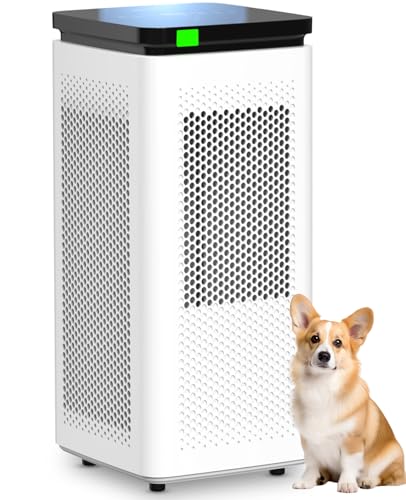
Air Purifiers for Home Large Rooms up to 3500 Ft², H13 True HEPA 0.1 Micron 99.97% Filtration with Carbon Filter, 235 CFM CADR, Removes Allergens, Pet Odor, Smoke, VOCs, 30dB Sleep Mode, PM2.5 Display
H13 True HEPA + Carbon Filter – Removes Allergens, Odors & Smoke: Equipped with H13 True HEPA (0.1μm,…
As an affiliate, we earn on qualifying purchases.
As an affiliate, we earn on qualifying purchases.
How Do Indoor Air Monitors Detect VOCs?

Ever wonder how indoor air monitors actually detect VOCs? They use specialized sensors that identify chemical compounds in the air. These sensors require regular calibration to guarantee accurate readings, which involves adjusting the device based on known standards. Once VOCs are detected, the monitor interprets the data to determine concentration levels. Accurate data interpretation depends on proper sensor calibration and understanding how the sensor responds to different compounds. Here’s a quick comparison:
| Calibration Status | Effect on Detection |
|---|---|
| Calibrated | Precise, reliable readings |
| Uncalibrated | Potentially inaccurate results |
| Over-Calibrated | False high VOC detection |
| Under-Calibrated | Missed VOC presence |
| Regular Checks | Maintains accuracy |
This process ensures your monitor provides trustworthy data about your indoor air quality. Proper maintenance, including regular filter checks, can also help improve the overall accuracy of indoor air quality assessments. Additionally, understanding sensor response mechanisms can help users better interpret the data provided by their monitors. Moreover, staying informed about sensor aging effects can help ensure consistent detection performance over time.

BREATHE Airmonitor Plus: Smart Air Quality Monitor Indoor – 8-in-1 CO2 Meter, Formaldehyde Detector, VOC Meter, PM1/2.5/10, Temperature & Humidity – Air Quality Tester for Home with App
PROFESSIONAL INDOOR AIR QUALITY MONITORING: Accurately track CO₂, PM1, PM2.5, PM10, TVOC, Formaldehyde (HCHO), Temperature and Humidity in…
As an affiliate, we earn on qualifying purchases.
As an affiliate, we earn on qualifying purchases.
What Sensors Do Indoor Air Monitors Use to Spot VOCs?
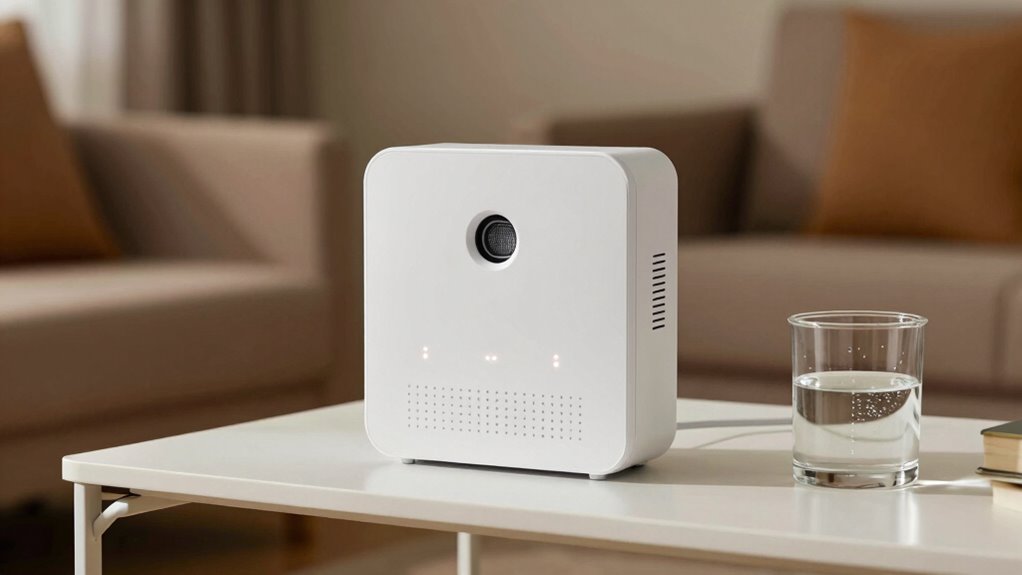
Indoor air monitors mainly use sensors like metal-oxide semiconductors and photoionization detectors to identify VOCs. However, each sensor type has limitations, such as sensitivity to humidity or difficulty distinguishing between different compounds. Understanding these technologies helps you choose the right monitor for accurate VOC detection. Additionally, advancements in smart home technology enable more integrated and responsive air quality management systems. Emerging sensor innovations are also improving detection accuracy and reducing false positives, making indoor air quality monitoring more reliable. Recognizing the sensor limitations is essential for interpreting monitor readings effectively. Incorporating calibration methods can further enhance sensor performance and ensure more precise readings over time. Furthermore, ongoing research into multi-sensor arrays aims to combine data from various sensors for improved accuracy and reliability.
Sensor Types Used in Detection
To detect volatile organic compounds (VOCs), air monitors rely on specialized sensors that respond to chemical changes in the environment. These sensors vary in type, each with strengths and limitations. Metal-oxide sensors, for example, detect VOCs through changes in electrical resistance when exposed to chemicals. Photoionization detectors use ultraviolet light to identify VOC molecules by ionizing them. Some sensors utilize electrochemical or colorimetric methods for precise detection. To maintain accuracy, you need to regularly perform sensor calibration, ensuring measurements stay reliable. Additionally, sensor lifespan varies based on type and usage, requiring periodic replacement. Visualize sensors as tiny chemical detectives, constantly analyzing the air around you. Their effectiveness depends on proper calibration and timely maintenance, ensuring your monitor accurately reflects indoor air quality. Vetted wave and wind concepts also influence how sensors respond to environmental factors like humidity and airflow, affecting their performance.
Limitations of Sensor Technologies
While VOC sensors are useful for detecting airborne chemicals, they have notable limitations that can affect accuracy. One key issue is sensor calibration; over time, sensors can drift from their original settings, leading to unreliable readings. Without proper calibration, data accuracy diminishes, making it harder to trust the monitor’s reports. Additionally, many sensors respond to a broad range of chemicals, which can cause false positives or missed detections of specific VOCs. Temperature and humidity fluctuations also impact sensor performance, further skewing results. Because of these factors, indoor air monitors may require regular adjustments or calibration checks to ensure dependable data. Recognizing these limitations helps you better interpret sensor readings and maintain effective indoor air quality monitoring.
What Are the Limitations of Indoor Air Monitors for VOC Detection?

Indoor air monitors can struggle with sensor specificity, often confusing VOCs with similar compounds. Their detection range and sensitivity might miss low or high concentrations, leading to inaccurate readings. Understanding these limitations helps you interpret monitor results more effectively. Additionally, proper maintenance of sensors is essential to ensure accurate detection and prolonged device functionality.
Sensor Specificity Limits Detection
Sensor specificity is a key factor that limits the effectiveness of indoor air monitors in detecting VOCs. If your sensor isn’t properly calibrated, it may misinterpret signals or miss certain compounds altogether. Cross sensitivity also poses a challenge, as sensors can respond to multiple chemicals, not just the targeted VOCs. This can lead to false readings or an inability to distinguish between different substances. To imagine this, consider:
- A sensor reacting to both formaldehyde and alcohol, causing confusion.
- Calibration drift over time, reducing accuracy.
- Overlapping responses from similar compounds, making precise detection difficult.
These limitations mean your monitor might alert you inaccurately or fail to detect specific VOCs, especially if the sensor isn’t finely tuned or if multiple chemicals are present.
Detection Range and Sensitivity
Detection range and sensitivity are critical factors that determine how well an indoor air monitor can identify VOCs. A limited detection range means you might miss low concentrations or VOCs outside the monitor’s scope. Sensitivity affects how small a VOC level the device can detect; higher sensitivity catches even trace amounts. However, some monitors may struggle with detecting certain VOCs at low concentrations or over extended distances. To understand these limitations, consider this table:
| Detection Range | Sensitivity |
|---|---|
| Varies by device | Determines minimum VOC level detected |
| Usually limited to a few meters | Critical for accurate readings at low concentrations |
| Affected by sensor quality | Higher sensitivity often means higher cost |
| Longer range reduces blind spots | Essential for early detection |
How Can You Tell Different VOCs Apart?
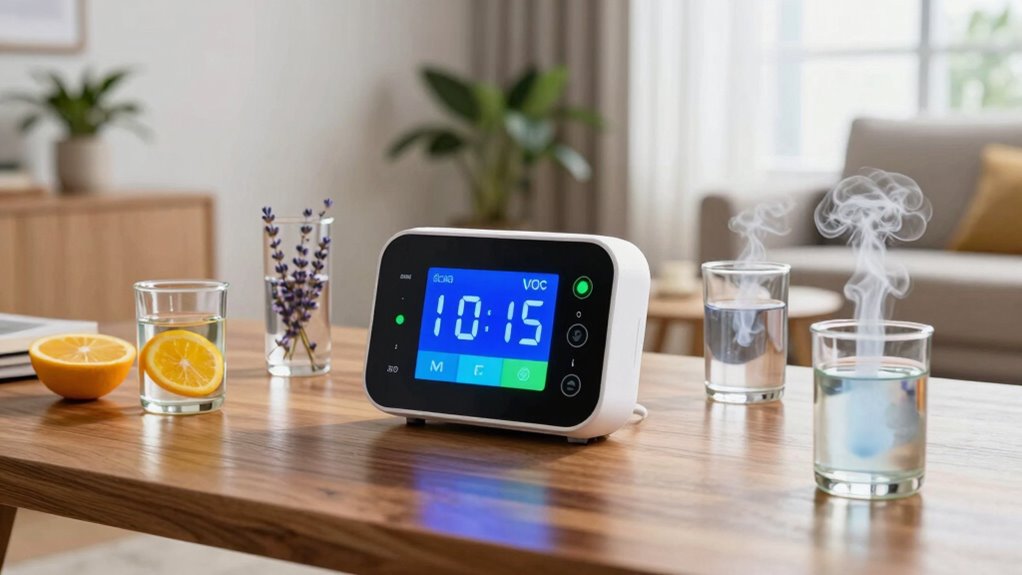
Ever wonder how to tell different VOCs apart? Since many VOCs emit similar signals, differentiating them can be tricky. You can’t rely solely on your air monitor’s readings, but understanding pollutant sources helps. For example, sources like cleaning products, paints, and new furniture release distinct VOCs. To identify specific VOCs, pay attention to patterns such as:
- Changes in readings when using certain products or appliances
- The timing of increased VOC levels, like after cleaning or painting
- The effectiveness of your air purifier, which varies depending on the targeted pollutants
Keep in mind, some VOCs are harder to distinguish without advanced sensors. Knowing pollutant sources and monitoring how readings fluctuate improves your ability to tell VOCs apart and enhance air purifier effectiveness. Additionally, support Breakfast options like fresh coffee or baked goods can temporarily influence indoor air quality and VOC levels, so consider these factors when analyzing your air monitor readings. Recognizing monitoring techniques can further help in differentiating VOCs based on how measurements respond to various activities. Understanding these sensor limitations can help set realistic expectations for what your air monitor can detect and distinguish.
What Do VOC Readings From Your Monitor Mean?
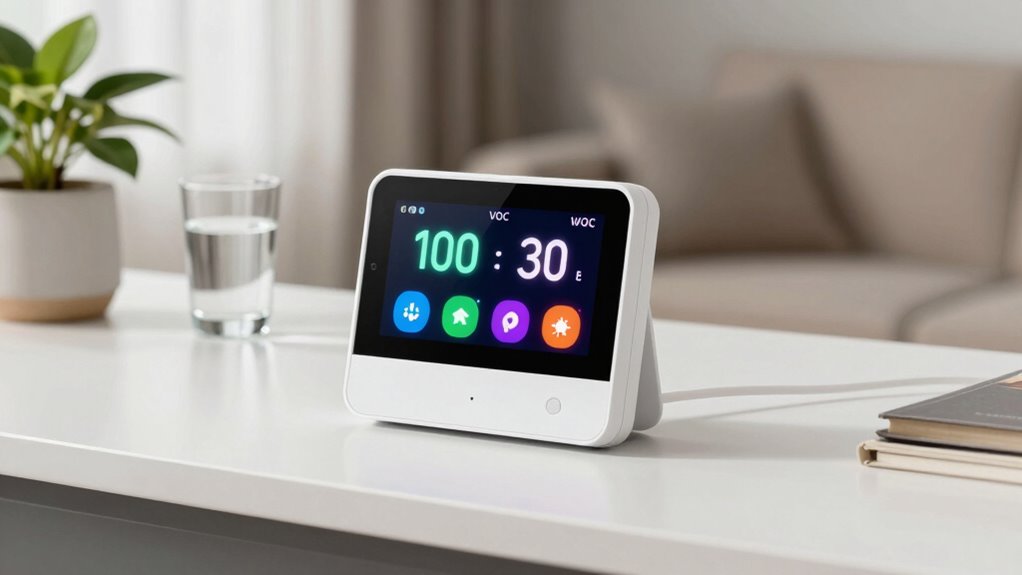
Have you ever wondered what your VOC monitor readings really mean? High readings indicate elevated levels of airborne compounds, which may signal poor air quality. These numbers don’t specify exact pollutants but suggest the need for action. To interpret them effectively, consider this table:
| VOC Level | Action Needed | Recommended Strategy |
|---|---|---|
| Low | Normal, no action needed | Maintain current ventilation |
| Moderate | Monitor closely | Increase ventilation or air purification |
| High | Take immediate steps | Improve ventilation, use air purifiers |
| Very High | Emergency situation | Evacuate if necessary, ventilate thoroughly |
Understanding these readings helps you decide when to boost ventilation strategies or add air purification, ensuring healthier indoor air.
How Can You Improve Indoor Air Quality Based on VOC Levels?

When VOC levels rise to moderate or high levels, taking proactive steps can considerably improve your indoor air quality. You can do this by implementing effective ventilation strategies and using air purifiers. These actions help remove or dilute VOCs, making your environment safer. Consider:
- Increasing fresh air flow by opening windows or using exhaust fans
- Using an air purifier equipped with activated carbon filters to trap VOCs
- Reducing sources of VOCs, like minimizing new furniture, paints, or cleaning products
What’s Next for VOC Monitoring Technology?

Advancements in VOC monitoring technology are making it easier and more accurate to track indoor air quality in real time. Researchers are developing sensors that detect specific chemical reactions caused by VOCs, enabling more precise identification of pollutants. These innovations allow monitors to differentiate between harmful VOCs and benign compounds, improving overall air quality management. Future systems may integrate with air purification devices, automatically adjusting filtration based on detected VOC levels. This seamless interaction ensures rapid responses to pollutant spikes, enhancing indoor safety. As technology evolves, VOC monitors will become smarter, more sensitive, and capable of providing continuous, detailed insights into your indoor environment. Ultimately, these advancements will help you maintain healthier indoor air with minimal effort, creating safer, cleaner spaces.
Frequently Asked Questions
Can Indoor Air Monitors Detect All Types of VOCS Accurately?
Indoor air monitors can’t detect all types of VOCs accurately due to sensor limitations and detection ranges. Some monitors are designed to identify specific VOCs, but many struggle with low concentrations or a wide variety of compounds. You might find that certain VOCs go unnoticed, especially if they fall outside your monitor’s detection capabilities. To get detailed readings, consider using multiple monitors or advanced devices with broader detection ranges.
How Often Should I Calibrate My VOC Detector for Reliable Readings?
You should calibrate your VOC detector at least once every six months for reliable readings. Regular sensor maintenance helps guarantee accuracy, especially if you notice unexpected fluctuations or false alarms. If you work in a high-VOC environment or notice inconsistent data, consider more frequent calibrations. Following the manufacturer’s calibration frequency recommendations and performing routine checks can help maintain your device’s precision and keep your indoor air quality monitoring trustworthy.
Are There Health Risks Associated With False Positives in VOC Detection?
False alarms from VOC detectors can cause unnecessary concern, but they generally don’t pose direct health risks. However, frequent false positives might lead you to ignore real threats or cause anxiety, impacting your well-being over time. To minimize health implications, make sure your monitor is well-calibrated and accurate. Staying informed and taking appropriate actions when genuine VOC levels are detected helps protect your health without undue worry from false alarms.
Do All Air Monitors Measure VOCS Continuously or Intermittently?
Most indoor air monitors measure VOCs continuously by using sensors with adjustable sensitivity and detection range. This allows them to provide real-time updates on air quality, helping you respond quickly to any increase in VOC levels. Some models may switch between continuous and intermittent measurements based on settings or detected conditions, but generally, continuous monitoring offers the most accurate and timely data to guarantee your indoor environment stays safe.
How Does Humidity Affect VOC Detection Accuracy?
Humidity levels can considerably impact VOC detection accuracy, with humidity interference causing up to 30% measurement errors in some monitors. Higher humidity can lead to calibration challenges, making sensors less precise. You should regularly check and calibrate your device in varying humidity conditions, especially if you notice inconsistent readings. Keeping indoor humidity stable helps ensure more reliable VOC detection, so consider using dehumidifiers or humidifiers as needed.
Conclusion
Now that you know what indoor air monitors detect and their limits, you’re better equipped to take control of your air quality. Remember, don’t rest on your laurels—stay vigilant and proactive about VOC levels. Regular monitoring can help you spot trouble early before it becomes a bigger issue. By staying informed, you can turn the tide in your favor and breathe easier, because sometimes, a little knowledge is all it takes to make a world of difference.