
Off-gassing usually lasts from a few days to several weeks, depending on the material and ventilation quality. You’ll notice odors fade quickly in well-ventilated spaces, but lingering smells or ongoing symptoms like headaches or dizziness can signal a problem. Persistent high VOC levels or odors that refuse to diminish mean off-gassing may still be happening. Keep going to discover more tips on recognizing normal vs. red flags and how to improve air quality.
Key Takeaways
- Normal off-gassing typically lasts from a few days to several weeks, with VOC levels decreasing over time through proper ventilation.
- Persistent odors beyond a few weeks or high VOC readings indicate an extended or ongoing off-gassing problem.
- Proper airflow and ventilation can significantly accelerate VOC reduction, helping off-gassing resolve faster.
- Symptoms such as headaches or respiratory irritation that persist suggest off-gassing issues are still present.
- Red flags include odors that do not fade, worsening symptoms, or VOC levels remaining high despite ventilation efforts.

LETMOON 14 Inch Hybrid California King Mattress, Cooling Memory Foam, Motion Isolation, Targeted Back Support, Fiberglass Free, Medium Firm for Side & Back Sleepers,Cali King Bed in a Box
Hybrid Comfort for All Sleep Positions: The Letmoon 84"×72" cali king hybrid mattress blends memory foam and supportive...
As an affiliate, we earn on qualifying purchases.
What Is Off-Gassing and Why Does It Happen?
Off-gassing occurs when volatile organic compounds (VOCs) are released from new products into the air. This process happens because many household items, like furniture, paints, and flooring, contain chemicals that evaporate over time. When VOCs are released, you might notice a chemical smell or experience symptoms like headaches, dizziness, or respiratory irritation. This is why understanding VOC exposure is essential for material safety. Manufacturers often add chemicals to improve durability or appearance, but these substances can emit harmful fumes during off-gassing. Ensuring proper ventilation and choosing low-VOC products can help minimize risks. Recognizing what causes off-gassing helps you make informed decisions about product safety and protect your indoor air quality. Understanding chemical emissions contributes to safer home environments and healthier living spaces.

California King Mattress, Upgraded 14 Inch Cal King Mattress in a Box, Cooling Gel Memory Foam Hybrid Mattresses with Pocket Springs, Pressure & Pain Relief, Double Additional Support, CertiPUR-US
【Ergonomic Zonal Support System】The california king mattress features multiple layers of premium memory foam and independent support springs...
As an affiliate, we earn on qualifying purchases.
How Long Does Off-Gassing Usually Last?
Typically, off-gassing from new products lasts anywhere from a few days to several weeks, depending on the material and ventilation. During this period, VOC emissions contribute to indoor air quality concerns, but they usually decrease over time. The duration can vary based on factors like product type, temperature, and airflow. You might notice higher VOC levels initially, which gradually diminish as off-gassing subsides. Proper ventilation helps speed up this process, improving indoor air quality faster. Be aware that some materials release VOCs for longer periods, especially if ventilation is poor. Understanding this timeline helps you determine when indoor air quality stabilizes. Most products will outgas considerably within a few weeks, but persistent VOC emissions may require further attention. Ventilation plays a crucial role in reducing off-gassing duration and improving indoor air health.

BEDingly California King Mattress, 12 Inch Luxury Hybrid Cal King Mattress in a Box, Medium Firm Mattresses with Cooling Gel Memory Foam & Pocket Springs, Double Additional Support, 365-Night Trial
【Enjoy High-End Mattress From Five-Star Hotels】Our luxury hybrid mattress is composed of multiple layers of high-quality thickened memory...
As an affiliate, we earn on qualifying purchases.
How Can You Tell Normal Off-Gassing From Red Flags?
While some initial smell or fumes are normal during off-gassing, it’s important to recognize the signs of red flags that may indicate a problem. Elevated VOC levels can signal that the off-gassing is excessive or persistent, negatively impacting air quality. If you notice the smell lingers for weeks or worsens over time, that’s a red flag. Poor air quality can cause headaches, dizziness, or respiratory irritation, so trust your senses. Use a VOC detector if possible, and monitor the air quality regularly. Normal off-gassing usually results in a quick decline in fumes and VOC levels. However, if odors persist beyond a few days or VOC levels stay high, it’s time to investigate further. Recognizing these signs helps ensure your environment remains safe and healthy.

Novilla Queen Size Mattress, 12 inch Gel Memory Foam Mattress for a Cool Sleep & Pressure Relief, Medium Firm Feel with Motion Isolating, Bliss
General Note: Please allow 24 - 72 hours for your Mattress to regain its full shape. Any memory...
As an affiliate, we earn on qualifying purchases.
What Are the Signs That Off-Gassing Is Still a Problem?

How can you tell if off-gassing is still a problem? If your indoor air quality remains poor, and you notice persistent chemical smells, off-gassing might still be ongoing. Common VOC sources like new furniture, paint, or flooring can emit fumes longer than expected. Watch for these signs:
Persistent chemical smells and poor air quality indicate off-gassing may still be ongoing.
- Lingering chemical odors that don’t fade over time
- Headaches, dizziness, or respiratory irritation when indoors
- Symptoms worsen when near new or renovated items
- Air quality tests indicating high VOC levels
- High-quality ventilation can help reduce lingering emissions and improve air exchange.
If these signs occur, off-gassing could still impact your health. Continuous exposure to VOC sources can compromise indoor air quality, making it essential to identify and address lingering emissions promptly. Recognizing these red flags helps you take action before long-term health effects develop.
How Can You Reduce and Speed Up Off-Gassing?
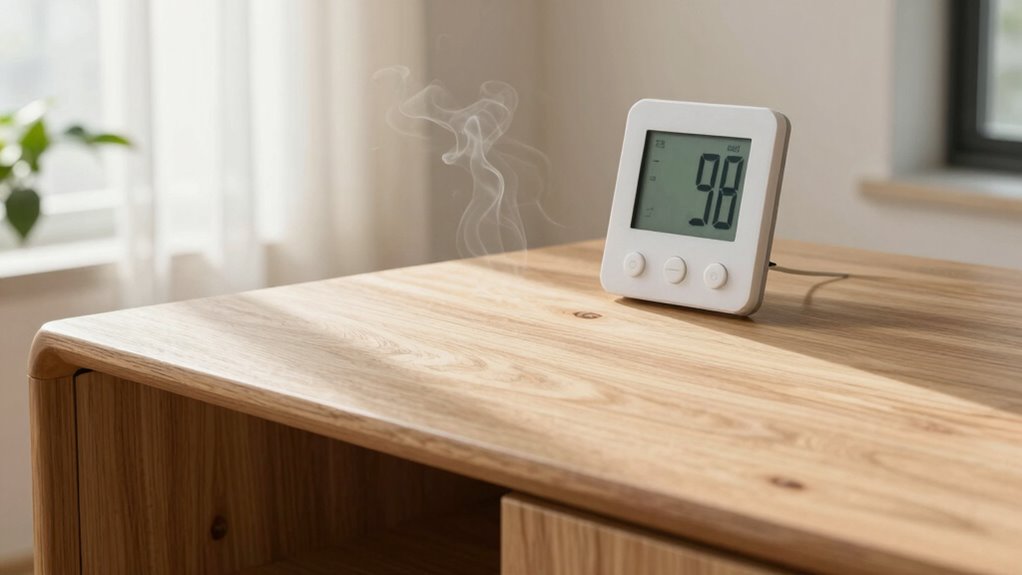
To effectively reduce and speed up off-gassing, you need to take proactive steps that promote ventilation and remove VOCs from your indoor environment. Implement ventilation strategies like opening windows and using fans to increase airflow, which helps disperse VOCs faster. Using air purifiers with activated carbon filters can also assist in VOC reduction by trapping airborne chemicals. Keep indoor humidity levels balanced, as high humidity can intensify off-gassing. Regularly clean surfaces to prevent VOC buildup from dust and residues. Avoid sealing off rooms or using airtight containers during initial off-gassing periods. Additionally, monitoring indoor air quality with appropriate sensors can help you assess when VOC levels are decreasing. By actively improving ventilation and employing VOC reduction techniques, you’ll accelerate the process, making your space safer and more comfortable sooner.
When Should You Seek Help or Medical Advice?
If you notice persistent or severe symptoms during the off-gassing period, it’s important to seek help promptly. Poor indoor air quality caused by chemical exposure can lead to health issues that require medical attention. Don’t ignore ongoing symptoms, especially if they worsen or don’t improve over time. Seek advice if you experience difficulty breathing, dizziness, headaches, or skin irritation. Recognize these warning signs as potential indicators of harmful chemical exposure. Additionally, understanding connected home fitness technology can help identify and mitigate environmental factors affecting your health.
Frequently Asked Questions
Are There Specific Materials That Off-Gas Longer Than Others?
Certain material types, like pressed wood, particleboard, and foam, tend to off-gas longer than others, such as solid wood or metal. You should be aware of these longevity differences because they can affect indoor air quality. Generally, synthetic materials and adhesives release VOCs for extended periods, sometimes months. To minimize exposure, choose natural, low-emission options, and make certain there is good ventilation during the off-gassing process.
Can Off-Gassing Symptoms Worsen Over Time Without Intervention?
Yes, off-gassing symptoms can worsen over time if indoor air quality isn’t improved, especially if you’re chemically sensitive. You might think your symptoms will stay the same, but prolonged exposure can increase irritation and discomfort. To protect yourself, monitor symptoms closely and consider improving ventilation or removing sources of off-gassing. Addressing indoor air quality early helps prevent symptoms from escalating and supports your overall health.
Does Off-Gassing Occur in New Versus Recycled Furniture?
You’ll notice off-gassing occurs in both new and recycled furniture, but VOC levels tend to be higher in new pieces due to fresh manufacturing processes. Recycled materials may emit fewer VOCs initially, but they can still release gases over time. It’s important to monitor VOC levels and ensure proper ventilation, especially with new furniture, to reduce health risks. Always check for signs of excessive off-gassing or lingering odors.
Are There Environmental Factors That Influence Off-Gassing Duration?
Environmental factors like indoor air quality and ventilation effectiveness considerably influence how long off-gassing lasts. Poor air circulation traps volatile chemicals, prolonging off-gassing, while good ventilation helps remove fumes faster. You should prioritize proper ventilation to improve indoor air quality, especially in new or recycled furniture. Opening windows and using air purifiers can speed up off-gassing, reducing potential health risks and making your space safer sooner.
Is It Safe to Stay Indoors During Off-Gassing Periods?
Staying indoors during off-gassing can be risky, as indoor air quality may drop considerably. Did you know that indoor air can be 2-5 times more polluted than outdoor air? To stay safe, guarantee proper ventilation strategies like opening windows or using exhaust fans. Ventilation helps reduce chemical buildup, making it safer for you to remain inside during off-gassing periods. Prioritize fresh air to protect your health.
Conclusion
Understanding off-gassing helps you keep your space safe. Usually, it lasts a few days to weeks, but if odors linger or cause headache or nausea, it’s a red flag. For example, imagine buying a new mattress and noticing a strong smell weeks later—that’s time to take action. By recognizing signs and taking steps to reduce off-gassing, you protect your health. Trust your instincts and seek help if symptoms persist—your well-being comes first.