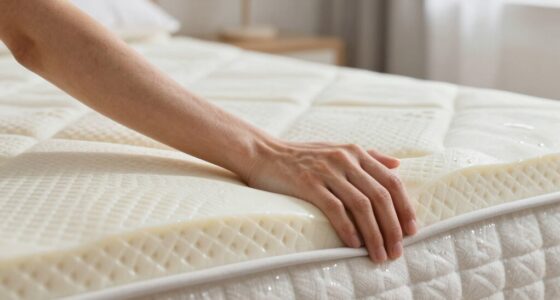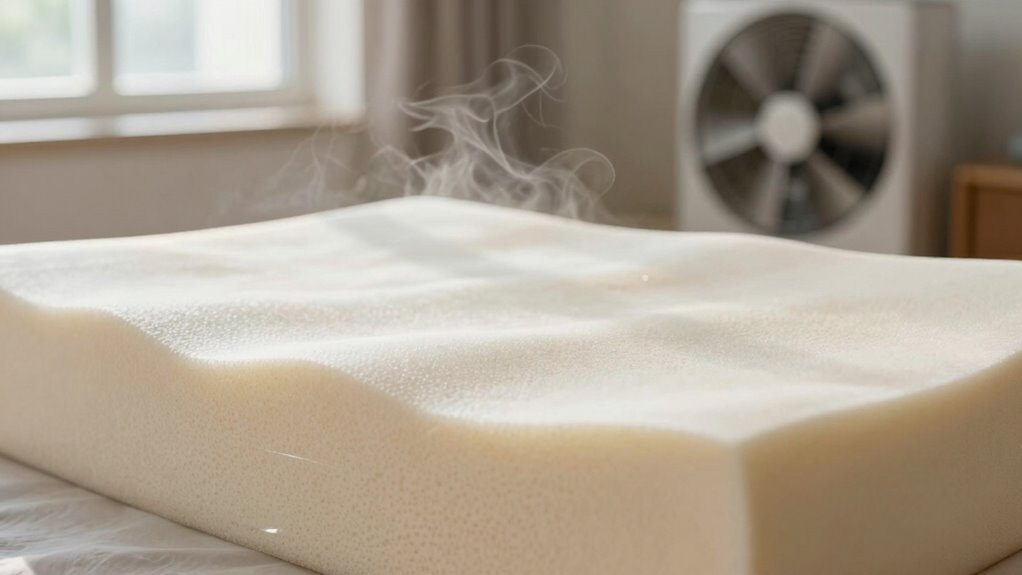

When you unbox a new memory foam mattress or pillow, expect a strong chemical smell caused by VOCs released during off-gassing. This odor typically lasts from a few days up to a couple of weeks, depending on ventilation and environmental factors. Opening windows, using fans, or placing the foam outdoors can speed up odor dissipation. If you’re curious about safe methods to manage this process, keep exploring to learn more tips.
Key Takeaways
- Memory foam often emits a chemical-like odor immediately after unboxing due to VOC off-gassing.
- Most odors fade within a few days to weeks with proper ventilation and increased airflow.
- Ventilating by opening windows, using fans, and placing foam outdoors accelerates odor dissipation.
- Persistent or strong smells may indicate ongoing VOC emissions, potentially causing health symptoms.
- Regularly airing out the foam and maintaining good indoor ventilation improves air quality and reduces odors.
Why Does My Memory Foam Smell When New?
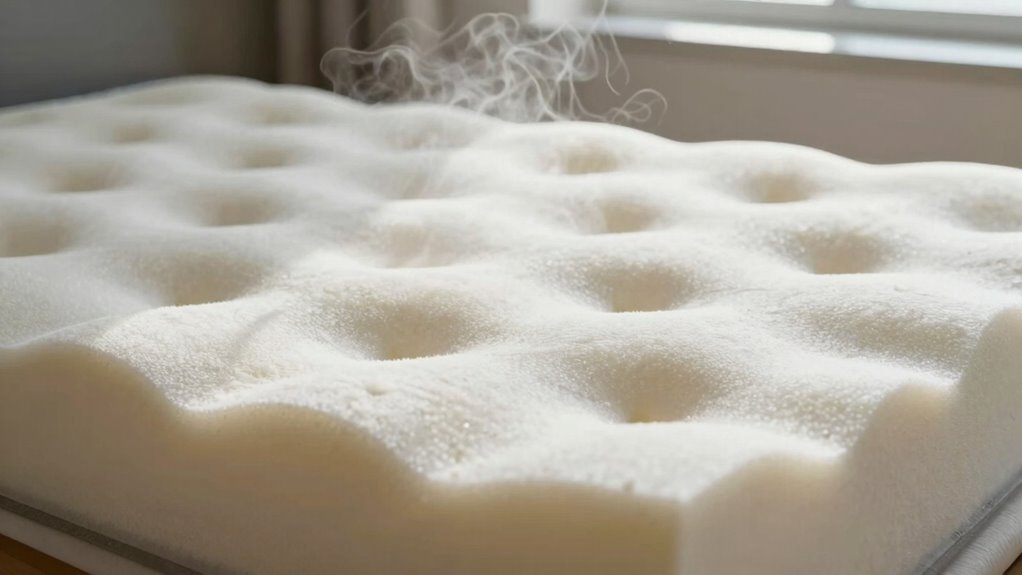
When you first unpack your new memory foam, you might notice a strong, chemical-like smell. This odor comes from volatile organic compounds (VOCs) released during manufacturing, known as off-gassing. These chemical odors are a normal part of the process, but they can raise health concerns for some people. The smell results from chemicals used to create the foam, such as adhesives and flame retardants. While the scent can be unpleasant, it’s usually not harmful in small amounts. However, sensitive individuals may experience headaches, respiratory irritation, or allergic reactions. The presence of chemical odors is temporary, and proper ventilation can help reduce these smells quickly. Understanding why your memory foam smells helps you take appropriate steps to make your sleep environment safer and more comfortable. Ensuring proper ventilation around your mattress can significantly help dissipate the odors more efficiently. Additionally, choosing memory foam products that are low-VOC or certified for indoor air quality can help minimize off-gassing in the future. Proper air circulation can also accelerate the process and improve overall air quality in your sleeping area. Increasing air exchange by opening windows or using fans can further speed up odor dissipation and enhance indoor air quality. Employing air purifiers with activated carbon filters can also help remove chemical odors more effectively.
How Long Does the Memory Foam Off-Gassing Last?
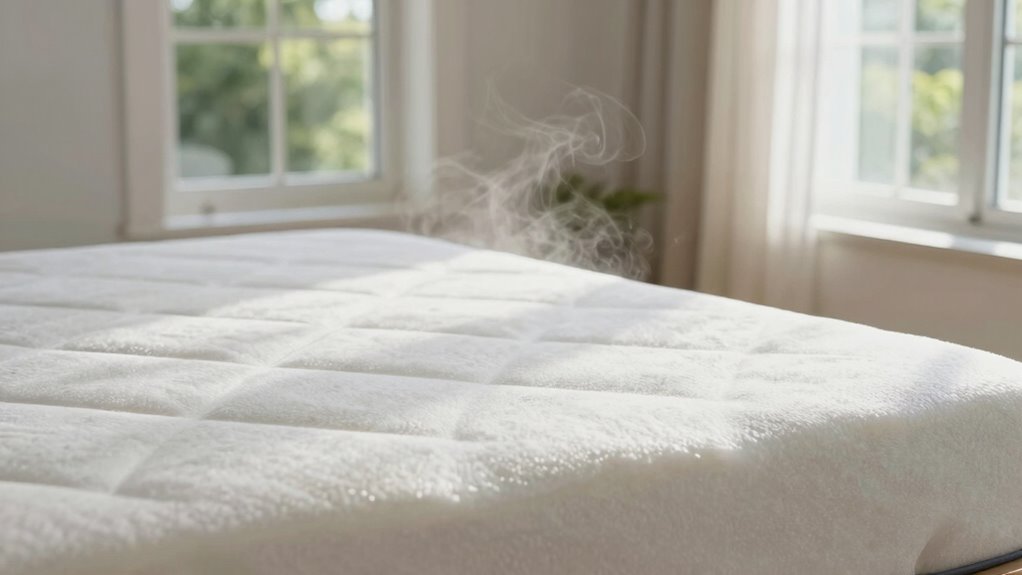
The duration of off-gassing from memory foam varies, but most smells tend to fade within a few days to a couple of weeks. During this time, the chemical odors released can temporarily impact your air quality, making the environment seem less fresh. Factors like temperature, ventilation, and the foam’s materials influence how quickly these odors dissipate. You might notice the strongest chemical smells right after unboxing, but they usually lessen as the foam off-gasses. To improve air quality and speed up the process, increasing ventilation helps vent out the chemical odors more effectively. Additionally, using air purifiers can further enhance Indoor Air Quality, helping to reduce lingering odors more efficiently. Keep in mind that individual sensitivities differ, so while some people notice the smell disappearing quickly, others may experience it lingering slightly longer. Patience and good airflow are your best tools during this phase, especially since ventilation techniques play a crucial role in odor dissipation. Proper airflow management can significantly influence how quickly the off-gassing odors diminish, and incorporating sustainable materials in foam production can also reduce the severity of initial odors. Regularly airing out the foam outdoors can also expedite the off-gassing process, especially in well-ventilated areas.
Can Ventilation Help Speed Up the Smell Dissipation?
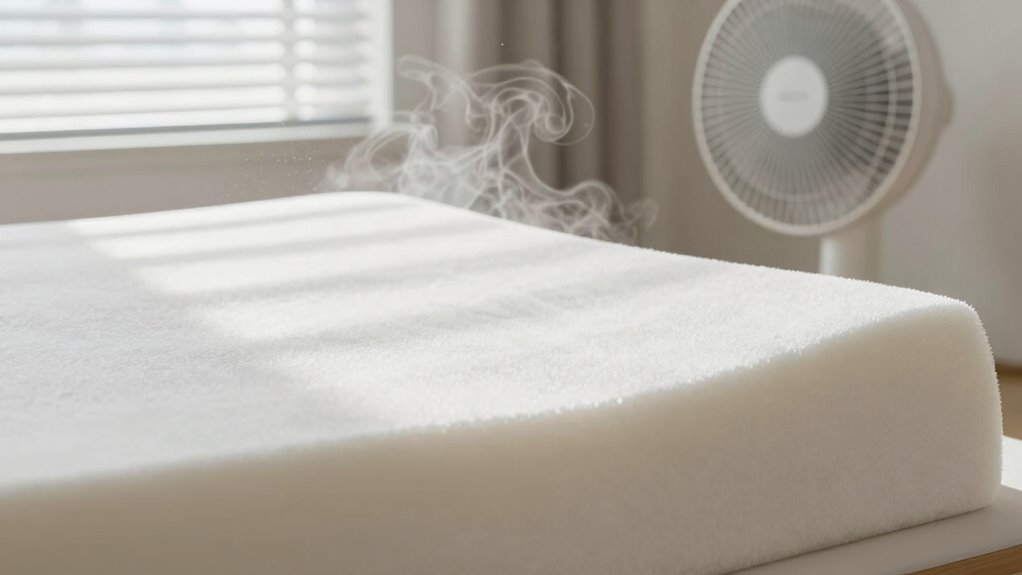
Increasing ventilation can considerably speed up the removal of chemical odors from memory foam. By enhancing airflow, you help carry off volatile compounds responsible for the smell, accelerating the off-gassing process. Proper airflow enhancement guarantees fresh air circulates around the foam, reducing the concentration of odorous particles. This process not only helps with odor neutralization but also makes the environment more comfortable. Keeping windows open or using fans creates a steady stream of air that pushes out trapped fumes. The more consistent the airflow, the quicker the smell dissipates. Air circulation plays a crucial role in dispersing chemical odors efficiently. Improving ventilation systems can further optimize odor removal and air quality. Additionally, maintaining good air quality is essential for reducing health concerns associated with chemical off-gassing.
What Are Easy Ways to Ventilate Your Memory Foam?
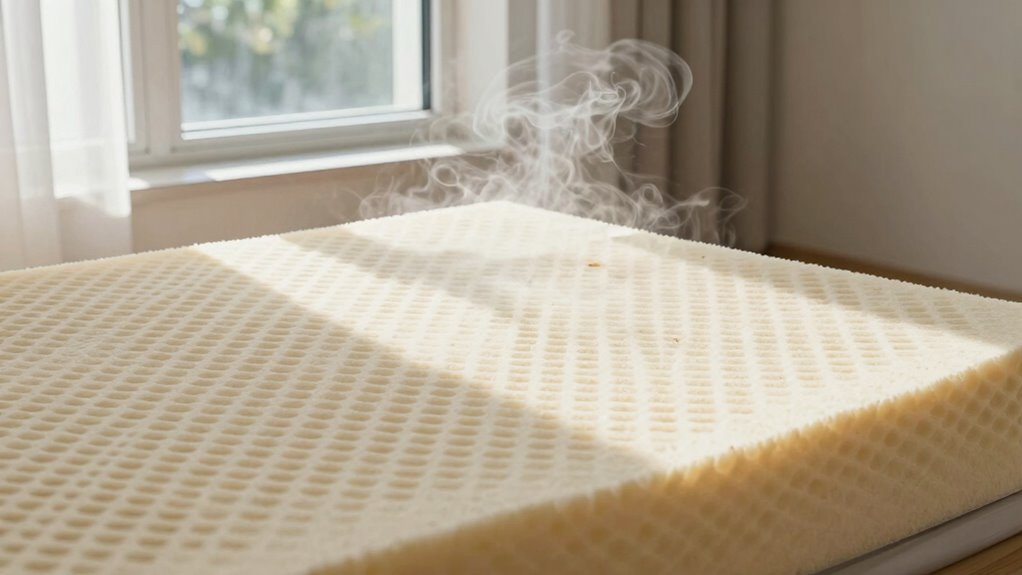
To ventilate your memory foam easily, start by improving air circulation around it—place it in a well-ventilated space or open windows. You can also sprinkle baking soda on the surface to absorb odors and then vacuum it off after a few hours. These simple steps help reduce smell and refresh your memory foam quickly. Incorporating connected home fitness devices like smart air purifiers can further enhance the ventilation process and improve overall indoor air quality. Ensuring proper filtration systems can also help eliminate lingering odors more effectively. Additionally, utilizing adequate ventilation techniques such as using fans or dehumidifiers can accelerate the off-gassing process and create a more comfortable environment. Proper ventilation methods are essential for managing and reducing the initial off-gassing odor more efficiently, especially in spaces with limited airflow.
Improve Air Circulation
Improving air circulation is one of the simplest ways to reduce the odor and moisture buildup in your memory foam. Better airflow enhances air quality and promotes odor control, making your sleep environment fresher. To do this, start by: 1. Opening windows daily to let fresh air sweep through your room. 2. Using a fan to create continuous airflow around your mattress. 3. Elevating the mattress slightly off the ground to improve ventilation underneath. Ensuring proper airflow management helps prevent trapped moisture and airborne odors, which can linger and cause discomfort. Incorporating ventilation techniques can significantly reduce the off-gassing smell and keep your mattress dry. Additionally, regularly rotating or flipping your mattress can help promote consistent air circulation and prevent uneven odor buildup. These steps help dissipate trapped moisture and airborne odors, preventing them from lingering. Proper ventilation not only reduces odors but also supports a healthier sleep environment by minimizing potential mold growth. Consistent ventilation ensures your memory foam stays dry and odor-free, which is essential for maintaining good air quality. By actively improving circulation, you’ll notice a fresher, more comfortable sleeping environment with less off-gassing smell.
Use Baking Soda
Using baking soda is an easy and effective way to ventilate your memory foam and reduce odors. Sprinkle a generous layer of baking soda over the surface of your mattress or pillow, then let it sit for several hours or overnight. Baking soda works by absorbing moisture and neutralizing unpleasant odors, making it a natural odor removal method. After the waiting period, vacuum up the baking soda thoroughly to remove any residue. This simple step helps speed up off-gassing and freshens your memory foam without harsh chemicals. For best results, repeat this process weekly until the smell diminishes. Proper ventilation methods can further enhance air quality and help dissipate odors more quickly. Additionally, ensuring good airflow around your memory foam by opening windows or using fans can significantly improve the off-gassing process. Using baking soda is a cost-effective, safe solution to improve air quality and make your memory foam more comfortable and inviting.
Is Off-Gassing Safe? What Should I Watch For?
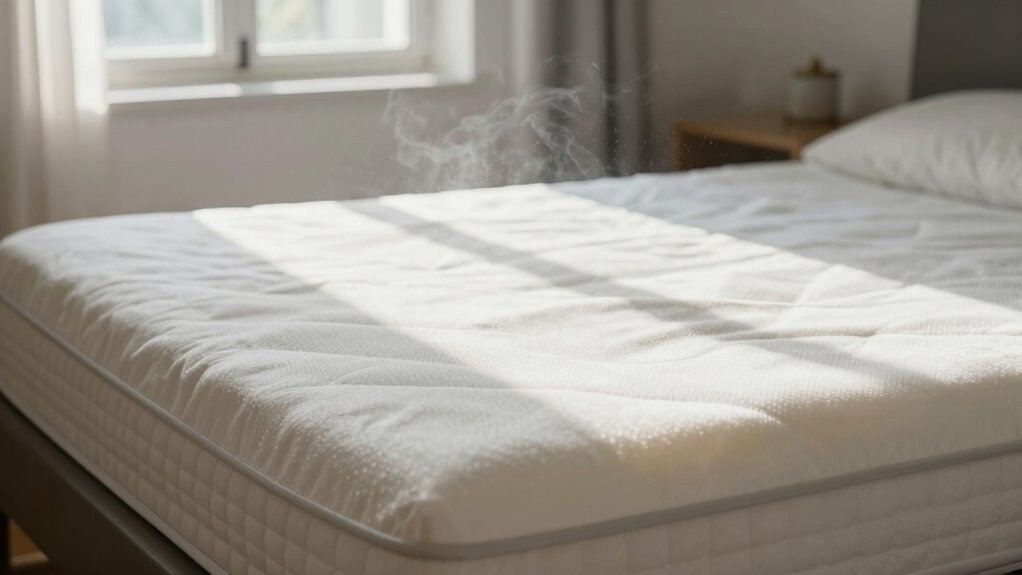
You should be aware of VOCs emissions when off-gassing, as these chemicals can cause health concerns. Watch for allergic reactions like sneezing, headaches, or irritation in your eyes and throat. Proper ventilation helps reduce these risks and keeps the air safer to breathe.
Recognize VOCs Emissions
How can you tell if memory foam is releasing harmful VOCs? First, pay attention to chemical odors that linger beyond initial unpacking. Next, notice any persistent or strong VOC emissions, which can cause discomfort. finally, observe if you experience symptoms like headaches, dizziness, or throat irritation when near the foam. These signs indicate that VOC emissions might be present. The chemical odors are often a clue, signaling off-gassing that could affect your indoor air quality. While some VOCs are harmless in small quantities, long-term exposure can be problematic. Ventilate your space thoroughly and give the foam time to off-gas before regular use. Recognizing these emissions helps you decide if the foam is safe or if further air quality checks are necessary.
Identify Allergic Reactions
While off-gassing from memory foam can release chemicals, it’s important to watch for allergic reactions that might indicate your body is reacting to these emissions. Signs of allergic reactions include sneezing, coughing, itchy eyes, skin rashes, or breathing difficulties. If you notice these symptoms shortly after bringing in a memory foam mattress or pillow, it could signal a sensitivity to the chemicals released. People with chemical sensitivities are more prone to such reactions and should be especially cautious. Pay attention to how your body responds in the first few days of use. If allergic reactions occur, consider ventilating the room more thoroughly or trying an alternative product. Recognizing these signs early helps ensure your health and comfort while managing off-gassing concerns.
Ensure Proper Ventilation
Ensuring proper ventilation is essential to safely manage off-gassing from memory foam products. Good airflow helps improve air quality and accelerates odor removal. To do this effectively, consider these steps:
- Open windows wide, creating a breeze that carries away lingering smells.
- Use fans to circulate fresh air, drawing out indoor pollutants.
- Keep the room well-ventilated for several days, especially during peak off-gassing periods.
How Can I Keep My Sleep Environment Fresh Over Time?
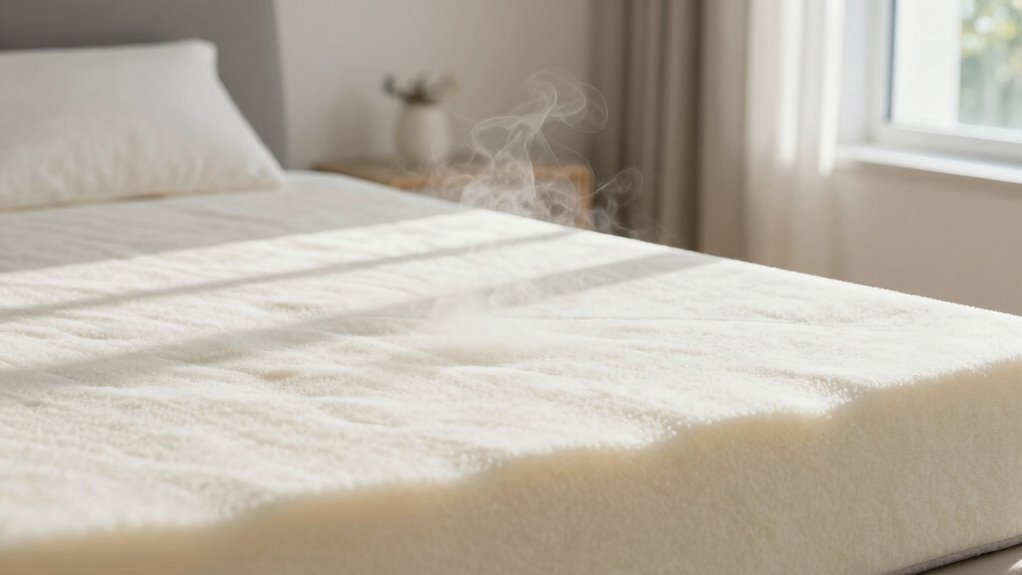
To keep your sleep environment fresh over time, regular ventilation is essential. Good air quality helps disperse any lingering odors from memory foam and reduces indoor pollutants, supporting better sleep hygiene. Open windows daily or use an air purifier to circulate fresh air and remove volatile organic compounds. Keep your bedroom well-ventilated, especially after initial off-gassing periods, to prevent stale odors from building up. Maintain a clean sleep space by washing bedding regularly and limiting clutter, which can trap dust and odors. Consider placing plants that improve air quality, like snake plants or peace lilies. Consistent air circulation not only reduces smells but also promotes healthier breathing, helping you fall asleep faster and wake up feeling more refreshed.
Frequently Asked Questions
Are There Specific Brands Known for Minimal Off-Gassing?
If you’re looking for brands with minimal off-gassing, you’ll want to take into account those with a strong reputation for quality and transparency. Brands like Avocado, Essentia, and Casper are often praised in customer reviews for their low-emission, eco-friendly products. These brands prioritize natural materials and rigorous testing, helping reduce unpleasant smells. Always check customer feedback to ensure their products meet your off-gassing expectations.
Does the Type of Memory Foam Influence Smell Intensity?
Think of memory foam as a symphony of scent, where the composition dictates its melody. The type of foam influences smell intensity and scent duration—denser, plant-based foams often sing a softer tune, with less off-gassing. On the other hand, traditional polyurethane foams might belt out a stronger aroma, lingering longer. So, your choice of foam composition directly shapes how strong the scent is and how long it stays.
Can Temperature Control Reduce Off-Gassing Fumes?
Yes, temperature regulation can help reduce off-gassing fumes. Using ventilation techniques like opening windows or running fans improves airflow, which disperses the fumes more quickly. Cooler temperatures slow down the release of volatile organic compounds (VOCs), minimizing the smell. By combining effective ventilation with temperature control, you can create a more comfortable environment and lessen the impact of memory foam odors.
Are Natural or Organic Memory Foams Less Odorous?
You get what you pay for, and natural or organic memory foams are generally less odorous. They use eco-friendly materials that minimize chemical emissions, reducing that strong, chemical smell often associated with traditional memory foam. While they still might have a slight scent, it’s usually milder and dissipates faster. Choosing these options helps create a healthier sleeping environment, especially if you’re sensitive to fumes or looking to avoid harsh chemical emissions.
How Can I Tell if Odor Levels Are Harmful?
You can tell if odor levels are harmful by using chemical detectors to monitor air quality around your memory foam. If detectors pick up high levels of volatile organic compounds (VOCs), it’s a sign the smell could be harmful. Keep the room well-ventilated and check for symptoms like headaches or dizziness. Trust your body’s reactions and improve ventilation if you notice persistent or strong odors, ensuring safer air quality.
Conclusion
Now that you know what causes that new memory foam smell and how to speed up its dissipation, you’re better equipped to enjoy a fresh, comfortable sleep environment. With proper ventilation and some simple tricks, you can minimize odors and breathe easier. Isn’t it worth taking these small steps to guarantee your mattress stays inviting and safe? After all, a peaceful night’s sleep starts with a fresh, well-ventilated space you can truly relax in.