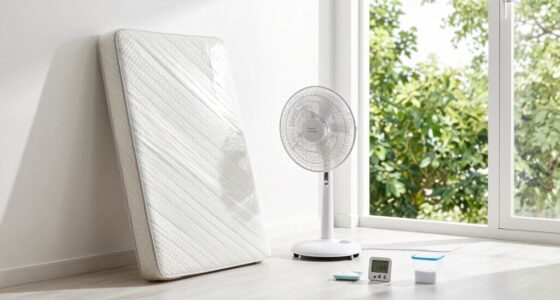
When you notice a strong chemical smell from a new mattress, it’s due to off-gassing—a process where VOCs, or volatile organic compounds, escape from materials like foam and adhesives during manufacturing. These odors are typical and usually fade with ventilation over days or weeks. Factors like temperature, humidity, and how well you air out the mattress influence how long it lasts. Understanding off-gassing helps you reduce exposure and choose safer options; learn more to keep your space healthier.
What Is Off-Gassing and Why Does It Happen?
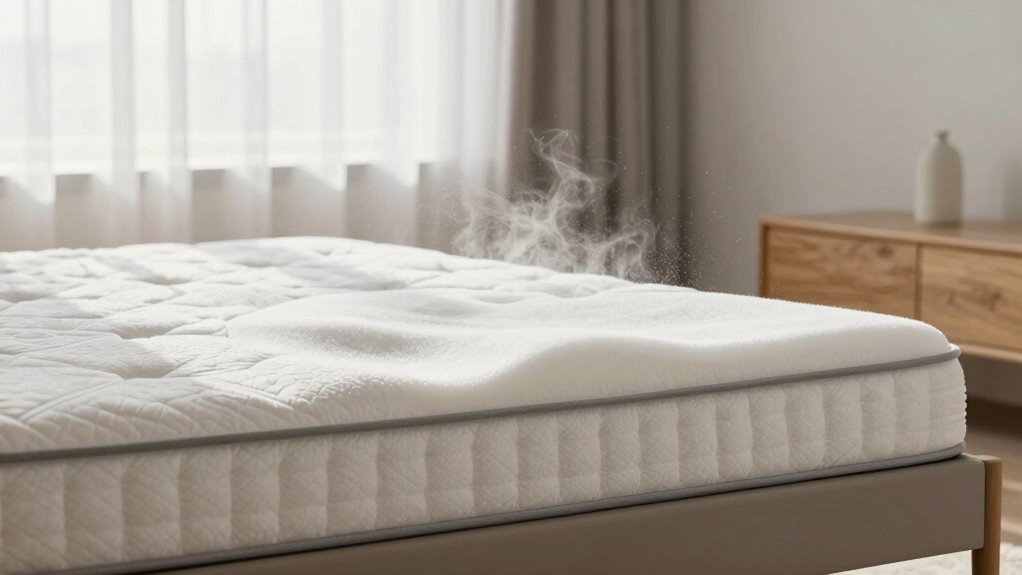
Off-gassing occurs when certain materials release volatile organic compounds (VOCs) into the air over time. This process involves chemical reactions that break down materials, leading to the emission of these compounds. When VOCs are released, they can impact your indoor air quality, sometimes causing discomfort or health concerns. The off-gassing happens because new products, like mattresses, contain chemicals used during manufacturing. As these chemicals react with air, they evaporate, creating that noticeable new smell. Understanding why off-gassing occurs helps you recognize that this is a natural part of new products settling into your space. Proper ventilation and choosing products with fewer VOCs can help reduce off-gassing odors, which can decrease the intensity and duration of these smells. Recognizing the volatile nature of chemicals involved can further aid in managing exposure.
Where Do Chemical Odors Come From in New Mattresses?
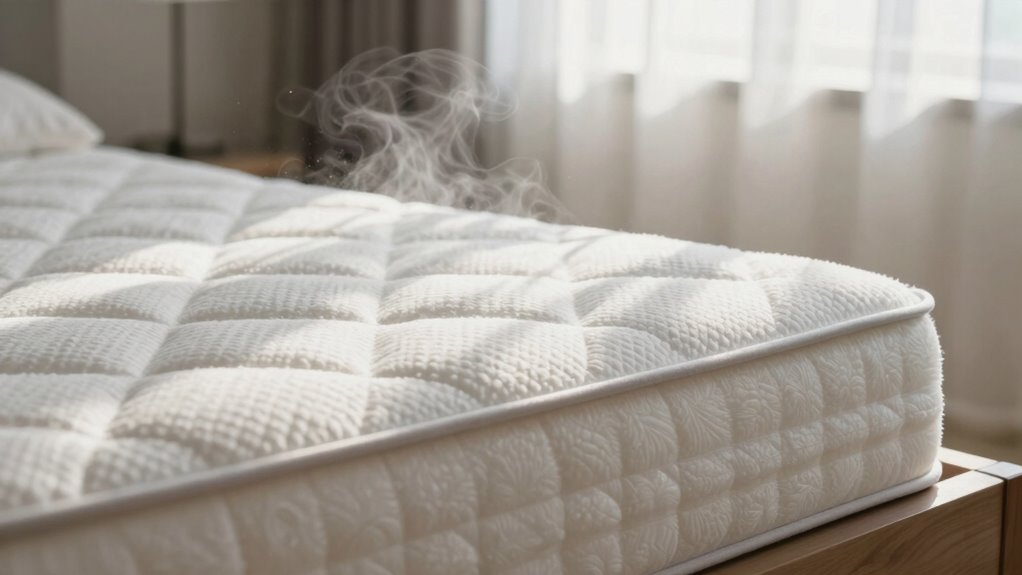
New mattresses often emit chemical odors because they contain various materials and chemicals used during manufacturing. These substances release volatile organic compounds (VOCs) that become airborne, impacting your indoor air quality. When you bring home a new mattress, you might notice a strong smell that comes from these chemicals. Here’s where they come from:
- Foam and polyurethane layers, which often contain formaldehyde and other VOCs.
- Flame retardants added to meet safety standards.
- Adhesives and sealants used to bond materials together.
- The presence of silly tantrums in some manufacturing processes can sometimes lead to overlooked chemical residues.
- Proper ventilation during the initial days can significantly reduce the concentration of these chemical odors and improve air quality. Additionally, using an air purifier with HEPA filters can help remove airborne VOCs and improve indoor air safety. Understanding the off-gassing process can help you better manage exposure and reduce lingering odors in your home environment. Being aware of indoor air quality concerns related to VOCs can guide you toward healthier living spaces.
How Do VOCs Cause That New Mattress Smell?
When a new mattress off-gasses, it’s mainly because Volatile Organic Compounds, or VOCs, are released into the air. These chemicals evaporate quickly, creating the familiar chemical smell. Once in the air, VOCs can react with other substances, intensifying that new mattress scent. Understanding indoor air quality is important because VOCs can also impact your health over time. Additionally, proper ventilation practices can help reduce the concentration of VOCs in your indoor environment. Incorporating air purification methods might also assist in removing these compounds more effectively. Being aware of emission sources can help you choose products that emit fewer VOCs and improve overall indoor air health. Recognizing the different product formulations can also help in selecting options with lower VOC emissions.
Emission of Volatile Organic Compounds
Volatile Organic Compounds (VOCs) are gases released from new mattresses as chemicals evaporate from their manufacturing materials. When you open a new mattress, these VOCs seep out into the air, creating that distinctive smell. This process, called emission, involves chemicals like formaldehyde and benzene evaporating over time. You might not realize it, but prolonged chemical exposure can have health implications, especially for sensitive individuals. Understanding off-gassing** can help you take steps to reduce your exposure and improve indoor air quality. Recognizing the chemical emission process** allows homeowners to make informed choices about product safety and ventilation during the initial stages of use.
Chemical Reactions in Air
As VOCs evaporate into the air, they undergo chemical reactions that produce the characteristic smell of a new mattress. These reactions involve VOC molecules interacting with oxygen, creating new compounds responsible for that distinct off-gassing odor. During this process, you’re exposed to chemical exposure, which can temporarily impact your air quality. The smell results from a combination of these volatile compounds transforming and releasing gases into your indoor environment. This chemical transformation is why the scent is strongest right after unpacking and gradually diminishes over time. Understanding these reactions highlights how VOCs affect air quality and why proper ventilation is essential. Reducing chemical exposure helps improve indoor air, making your space safer and more comfortable as off-gassing subsides.
How Long Does the Off-Gassing Smell Usually Last?
The duration of the off-gassing smell can vary depending on factors like the material’s composition, ventilation, and temperature. Typically, the strongest smell lasts from a few days to a week, but it can linger longer in poorly ventilated spaces. During this time, you might be exposed to chemical fumes that affect indoor air quality and pose potential health risks. To reduce this, you should:
- Increase ventilation by opening windows and using fans.
- Place the mattress in a well-ventilated area before bringing it inside.
- Use air purifiers to help clear out chemical vapors more quickly.
- Understanding emission rates can help you better predict how long the smell might persist. Additionally, being aware of material composition can help consumers choose products with lower emissions, reducing off-gassing duration and health concerns. Being mindful of manufacturing processes can also be beneficial in selecting less volatile materials. Knowing how volatile organic compounds (VOCs) are released from materials can further inform your choices and reduce exposure. Furthermore, considering air exchange rates can significantly influence how rapidly the odor dissipates from your space.
What Factors Make the Odor Stronger or Last Longer?
The materials your mattress is made from can influence how strong and long-lasting the smell is. Good ventilation and airflow help carry away the odors faster, while poor circulation lets them linger. Temperature and humidity also play a role, with warmer and more humid conditions often intensifying the scent. Additionally, the sustainability practices of the manufacturer may affect the types of materials used, which in turn can impact odor duration. Choosing mattresses made with eco-friendly materials can sometimes reduce the intensity and longevity of off-gassing odors. Incorporating Free Floating design principles in your space can also improve air circulation and reduce lingering smells. Being mindful of air exchange rates can further help clear out indoor odors more effectively, especially when combined with proper ventilation.
Mattress Material Composition
Certain mattress materials are more likely to produce strong or long-lasting off-gassing odors because of their chemical makeup. If your mattress contains certain foams or synthetic components, the smell can linger longer and be more intense. This impacts your sleep environment and can even affect mattress longevity if odors signal ongoing chemical emissions.
- Memory foam often contains volatile organic compounds (VOCs), which cause stronger odors initially.
- Polyurethane foam releases chemicals that can stick around for weeks.
- Synthetic fabrics may emit odors due to chemical treatments or dyes.
Understanding your mattress material helps you anticipate odor duration and improve your sleep environment, ensuring a fresher, healthier space for better mattress longevity.
Ventilation and Airflow
When airflow is limited, off-gassing odors tend to become stronger and last longer. Poor ventilation traps volatile organic compounds (VOCs) and other chemicals released from your mattress, increasing chemical exposure and making the smell more intense. Stagnant indoor air prevents these fumes from dissipating quickly, prolonging the discomfort. Without proper airflow, the concentration of chemicals in the air rises, which can be an issue for your health, especially if you’re sensitive to indoor air quality. Improving ventilation helps to dilute and carry away the off-gassing odors, reducing both their strength and duration. By opening windows, using fans, or increasing airflow, you allow fresh air to replace contaminated indoor air, making your environment safer and more comfortable during this off-gassing period.
Temperature and Humidity
Temperature and humidity levels play a crucial role in how long off-gassing odors last and how strong they become. Higher temperatures can accelerate the release of volatile compounds, leading to a more intense smell. Similarly, humidity impact is significant—moist air helps VOCs linger longer, making odors last days or even weeks. To minimize the odor’s strength and duration, consider:
- Keeping the room cool to reduce temperature effects on off-gassing.
- Using a dehumidifier to lower humidity impact and speed up odor dissipation.
- Ventilating the space regularly, which helps remove VOCs more quickly.
Is Off-Gassing Safe or Harmful to Your Health?
Off-gassing can raise concerns about its safety because it releases volatile organic compounds (VOCs) into the air, but whether it’s harmful depends on various factors. Chemical exposure from VOCs may cause short-term symptoms like headaches, dizziness, or irritation, especially in sensitive individuals. Long-term health implications are less clear and depend on the type and amount of chemicals released, as well as exposure duration. Most new products off-gas at low levels that are unlikely to cause serious health issues for the average person. However, if you’re concerned about chemical exposure, it’s wise to ventilate your space thoroughly and choose products labeled low-VOC or free from harmful chemicals. Always prioritize your comfort and safety when evaluating off-gassing risks.
What Are the Best Ways to Reduce Off-Gassing Before and After Buying?
To minimize off-gassing both before and after purchasing new products, start by choosing items labeled low-VOC or made from natural, non-toxic materials. This helps reduce chemical exposure and keeps indoor air healthier. Additionally, consider these steps:
- Unpack and let new items, like mattresses or furniture, air out in a well-ventilated space for several days before bringing them inside.
- Keep windows open and use fans to promote airflow, dispersing volatile organic compounds released during off-gassing.
- Avoid sealing off rooms with new products immediately, giving the indoor air a chance to circulate and clear out any lingering chemicals.
Implementing these practices will help lower chemical exposure and improve indoor air quality, making your environment safer and more comfortable.
How Can You Properly Ventilate Your New Mattress?
When you bring a new mattress home, proper ventilation is essential to reduce the buildup of volatile organic compounds and improve indoor air quality. Start by placing your mattress in a well-ventilated room, ideally with open windows and fans to circulate fresh air. If possible, remove packaging and allow the mattress to air out for several days before use. Regularly airing out the room helps dissipate off-gassing chemicals, supporting better chemical safety. Use air purifiers with activated carbon filters to capture airborne VOCs and improve overall air quality. Keep the room ventilated during and after the initial off-gassing period to ensure harmful chemicals don’t accumulate. Proper ventilation not only reduces odors but also promotes a healthier sleeping environment.
What Are Good Alternatives to Traditional Mattresses to Avoid Off-Gassing?
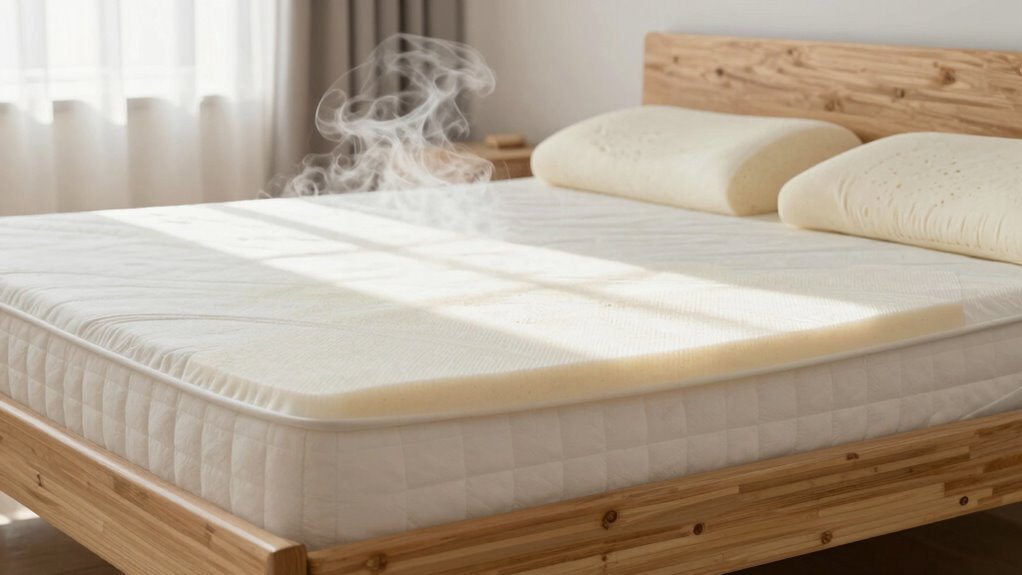
If you want to avoid off-gassing, consider beds made from natural materials like latex, wool, or cotton. Organic and eco-friendly options often use less chemicals, making them safer for your health. These alternatives can provide comfort without the chemical odors associated with traditional mattresses.
Natural Mattress Materials
Natural mattress materials offer a healthier alternative to traditional foam or synthetic options, especially if you’re concerned about off-gassing. These materials tend to have better chemical safety, reducing the risk of harmful fumes in your sleeping environment. Plus, they often boast impressive material durability, meaning your mattress can last longer without breakdown or loss of support.
Here are three great options:
- Latex – Made from natural rubber, it’s resilient and breathable.
- Organic Wool – Provides natural insulation and moisture regulation.
- Organic Cotton – Soft, breathable, and free from synthetic dyes or chemicals.
Choosing these materials supports your health and guarantees a safer, more durable sleep surface.
Organic and Eco-Friendly Options
Choosing organic and eco-friendly mattress options can considerably reduce your exposure to harmful off-gassing. These mattresses are made from natural materials like organic cotton, wool, and latex, which emit fewer volatile organic compounds (VOCs). By selecting such options, you limit your chemical exposure, ensuring that harmful fumes don’t linger in your indoor air quality. These eco-friendly mattresses are designed to be free of synthetic chemicals and flame retardants often found in traditional beds, making them safer for you and the environment. Investing in organic and eco-conscious mattresses helps create a healthier sleep environment, especially if you’re sensitive to chemical odors or have allergies. Ultimately, they provide peace of mind and contribute to better indoor air quality, supporting your overall well-being.
How Do You Know If Off-Gassing Is a Health Risk?
Recognizing whether off-gassing poses a health risk involves paying attention to your body’s reactions and the environment. If you notice persistent headaches, dizziness, or respiratory issues after bringing in a new mattress, it could signal a health concern linked to chemical safety. To assess the risk, consider these factors:
- How long the smell lasts—if it lingers beyond a few days, it might be more than just a temporary off-gassing phase.
- The intensity of the smell—strong, chemical odors are more concerning.
- Your symptoms—if you experience allergy-like reactions or worsened asthma, it’s time to evaluate the potential health risks.
Being aware of these signs helps you determine if off-gassing presents a genuine health concern or if you should seek healthier options.
Frequently Asked Questions
Can Off-Gassing Occur With All Types of Mattresses?
Yes, off-gassing can occur with all types of mattresses. When you bring home a new mattress, it releases chemical emissions, mainly VOCs, which can cause that familiar new smell. While some materials, like memory foam and synthetic fabrics, tend to off-gas more, even natural latex or innerspring mattresses can emit VOCs. If you’re concerned about VOCs, look for low-emission or eco-friendly options to reduce your exposure.
Are Natural or Organic Mattresses Completely Free of Off-Gassing?
You might think natural or organic mattresses are completely free of off-gassing, but that’s not entirely true. While they drastically reduce chemical emissions and VOC concerns, some materials or treatments can still produce minor off-gassing. It’s like expecting a cloudless sky and getting a tiny breeze—less intense but still present. So, if you’re highly sensitive, look for certifications and choose brands that prioritize low or no off-gassing to minimize that smell.
Does Off-Gassing Pose Long-Term Health Risks?
Off-gassing from a new mattress can pose some long-term health risks, especially if you’re exposed to high levels of VOC emissions over time. You might experience symptoms like headaches or respiratory issues due to chemical exposure, but these risks are usually minimal if you choose natural or organic mattresses with low VOC emissions. To reduce exposure, air out your mattress before using it and maintain good ventilation in your bedroom.
How Can I Identify if My Mattress Is Off-Gassing?
You can tell if your mattress is off-gassing by noticing a faint, chemical-like odor that wafts through your bedroom, especially after unwrapping it. During odor detection, VOC emissions may subtly fill the air, creating a temporary scent that’s sharper than usual. If you smell these signs, it indicates your mattress is releasing gases. Keep the room well-ventilated to help disperse the emissions and reduce your exposure.
Are There Certifications Indicating Low or No Off-Gassing?
Yes, there are certifications indicating low or no chemical emissions. Look for standards like CertiPUR-US, GREENGUARD Gold, and OEKO-TEX Standard 100. These certifications guarantee your mattress meets strict chemical emissions limits, meaning fewer off-gassing concerns. When shopping, check for these labels on the mattress or its packaging. Choosing a certified mattress helps reduce your exposure to potentially harmful fumes and creates a healthier sleeping environment.
Conclusion
So, now you’re an off-gassing expert—ready to sniff out that mysterious new mattress smell and pretend it’s just a quirky perfume. Remember, a little odor is normal, but if it turns your bedroom into a chemical lab, maybe consider greener options. After all, who needs a scent-sational sleep if it comes with a side of VOCs? Sleep tight, and breathe easy—preferably not in a cloud of toxic fumes!