
“Low odor” and “low VOC” are not the same because they target different chemical properties. Low odor products minimize smells, often through masking scents, but may still contain high levels of volatile organic compounds (VOCs). Low VOC products reduce emissions of harmful chemicals into the air but don’t necessarily smell less. Understanding these differences helps you choose products that are safer and more eco-friendly. Keep exploring to learn how to make better product choices.

Get home appliances delivered free with Prime
- Fast, free delivery on millions of items
- Prime Video, Amazon Music and more included
- Member-only deals all year
Key Takeaways
- “Low odor” focuses on reducing noticeable smells, not necessarily chemical emissions or VOC levels.
- “Low VOC” specifically indicates fewer volatile organic compounds released into the air.
- Products labeled “low odor” may still contain high VOCs or masking fragrances.
- “Low VOC” products aim to minimize environmental impact and indoor air pollution.
- The two terms address different safety and environmental concerns, so they are not interchangeable.
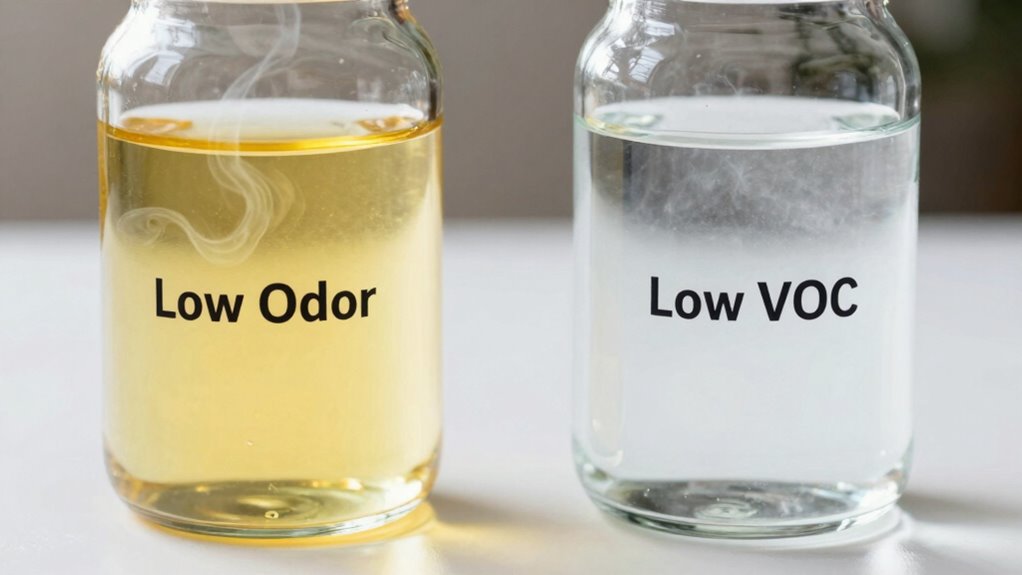
Have you ever assumed that low odor and low VOC products are the same? Many people think these terms are interchangeable, but they actually refer to different qualities. Understanding this distinction is essential because it affects both environmental impact and health considerations. When a product is labeled as “low odor,” it simply means it emits fewer smells that might be noticeable or unpleasant. This is often achieved through masking agents or scent-free formulations. On the other hand, “low VOC” indicates that the product contains fewer volatile organic compounds, chemicals that easily vaporize into the air. These VOCs can be harmful to both the environment and your health, especially when inhaled over time. Being aware of the chemical composition of products can help you make safer choices.
Choosing low odor products might make your space more comfortable, but it doesn’t necessarily mean they’re better for the environment or safer for your health. Sometimes, manufacturers reduce noticeable smells by adding masking fragrances or other chemicals that are not necessarily low in VOCs. This can create a false sense of safety, as you might believe you’re avoiding harmful emissions when, in fact, the chemical load remains high. Conversely, low VOC products are designed with the goal of reducing emissions of potentially hazardous chemicals into the air, which directly benefits both environmental impact and personal health. By choosing low VOC options, you help decrease indoor air pollution and lessen the release of pollutants into the environment, especially during manufacturing or disposal. Understanding VOCs can help consumers make more informed choices about the products they use indoors. Additionally, testing methods are available to accurately measure VOC emissions, enabling consumers and manufacturers to verify claims. Furthermore, understanding the regulatory standards for VOCs can guide consumers toward safer and more environmentally responsible products. Recognizing the differences between these terms can also influence the product labeling you rely on when making purchases.
From a health perspective, low VOC products are generally safer for your respiratory system and overall well-being. VOCs have been linked to headaches, dizziness, respiratory irritation, and even long-term health issues like liver and kidney damage. When you’re exposed to fewer VOCs, you reduce these risks markedly. However, a product labeled as low odor might still contain chemicals that can irritate your skin or lungs, even if you don’t notice a smell. This is why it’s essential to read labels carefully and not assume that low odor equates to low chemical emissions.
As an affiliate, we earn on qualifying purchases.
Frequently Asked Questions
How Do Low Odor and Low VOC Products Compare in Safety?
Low odor and low VOC products generally promote safety by reducing chemical exposure, but their safety depends on chemical composition. Low VOC products emit fewer volatile compounds, often making them safer for indoor air quality. However, consumer perception varies; some may trust low odor labels more, assuming they’re safer, even if the chemical makeup isn’t considerably different. Always check ingredient lists to truly assess safety beyond labels.
Can a Product Be Low Odor but High VOC?
Yes, a product can be low odor but high VOC. It might use synthetic fragrances or scent masking agents that reduce noticeable smells, but these can still emit volatile organic compounds. These VOCs can contribute to indoor air pollution and potential health issues, even if you don’t smell them. So, just because a product is low odor doesn’t mean it’s free of VOCs, highlighting the importance of checking both labels.
What Industries Prioritize Low Odor Over Low VOC?
You’ll find that industries like hospitality, healthcare, and residential construction prioritize low odor over low VOC because air quality directly impacts comfort and health. Consumers prefer products that don’t emit strong smells, especially in enclosed spaces. While low VOCs are important for chemical safety, a pleasant, odor-free environment often takes precedence, making low odor labels vital in these sectors to meet consumer preferences and guarantee a positive experience.
Are Low Odor Products Always Environmentally Friendly?
Low odor products aren’t always environmentally friendly. Fragrance preferences and sensory sensitivity drive many to choose products with less scent, but these products can still contain harmful chemicals or high VOC levels. Just because a product has a mild smell doesn’t mean it’s eco-friendly. Always check labels for ingredients and certifications, especially if you’re concerned about environmental impact or sensitivities, rather than relying solely on the scent or odor claims.
How Is Odor Perception Different From VOC Measurement?
Odor perception involves sensory detection, where your nose senses volatile compounds, often at very low levels. In contrast, VOC measurement uses chemical quantification techniques to determine the actual concentration of volatile organic compounds. While VOC tests provide precise chemical data, odor detection depends on how your sensory system interprets those compounds, which can vary between individuals. So, odor perception isn’t solely about chemical levels—it’s about how your senses experience them.
As an affiliate, we earn on qualifying purchases.
Conclusion
Understanding the difference between low odor and low VOC is essential for your health and environment. Did you know that some low VOC products still emit odors that can cause irritation? That’s because odor isn’t always linked to VOC levels. So, next time you choose a product, pay attention to both labels. About 40% of indoor air pollution comes from building materials—knowing the facts helps you make smarter, safer choices for your space.
As an affiliate, we earn on qualifying purchases.
eco-friendly low VOC cleaning products
As an affiliate, we earn on qualifying purchases.
As an affiliate, we earn on qualifying purchases.
Halloween Picks
halloween
As an affiliate, we earn on qualifying purchases.