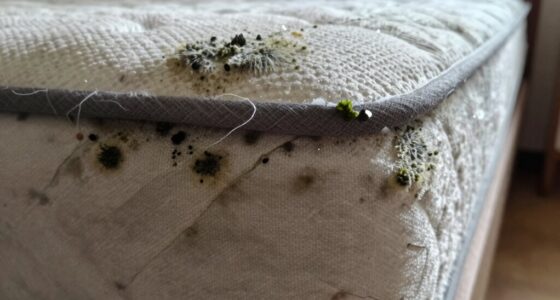

If you have a latex allergy, you might react to natural latex in mattresses, causing symptoms like hives or breathing issues. However, many latex mattresses undergo processing to reduce allergens, making them safer for sensitive sleepers. Synthetic latex or hypoallergenic options are also available. To stay safe, check labels, consider mattress covers, and consult your doctor if needed. Keep exploring to learn how to choose the best option for your needs and minimize risks.
Key Takeaways
- Latex allergy involves an immune response to natural latex proteins, potentially causing severe reactions, unlike latex sensitivity which is milder.
- Natural latex mattresses may contain residual proteins that can trigger allergies, but processing methods aim to reduce allergen levels.
- Synthetic latex mattresses generally pose a lower allergy risk but can still cause reactions in sensitive individuals.
- Individuals with latex allergies should choose hypoallergenic, latex-free mattress options and use protective covers to minimize exposure.
- Consulting healthcare providers and checking for certifications helps ensure safe mattress choices for those with latex sensitivities or allergies.

Awara Natural Hybrid Queen Mattress 10 Inch – Certified Organic Natural Latex – Sustainable New Zealand Wool – Fiberglass-Free – 365-Night Trial
365-NIGHT HOME TRIAL & LIFETIME WARRANTY – Our industry-leading trial period and warranty starts the day your Awara…
As an affiliate, we earn on qualifying purchases.
As an affiliate, we earn on qualifying purchases.
What Is Latex, and How Do Allergies Develop?
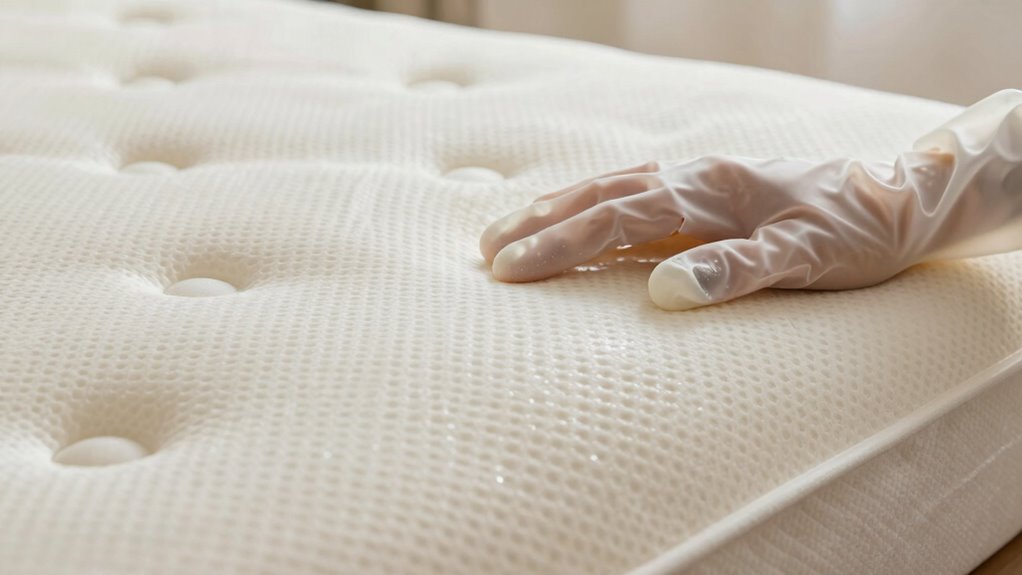
Latex is a natural material derived from the sap of rubber trees, commonly used in products like gloves, balloons, and mattresses. During latex production, the sap is processed into liquid latex or dried into sheets, which are then turned into various items. Some people develop latex allergies when their immune system overreacts to proteins found in natural latex. The allergy prevalence varies, but it’s more common among healthcare workers and those with frequent latex exposure. Allergic reactions can range from skin irritation to more severe responses like respiratory issues. Understanding how latex triggers allergies helps you recognize potential risks, especially if you work with latex regularly or have sensitivities. Being aware of latex’s role in allergy development is key to managing exposure and preventing reactions. Additionally, advances in latex allergy testing have improved the detection and management of sensitivities for at-risk individuals.

AllerEase Waterproof Mattress Protector, Maximum Allergy Mattress Protector, Queen Mattress Cover
ADVANCED ALLERGY PROTECTION: AllerEase mattress protectors have tightly woven, expertly-designed fabric to prevent 99.9% of unhealthy household particles…
As an affiliate, we earn on qualifying purchases.
As an affiliate, we earn on qualifying purchases.
How Do You Know if You Have a Latex Allergy? Symptoms and Testing
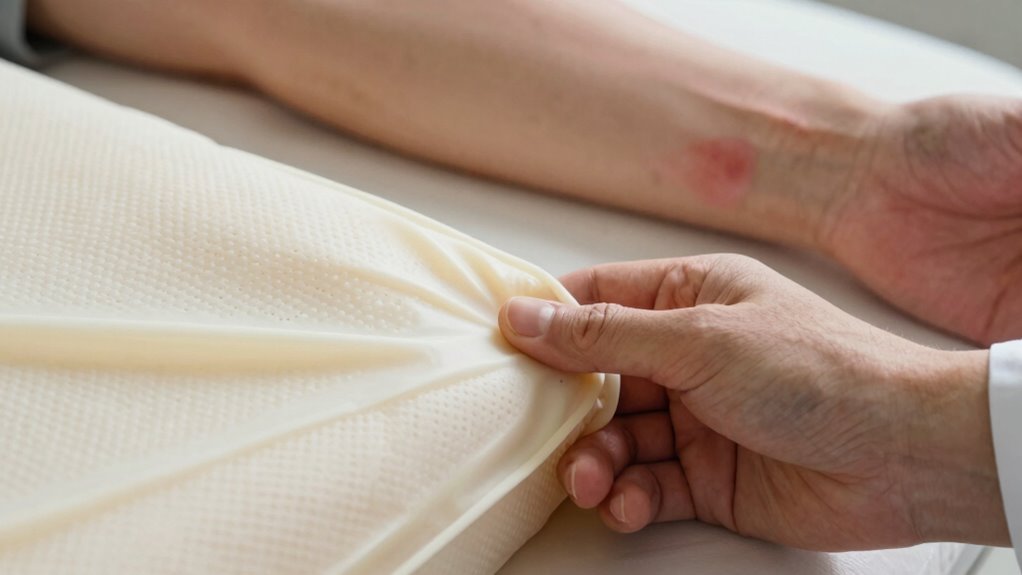
If you suspect you might have a latex allergy, paying attention to your body’s reactions is the first step. Common symptoms after latex exposure include skin irritation, redness, hives, itching, or swelling. Some people experience respiratory issues like sneezing, runny nose, or asthma-like symptoms. Severe reactions, though rare, can involve difficulty breathing or anaphylaxis. To confirm an allergy, your healthcare provider may perform skin prick tests or blood tests that measure your immune response to latex proteins. Recognizing these symptoms early helps with allergy prevention and avoiding further latex exposure. High contrast ratio in imaging can also highlight subtle allergic reactions on the skin. If you notice consistent reactions following contact with latex products, seek medical advice to determine your allergy status and establish appropriate precautions.
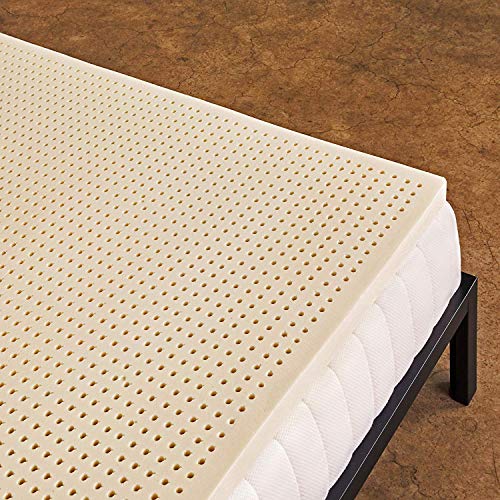
Pure Green Natural Latex Mattress Topper – Soft – 3 Inch – Queen Size (GOLS Certified Organic)
Soft – Great for Adding Softness to the Surface of a Mattress
As an affiliate, we earn on qualifying purchases.
As an affiliate, we earn on qualifying purchases.
Natural vs. Synthetic Latex: Which Is Used in Mattresses?
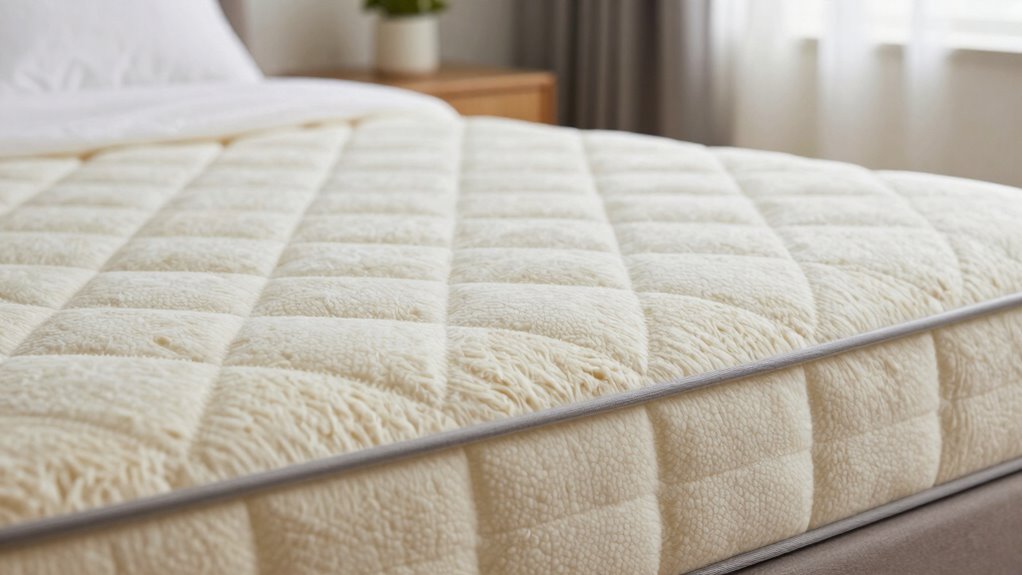
You probably want to know what’s in your mattress, so understanding natural versus synthetic latex is key. Natural latex is made from rubber tree sap, making it eco-friendly and biodegradable. Synthetic latex, on the other hand, is created from chemical compounds, which can affect durability and allergy concerns. Additionally, evidence-based insights can help you assess the health implications of each type.
Natural Latex Composition
Natural latex is derived directly from the sap of rubber trees, making it a popular choice for eco-conscious consumers. During latex processing, natural latex undergoes a series of steps to produce a durable, flexible material. This process often includes allergen reduction techniques, which help minimize proteins that could trigger sensitivities. Because it’s minimally processed compared to synthetic options, natural latex retains more of its original properties, such as breathability and elasticity. Its composition mainly consists of natural rubber, water, and trace elements from the tree. This natural origin and careful processing make it less likely to contain synthetic additives, which can sometimes cause allergic reactions. Additionally, allergen reduction techniques are employed to further decrease the risk of allergic responses. If you’re looking for a mattress with a pure composition, natural latex offers an environmentally friendly and hypoallergenic option.
Synthetic Latex Materials
Synthetic latex is manufactured through chemical processes that create a material similar in feel and function to natural latex, but it’s made from petrochemicals rather than tree sap. During latex manufacturing, you might notice a uniform, smooth surface with consistent elasticity. Its production involves blending chemicals to form a foam that mimics natural latex’s bounce and durability. This synthetic version often appears in products with:
- Uniform texture, free of natural imperfections
- Slightly denser or stiffer feel
- Fewer natural latex allergens
- Lower allergy prevalence compared to natural latex
While synthetic latex reduces allergy concerns, it can still cause reactions for sensitive individuals. Its durability varies, but it’s generally more affordable and eco-friendly. Additionally, synthetic latex often undergoes manufacturing processes that enhance its consistency and performance. Knowing the differences helps you choose a mattress that aligns with your health and comfort needs.
![Zinus 12 Inch Green Tea Essential Memory Foam Mattress [New Version], Queen, Fiberglass Free, Medium Feel, Breathable Airflow Memory Foam, Certified Safe Foams & Fabric, Mattress in A Box](https://m.media-amazon.com/images/I/41zOku8iPrL._SL500_.jpg)
Zinus 12 Inch Green Tea Essential Memory Foam Mattress [New Version], Queen, Fiberglass Free, Medium Feel, Breathable Airflow Memory Foam, Certified Safe Foams & Fabric, Mattress in A Box
FRESHER SLEEP AND A CLEANER PLANET – Topped with breathable green tea Airflow memory foam, this mattress is…
As an affiliate, we earn on qualifying purchases.
As an affiliate, we earn on qualifying purchases.
Are Latex Mattresses Safe for People With Latex Allergies?
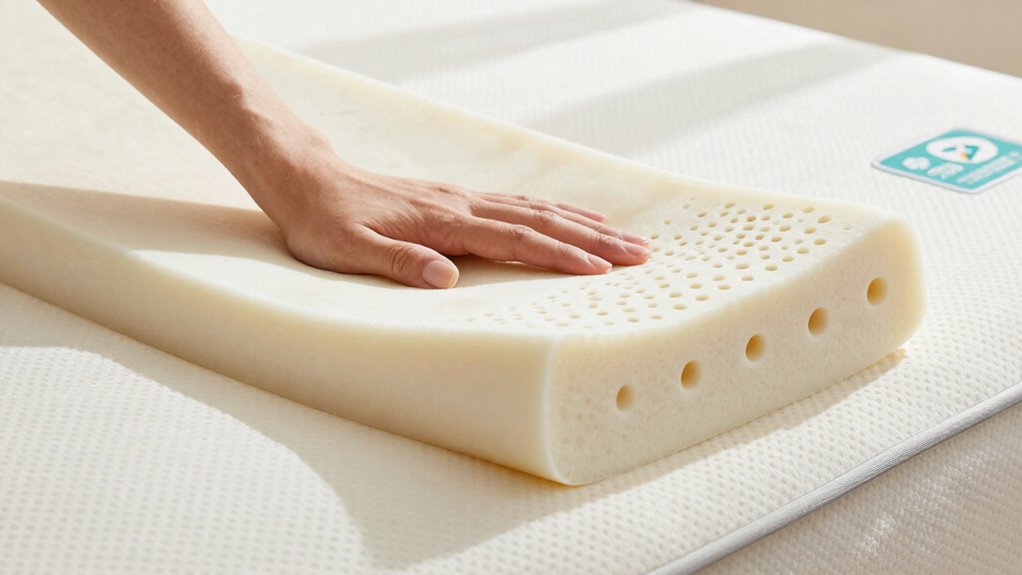
Many people with latex allergies wonder if latex mattresses are safe to use. The answer depends on how the mattress is made. During latex production, allergen reduction techniques can minimize the presence of natural latex proteins that trigger reactions. Some manufacturers process latex to remove most allergens, making their products safer for allergy sufferers. However, even with allergen reduction, a small risk remains because traces of latex proteins might still be present. If your allergy is severe, it’s essential to consult your doctor before choosing a latex mattress. Non-latex alternatives, such as memory foam or synthetic mattresses, could be safer options. Understanding the manufacturing process and allergen content helps you make an informed decision about latex mattresses and allergy safety.
How Do Mattress Manufacturers Reduce Latex Allergens?
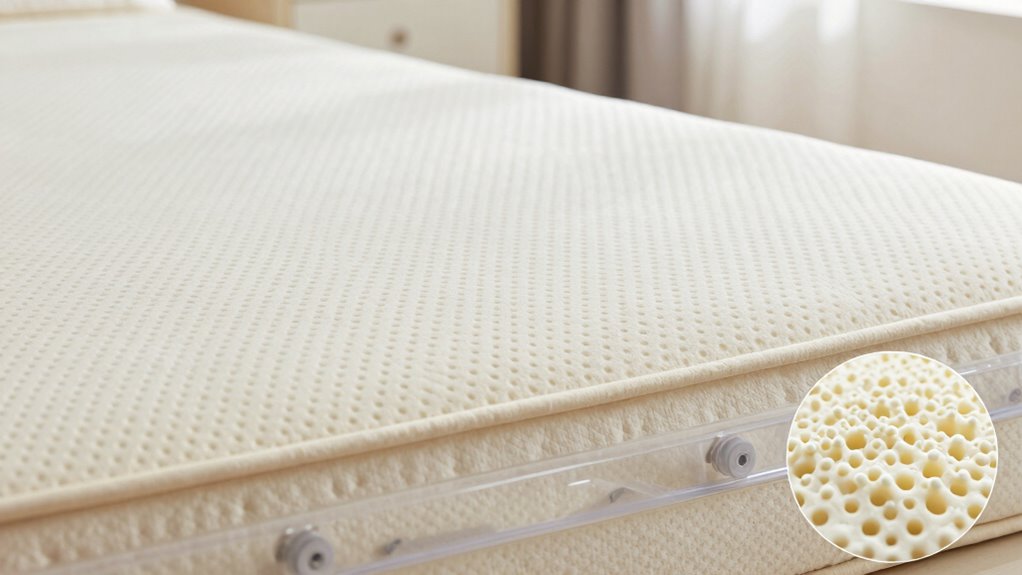
To reduce latex allergens in mattresses, manufacturers use specialized processing techniques that target the proteins responsible for allergic reactions. These methods aim to minimize latex exposure and improve allergy prevention. Imagine the following steps:
- Cleaning: Removing surface dirt and debris that harbor latex proteins.
- Leaching: Soaking latex in water or chemicals to wash away soluble proteins.
- Coating: Applying barrier layers that seal in allergens and reduce exposure.
- Heat Treatment: Baking or curing the latex to denature allergenic proteins.
Additionally, some manufacturers incorporate hypoallergenic processing methods to further reduce allergenicity. These strategies help lower the risk of allergy symptoms while maintaining mattress quality. By reducing latex exposure, manufacturers make latex mattresses safer for allergy prevention, especially for those with sensitivities or concerns about latex allergy.
Latex Sensitivity vs. Latex Allergy: What’s the Difference?
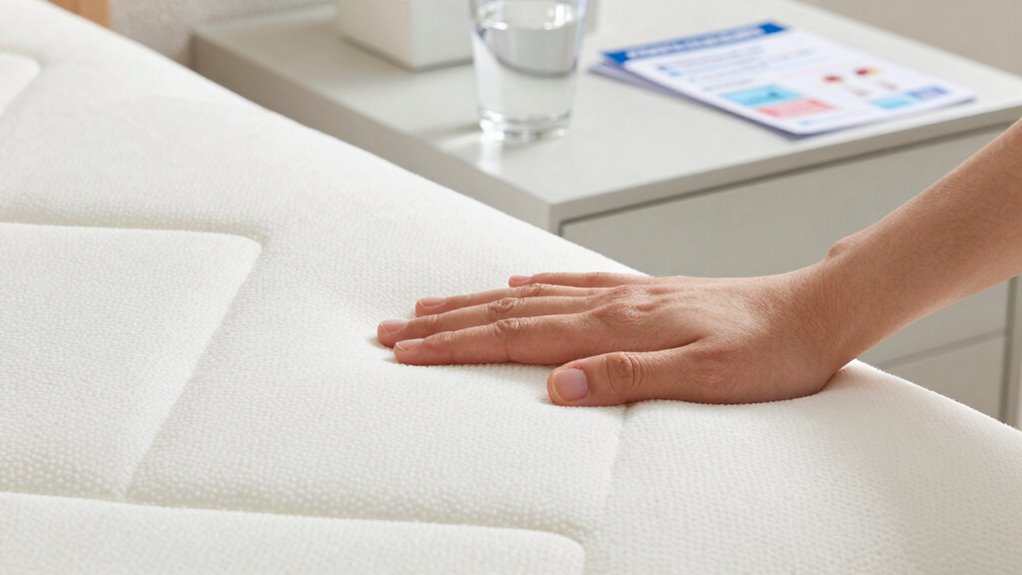
Understanding the difference between latex sensitivity and allergy helps you recognize your body’s reactions. Sensitivity may cause mild symptoms, while an allergy triggers a more serious immune response. Learning about their symptoms, immune mechanisms, and how to get tested can keep you informed and safe.
Definition and Symptoms
Have you ever wondered how latex sensitivity differs from a latex allergy? Both result from latex exposure, but their symptoms vary. Latex sensitivity causes mild reactions like skin irritation or itching, often developing after repeated contact. In contrast, a latex allergy triggers more severe responses, such as hives, swelling, or difficulty breathing. The key difference lies in allergy development, which involves the immune system reacting aggressively. Additionally, some individuals may experience Free Floating reactions that are not directly related to allergies but still cause discomfort. Here are four symptoms to watch for:
- Itching or rash on the skin
- Redness and swelling
- Sneezing or runny nose
- Breathing difficulties
Understanding these signs helps you identify if your symptoms stem from sensitivity or a true allergy, which could worsen with continued latex exposure.
Immune Response Differences
The immune response in latex sensitivity and latex allergy differs markedly, influencing how your body reacts to latex exposure. In sensitivity, your immune system shows immune response variability, often causing mild irritation or skin reactions. In contrast, a latex allergy triggers a more robust and immediate immune response, leading to severe symptoms like hives, respiratory issues, or anaphylaxis. The allergy severity differences are significant, with allergies posing higher health risks. Understanding these differences helps you recognize potential risks. Here’s a comparison:
| Aspect | Latex Sensitivity | Latex Allergy |
|---|---|---|
| Immune Response | Mild, delayed, variable | Immediate, strong, specific |
| Symptoms | Skin irritation, mild discomfort | Hives, swelling, breathing difficulties |
| Risk Level | Lower, mainly irritant-based | Higher, potentially life-threatening |
Additionally, the immune system’s response to latex can be influenced by genetic factors and previous exposures, which also play a role in the severity of allergic reactions.
Testing and Diagnosis
Testing and diagnosis for latex sensitivity and latex allergy involve specific methods that help identify your body’s reaction to latex exposure. These tests clarify whether you have a sensitivity or a true allergy, which is vital given the allergy prevalence and potential health risks. A medical evaluation may include additional testing options to ensure accurate diagnosis and appropriate management.
What Mattress Alternatives Are Best for Latex-Sensitive Sleepers?
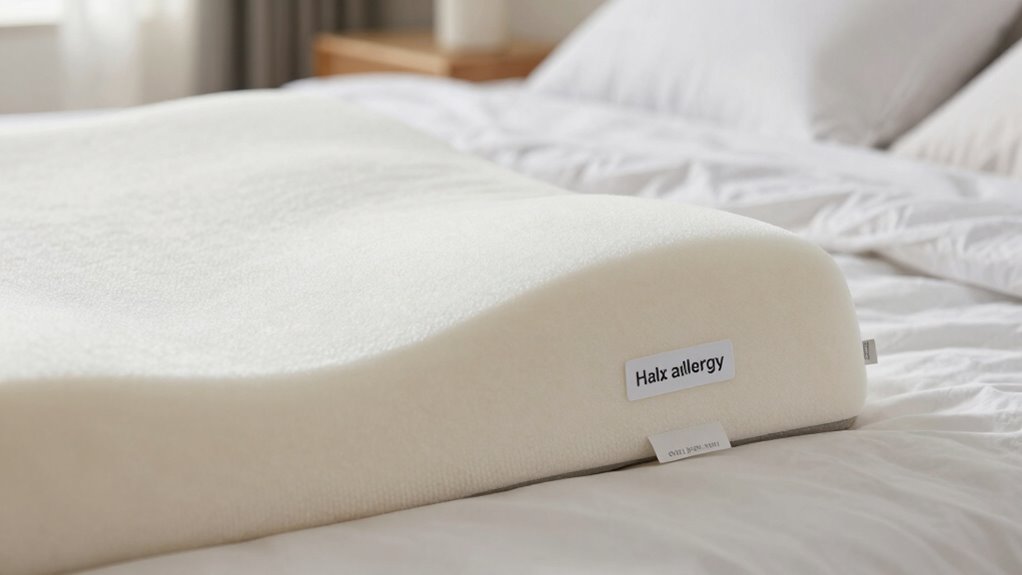
If you’re sensitive to latex, finding a comfortable mattress without triggering allergic reactions is essential. Look for alternatives made from hypoallergenic materials like memory foam, latex-free innerspring, or organic cotton and wool. These options minimize your risk of latex sensitivity while offering good mattress durability. Memory foam provides support and comfort without latex, making it a popular choice. Innerspring mattresses with synthetic or natural fibers also avoid latex while maintaining durability. Organic materials, such as wool and cotton, are naturally hypoallergenic and resistant to dust mites. Always check product labels for latex-free certification to ensure safety. Choosing the right mattress can help you sleep comfortably without compromising your health or durability needs.
How to Choose a Mattress Safely When You Have Allergies
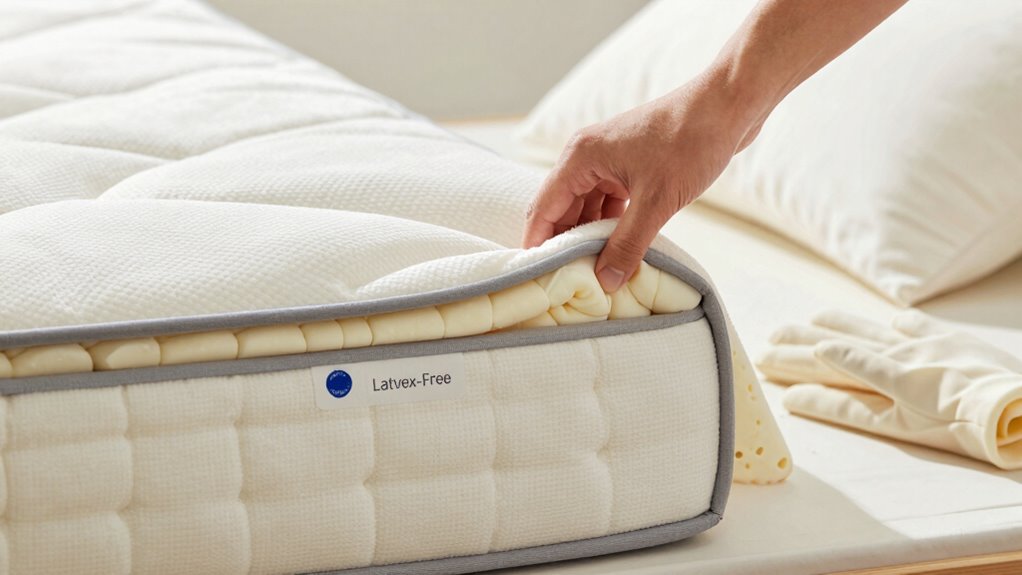
Start by checking mattress labels carefully to understand the materials used. Opt for hypoallergenic options that are specifically designed for sensitive sleepers. Look for testing and certification to guarantee the mattress meets safety standards and reduces allergy risks.
Material Labels and Labels
When choosing a mattress with allergies in mind, carefully reading the material labels is essential. Labels reveal ingredients, helping you avoid products with harmful chemicals that could trigger allergy symptoms. Look for clear indicators of safety and non-toxic materials to reduce chemical exposure. To aid your decision, imagine:
- A label stamped “organic” or “natural,” signaling fewer chemicals.
- Symbols indicating hypoallergenic certification.
- Ingredients list free of synthetic chemicals or flame retardants.
- Clear warnings about potential allergens or irritants.
Hypoallergenic Mattress Options
Choosing a hypoallergenic mattress involves selecting options designed to minimize allergy triggers and prevent respiratory irritation. Look for mattresses made from natural or synthetic materials with low allergen content. Consider latex production methods, such as Talalay or Dunlop, which can influence the presence of residual latex proteins that might cause allergic reactions. Hypoallergenic options often feature tightly woven covers or antimicrobial treatments that block dust mites, mold, and other common allergens. Avoid mattresses with added chemical treatments or synthetic foams known to emit volatile organic compounds (VOCs). When shopping, check for certifications like CertiPUR-US or OEKO-TEX, which ensure the mattress meets strict safety standards. This careful approach helps reduce allergic reactions and creates a safer sleep environment for allergy sufferers.
Testing and Certification
To guarantee a mattress is safe for allergy sufferers, it’s important to look for testing and certification labels that verify product safety and low allergen content. These labels confirm the mattress has undergone rigorous testing for latex exposure, reducing allergy risks. When shopping, consider these key indicators:
- CertiPUR-US® label, ensuring low chemical emissions and minimal allergens.
- Oeko-Tex Standard 100 certification, confirming the fabric is free from harmful substances.
- Greenguard Gold certification, indicating low chemical emissions for better indoor air quality.
- Latex-Free labels, which help with allergy prevention by avoiding natural latex altogether.
Choosing mattresses with these certifications helps prevent latex exposure, supporting safer sleep for allergy sufferers.
Can Mattress Covers Help Reduce Latex Allergens?

A quality mattress cover can be an effective tool in reducing latex allergens in your sleeping environment. By creating a barrier, it helps minimize latex exposure, which is essential for allergy prevention. Look for covers labeled as allergen-proof or dust-mite-proof, as these are designed to block airborne particles and skin flakes that carry latex proteins. While mattress covers won’t eliminate latex allergens entirely, they considerably lower your risk of contact and inhalation. This is especially helpful if you’re sensitive or allergic to latex but still want to use a mattress that might contain small amounts of latex. Remember, the effectiveness depends on the material quality and proper fit. Using a specialized cover is a practical step toward a safer, allergen-reduced sleep space.
Should You Get Tested for Latex Allergies Before Buying a Mattress?
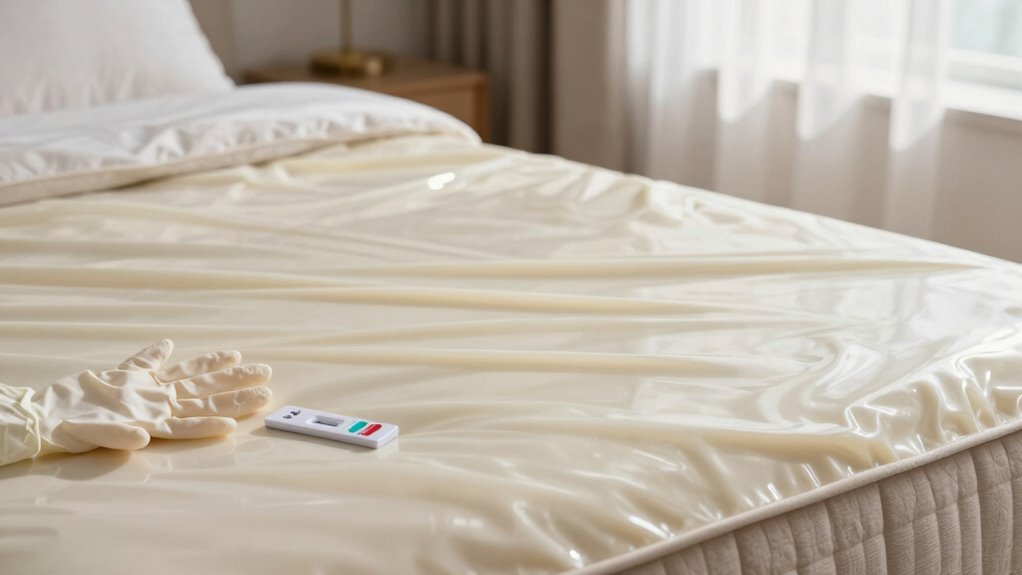
If you’re concerned about latex allergies, getting tested before purchasing a mattress can save you from potential reactions. Knowing your allergy status helps you decide whether to choose latex or alternatives, especially since allergy prevalence varies among individuals. Latex manufacturing involves processing natural rubber, which can sometimes trigger allergic responses. Testing can clarify if you’re at risk, especially if you have a history of allergies or sensitive skin. Imagine:
- Visiting a doctor for a skin prick or blood test.
- Understanding how your immune system reacts to latex proteins.
- Deciding whether to opt for latex-free mattresses.
- Avoiding the discomfort of unexpected allergic reactions after sleep.
Getting tested offers peace of mind and informed choices, especially in a market where allergy prevalence differs among consumers.
Frequently Asked Questions
Can Latex Allergies Develop After Years of Exposure?
Yes, latex allergies can develop after years of exposure. You might experience increased latex sensitivity over time, which can lead to allergy progression. Even if you haven’t had a reaction before, prolonged contact can cause your immune system to become more reactive. It is crucial to monitor any new symptoms, such as skin irritation or respiratory issues, and consult a healthcare professional if you suspect a latex allergy is developing.
Are There Hypoallergenic Latex Mattresses Available?
Yes, hypoallergenic latex mattresses are available to minimize allergy risks. They’re crafted from natural or synthetic latex with minimal allergenic proteins, making them a good option for latex allergy prevention. When shopping, look for labels indicating hypoallergenic or latex allergy-friendly features. These mattresses are designed to limit dust mites and mold, providing a safer sleep environment for allergy sufferers. Always verify product details to confirm they meet your allergy prevention needs.
How Long Do Latex Allergens Typically Remain in Mattresses?
Imagine a gentle breeze carrying away lingering latex sensitivity, but the truth is, latex allergens can stay in your mattress for weeks or even months. During mattress off-gassing, tiny latex particles might escape, prolonging exposure. To reduce risks, look for hypoallergenic options and allow your mattress to ventilate thoroughly before use. With proper care, you can enjoy comfort without worry about long-lasting allergens.
Can Washing or Airing Out a Mattress Reduce Latex Allergens?
Washing techniques and mattress airing can help reduce latex allergens, but they don’t eliminate them entirely. You should regularly strip and wash your mattress cover, and use a damp cloth with mild detergent to clean the surface. Additionally, airing out your mattress by exposing it to fresh air and sunlight helps decrease allergen levels. However, for sensitive individuals, it’s best to contemplate allergen-proof covers or replacing the mattress altogether.
What Are the Risks of Cross-Reactivity With Other Allergens?
You face cross-reactivity risks if you have a latex allergy, as latex contact might trigger reactions to certain fruits like bananas or kiwis. These cross reactivity risks occur because your immune system confuses proteins in latex with those in related allergens. Be cautious with products containing natural rubber or related plant materials, and consult your doctor if you notice symptoms after contact, to avoid unexpected allergic reactions.
Conclusion
Exploring the world of latex mattresses can feel like walking a tightrope, but knowledge is your safety net. By understanding the differences between natural and synthetic latex, testing for allergies, and choosing hypoallergenic options, you can sleep soundly without fear. Remember, with the right precautions, you won’t be sailing into stormy waters—your ideal, allergy-free sleep oasis is well within reach. Sweet dreams lie just beyond the horizon of informed choices.