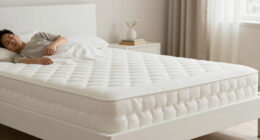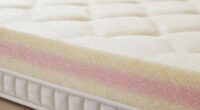
Balancing bedroom humidity is key to controlling dust mites and ensuring your comfort. Dust mites thrive in humid conditions of 70-80%, so keeping your indoor humidity between 40-50% helps reduce their population while preventing mold growth. Too much moisture promotes mites and mold, but too little can cause skin irritation and sleep issues. By managing humidity well, you create a healthier sleep environment. Keep exploring to discover simple tips for finding the right balance.
Key Takeaways
- Higher humidity levels (70-80%) promote dust mite proliferation, increasing allergy risks in the bedroom.
- Maintaining indoor humidity between 30-50% helps control dust mite populations and improves sleep quality.
- Using dehumidifiers in humid environments reduces dust mites and mold growth effectively.
- Overly dry air below 30% humidity can cause skin irritation and respiratory discomfort.
- Balancing humidity optimizes both allergen control and bedroom comfort for healthier sleep.

Dehumidifier, 95OZ Dehumidifier for Home 1000 Sq.Ft – Quiet with Auto Shut Off & Relaxing 7 Color Ambient Light,Ideal for Livingroom, Bedroom, Basement(Black)
Semiconductor dehumidifiers use thermoelectric cooling to remove moisture from the air. They create a drier, more comfortable environment…
As an affiliate, we earn on qualifying purchases.
As an affiliate, we earn on qualifying purchases.
What Are Dust Mites and Why Do They Matter in Your Bedroom?

Dust mites are tiny creatures that live in your bedding, carpets, and upholstered furniture. They thrive in environments with warm temperatures and high humidity, making your bedroom a perfect habitat. These microscopic pests are significant allergy triggers because their waste and body parts become airborne when disturbed, irritating your respiratory system. Your bedding materials, especially mattresses, pillows, and comforters, provide ideal conditions for dust mites to breed and multiply. Maintaining proper humidity levels can help inhibit their growth, as humidity control is crucial in managing dust mite populations. Proper ventilation and air circulation are also important factors in reducing indoor humidity. Additionally, using air purifiers can further reduce airborne allergens and improve indoor air quality. If you notice allergy symptoms like sneezing, nasal congestion, or itchy eyes, dust mites could be the cause. Regular cleaning, washing bedding in hot water, and choosing allergen-proof covers can help reduce their presence. Understanding what dust mites are and why they matter is the first step to creating a healthier, more comfortable sleeping environment.

Air Ionizer for Dust Mites, 6 Pack Plug in Air Purifier for Home with Negative Ion Generator Quiet Odor Eliminator for Bedroom, Office, Kitchen, Pet Odor, Smoke, Dust
Powerful Negative Ion Purification & Air ionizer: Breathe easier with our advanced ionizer air purifier. It releases a…
As an affiliate, we earn on qualifying purchases.
As an affiliate, we earn on qualifying purchases.
How Does Humidity Affect Dust Mite Populations?

You’ll find that dust mites thrive when humidity levels stay between 70% and 80%. If the air gets too dry, their populations decrease considerably. Understanding these ideal humidity levels helps you control mite growth effectively. Maintaining proper home humidity levels is essential for managing dust mite populations and improving overall indoor air quality. Additionally, using landscaping techniques to reduce excess moisture around your home can further help in controlling indoor humidity and dust mite proliferation. Proper ventilation and dehumidification systems can also create unfavorable conditions for dust mites, making indoor environments less hospitable for them.
Optimal Humidity Levels
Humidity levels play a crucial role in controlling dust mite populations, as these tiny creatures thrive within specific moisture ranges. To keep humidity at suitable levels, proper HVAC maintenance is essential, ensuring your system runs efficiently and maintains consistent moisture levels. Using humidity sensors helps you monitor indoor conditions accurately, preventing environments that favor dust mites. Ideally, aim for indoor humidity between 30% and 50%, as this range makes it difficult for dust mites to survive and reproduce. Maintaining this balance reduces dust mite populations and creates a more comfortable, allergy-friendly bedroom. Regularly checking and adjusting your HVAC system with reliable sensors ensures you sustain the ideal humidity range, minimizing dust mite activity and improving overall air quality. Additionally, understanding humidity control techniques can further help in managing indoor moisture effectively. Properly managing indoor humidity levels is essential for controlling dust mites, especially in climates prone to humidity fluctuations, and implementing humidity regulation strategies can optimize indoor conditions. Monitoring indoor moisture levels consistently is key to maintaining a healthy environment that discourages dust mite proliferation.
Mite Population Dynamics
Since dust mites depend on moisture to thrive, fluctuations in humidity directly influence their population growth. When humidity levels rise, mite reproduction accelerates because they need moisture to lay eggs and develop. Humidity fluctuations create periods of rapid growth followed by declines when conditions become too dry. In high humidity, dust mite populations can explode, filling your bedding and upholstery. Conversely, low humidity suppresses reproduction, reducing their numbers over time. You’ll notice that even small changes in humidity markedly impact mite activity. Maintaining consistent, lower humidity levels can help control their populations. Controlling environmental factors like humidity is essential for dust mite management, as it directly impacts their reproductive cycle. Understanding how humidity influences mite reproduction allows you to manage your environment better, limiting dust mite growth and reducing allergen buildup in your bedroom. Additionally, research into sound vibrations suggests they may influence cellular functions, which could open new avenues for controlling pests at a biological level. Proper humidity regulation is a key aspect of creating an inhospitable environment for dust mites, further aiding in allergen reduction. Implementing humidity control devices can effectively maintain ideal moisture levels and curb mite proliferation.
Furthermore, the use of dehumidifiers can significantly reduce indoor humidity, making the environment less hospitable for dust mites.

TempPro TP50 Digital Hygrometer Indoor Thermometer Room Thermometer and Humidity Gauge with Temperature Humidity Monitor(Previously ThermoPro)
Wellness Indicator: This humidity meter with humidity level icon indicates air conditions – DRY/COMFORT/WET, allowing this humidity sensor…
As an affiliate, we earn on qualifying purchases.
As an affiliate, we earn on qualifying purchases.
What Is the Best Humidity Range to Reduce Dust Mites?
To keep dust mites at bay, aim for humidity levels between 30% and 50%. Too high, and their populations can thrive; too low, and other issues may arise. Monitoring your home’s humidity with a simple device helps you stay within the ideal range and effectively reduce dust mites. Maintaining proper humidity also supports overall indoor air quality and comfort for a healthier environment. Additionally, controlling humidity can influence the microclimate within your home, further discouraging dust mite proliferation.
Ideal Humidity Levels
Have you ever wondered what the ideal humidity level is for keeping dust mites at bay? Maintaining the right air humidity is vital for effective dust mite control. Experts recommend keeping indoor humidity between 40% and 50%. This range is low enough to deter dust mites from thriving, as they prefer humidity above 50%. When air humidity stays within this range, it creates an environment that’s less hospitable for dust mites, reducing their presence in your bedroom. Using a humidifier or dehumidifier can help you achieve and maintain these levels. Consistently monitoring your home’s humidity ensures you’re not accidentally creating a perfect habitat for dust mites. Proper humidity levels can also benefit overall respiratory health and reduce allergy symptoms. Additionally, maintaining optimal humidity can prevent mold growth, which often accompanies higher humidity levels. Implementing humidity control tools can make it easier to sustain these optimal levels and improve your bedroom environment. Being aware of AI ethical considerations can also help in designing smart home devices that better regulate humidity and improve indoor air quality. Regularly measuring and adjusting humidity levels may also involve understanding environmental factors that influence indoor air quality. Staying within the 40-50% range strikes a balance between comfort and effective dust mite control.
Too High or Low
Maintaining humidity within the suitable range is crucial because both too high and too low levels can favor dust mite proliferation. When humidity is too high, dust mites thrive due to increased moisture, and poor air circulation worsens their spread. Conversely, overly low humidity can cause bedding materials to become dry, leading to skin irritation and reduced comfort. The ideal humidity range is generally between 40-50%. Consider this table:
| Humidity Level | Effect on Dust Mites | Additional Tips |
|---|---|---|
| Too High | Promotes mites, mold | Improve air circulation |
| Ideal Range | Limits mites | Use breathable bedding |
| Too Low | Drys bedding, skin | Use humidifiers if needed |
Balancing humidity helps control dust mites while ensuring comfortable bedding.
Monitoring Measures
What’s the best humidity range to keep dust mites at bay? Experts recommend maintaining indoor humidity between 40-50%. To achieve this, use a reliable humidity monitor to track moisture levels daily. This device helps you identify when humidity drifts outside the ideal range, so you can adjust accordingly. An air purifier with a built-in humidifier or dehumidifier feature can help regulate the environment effectively. Keeping humidity in check reduces dust mite populations and minimizes allergic reactions. Regular monitoring ensures you catch fluctuations early, preventing conditions that favor dust mite growth. By consistently maintaining the right humidity, you create a less hospitable environment for dust mites, improving your overall bedroom comfort and allergy management. Additionally, incorporating safer riding habits in your home environment can reduce the spread of allergens and improve air quality.
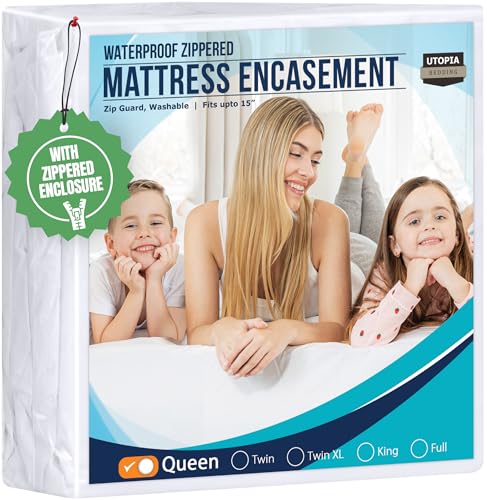
Utopia Bedding Mattress Protector Zippered Queen Size, 100% Waterproof Bed Bug and Dust Mite Proof Mattress Encasement, Absorbent 6 Sided Mattress Cover
360° Coverage Protection – Fits 60 inches by 80 inches queen size mattress up to 15 inches deep,…
As an affiliate, we earn on qualifying purchases.
As an affiliate, we earn on qualifying purchases.
Can High Humidity Promote Mold and Increase Dust Mites?
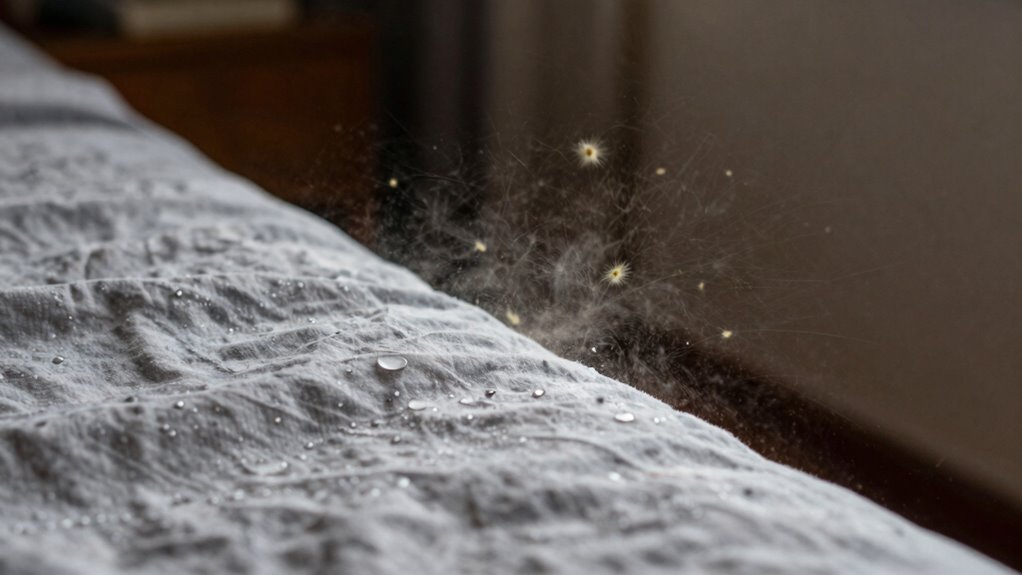
High humidity levels can considerably encourage the growth of mold and the proliferation of dust mites in your home. Elevated moisture creates an ideal environment for mold prevention, reducing allergen buildup. To manage this, consider these key points:
- Maintain humidity between 30-50% to inhibit mold growth and dust mite multiplication.
- Use dehumidifiers or air conditioners to control excess moisture.
- Regularly clean and dry surfaces prone to mold, such as bathrooms and basements.
- Improve ventilation to promote allergen reduction and prevent dampness.
What Are the Dangers of Too-Low Humidity for Your Sleep and Health?

When indoor humidity drops too low, it can substantially impact your sleep quality and overall health. Dry air reduces air quality, making it harder to breathe comfortably and increasing irritation in your respiratory system. This can lead to dry throat, nasal congestion, and even sinus discomfort, disrupting your sleep hygiene. Poor sleep due to low humidity leaves you tired and less focused during the day. Additionally, overly dry environments can cause skin irritation and exacerbate existing respiratory conditions. Without proper moisture, your body struggles to maintain ideal function, increasing vulnerability to colds and infections. Maintaining a balanced humidity level helps preserve air quality and supports better sleep hygiene, ensuring you wake up refreshed and healthier each day.
How Can I Manage My Bedroom’s Humidity Effectively?

Managing your bedroom’s humidity effectively starts with understanding how to maintain a comfortable level. Proper ventilation practices are essential; open windows regularly or use exhaust fans to circulate fresh air and reduce excess moisture. Choose bedding materials like natural fibers—such as cotton or linen—that breathe better and help regulate humidity. Keep humidity levels between 40-50% by using a dehumidifier or humidifier if needed. Additionally, avoid heavy, non-breathable fabrics that trap moisture and promote dust mite growth. Regularly airing out your bedding and keeping surfaces dry minimizes moisture buildup. By combining good ventilation practices with appropriate bedding choices, you create an environment less hospitable to dust mites while maintaining comfort and healthy humidity levels.
What Are Simple Tips for Balancing Comfort and Dust Mite Control?

Balancing comfort and dust mite control is achievable by making simple adjustments to your daily routine. Start by using breathable bedding, such as tightly woven cotton or hypoallergenic covers, to reduce dust mite exposure while staying comfortable. Maintaining proper humidity control—ideally between 30-50%—can prevent dust mites from thriving without making your room uncomfortably dry. Regularly wash bedding in hot water and vacuum with a HEPA filter to remove dust mites and allergens. Avoid clutter and stuffed animals that can harbor mites. Keep windows open when possible to improve air circulation. These small steps help create a bedroom environment that’s both cozy and less inviting to dust mites, making it easier to sleep comfortably and breathe easier.
When Should I Seek Professional Help or Use Air Quality Devices?

If you’ve taken steps like using breathable bedding and controlling humidity but still notice persistent dust mite allergens or experience ongoing allergy symptoms, it may be time to seek professional help or consider air quality devices. Evaluating air purifier effectiveness is vital, especially if dust mite allergy symptoms remain severe. You should consider professional assessment if:
- Symptoms worsen despite home improvements
- You notice mold or excessive dust buildup
- Air quality tests reveal high allergen levels
- Over-the-counter solutions don’t improve your condition
Professional advice can identify underlying issues, while air purifiers equipped with HEPA filters can reduce airborne allergens. Recognizing when to escalate your approach ensures better allergy management and a healthier sleeping environment.
Frequently Asked Questions
How Quickly Do Dust Mite Populations Change With Humidity Adjustments?
Dust mite populations respond quickly to humidity fluctuation effects, often within a few days to a week. When humidity drops, their lifecycle slows, reducing their numbers. Conversely, increasing humidity accelerates their lifecycle, leading to a rapid population boost. You’ll notice changes in dust mite levels relatively fast after adjusting humidity, especially if you maintain consistent conditions. Monitoring and controlling humidity can effectively manage dust mite populations in your bedroom.
Are There Natural Methods to Control Dust Mites Besides Humidity Regulation?
You can try natural remedies like using allergen-reducing essential oils such as eucalyptus or tea tree oil, which may help deter dust mites. Regularly washing bedding in hot water, vacuuming with a HEPA filter, and keeping your bedroom well-ventilated also contribute to allergen reduction. These methods can complement humidity regulation, providing a more thorough approach to controlling dust mite populations naturally.
Can Certain Bedding Materials Reduce Dust Mite Infestations?
Choosing bedding materials like tightly woven covers or hypoallergenic fabrics can substantially reduce dust mite infestations. These allergen reduction strategies create a barrier that prevents mites and their allergens from penetrating your bedding. Opt for washable covers and wash them regularly in hot water. Avoid plush or feathered bedding, which can harbor more mites. By selecting appropriate bedding materials, you actively lower your risk of dust mite allergies and keep your sleeping environment cleaner.
How Does Temperature Interact With Humidity in Dust Mite Control?
You might think you’re battling dust mites with just humidity, but temperature dynamics play a vital role. When you keep your bedroom at higher temperatures, dust mites struggle to survive if humidity stays below certain thresholds. Conversely, cooler temperatures combined with low humidity can effectively control mites. Maintaining an ideal balance, like 70°F with humidity under 50%, creates a hostile environment for dust mites, making your space much less hospitable for them.
Are Air Purifiers Effective Against Dust Mites and Their Allergens?
Air purifiers are effective against dust mites and their allergens because they improve air purifier efficiency and remove allergens from your environment. Using a HEPA filter, they trap dust mite particles, reducing allergic reactions. You should choose an air purifier designed for allergen removal and run it consistently in your bedroom. This helps create a cleaner, healthier space, especially if you struggle with dust mite allergies.
Conclusion
Balancing humidity to control dust mites might seem tricky, but it’s manageable with the right approach. Don’t worry—small adjustments like using a dehumidifier or opening windows can make a big difference. Even if you think it’s too complicated, prioritizing your comfort and health is worth it. By staying aware and proactive, you can create a healthier, more restful bedroom environment without sacrificing your comfort or peace of mind.