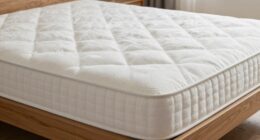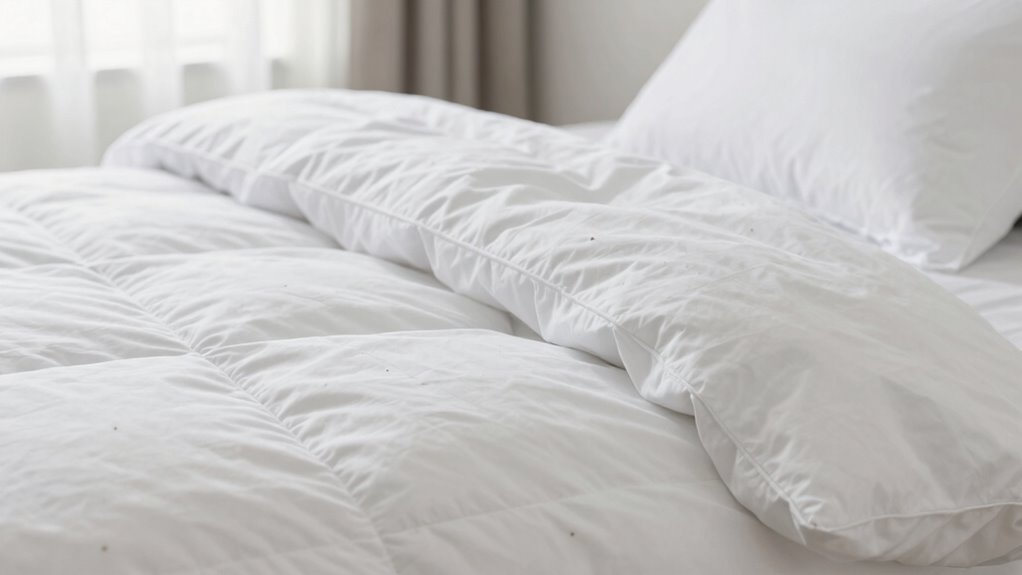
To reduce dust mite allergies linked to bedding, focus on habits like washing sheets weekly in hot water, using allergen-proof mattress and pillow encasements, and choosing fabrics that resist mites. Keep humidity below 50%, vacuum regularly with HEPA filters, and avoid plush bedding that traps allergens. Making these changes can help lessen your exposure and allergy symptoms. Keep going to discover more effective strategies to create an allergy-friendly bedroom environment.
Key Takeaways
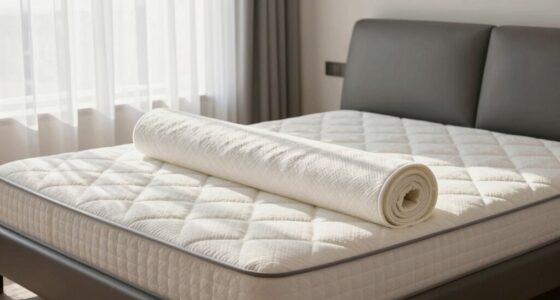
- Encase mattresses and pillows with allergen-proof covers to block dust mite allergens.
- Wash bedding weekly in hot water at least 130°F (54°C) to eliminate mites and allergens.
- Use synthetic or tightly woven fabrics for bedding to reduce mite trapping.
- Maintain humidity below 50% to inhibit dust mite growth in the bedroom.
- Regularly vacuum with HEPA filters and remove clutter to minimize dust mite habitats.
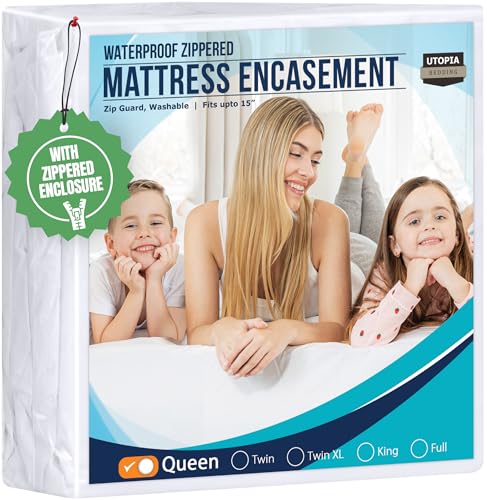
Utopia Bedding Mattress Protector Zippered Queen Size, 100% Waterproof Bed Bug and Dust Mite Proof Mattress Encasement, Absorbent 6 Sided Mattress Cover
360° Coverage Protection – Fits 60 inches by 80 inches queen size mattress up to 15 inches deep,…
As an affiliate, we earn on qualifying purchases.
As an affiliate, we earn on qualifying purchases.
What Are Dust Mites and How Do They Cause Allergies?
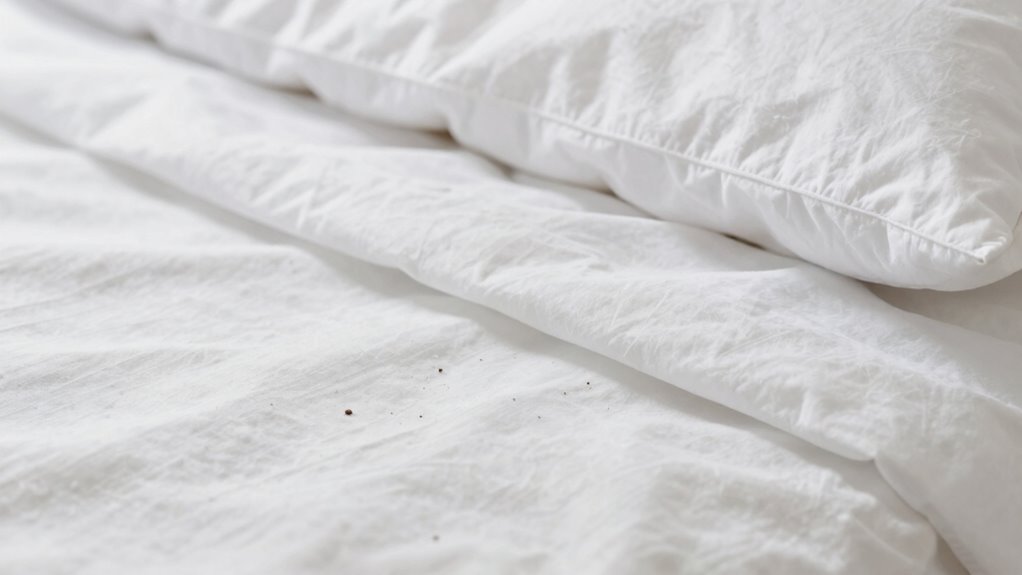
Dust mites are tiny creatures that live in household bedding, furniture, and carpets. Their biology involves feeding on dead skin cells shed by humans and pets. You might not see them, but their presence can trigger allergic reactions. Dust mite allergens come from their body parts, feces, and shed skins, which become airborne or settle into surfaces. Allergen exposure factors include how often you clean, your home’s humidity, and bedding habits. These microscopic creatures thrive in warm, humid environments, increasing your risk of exposure. When you breathe in dust mite allergens, your immune system reacts, causing allergy symptoms like sneezing, runny nose, and itchy eyes. Understanding dust mite biology helps you recognize how these tiny pests can impact your health, especially in areas where you spend a lot of time resting. Maintaining proper home humidity levels can significantly reduce dust mite populations and allergen presence.

Set of 4 Standard/Queen AllerEase Pillow Protectors – Temperature Balancing, Allergist Recommended – Premium Breathable, Zippered Protectors
ADVANCED ALLERGY PROTECTION: AllerEase pillow protectors have tightly woven, expertly-designed fabric to prevent unhealthy household particles from collecting…
As an affiliate, we earn on qualifying purchases.
As an affiliate, we earn on qualifying purchases.
How Does Bedding Make You More Exposed to Dust Mites?

Since bedding provides a warm, moist environment, it becomes a prime habitat for dust mites, increasing your exposure while you sleep. Your choice of bedding materials can markedly influence dust mite exposure. Materials like wool or feather pillows tend to trap more allergens, while synthetic fabrics may resist mites better. Dust mites thrive on materials that retain moisture and organic debris, making your bedding a perfect breeding ground. To reduce exposure, consider the following:
Bedding’s warmth and moisture attract dust mites; choose breathable, allergen-resistant fabrics to reduce exposure.
- Use allergen-proof mattress and pillow encasements
- Wash bedding weekly in hot water
- Avoid heavy, plush bedding that traps dust
- Opt for synthetic or tightly woven fabrics
Being mindful of bedding materials helps limit dust mite exposure and minimizes allergy symptoms. Regular maintenance is essential to keep dust mites at bay and improve your sleep environment. Proper bedding choices can significantly impact your overall allergy management.

Utopia Bedding Washable Underpads 34" x 36" (Pack of 4), Waterproof Reusable Heavy Absorbency Incontinence Bed Pads for Adults, Kids, Elderly and Pets, Bedwetting Pads for Sofa and Couch (Blue)
Maximum Absorbency – Utopia bedding reusable underpads are designed for optimal fluid absorption, quickly drawing moisture away from…
As an affiliate, we earn on qualifying purchases.
As an affiliate, we earn on qualifying purchases.
What Are the Top Bedding Habits to Reduce Dust Mite Allergens?

Adopting effective bedding habits can substantially reduce your exposure to dust mite allergens. Using hypoallergenic bedding creates a barrier that prevents dust mites from penetrating your sleep environment. These specially designed covers are tightly woven and help contain existing allergens, making them less likely to trigger reactions. Additionally, regular washing of your bedding at high temperatures—at least 130°F (54°C)—destroys dust mites and removes their waste. Wash pillowcases, sheets, and blankets weekly to keep allergen levels low. Avoiding heavy, plush comforters and opting for lightweight, washable alternatives also helps. Incorporating Free Floating landscaping techniques around your bedroom can further reduce dust accumulation and improve air quality. Consistently practicing these habits minimizes dust mite presence in your bedding, providing relief and creating a healthier, allergy-friendly sleeping space.

Shark Upright Vacuum, Navigator Lift-Away Deluxe with Large Dust Cup Capacity, HEPA Filter, Swivel Steering, Upholstery Tool & Crevice Tool, Blue, NV360
POWERFUL SUCTION: Deep-clean carpets and tackle bare floors with multi-surface powerful suction.
As an affiliate, we earn on qualifying purchases.
As an affiliate, we earn on qualifying purchases.
How Can You Make Your Bedroom More Allergy-Friendly?
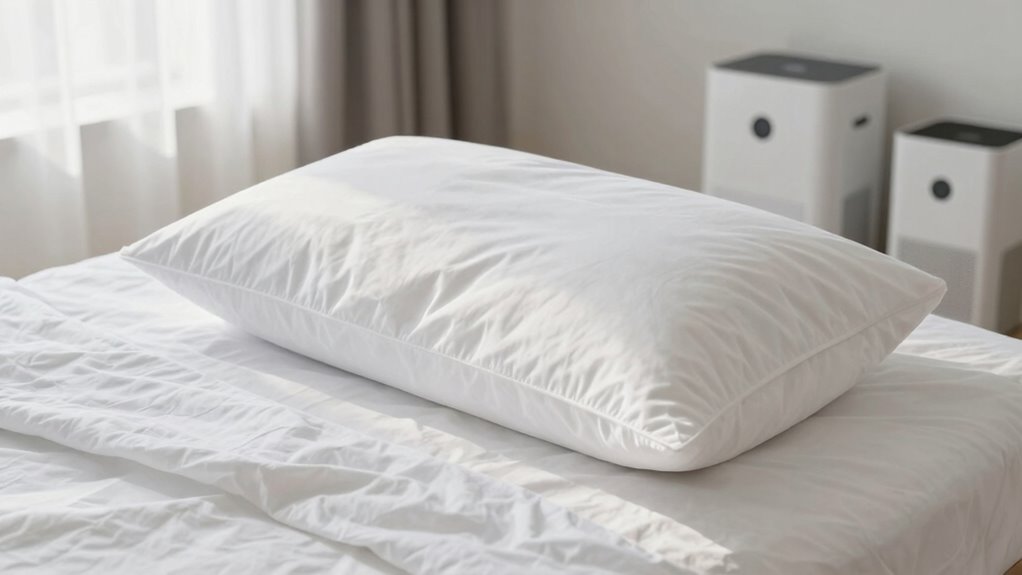
Creating a bedroom environment that minimizes dust mite allergens involves more than just bedding habits. To improve dust mite prevention, focus on several key strategies. First, use allergy-proof bedding, such as tightly woven covers for mattresses and pillows. Second, keep humidity levels below 50% to discourage mite growth. Third, vacuum carpets and upholstery regularly with a HEPA filter. Fourth, consider removing carpets and opting for washable, hard-surface flooring. Additionally, wash bedding weekly in hot water and air out your room frequently. Maintaining clean and clutter-free surfaces reduces dust accumulation and helps control allergens. These steps help create an allergy-friendly space where dust mites struggle to thrive. By combining these practices, you markedly reduce allergen exposure and make your bedroom safer for allergy sufferers. Taking these measures ensures a cleaner, healthier sleeping environment.
When Should You Talk to a Doctor About Dust Mite Allergies?
You should talk to a doctor about dust mite allergies if your symptoms persist despite making your home more allergy-friendly. Early allergy symptoms, like sneezing, nasal congestion, or itchy eyes, might seem manageable at first, but if they continue or worsen, seeking medical advice is essential. Persistent symptoms can impact your daily life and indicate that your allergy needs professional treatment. Don’t wait until symptoms become severe—early intervention can improve your comfort and prevent complications. If over-the-counter medications don’t provide relief or if you experience difficulty breathing, it’s time to consult a healthcare provider. Addressing dust mite allergies promptly guarantees you get the proper diagnosis and personalized treatment plan to better manage your allergy symptoms.
Frequently Asked Questions
Can Dust Mite Allergies Develop Suddenly or Do They Appear Over Time?
Dust mite allergies can develop suddenly or over time, depending on your exposure and immune response. You might experience immediate reactions like sneezing or congestion, signaling allergy development. Sometimes, allergy symptoms gradually worsen as your immune system becomes more sensitive. If you notice new or increasing allergy symptoms, it’s wise to contemplate possible dust mite allergy development and take steps to reduce exposure, like changing bedding habits and improving air quality.
Are There Specific Types of Bedding That Are Completely Dust Mite-Proof?
Yes, there are bedding options that are completely dust mite-proof. You should look for hypoallergenic bedding and dust mite proof covers, which create a barrier against allergens. These covers are made of tightly woven fabrics that prevent dust mites from penetrating. Using hypoallergenic bedding and dust mite proof covers on your pillows, mattress, and comforters can markedly reduce your exposure and help manage allergy symptoms effectively.
How Often Should Bedding Be Washed to Effectively Reduce Dust Mite Exposure?
Washing your bedding weekly is your best defense against dust mites—faster than a cheetah chasing prey! Use hot water, ideally 130°F, to kill dust mites effectively. Stick to allergen-proof bedding materials like tightly woven fabrics or those labeled for dust mite protection. Washing frequency matters because dust mites thrive in humid, cozy spots, so regular laundering keeps your sleeping environment healthier and markedly reduces allergy symptoms.
Do Dust Mites Affect People Differently Depending on Age or Health Condition?
Yes, dust mites affect you differently based on your age and health condition. Age-related sensitivity means children and seniors often experience stronger reactions. If you have asthma or allergies, your immune system may react more intensely, making symptoms worse. Your health condition impacts how markedly dust mites bother you, so staying vigilant with bedding habits is essential to minimize exposure and reduce discomfort.
Are There Natural Remedies or Supplements That Can Help Alleviate Dust Mite Allergy Symptoms?
You might think natural remedies can’t do much, but herbal supplements and home remedies can help ease dust mite allergy symptoms. Consider taking quercetin, a natural antihistamine, or using steam inhalation to clear nasal passages. While these approaches may not substitute for medications, they can complement your treatment plan and reduce discomfort. Always check with your healthcare provider before trying new supplements or remedies to ensure safety and effectiveness.
Conclusion
By adopting effective bedding habits, you can markedly reduce dust mite exposure and improve your allergy symptoms. For example, imagine Sarah, who switched to allergen-proof covers and washed her bedding weekly—her allergy flare-ups decreased noticeably. Taking these simple steps shows that small changes make a big difference. If you continue to struggle despite these efforts, don’t hesitate to consult a healthcare professional for personalized advice and treatment options.