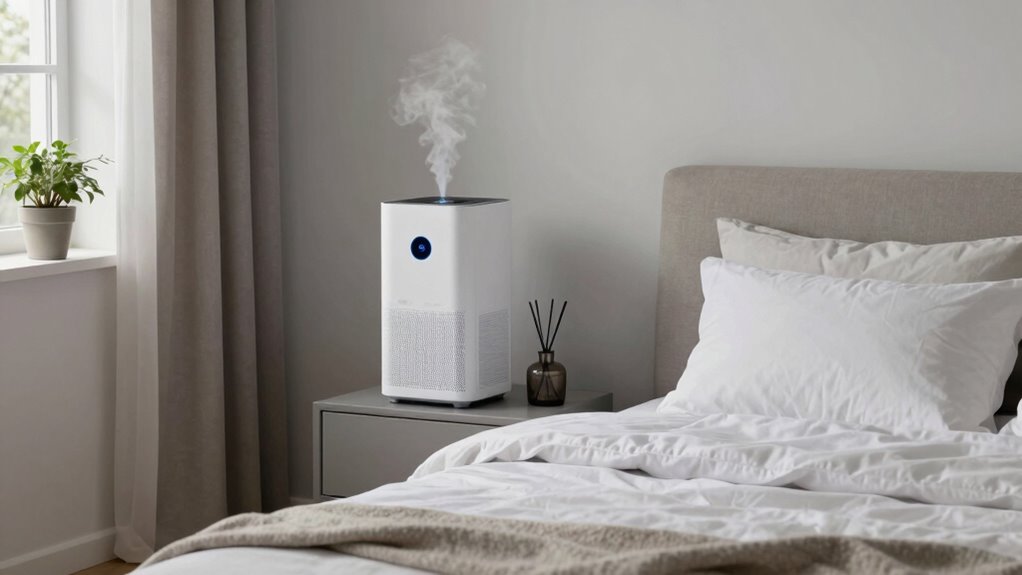

To reduce asthma irritants in your bedroom, choose hypoallergenic bedding and mattress covers that block dust mites, and wash your sheets weekly in hot water. Keep the space clean by dusting with a damp cloth, vacuuming with a HEPA filter, and decluttering to minimize dust traps. Maintain indoor humidity between 30-50%, use air purifiers, and ensure good ventilation. Using non-toxic cleaning products and controlling moisture help prevent mold growth. Learn more about creating a healthier sleeping environment.
Key Takeaways
- Use allergen-proof bedding covers and wash bedding weekly in hot water to reduce dust mites and allergens.
- Maintain indoor humidity between 30-50% with dehumidifiers and proper ventilation to prevent mold growth.
- Regularly clean and dust surfaces with a damp cloth, and vacuum with a HEPA filter to minimize airborne irritants.
- Incorporate air purifiers and ensure proper ventilation to improve indoor air quality and remove airborne allergens.
- Declutter the bedroom and choose non-toxic cleaning products to reduce dust accumulation and chemical irritants.
How to Choose Hypoallergenic Bedding and Mattress Covers

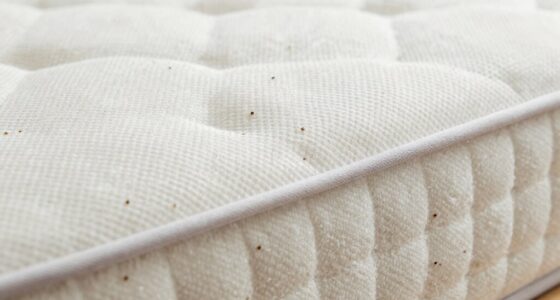
Choosing the right hypoallergenic bedding and mattress covers is essential for managing asthma symptoms at night. Look for bedding made from hypoallergenic materials like tightly woven cotton, bamboo, or specialized synthetic fibers that resist dust mites and allergens. These materials help create a barrier between you and common irritants, reducing flare-ups. When selecting mattress covers, ensure they are labeled allergen-proof or dust-mite-proof to maximize protection. Proper bedding maintenance is equally important; wash your sheets, pillowcases, and covers weekly in hot water to eliminate dust mites and allergens effectively. Avoid using feather or down-filled bedding, as they can trap allergens. Additionally, indoor air quality can impact allergen levels, so consider using air purifiers in your bedroom to further decrease irritants. By choosing appropriate hypoallergenic materials and maintaining your bedding regularly, you create a healthier sleeping environment that helps alleviate asthma symptoms.
How to Clean Your Bedroom Regularly to Reduce Dust
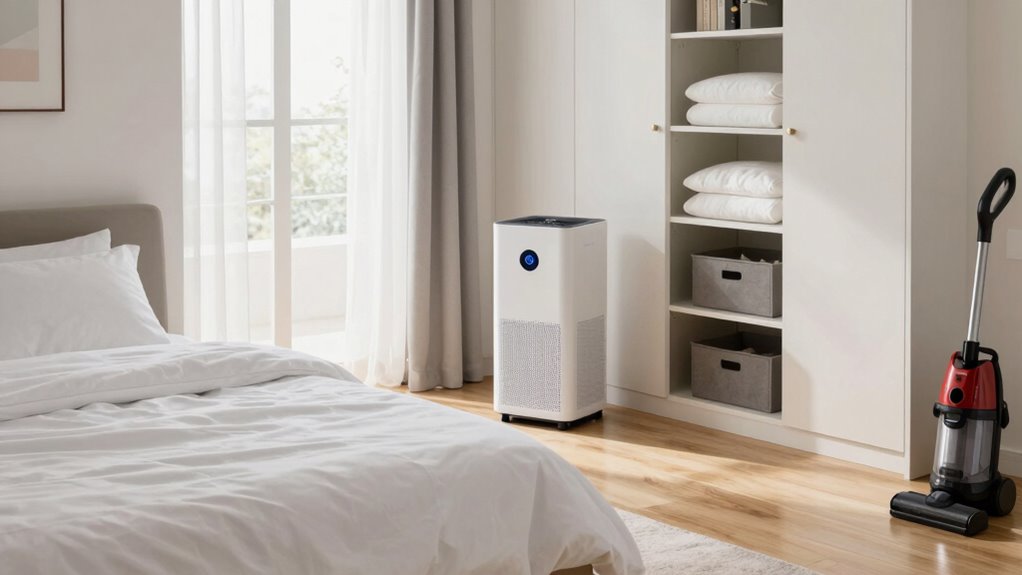
Regularly cleaning your bedroom is essential for minimizing dust buildup and reducing allergy triggers that can worsen asthma symptoms. Start by dusting surfaces with a damp cloth to trap dust mites and prevent it from becoming airborne. Vacuum your floors and carpets frequently using a HEPA filter to maximize dust mite reduction. Wash bedding, including sheets and pillowcases, weekly in hot water to eliminate allergens. Use allergen barriers like dust-proof covers on mattresses and pillows to block dust mites. Declutter your space to reduce hiding spots for dust and allergens. Keep clutter off the floor and wash curtains regularly. Maintaining a clean, dust-free environment helps lessen irritants, making your bedroom a safer space for asthma management. Additionally, choosing a high-quality home theatre projector with good contrast and low dust accumulation can improve your overall indoor environment.
How to Control Indoor Humidity and Prevent Mold Growth

Keeping your bedroom clean helps reduce dust and allergens, but controlling indoor humidity is equally important for asthma management. Too much moisture fosters mold growth, which can trigger symptoms. To keep humidity levels in check, use humidity sensors to monitor moisture levels regularly. Aim for 30-50% humidity. Installing vapor barriers on floors and walls prevents moisture from seeping in, especially in basements or ground floors. Ventilate your room well, especially after activities that increase humidity, like showering or drying clothes indoors. If needed, use a dehumidifier to maintain suitable moisture levels. Additionally, choosing an air purifier equipped with a HEPA filter can help remove airborne irritants and allergens, further improving indoor air quality. These steps help prevent mold growth and reduce irritants, creating a healthier sleeping environment. Consistent control of indoor humidity reduces asthma triggers and improves overall air quality.
How to Use Air Purifiers and Improve Ventilation for Better Air Quality
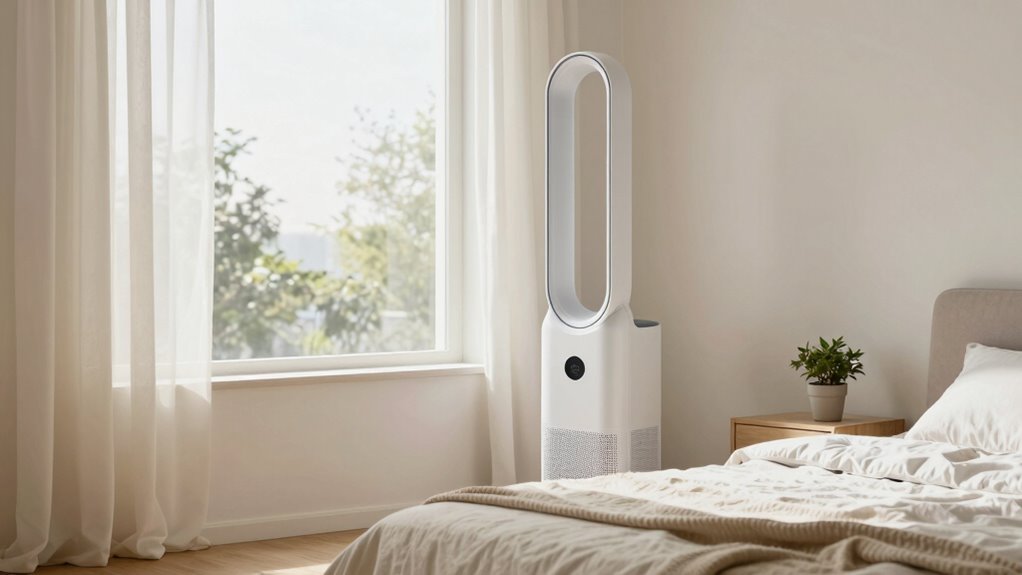
To improve your bedroom’s air quality, using air purifiers and enhancing ventilation are essential steps. Regular air purifier maintenance ensures it functions effectively, filtering out dust, pollen, and other irritants. Clean or replace filters as recommended by the manufacturer to maintain peak performance. Upgrading your ventilation system can also make a significant difference; consider installing exhaust fans or improving airflow with vents. Proper ventilation helps dilute indoor pollutants and brings in fresh air. Keep windows open when weather permits, but use exhaust fans or air purifiers during high pollen seasons or when outdoor air quality is poor. Incorporating Free Floating principles into your ventilation strategy can further optimize airflow and reduce stagnant air. By combining these strategies, you’ll create a cleaner, healthier environment that reduces asthma triggers and promotes better breathing.
How to Declutter Your Bedroom to Minimize Dust and Allergens

A cluttered bedroom can trap dust, pet dander, and allergens, making it harder to breathe and increasing asthma symptoms. To combat this, focus on organizing clutter—keep surfaces clear and storage tidy. Remove unnecessary items that act as dust collectors, such as piles of clothes, books, or decorative objects. Regularly dust and vacuum hidden areas like under the bed and behind furniture. Use storage bins with tight-fitting lids to contain dust-prone items. Keep bedding minimal and wash it frequently to reduce allergen buildup. By eliminating dust collectors and maintaining a clean, organized space, you create an environment that’s easier to keep allergen-free, helping to lessen asthma triggers and improve overall air quality in your bedroom. Additionally, choosing hypoallergenic cleaning products can further reduce airborne irritants in your space.
What Safe, Non-Toxic Cleaning Products Should You Use?
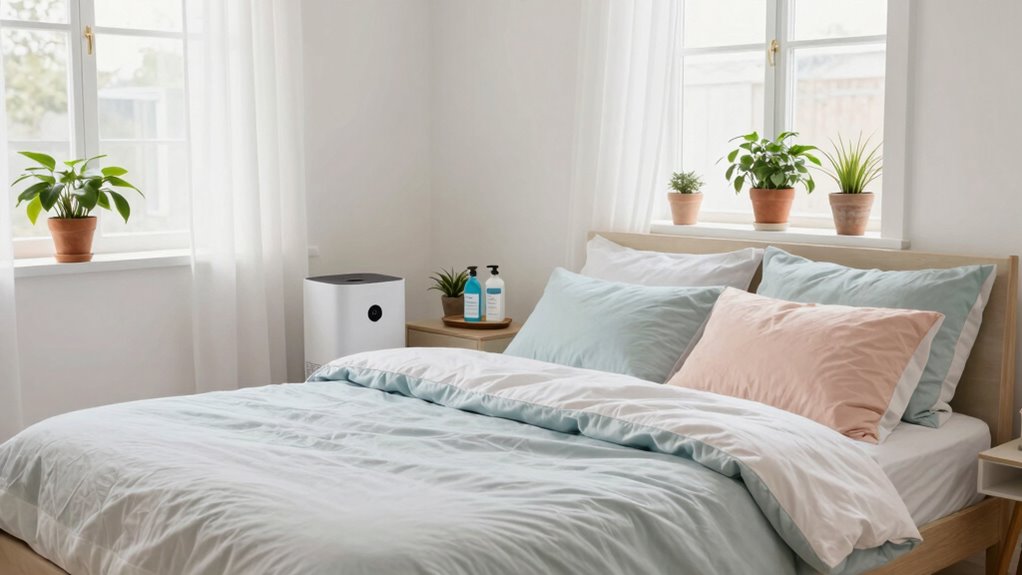
Choosing safe, non-toxic cleaning products is essential for reducing asthma triggers in your bedroom. Look for natural remedies like vinegar, baking soda, and lemon, which effectively clean without harsh chemicals. These ingredients act as allergen barriers, helping to eliminate dust, mold, and pet dander safely. Always read labels to guarantee products are free from artificial fragrances, dyes, and volatile organic compounds (VOCs). Using eco-friendly cleaners minimizes chemical exposure and supports healthier air quality. Regularly wiping down surfaces with these natural solutions prevents buildup of irritants and maintains a safe environment. Incorporating natural remedies into your cleaning routine is a simple, effective way to protect your lungs while keeping your bedroom fresh and allergen-free. Additionally, choosing products that follow air purifier maintenance guidelines ensures your indoor air remains clean and free from irritants.
Frequently Asked Questions
How Can I Identify Hidden Sources of Indoor Allergens?
To spot hidden indoor allergens, start by inspecting areas prone to mold, using mold detection techniques like moisture meters or hiring professionals for testing. An air purifier benefits you by filtering out airborne irritants. Check for dust, pet dander, or mold behind furniture, under sinks, and in vents. Regular cleaning and proper ventilation reduce these hidden sources, making your space safer and easier to breathe.
Are There Specific Plants That Help Improve Bedroom Air Quality?
Some allergen reducing plants can improve your bedroom air quality naturally. Look for indoor air purification plants like snake plants, pothos, or peace lilies, which are known to filter toxins and reduce allergens. These plants help purify the air and create a healthier environment, especially if you choose low-maintenance options. Just guarantee they’re kept clean and free from mold to maximize their air-purifying benefits for your bedroom.
What Are the Best Ways to Prevent Pet Dander in the Bedroom?
Pet dander can be a sneaky villain, but you can fight back. Focus on pet hair management by brushing your pet regularly and bathing them to reduce dander spread. Use allergen-proof covers on pillows and mattresses to block dander from settling in. Keep pets out of the bedroom as much as possible, and vacuum frequently with a HEPA filter. These steps create a fortress of relief for your asthma-friendly space.
How Often Should Bedding and Curtains Be Washed for Allergy Control?
You should wash your bedding and curtains at least once a week to control allergens. Regular mattress maintenance helps prevent dust buildup, so vacuum or air it out monthly. Keep pillow hygiene in check by washing pillowcases weekly and replacing pillows every 1-2 years. Curtains should be cleaned every 2-4 weeks, depending on your environment. These habits reduce irritants, making your bedroom safer for allergy and asthma management.
Can Essential Oils Help Reduce Asthma Triggers Safely?
Diffusing essential oils can help reduce asthma triggers if used safely. You should always dilute oils properly and avoid over-diffusing, as some scents might irritate your airways. Use a diffuser with a timer and guarantee good ventilation in your room. It’s best to choose oils like lavender or eucalyptus, which are generally safer, but check with your healthcare provider first to confirm safe usage for your specific condition.
Conclusion
By making simple changes like choosing hypoallergenic bedding, cleaning regularly, and controlling humidity, you can substantially reduce asthma irritants in your bedroom. Using air purifiers and decluttering also helps improve air quality. Did you know that dust mites thrive in humid environments above 50%? Keeping your bedroom dry and clean can decrease allergens by up to 50%, making your space safer and more comfortable for breathing.