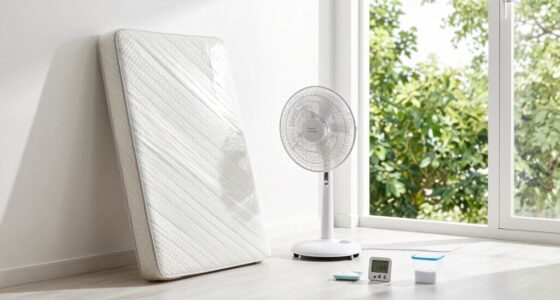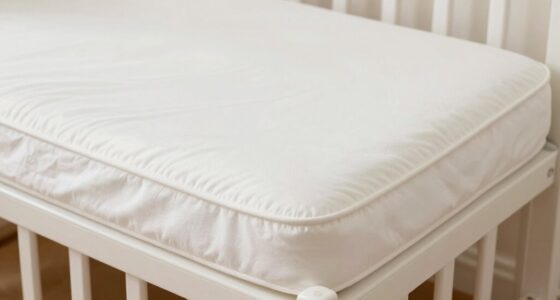
To safely air out a new mattress, start by removing all bedding and accessories. Open windows and use fans to create good airflow, preferably on a sunny, low-humidity day. Avoid using chemicals or artificial scents; instead, use natural methods like baking soda or activated charcoal to absorb odors. Keep the room well-ventilated for several hours or even a full day. If you want tips on speeding up the process and ensuring the freshness, continue with this guide.
Key Takeaways
- Remove all bedding and accessories before airing to maximize airflow and prevent trapping odors.
- Open windows on opposite sides of the room to create cross-breezes and enhance ventilation.
- Use fans and air purifiers with activated charcoal filters to accelerate odor dissipation safely.
- Expose the mattress to direct sunlight if possible, as natural UV light helps neutralize odors.
- Allow several hours to a full day for thorough airing, especially in well-ventilated, low-humidity conditions.
activated charcoal air purifier for bedroom
As an affiliate, we earn on qualifying purchases.
As an affiliate, we earn on qualifying purchases.
Why Does My New Mattress Smell?
When you get a new mattress, it’s common to notice a strong chemical smell coming from it. This odor mainly comes from the mattress materials used during manufacturing. Many new mattresses contain foam, adhesives, or synthetic fabrics that release volatile organic compounds (VOCs). These VOCs are the primary odor sources and can cause that noticeable chemical smell. The smell may be more intense with memory foam or latex mattresses, which often contain chemicals to improve durability and comfort. While this smell can be unpleasant, it’s usually harmless and will dissipate over time. The key is understanding that these odors originate from the materials themselves, not from mold or dirt, and proper airing can considerably reduce or eliminate the smell. Additionally, the chemical composition of the materials influences how quickly the odors will fade.
baking soda odor absorber for mattress
As an affiliate, we earn on qualifying purchases.
As an affiliate, we earn on qualifying purchases.
When Is the Best Time to Air Out Your Mattress?
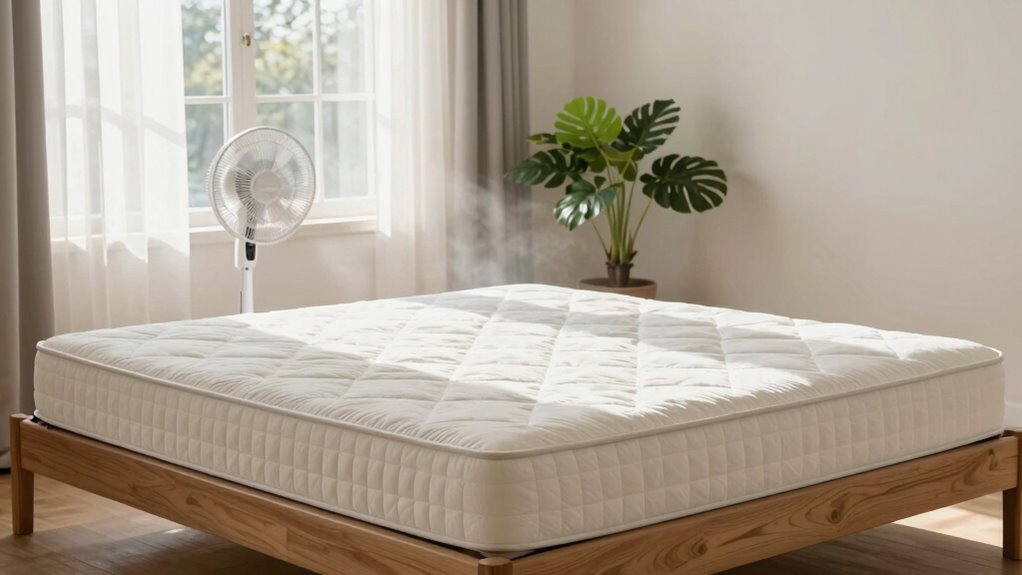
The best time to air out your mattress is when you have a few free hours in good weather. Consider environmental factors like humidity and airflow to maximize freshness. By choosing the right conditions, you’ll help eliminate odors faster and improve your sleep environment. Additionally, using natural ventilation can enhance the effectiveness of airing out your mattress.
Best Time to Air Out
Choosing the right time to air out your mattress can make a noticeable difference in how effectively it refreshes. The best time is when you can maximize air circulation and improve sleep quality. Ideally, air out your mattress during the warm, dry parts of the day, like mid-morning or early afternoon, when fresh air flows best. This helps remove odors and moisture faster. Consider these moments for airing out:
- On sunny days with good weather
- When you have a few hours free
- During weekends or days off
- When the room is well-ventilated
- After cleaning or deep cleaning your bedroom
- Using a portable fan or air purifier can enhance airflow and speed up the process.
Timing your efforts well guarantees your mattress stays fresh, odor-free, and contributes to healthier sleep. Consistent airing during ideal times boosts overall sleep quality.
Environmental Factors to Consider
Environmental factors play a crucial role in determining the best time to air out your mattress. You should consider indoor air quality, especially if you have indoor plants, as they can improve air circulation and reduce airborne pollutants. A well-ventilated room with good airflow helps dissipate odors and harmful VOCs from the mattress more effectively. Avoid airing out your mattress during high humidity or extreme weather, which can trap moisture and promote mold growth. Choosing a time when outdoor air quality is high, such as early mornings or days with low pollution, also makes a difference. Proper air circulation ensures that odors and VOCs are dispersed more efficiently, enhancing the airing process. By paying attention to these environmental factors, you guarantee a safer, more effective airing process that enhances your mattress’s freshness and your overall indoor air quality.
mattress UV sanitizing cover
As an affiliate, we earn on qualifying purchases.
As an affiliate, we earn on qualifying purchases.
How to Prepare Your Space for Mattress Ventilation
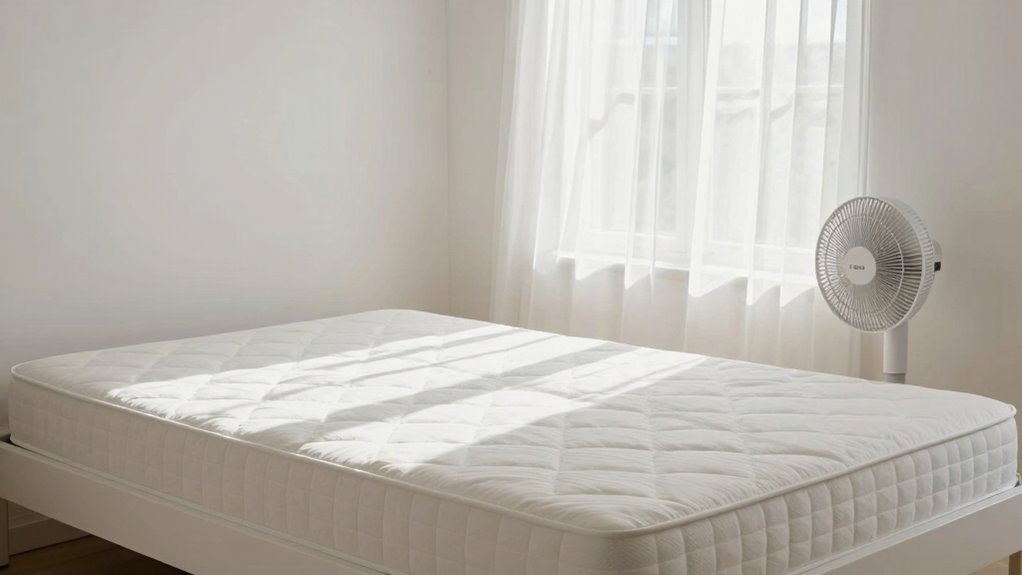
Before airing out your new mattress, it’s important to prepare your space to guarantee proper ventilation. A well-ventilated area improves air quality and prevents odors from lingering. Start by ensuring your bedroom is free of clutter, especially bulky bedroom furniture that could block airflow. Open windows to increase fresh air circulation and consider using a fan to help move air efficiently. Clear the area around your mattress so air can reach all sides. Remove any accessories or items that might trap odors or block ventilation paths. Finally, check the room’s humidity levels and aim for a dry, cool environment to speed up the airing process. Proper preparation helps your mattress air out quickly and keeps your room comfortable and fresh. Incorporating proper ventilation techniques can further enhance airflow and reduce drying time.
portable fan for airing out mattress
As an affiliate, we earn on qualifying purchases.
As an affiliate, we earn on qualifying purchases.
Remove Bedding and Accessories Before Venting
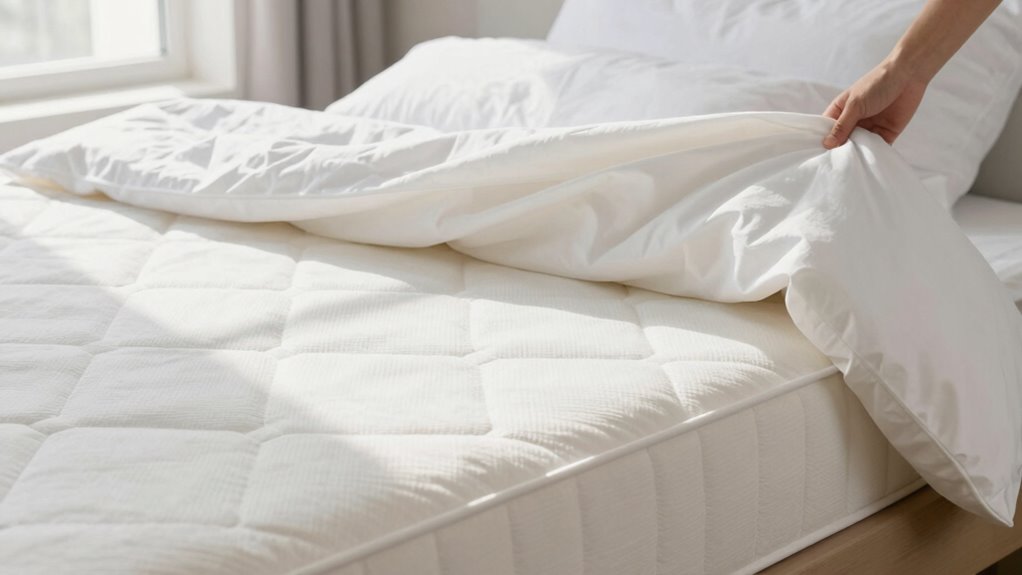
Removing all bedding and accessories from your mattress is a crucial first step before venting. This helps guarantee proper mattress cleaning and allows fresh air to circulate freely around the entire surface. By stripping away sheets, pillowcases, mattress protectors, and any decorative items, you prevent trapped odors and dust from lingering. Bedding maintenance is easier when the mattress is exposed, enabling you to spot stains or dust that need attention. Venting becomes more effective because airflow isn’t obstructed by layers of fabric or accessories. Additionally, removing bedding minimizes the risk of trapping moisture, which can lead to mold or mildew. Proper ventilation is essential for a sustainable cloud environment, ensuring your mattress remains fresh and hygienic. This simple step creates a clean slate for your mattress to air out safely, promoting a healthier sleeping environment from the start.
How to Use Natural Ventilation for Your Mattress
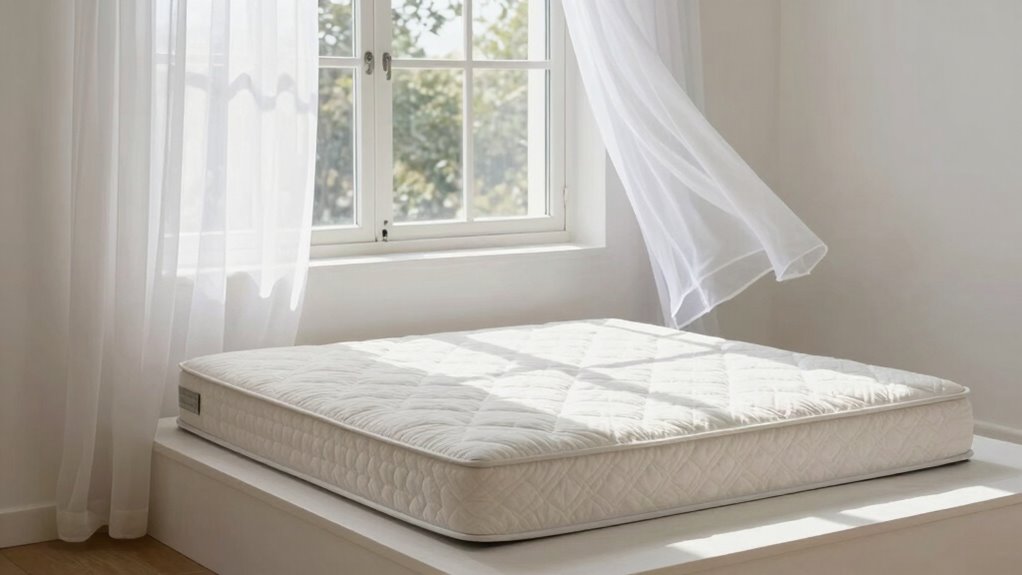
Using natural ventilation is one of the simplest and most effective ways to freshen up your new mattress. It helps with mattress cleaning and improves bed hygiene by allowing fresh air to remove trapped moisture and odors. To maximize airflow, open windows on opposite sides of the room to create a cross-breeze. Keep bedding and accessories aside during this process to prevent trapping odors. You can also:
- Use window screens to keep out dust and insects
- Position the mattress where it gets direct sunlight
- Regularly open windows for at least a few hours daily
- Ensure good air circulation by keeping doors open
- Rotate the mattress periodically for even airing
- Understanding baking techniques can help you better control moisture and airflow in your home, which is beneficial for mattress maintenance.
Natural ventilation reduces moisture buildup, discourages mold, and keeps your mattress fresh longer.
Using Fans and Air Purifiers to Speed Up Ventilation
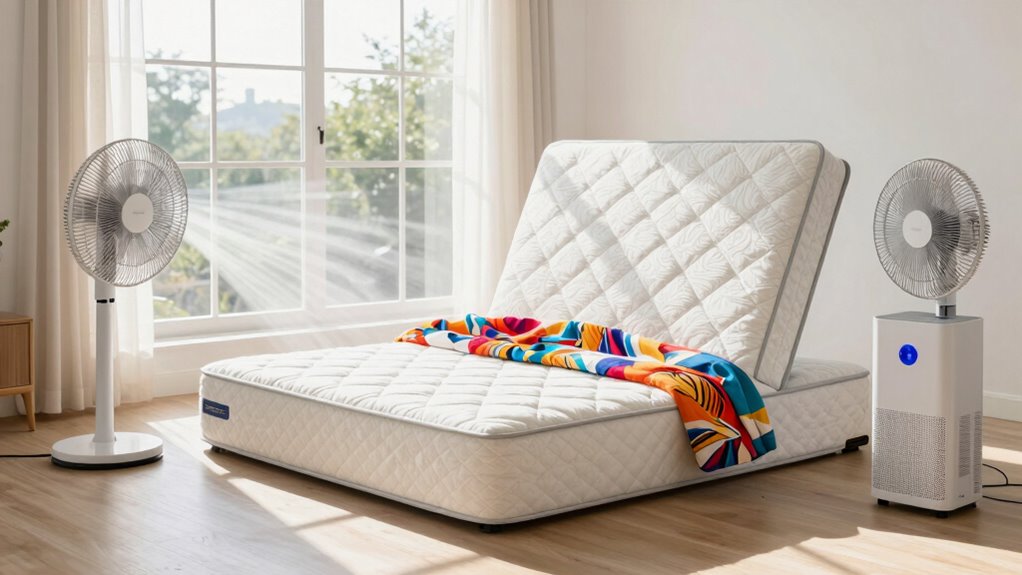
Placing fans strategically near your mattress helps circulate air more efficiently, speeding up the airing-out process. Choosing the right air purifiers can also remove lingering odors and improve air quality. To get the best results, focus on ideal fan placement and select effective air purifiers suited for your space. Additionally, understanding airflow management can help optimize ventilation and ensure thorough airing out of your mattress.
Optimal Fan Placement
To maximize airflow and speed up ventilation, positioning fans and air purifiers strategically is essential. Proper fan placement influences airflow patterns, ensuring fresh air circulates effectively and odors dissipate quickly. Place fans near windows or doorways to draw in fresh air and push stale air out. Use oscillating fans to cover a wider area, creating consistent airflow across the room. Avoid blocking vents or airflow paths, as this disrupts circulation. Consider positioning an air purifier near the mattress to target lingering odors. Keep fans at an angle that promotes cross-ventilation, encouraging air to flow naturally through the space. Adjust fan height and direction based on airflow patterns for ideal results. Proper placement accelerates the airing process without creating turbulence or discomfort. Additionally, understanding the airflow dynamics can help optimize the ventilation setup for faster results.
Choosing Effective Air Purifiers
Choosing an effective air purifier can markedly enhance the ventilation process when airing out a new mattress. A good air purifier improves air quality by filtering out dust, allergens, and volatile organic compounds (VOCs) that contribute to odors. Look for models with activated carbon filters, as they excel at odor elimination. HEPA filters also help remove airborne particles, ensuring cleaner indoor air. When selecting an air purifier, consider its size relative to your room to maximize efficiency. Running it alongside fans speeds up odor removal and freshens the air more quickly. Keep windows open to allow fresh air in, and place the purifier strategically near the mattress. Combining these tools guarantees a safer, more effective way to reduce smells and improve overall air quality during the airing-out process. Additionally, using a bike generator can provide a renewable power source to operate your air purifier and fans, making the process more energy-efficient.
Skip Harsh Chemicals and Strong Scents While Airing Out
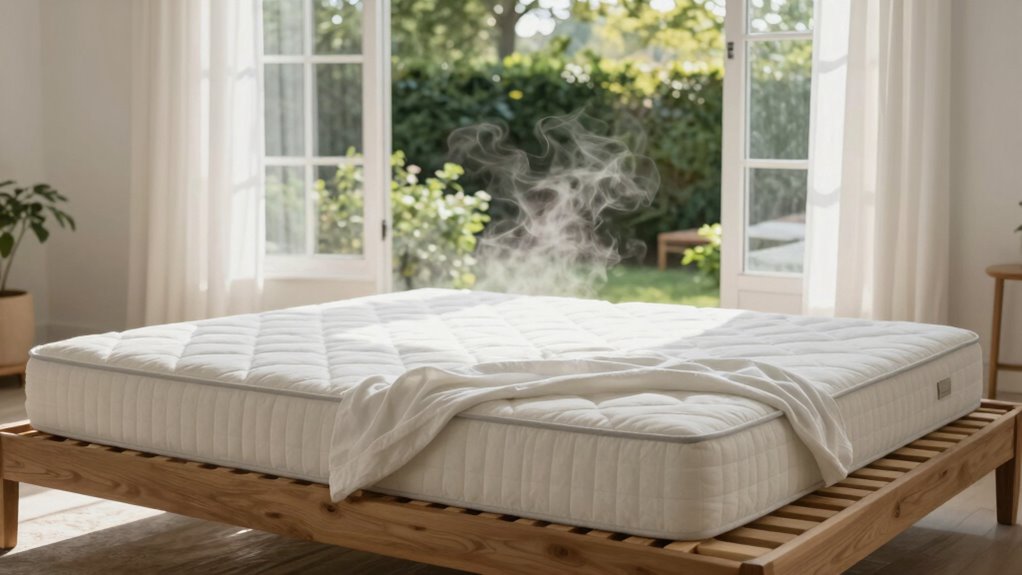
While airing out your new mattress, it’s important to avoid harsh chemicals and strong scents that can cause irritation or discomfort. These chemicals can compromise chemical safety and trigger allergies. Instead, focus on natural methods to reduce odors. To prevent scent masking with artificial fragrances, steer clear of air fresheners or strong-smelling products.
Consider these tips:
- Use open windows for natural ventilation
- Avoid chemical-laden cleaning sprays
- Choose breathable, organic bedding
- Keep pets and smoke away
- Let the mattress breathe without covering it immediately
This approach minimizes exposure to harmful substances and promotes a healthier sleeping environment. By avoiding strong scents, you ensure the air remains fresh and safe, making your mattress safer and more comfortable over time.
Quick Tips for Reducing Mattress Odors
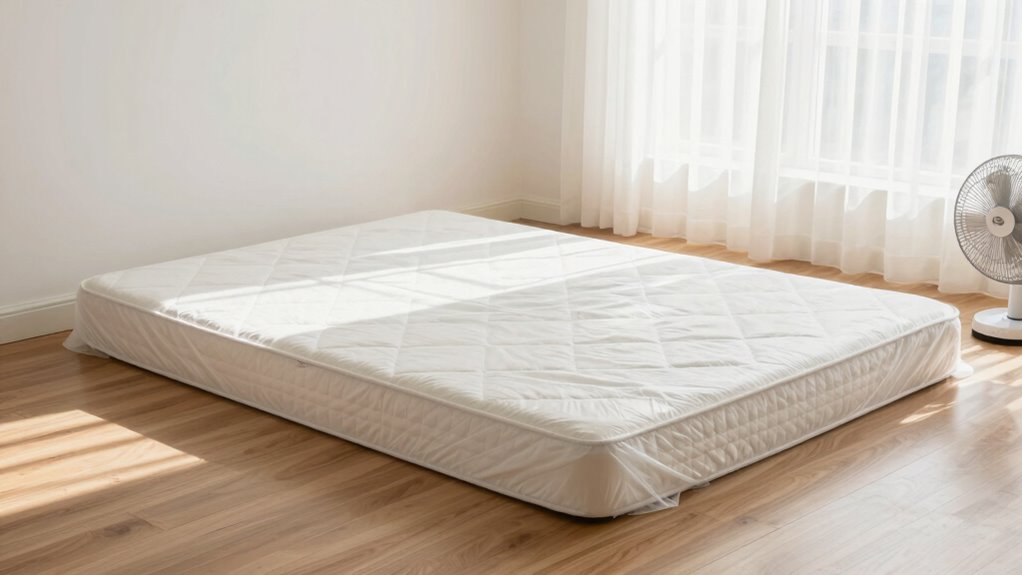
After ensuring your mattress has plenty of time to air out naturally, you can take quick, effective steps to further reduce lingering odors. Focus on your mattress materials, as some, like memory foam or latex, tend to trap smells more than others. Improving air quality around your mattress helps eliminate odors faster. Open windows and use fans to increase airflow, which disperses odors more quickly. Ventilate the room regularly, and consider placing a small, breathable fan near the mattress to promote circulation. Avoid heavy perfumes or chemical sprays, which can worsen air quality. Instead, rely on fresh air and proper ventilation to help odors dissipate naturally. These simple tactics enhance air quality and make your sleeping environment more inviting and odor-free.
Should You Use Baking Soda or Other Odor Absorbers?
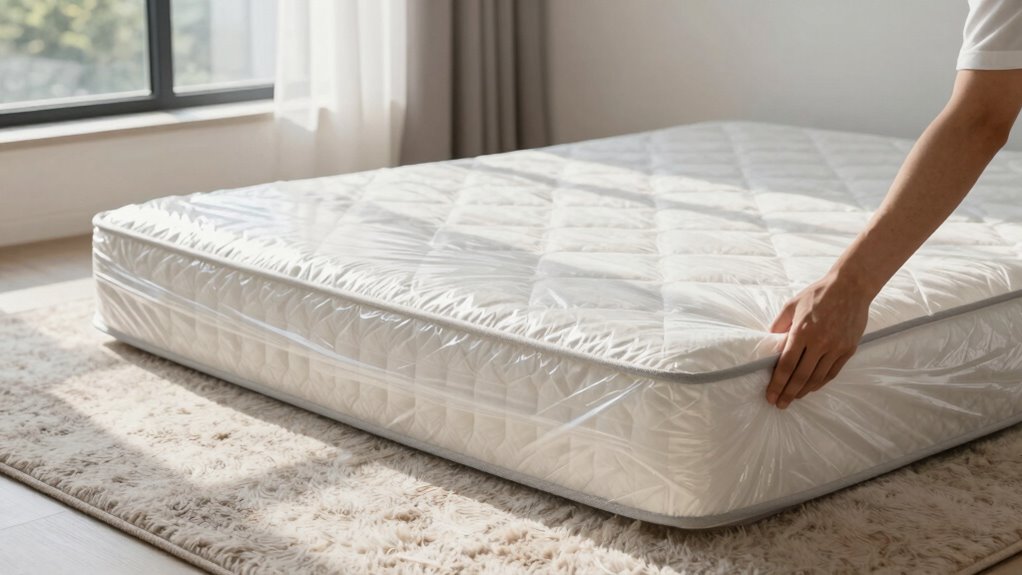
Using baking soda or other odor absorbers can be an effective way to neutralize lingering smells from your new mattress. Baking soda is popular for natural deodorization because it absorbs odors without harsh chemicals. You can sprinkle a generous layer of baking soda over your mattress surface, let it sit for several hours, then vacuum it off. Other odor absorbers, like charcoal bags or essential oils, can also help eliminate smells naturally. Consider these options:
- Baking soda for natural deodorization
- Activated charcoal bags for odor absorption
- Essential oils for a fresh scent
- Ventilation to promote air circulation
- Odor-neutralizing sprays as a quick fix
Using these methods helps keep your mattress smelling fresh and safe, especially when you prefer natural solutions over chemical air fresheners.
Make Sure Your Mattress Is Fully Air-Ready Before Re-Bedding
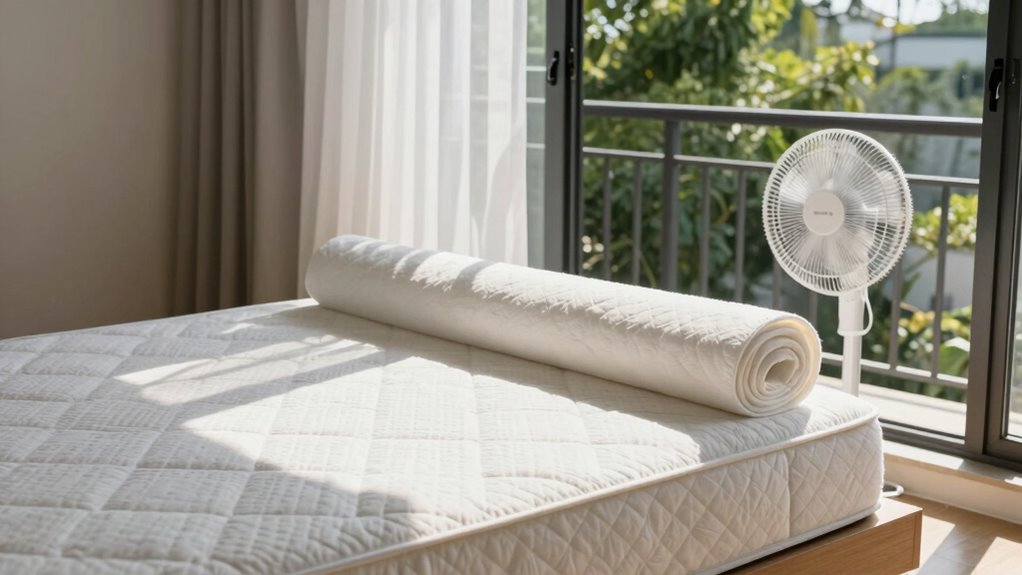
Before re-bedding your mattress, make sure it’s fully aired out by allowing enough ventilation time. Check carefully for any lingering odors to confirm it’s fresh enough for use. Taking these steps helps guarantee your mattress is truly air-ready and comfortable.
Ventilation Time Needed
Ensuring your mattress is fully aired out before re-bedding is essential for a fresh and healthy sleep environment. The ventilation time depends on your mattress material and air quality. Typically, you should allow at least a few hours to a full day for proper airing. During this time, fresh air helps dissipate any lingering odors and improves overall comfort. Keep in mind:
- Foam mattresses may need less time than innerspring ones
- Airing in a well-ventilated room speeds up the process
- Using fans can accelerate airflow and reduce odor
- Avoid sealing the mattress during airing to improve air circulation
- Patience guarantees better air quality and reduces off-gassing
Check for Odors
How can you tell if your mattress is fully aired out and free of odors? First, give it a sniff—if you notice a strong chemical or musty smell, it needs more airing. Good sleep hygiene depends on a fresh, odor-free mattress, so it’s essential to check for lingering smells before re-bedding. Different mattress materials, like foam or innerspring, emit odors differently; foam may off-gas more initially. Confirm the smell has dissipated by inspecting the mattress closely and smelling it near the surface and seams. If odors persist, extend the airing period or consider using a mattress protector or baking soda to absorb odors. Only when your mattress smells neutral and clean is it truly ready for sleep, ensuring a healthy sleep environment.
Frequently Asked Questions
How Long Does It Typically Take to Fully Air Out a New Mattress?
It usually takes about 24 to 72 hours to fully air out a new mattress. During this time, you’ll help reduce chemical off-gassing and odor removal by opening windows and using fans. Keep the mattress in a well-ventilated area to accelerate the process. If the smell persists, consider using baking soda or an air purifier to enhance odor removal and guarantee a fresh, safe sleeping environment.
Can Airing Out a Mattress Eliminate All Chemical Odors?
Airing out your new mattress can ensure reduce chemical off gassing and VOCs, but it might not eliminate all odors completely. To improve VOC reduction, place the mattress in a well-ventilated space and consider using fans or open windows. Keep in mind, some odors may linger longer, especially if the mattress contains synthetic materials. Patience and consistent airing help ensure a fresher, safer sleeping environment.
Is It Safe to Sleep on a Mattress Immediately After Airing It Out?
Yes, it’s safe to sleep on your mattress after airing it out, as long as the chemical off gassing has considerably reduced. Proper ventilation helps guarantee mattress safety by dissipating strong odors and harmful fumes. If the smell persists or is very strong, consider airing it out longer or using a mattress protector. Trust your senses—if it smells fresh and no fumes remain, you can sleep comfortably and safely.
Are There Specific Environmental Conditions That Enhance Ventilation Effectiveness?
You can boost ventilation effectiveness by considering environmental factors and using proper ventilation techniques. Keep the room well-ventilated with open windows and a fan to circulate fresh air, especially if humidity levels are high. Ideal conditions include moderate temperatures and low humidity, which help odors dissipate faster. Think of it as hitting two birds with one stone—your mattress airs out quicker when the environment supports good airflow and dry conditions.
Can Airing Out a Mattress Help Prevent Mold and Mildew Growth?
Airing out your mattress can definitely help prevent mold and mildew growth by reducing moisture. It also helps dissipate chemical off gassing from mattress materials, which can cause odors and irritation. To maximize this, keep your bedroom well-ventilated, open windows, and let fresh air circulate around your mattress. Regularly airing out your mattress not only minimizes moisture buildup but also promotes a healthier sleeping environment.
Conclusion
Just like a fresh start, airing out your new mattress clears away more than just odors—it’s a step toward comfort and peace of mind. By giving it time and proper ventilation, you’ll create a sanctuary where restful sleep begins. Remember, patience is key; even the brightest stars need time to shine. So, trust the process, and soon you’ll wake up feeling refreshed, ready to embrace each new day with the serenity of a well-vented haven.