
How you place sensors in your room shapes what you think it’s doing because placement affects how accurately they capture environmental conditions and activity. Well-positioned sensors detect temperature, motion, and sound more reliably, giving you a clearer picture of what’s happening. Poor placement can lead to misinterpretations—like missing activity or sensing false alarms. Understanding these effects can help you optimize your sensors and get better insights into your room’s true environment; explore further to learn precisely how this works.

Get home appliances delivered free with Prime
- Fast, free delivery on millions of items
- Prime Video, Amazon Music and more included
- Member-only deals all year
Key Takeaways
- Proper sensor placement ensures accurate detection of room activity, preventing misinterpretation of ambient conditions.
- Off-center sensors may miss critical activity, leading to false assumptions about the room’s environment.
- Strategic positioning improves ambient awareness, allowing a more precise understanding of temperature, light, and motion.
- Poor placement can cause sensors to record misleading data, skewing perceptions of room activity.
- Combining optimal placement with calibration maintains reliable data, shaping accurate insights into the room’s behavior.
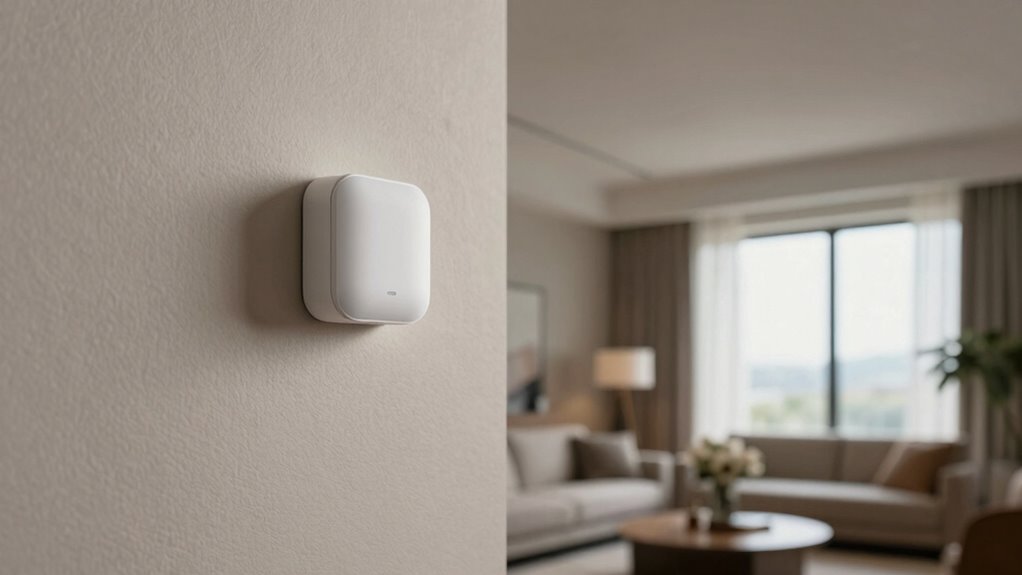
Have you ever wondered how sensors can accurately perceive a room’s layout and environment? It’s a fascinating process that hinges on the strategic placement of sensors and their ability to interpret ambient awareness. When sensors are perfectly positioned, they gather data from various points in the room, giving a thorough picture of the environment. But if the placement is off, your perception of what’s happening inside the space can be way off, leading to misinterpretations or unnecessary adjustments. The key lies in understanding how sensor placement influences the data collected and how sensor calibration guarantees that data is accurate and meaningful.
Ambient awareness plays a vital role here. It’s the sensor’s ability to detect the overall environment—like light levels, temperature, motion, and sound—without focusing on one specific area. When you place sensors thoughtfully, they can better capture ambient conditions, providing a clearer picture of the room’s true state. For example, if a motion sensor is tucked into a corner, it might miss activity happening centrally, causing you to think the room is empty when it’s not. Conversely, placing sensors at strategic points ensures that they perceive the entire space accurately, giving you reliable data to make informed decisions.
Strategic sensor placement captures ambient conditions accurately, providing a clear, reliable picture of the room’s true environment.
Sensor calibration is equally significant. Even the best-placed sensors can produce skewed data if they’re not properly calibrated. Calibration involves adjusting sensors so their readings match known standards or real-world conditions. Think of it as tuning an instrument—without it, the data can be misleading. When sensors are calibrated correctly, they interpret ambient awareness more precisely, reducing false positives or negatives. This calibration process compensates for factors like sensor drift over time, environmental changes, or manufacturing inconsistencies. Additionally, sensor calibration plays a crucial role in maintaining data integrity over time, especially as environmental conditions fluctuate. Regular calibration routines help ensure that sensors adapt to changing conditions and continue to provide accurate insights.
Your perception of what the room is doing hinges on how well these elements work together. If sensors are placed haphazardly or left uncalibrated, you might think the space is quiet when it’s noisy, or that it’s cool when it’s warm. Proper placement ensures that sensors detect the right signals from the right locations, while calibration guarantees those signals are accurate. Additionally, understanding the impact of environmental factors can help optimize sensor performance and data accuracy. Together, they shape your understanding of the environment, influencing everything from HVAC control to security monitoring. Ultimately, how you interpret a room’s activity depends on these foundational choices—where you put sensors and how well they’re tuned to perceive ambient awareness.
best motion sensors for home security
As an affiliate, we earn on qualifying purchases.
As an affiliate, we earn on qualifying purchases.
Frequently Asked Questions
How Does Sensor Placement Affect Energy Efficiency?
Sensor placement directly impacts your energy efficiency because well-placed sensors accurately detect environmental factors like temperature, humidity, and occupancy. Proper sensor calibration guarantees they respond correctly, preventing unnecessary energy use. If sensors are placed poorly—such as near heat sources or drafts—they may misjudge room conditions, leading to wasted energy. By optimizing sensor locations considering environmental factors, you guarantee your system runs efficiently, saving energy and reducing costs.
Can Multiple Sensors Improve Room Accuracy?
Multiple sensors can definitely improve your room’s accuracy. Think of it as having multiple eyes instead of one—each sensor’s placement optimization and calibration capture different zones, reducing blind spots. By calibrating each sensor correctly and strategically placing them, you get a thorough overview of your space. This setup minimizes false readings and ensures your system responds precisely, making your room smarter and more responsive to your needs.
What Are Common Sensor Placement Mistakes?
You often make placement mistakes by not calibrating sensors properly or ensuring consistent placement. Avoid placing sensors near sources of interference, like vents or electronics, which can skew data. Keep sensors at standardized heights and positions to maintain accuracy. Inconsistent placement can lead to false readings, so double-check calibration and stick to a regular setup. This way, your sensors provide reliable data, helping you better understand your room’s environment.
How Do Sensors Influence Perceived Room Comfort?
Studies show that proper sensor placement can improve perceived room comfort by up to 40%. When sensors are well-calibrated and positioned considering occupant behavior, they accurately reflect real conditions, making you feel more comfortable. Poor placement can lead to misreadings, causing unnecessary adjustments. By focusing on calibration and understanding how you move and use the space, sensors help create a more consistent, comfortable environment tailored to your needs.
Are There Optimal Sensor Positions for Different Room Types?
Yes, ideal sensor positions vary by room type to guarantee accurate readings. You should calibrate sensors regularly for precision and place them away from heat sources or drafts to avoid skewed data. Consider placement aesthetics so sensors blend seamlessly into your decor. For example, in living rooms, position sensors near seating areas, while in kitchens, keep them away from appliances, ensuring reliable data that truly reflects your room’s environment.
temperature and humidity sensor calibration kit
As an affiliate, we earn on qualifying purchases.
As an affiliate, we earn on qualifying purchases.
Conclusion
Ultimately, understanding how sensor placement shifts your space’s story sharpens your sensing sense. By balancing background biases with deliberate device design, you can better believe in your room’s true behaviors. Precise placement prompts perceptive perception, proving that positioning profoundly impacts perception. So, stay strategic, scrutinize sensor settings, and stay savvy—shaping a space that’s not just sensed but sincerely seen.
ambient light sensors for smart home
As an affiliate, we earn on qualifying purchases.
As an affiliate, we earn on qualifying purchases.
sensor placement tools for environmental monitoring
As an affiliate, we earn on qualifying purchases.
As an affiliate, we earn on qualifying purchases.
Fall yard work Picks
leaf blowers
As an affiliate, we earn on qualifying purchases.