TL;DR

Get home appliances delivered free with Prime
- Fast, free delivery on millions of items
- Prime Video, Amazon Music and more included
- Member-only deals all year
Ideal Home contributor Amanda Jones has outlined three personal rules for more mindful consumption: buy less, buy better and buy small. Her article describes habits she uses to reduce unnecessary purchases, choose longer-lasting goods and support independent businesses; it does not present measured environmental results.
Amanda Jones, a contributor to Ideal Home’s Open House series, has shared three personal rules for mindful consumption: buy less, buy better and buy small. Her article describes ways she tries to limit unnecessary purchases, choose durable products and spend with independent businesses, while placing responsibility for environmental harm on both consumers and larger institutions.
Jones says her first rule is to pause before buying and consider whether an item meets a genuine need or adds lasting value. She links impulse shopping to advertising, social media and the pressure to keep up with other people’s possessions and lifestyles. In her account, a period of low or no spending helped her identify necessities and purchases that brought her lasting enjoyment.
Her second rule is to choose the best quality a budget allows, rather than buying a cheaper item that may need replacing sooner. Jones says this can mean waiting and saving: she is putting money aside for a sofa and researching options while continuing to use her current one. She also recommends considering second-hand goods and keeping an emergency fund, so a broken item does not force a rushed purchase.
The third rule is to spend with small, independent and local businesses where possible. Jones says she looks for businesses that are environmentally conscious and transparent, and favors UK-based sellers when practical to reduce air miles. She presents personal connections with business owners and support for their livelihoods as reasons she enjoys this approach to shopping.
How the Three Rules Shape Spending
Jones’s recommendations offer readers a personal framework for shopping decisions, rather than a quantified plan for reducing environmental impact. Pausing before a purchase, saving for durable goods and looking for second-hand options may help some households avoid unwanted or short-lived purchases, while spending locally can direct money toward independent sellers.
The article also makes a distinction about responsibility: Jones argues individuals should recognize the effects of overconsumption, but says a larger share of responsibility belongs to corporations and governments. That is her stated view, not a finding established by the article. The practical point for readers is that personal choices can be one part of mindful consumption without being presented as a substitute for broader policy or business action.
There are limits to how universally these rules can be applied. Buying higher-quality goods may require savings that are not available to every household, and smaller or local businesses may not sell every item a person needs at an affordable price. Jones’s account is based on her experience and does not compare costs or environmental outcomes across different shopping choices.
Products Worth Considering

Dyson Airsmooth Styling Brush

Bose Lifestyle Ultra Compact Wireless Smart Home Speaker Bundle, Black

Bose Smart Soundbar 700 with Alexa, Black
As an affiliate, we earn on qualifying purchases.
Jones’ Open House Advice
Ideal Home introduces Jones as one of its Open House contributors, writing about sustainable living and decorating a home with environmental considerations in mind. The supplied article frames her advice against what she describes as a consumer-driven culture, with social media and advertising encouraging people to buy more.
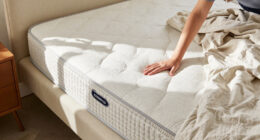
Her examples are personal: a low- or no-spend year, saving for a mattress and a future sofa, and choosing independent businesses. She says her household saved for years to buy a natural mattress that improved her sleep experience. These details illustrate her approach; they are not independent tests of product durability, health benefits or environmental performance.
The source material provides no publication date, data on Jones’s purchases, or measurement of emissions, waste or business impacts. The report is best understood as an advice article based on one contributor’s experience, not a new study or formal consumer policy announcement.
“Buy Less, Buy Better, Buy Small.”
— Amanda Jones, Ideal Home Open House contributor
What the Advice Does Not Measure
The article does not quantify how much Jones’s habits have reduced her household’s spending, waste or environmental footprint. It also gives no comparative data showing that the products or businesses she describes have lower impacts than alternatives. Her statements about potential benefits should be read as personal observations and recommendations, not measured results.
It is also unclear how readily readers with different incomes, locations or access to shops can follow each rule. The source does not provide a price comparison, a checklist for verifying environmental claims, or specific evidence about the air-mile savings from choosing UK-based sellers. Those questions would need further information beyond Jones’s account.
Applying the Rules to Purchases
Jones’s article does not announce a program or set a date for a follow-up. Readers who want to use her approach can begin by pausing over a planned purchase, checking whether it meets a need, and comparing options that fit their budget. For larger items, her examples point to saving, researching durability and considering second-hand choices rather than buying in a hurry.
For the “buy small” principle, the next step she describes is to look for independent or local sellers whose practices are transparent, and to choose them when suitable. Whether these choices produce the claimed environmental or community benefits will depend on the product, the seller and the buyer’s circumstances; the article does not track those outcomes.
Key Questions
Who shared the three rules for mindful consumption?
Amanda Jones, an Ideal Home Open House contributor, shared the rules in a personal article about sustainable living and home choices.
What are Jones’s three shopping rules?
Her rules are to buy less, buy better and buy small: pause before purchasing, prioritize durable goods within budget, and support independent businesses where possible.
Does the article prove that these habits reduce environmental impact?
No. It offers Jones’s personal experience and recommendations, but does not provide measurements or comparative data on emissions, waste or other environmental outcomes.
What does Jones recommend when a new product is too expensive?
She suggests saving up, researching options and considering second-hand goods. She also recommends keeping an emergency fund to reduce the chance of making a rushed replacement purchase.
Source: idealhome.co.uk