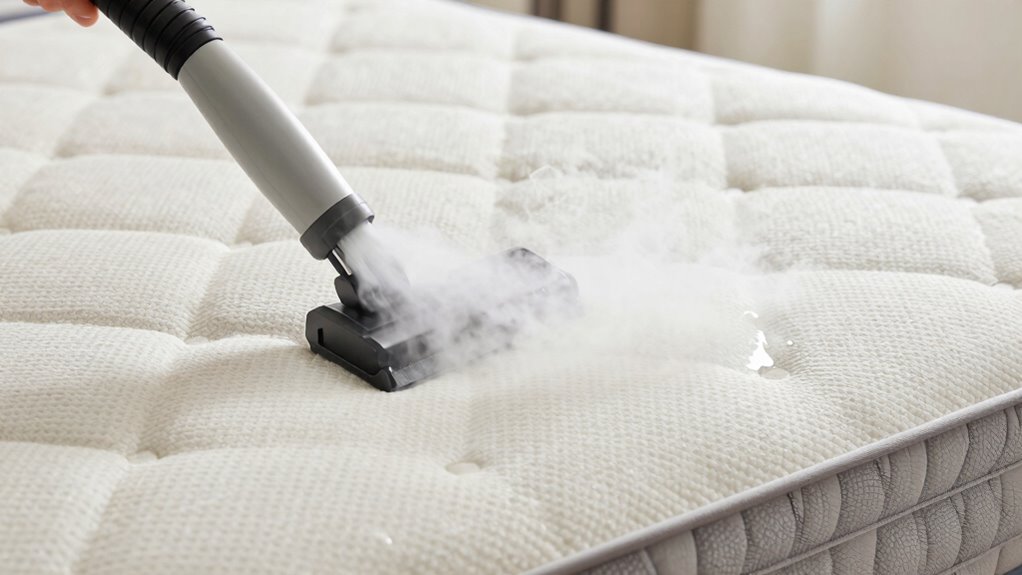
Yes, you can steam clean a mattress, but it’s important to be cautious with moisture. Steam effectively removes dirt, allergens, and bacteria, but excess water can lead to mold, mildew, and damage to mattress materials like memory foam or latex. Proper technique, thorough drying, and good ventilation help prevent issues. To safely steam clean your mattress and avoid moisture risks, there are essential steps you should follow, which you can discover next.
Key Takeaways
- Steam cleaning can effectively remove dirt, allergens, and bacteria from mattresses without harsh chemicals.
- Excess moisture from steam cleaning may cause mold, mildew, and structural damage if not properly dried.
- Proper preparation, such as vacuuming and controlling steam temperature, minimizes moisture risks during cleaning.
- Ensuring complete drying and ventilation post-steaming is essential to prevent mold growth and odor issues.
- Using low to medium steam settings and maintaining proper technique reduces the chance of moisture-related damage.

XIAOLANG Bed Mattress Vacuum Cleaner Cordless 16Kpa Handheld Vacuum, Vacuum Cleaner with 253.7nm UV-C Light,HEPA Filter & Ultrasonic, Portable Vacuums for Sofa Bed Couch Crib Gifts for Women her Man
【Multi-Function Design】This Xiaolang Cordless Mattress Vacuum Cleaner Is Equipped With 253.7nm Uv-C Light, Intelligent Dust Sensing, Ultrasonic Technology,…
As an affiliate, we earn on qualifying purchases.
As an affiliate, we earn on qualifying purchases.
What You Need to Know About Steam Cleaning Your Mattress

While steam cleaning can effectively remove surface dirt and kill some germs, you need to be cautious because improper use can introduce moisture that leads to mold and mildew growth. When considering pest control, steam cleaning may help eliminate dust mites and other pests hiding in your mattress materials. However, different mattress materials respond differently to moisture; foam and memory foam can absorb water, making them harder to dry and more prone to damage. Cotton or wool mattresses may tolerate steam better but still risk retaining moisture. Always verify you use the right technique and avoid saturating the mattress. Proper drying afterward is essential to prevent mold growth. Additionally, understanding moisture management is crucial to maintaining a healthy sleeping environment. Remember, steam cleaning isn’t a one-size-fits-all solution, especially when pest control and mattress material safety are involved.

VEVOR Pivoting Utility Fan, 600 CFM High Velocity Floor Blower for Drying, Cooling, Ventilating, Exhausting, 300° Blowing Angle Air Mover, Portable Carpet Dryer Fan for Home, Work Shop
3 Blow Speeds: Power: 115V/60Hz. This floor blower offers three adjustable airflow options: 600, 550, and 440 CFM….
As an affiliate, we earn on qualifying purchases.
As an affiliate, we earn on qualifying purchases.
How Does Steam Cleaning Work and Why Use It on a Mattress?

Steam cleaning works by using hot vapor to penetrate surface materials, effectively loosening dirt, bacteria, and allergens. This method is ideal for deep cleaning your mattress without harsh chemicals. It also aids in stain removal by breaking down residues at a microscopic level. You might consider it for bed bug treatment, as the heat can kill pests hiding in the fabric. However, it’s important to use proper techniques to avoid excess moisture. Here’s a quick overview:
| Benefit | Method | Result |
|---|---|---|
| Bed bug treatment | High-temperature steam | Kills pests effectively |
| Stain removal | Hot vapor penetrates | Lifts stains easily |
| Allergen reduction | Deep cleaning | Improves air quality |
Using steam on your mattress can refresh it, but always be cautious about moisture levels. Additionally, understanding moisture management is key to preventing mold and damage.

Dupray Neat Steam Cleaner with 17-Piece Kit – Powerful, Chemical-Free Cleaning for Floors, Cars, Tiles, Upholstery, Kitchen, Bathroom Grout, Carpets & More – Kills up to 99.9% of Bacteria & Viruses *
Powerful Chemical-Free Cleaning: Generates superheated steam up to 275F/135C to effectively lift dirt, grease, and grime from a…
As an affiliate, we earn on qualifying purchases.
As an affiliate, we earn on qualifying purchases.
What Are the Risks of Excess Moisture on Your Mattress?
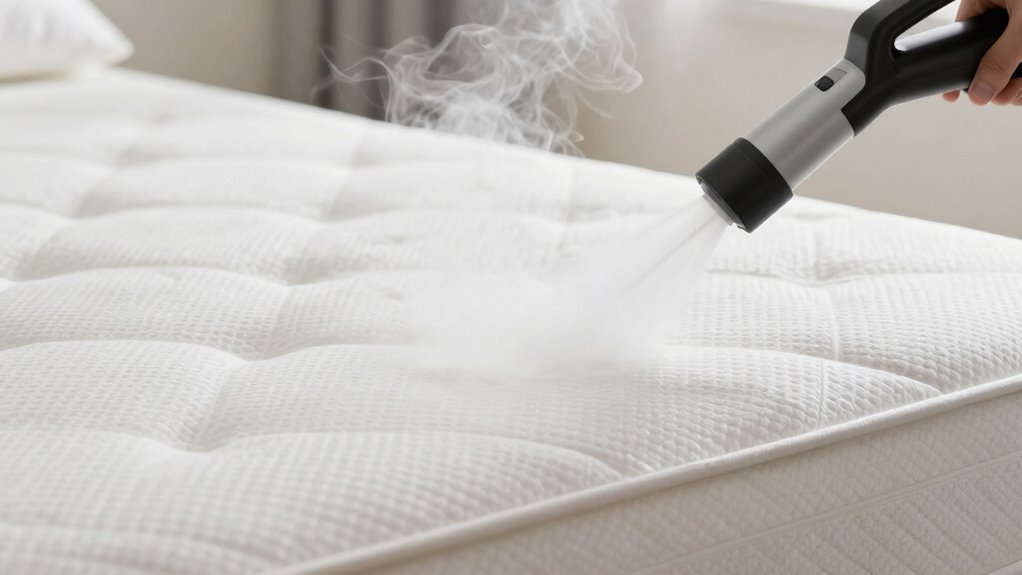
Excess moisture from steam cleaning can cause significant problems for your mattress, even if you don’t notice it right away. When moisture isn’t properly dried, it leads to moisture retention in the mattress fibers, creating a perfect environment for mattress mold to develop. This mold can cause health issues like allergies and respiratory problems. Additionally, the trapped moisture weakens the mattress structure over time, leading to sagging and reduced support. The damp environment also encourages dust mites and bacteria growth, further compromising your sleep quality. If you don’t thoroughly dry your mattress after steam cleaning, these risks increase, making it essential to guarantee complete drying and proper ventilation to prevent long-term damage caused by excess moisture. Using proper drying techniques can help minimize these moisture-related issues and protect your mattress’s longevity.

Steam Cleaner,15s Heat-Up 42.27oz Tank,2500w Handheld Steam Cleaner for Home with 15 pcs Accessories,Portable Steamer for Cleaning,kitchens,Grease,bathrooms,Grout,Tile,Bed Bugs,Floor,Couch and Car
High Pressure Steam Cleaner:This hand held steam cleaner has a power of 2500w and releases a high pressure…
As an affiliate, we earn on qualifying purchases.
As an affiliate, we earn on qualifying purchases.
Can Steam Damage Your Mattress Parts?
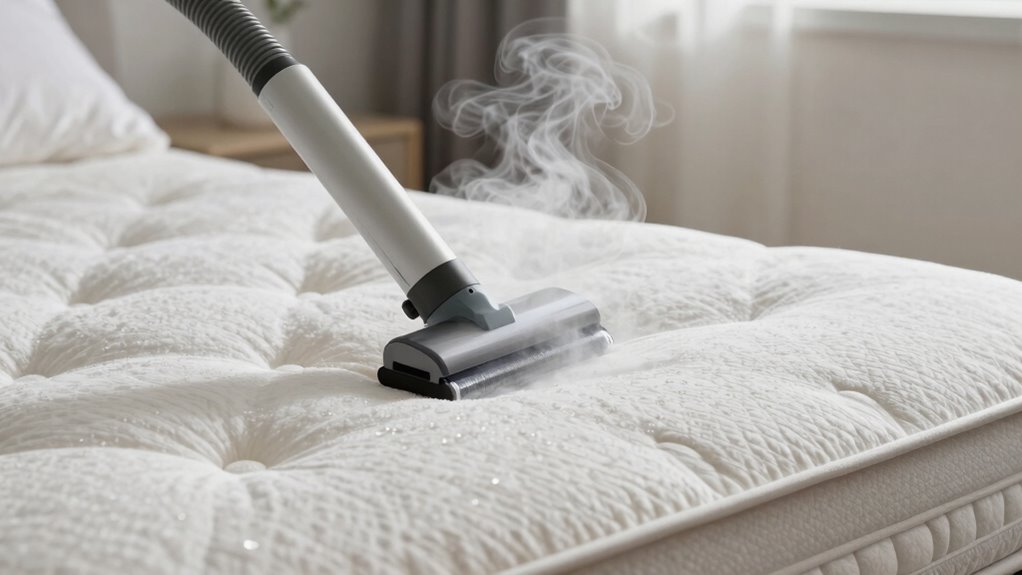
Using steam to clean your mattress can be effective, but it also poses a risk of damaging its various parts if not done carefully. Different mattress materials have varying steam compatibility; for instance, memory foam and latex can be sensitive to excess heat and moisture, risking warping or degradation. In contrast, innerspring mattresses generally tolerate steam better, but the core components can still suffer if exposed to too much moisture. When you use steam, ensure it’s at a low temperature and held at a safe distance. Overly aggressive steam application can weaken adhesives, break down foam layers, or cause swelling in certain materials. Proper technique and knowledge of your mattress’s construction are essential to avoid damaging its parts. Additionally, understanding the moisture risks involved can help prevent long-term damage.
What Are the Benefits of Steam Cleaning Your Mattress?
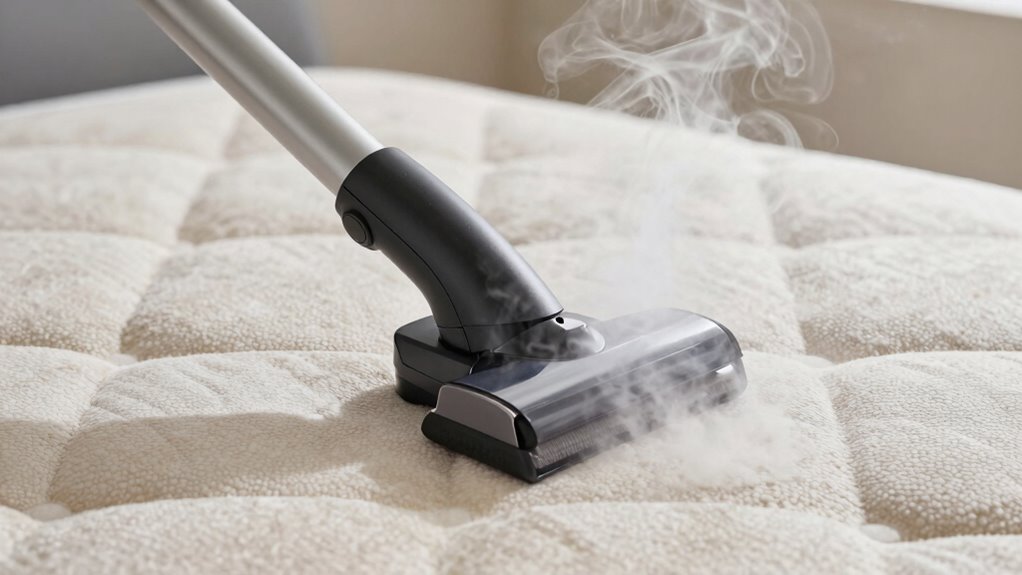
Steam cleaning your mattress helps remove deep dirt and grime, leaving it fresher and cleaner. It also reduces allergens and dust mites, which can improve your sleep quality. Overall, it’s an effective way to maintain a healthier sleeping environment. Additionally, using appropriate techniques minimizes moisture risk and prevents damage to your mattress moisture management practices.
Deep Dirt Removal
Deep dirt and debris can hide deep within your mattress, making it difficult to clean thoroughly with traditional methods. Steam cleaning reaches these hidden areas, breaking down organic stains and lifting dirt that brushing or vacuuming might miss. This process not only removes visible grime but also targets the microscopic particles that contribute to mattress odors. By penetrating deep into the fabric and filling the tiny crevices, steam cleaning effectively flushes out dirt, leaving your mattress fresher and cleaner. This deep cleaning helps extend your mattress’s lifespan and improves your overall sleep environment. Plus, it guarantees that stubborn stains and lingering smells are addressed at their core, rather than just masked. In doing so, steam cleaning provides a more exhaustive clean than surface treatments alone. Additionally, understanding the contrast ratio of your cleaning method can help ensure that the process effectively removes dirt without damaging delicate fabric fibers.
Allergens and Dust Mitigation
Removing dirt and stains from your mattress is just one part of creating a healthier sleep environment. Steam cleaning helps reduce allergens like dust mites, mold, and bacteria that can trigger allergies or asthma. By penetrating deep into the mattress fibers, steam kills these microscopic irritants, improving indoor air quality. This process can also assist with pest control, as it targets bed bugs and their eggs, making your mattress less attractive to pests. Additionally, regular steam cleaning may help preserve your mattress warranty by maintaining its condition and preventing buildup that could void coverage. Furthermore, it is important to be aware of moisture risks, as excessive moisture can lead to mold growth and damage the mattress over time. Overall, steam cleaning offers a practical way to mitigate dust and allergens, helping you breathe easier and sleep more comfortably night after night.
How Can You Prepare Before Steaming Your Mattress?

Before steaming your mattress, make sure to clear away any surface debris so the cleaner can work effectively. Next, vacuum thoroughly to remove dust, dirt, and allergens that may be embedded in the fabric. Proper preparation helps guarantee a thorough and safe cleaning process. Additionally, ensure your mattress is dry and free of moisture to prevent moisture buildup during the steaming process.
Clear Surface Debris
Ensuring your mattress is free of surface debris is a crucial first step before steaming. Remove any loose items, including pet hair, dust mites, or crumbs, to prevent them from embedding deeper during cleaning. Clearing debris also helps the steam penetrate effectively. To organize your prep, consider this table:
| Debris Type | Removal Method | Tips |
|---|---|---|
| Dust Mites | Use a gentle brush or cloth | Focus on seams and edges |
| Pet Hair | Use a lint roller or vacuum | Cover entire surface |
| Dust and Dirt | Wipe with a damp cloth | Avoid excess moisture |
| Loose Items | Remove pillows, blankets | Clear entire surface |
| Small Trash | Pick up and discard | Keep area tidy |
Clearing surface debris ensures a safer, more effective steaming process. Additionally, understanding moisture risks associated with steaming can help you avoid over-saturating your mattress.
Vacuum Thoroughly
Vacuuming your mattress thoroughly is the next step to prepare it for steaming. Regular vacuuming is essential for proper mattress maintenance and helps remove dust, allergens, and skin flakes that accumulate over time. Before steaming, guarantee you cover the entire surface, including seams and edges, to maximize cleanliness. This step aligns with your cleaning schedule, keeping your mattress fresh and hygienic. Use a vacuum with a high-efficiency particulate air (HEPA) filter to trap even tiny particles. Taking this precaution minimizes debris that could trap moisture or interfere with the steaming process. Proper vacuuming not only enhances your mattress’s overall cleanliness but also reduces potential moisture issues, making steaming safer and more effective. Incorporating free floating techniques during vacuuming can help dislodge dust particles from hard-to-reach areas, ensuring a more thorough clean.
Other Ways to Clean and Sanitize Your Mattress
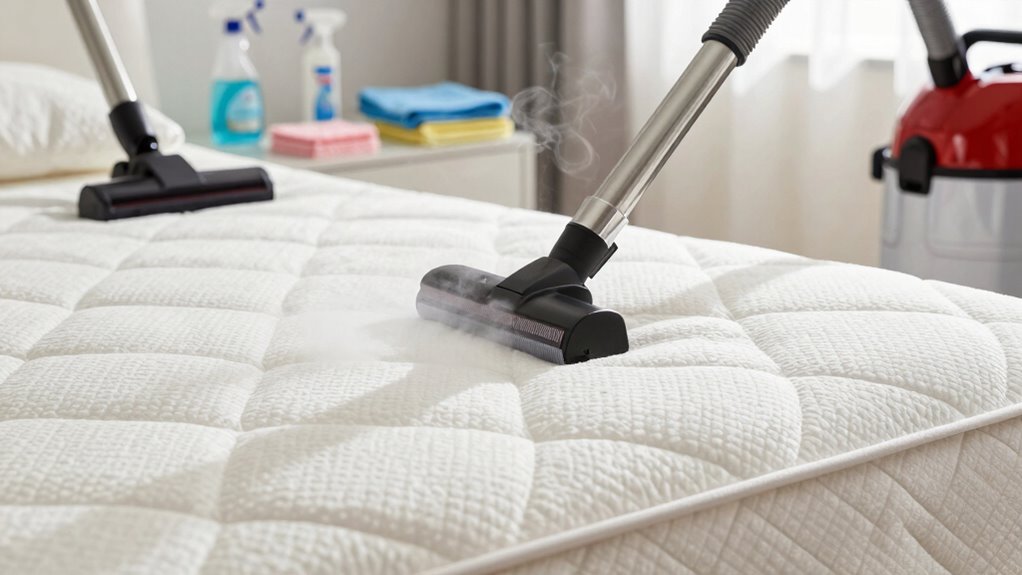
If you want to clean and sanitize your mattress without risking moisture issues, there are effective alternative methods to contemplate. Regularly spot-treat stains with a mixture of baking soda and water, then vacuum thoroughly to eliminate dust mites and allergens. Use a mattress protector that’s washable to prevent future pests and reduce the need for frequent deep cleaning. You can also sprinkle baking soda over your mattress, let it sit for a few hours, then vacuum to absorb odors and moisture. These methods help with pest prevention and extend your mattress’s lifespan, reducing the need for mattress replacement. Avoid excessive moisture, which can lead to mold growth and other issues, by sticking to dry cleaning techniques that keep your mattress fresh and hygienic.
How to Safely Use a Steam Cleaner on Your Mattress
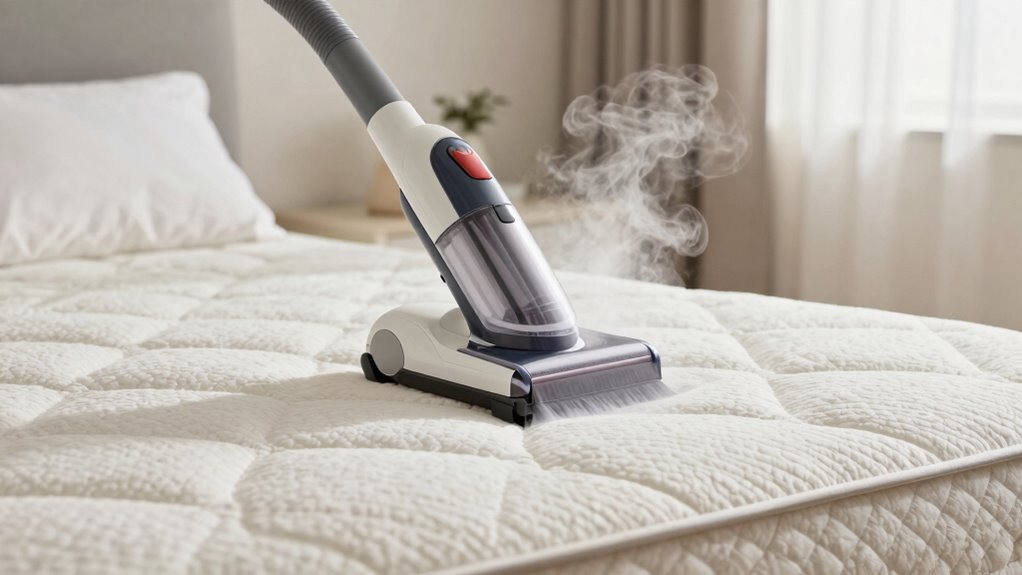
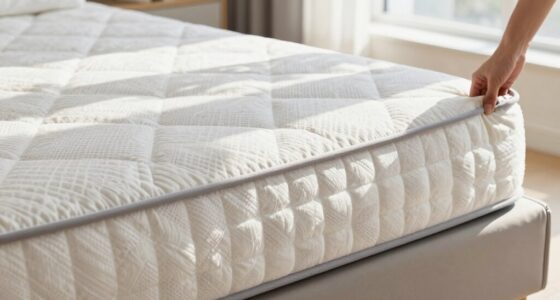
Using a steam cleaner on your mattress can be an effective way to sanitize it, but you must do so carefully to avoid moisture damage. Keep the steam at a low to medium setting to prevent excess water from seeping into the mattress layers. Hold the steamer a few inches above the surface and move it steadily to target areas prone to mattress mold or bed bugs. Avoid over-saturating the fabric, which can lead to mold growth or lingering moisture. After steaming, open windows or use fans to promote airflow and help the mattress dry quickly. Remember, thorough drying is essential to prevent moisture buildup that could promote mattress mold or compromise your bed bug treatment efforts. Always follow your steam cleaner’s instructions for safe use.
Tips to Make Sure Your Mattress Dries After Cleaning
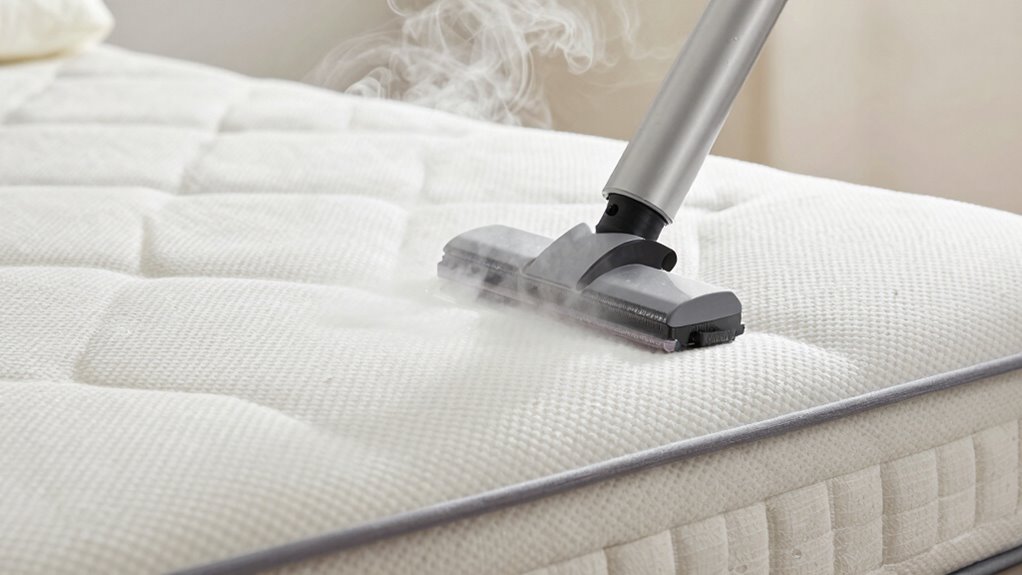
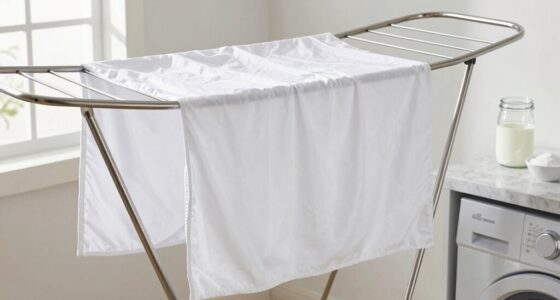
After cleaning your mattress, making certain it dries thoroughly is essential to prevent mold growth and maintain a fresh sleeping environment. Proper drying also helps eliminate any residual mattress odor and ensures stain removal is complete. To speed up drying, consider opening windows or turning on fans to improve airflow. Use a wet/dry vacuum to extract excess moisture and absorbent towels to blot damp areas. Placing a dehumidifier nearby can further reduce humidity levels, promoting faster drying. Avoid making the bed immediately after cleaning; give your mattress time to dry completely. This prevents moisture from trapping and reduces the risk of mold or mildew. Taking these steps ensures your mattress stays fresh, odor-free, and free of lingering stains.
Frequently Asked Questions
Can Steam Cleaning Eliminate All Types of Mattress Stains?
Steam cleaning can remove many stains, but it might not eliminate all types, especially chemical stains or stubborn spots. You may find that some stains require targeted treatments or specialized cleaning products. Steam helps lift dirt and moisture, but persistent or chemical stains often need additional steps. To get the best results, combine steam cleaning with spot treatments, ensuring you don’t leave behind residues that could cause further issues.
Is Steam Cleaning Effective Against Dust Mites and Allergens?
Steaming your mattress can be quite effective against dust mites and allergens, helping to reduce their presence. The deep heat can also assist in mold removal and deter bed bugs from settling. While it’s a great step in allergy relief, make certain you don’t oversaturate the mattress, as excess moisture can lead to mold growth. Proper drying afterward is key to maintaining a fresh, healthy sleeping environment.
How Long Should I Wait Before Sleeping on a Steamed Mattress?
You should wait at least 4 to 6 hours before sleeping on a steamed mattress. During this time, guarantee proper mattress drying and moisture control by opening windows or using fans. This helps eliminate excess moisture, preventing mold and mildew growth. Rushing to sleep too soon can expose you to residual dampness. Patience and thorough drying are key to safely enjoying a clean, refreshed mattress after steam cleaning.
Are There Specific Mattress Materials That Shouldn’t Be Steamed?
If your mattress fabric resembles a delicate silk dress, steer clear of steam cleaning, or risk steam damage. Certain materials like memory foam, latex, or innerspring are sensitive to moisture and heat, making them poor candidates for steaming. You’d be better off with gentle vacuuming or spot cleaning. Ignoring this advice might turn your mattress into a soggy disaster, defeating the purpose of cleaning altogether.
Can I Use a Handheld Steamer Instead of a Standard Steam Cleaner?
Yes, you can use a handheld steamer instead of a standard steam cleaner. Its handheld convenience makes it easier to target specific areas, and it usually offers adjustable steam pressure for better control. Just make certain you don’t hold it in one spot too long to prevent excess moisture. Use gentle, even strokes, and keep the steamer moving to avoid soaking your mattress. This method helps clean without over-saturating the material.
Conclusion
Now that you know the dangers and details, don’t plunge into deep dampness without diligence. Diligently dry, disinfect, and decide wisely—steam cleaning can be safe if you stay cautious. Remember, moisture might mean mess, but mindful methods mean a marvelous, mold-free mattress. So, stay savvy, steer clear of saturation, and safeguard your sleep sanctuary for a spotless, serene slumber. Sleep soundly, stress-free, and soap-free with smart steaming strategies!