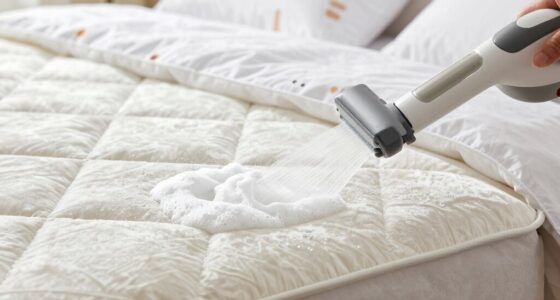
To keep your mattress in good shape, rotate it every 3 to 6 months during the first year, then switch to twice a year afterward. Factors like mattress type and how often you sleep on it influence this schedule. Proper rotation helps prevent uneven wear, sagging, and extends its life. For more tips on maintaining your mattress and ensuring lasting comfort, stay tuned for expert advice and suggestions.
Why Does Rotating Your Mattress Matter?

Rotating your mattress matters because it helps distribute wear evenly, preventing sagging and prolonging its lifespan. When you rotate your mattress, you maintain better bed frame stability by avoiding uneven pressure that can weaken the support. This process also preserves the mattress material durability, ensuring the comfort layers and core stay intact longer. Without rotation, certain areas bear more weight, leading to early indentations and reduced support. Consistent rotation keeps the mattress in better shape, so it continues to provide proper alignment and comfort. Additionally, proper airflow facilitated by regular rotation can help reduce moisture buildup and mold growth, which is crucial in maintaining a healthy sleeping environment. This improved airflow plays a key role in indoor air quality, helping to keep your sleeping environment healthier. By doing so, you protect your investment and avoid premature replacement. Regularly ventilating your mattress can also prevent the buildup of allergens and dust mites that thrive in stagnant environments. Incorporating mattress maintenance into your routine is a simple yet effective way to extend its lifespan and maintain optimal comfort. Regular rotation, combined with other protective measures, can significantly enhance the durability and comfort of your mattress over time. Ultimately, rotating your mattress is a simple step that supports overall mattress health and maintains a stable, supportive sleep surface for years to come.
How Often Should You Rotate Your Mattress by Type?
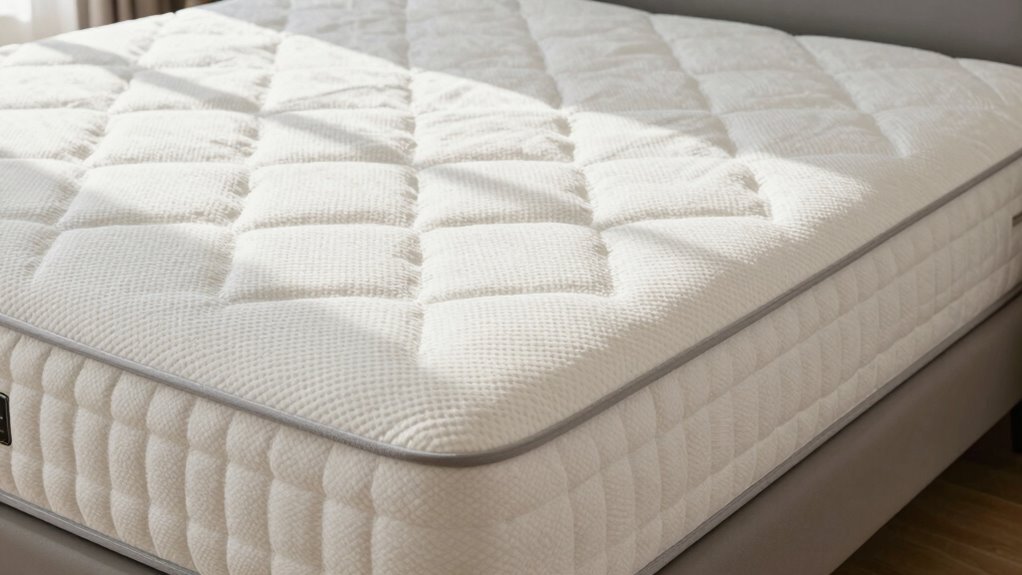
The frequency at which you should rotate your mattress depends on its type, as different materials respond uniquely to wear. For example, memory foam and latex mattresses typically need less frequent rotation, usually every 6 to 12 months, because they distribute weight evenly and are less prone to sagging. In contrast, innerspring mattresses may require more regular turning, about every 3 to 6 months, to prevent uneven wear. Bed frame compatibility also influences rotation; some frames make flipping or rotating easier, while others restrict movement. Mattress material differences affect how often you should rotate to maintain support and longevity. Always check manufacturer recommendations, as improper rotation can lead to quicker deterioration or compatibility issues with your bed frame. Additionally, understanding wall surfaces and finishes can help ensure your sleep environment remains optimal and free from damage during mattress maintenance. Proper rotation practices are essential for extending mattress lifespan and ensuring consistent comfort over time. Moreover, being aware of mattress care guidelines can help you develop a routine that keeps your mattress in top condition.
What Factors Affect How Frequently You Need to Rotate Your Mattress?
Several factors influence how often you should rotate your mattress, beyond just its type. One key aspect is bed frame stability; a sturdy, well-supported frame helps prevent uneven wear, reducing the need for frequent rotations. Mattress material durability also plays a role—high-quality materials like memory foam or latex typically wear more evenly and last longer, meaning you might not need to rotate as often. Conversely, less durable materials may develop indentations or sagging sooner, requiring more frequent flipping or rotating. Your sleeping habits matter too; if you often sleep in the same position or on one side, you’ll want to rotate more frequently to promote even wear. Additionally, understanding the total-cost clarity involved in mattress maintenance can help you make informed decisions about rotation schedules, ensuring your investment remains comfortable and long-lasting. Being aware of wear patterns can help you identify when your mattress might need extra attention to extend its lifespan, especially since proper mattress care can significantly impact its longevity.
Debunking Common Myths About Rotating Your Mattress
Many people believe that rotating their mattress is unnecessary or even harmful, but these myths often lead to neglecting a simple step that can extend your mattress’s lifespan. Some think rotating causes damage or voids warranties, but in reality, it helps distribute wear evenly and maintain support. Others believe rotating isn’t needed if you sleep in the same spot every night, yet consistent rotation can improve overall comfort and reduce sagging. Some assume rotating impacts bed bug prevention, but regular flipping can actually make it easier to spot and eliminate pests early. When buying a mattress, look for tips on durability and maintenance—rotation included—to ensure you get the most out of your investment. Incorporating a proper workspace setup that supports your sleep and health can also contribute to better sleep hygiene and overall well-being. Additionally, understanding mattress lifespan and proper care can help you plan for replacements before issues arise. Regularly rotating your mattress is also an effective way to prevent uneven wear patterns and prolong its life, as supported by mattress care guidelines. Moreover, staying informed about topical authority in mattress maintenance can help you make better decisions for your sleep environment. For example, using quality bedding can enhance comfort and protect your mattress, further extending its durability. Debunking these myths helps you keep your mattress in top shape longer.
Tips to Make Your Mattress Last Longer (Besides Rotation)

To make your mattress last longer, it’s important to focus on proper support and protection. Regular mattress maintenance, like using a quality mattress protector, shields against spills, dust, and allergens, helping prevent wear and stains. Keep your sleep hygiene in check by maintaining a consistent sleep schedule and avoiding jumping onto the bed with shoes or heavy objects, which can cause damage. Guarantee your bed frame provides even support, preventing sagging. Additionally, air out your mattress regularly to reduce moisture buildup, which can lead to mold or odor. Keeping your sleeping environment clean and free of debris not only extends your mattress’s lifespan but also promotes healthier sleep. Incorporating European-inspired sleep routines can enhance your sleep quality and help preserve your mattress longer. Developing good sleep environment habits plays a significant role in prolonging your mattress’s durability. Proper ventilation and moisture control are essential for preventing mold and odors, further extending your mattress’s lifespan. Routine airing out your mattress can also help maintain freshness and prevent the buildup of allergens. Practicing routine mattress care ensures your investment remains comfortable and supportive for years to come. Prioritizing these habits makes your mattress more durable and supports better sleep quality over time.
Frequently Asked Questions
Can Rotating My Mattress Improve Sleep Quality?
Yes, rotating your mattress can improve sleep quality by promoting better sleep hygiene. When you turn or flip it regularly, it helps distribute wear evenly, especially with different mattress materials like memory foam or innerspring. This reduces sagging and maintains support, making your sleep more comfortable. Better support and comfort lead to deeper, more restorative sleep, helping you wake up refreshed and ready for the day.
Is It Better to Rotate or Flip My Mattress?
It’s better to rotate your mattress than flip it, especially if it’s memory foam. Memory foam mattresses aren’t designed to be flipped but benefit from regular rotation to promote even wear and improve bed maintenance. Rotating helps prevent sagging and extends your mattress’s lifespan. So, keep your bed in top shape by rotating it every few months, ensuring consistent comfort and support for restful sleep.
How Does Body Weight Influence Rotation Frequency?
Your body weight influences how often you should rotate your mattress because heavier areas create uneven pressure distribution, causing quicker wear. If you’re heavier, rotate more frequently to prevent sagging and maintain support. Mattress material matters too; memory foam may need less frequent rotation, while innerspring beds benefit from regular turning. Adjust rotation schedules based on your weight and material to prolong your mattress’s lifespan and guarantee maximum comfort.
Are There Specific Signs Indicating I Need to Rotate My Mattress?
When your mattress begins to show signs of wear, it’s like a tired dance partner—uneven sagging, visible indentations, or discomfort. Seasonal changes can accentuate these issues, especially with certain mattress materials that respond differently to temperature and humidity. If you notice waking up sore or feeling uneven support, it’s time to rotate your mattress. Keep an eye on these signs, and you’ll keep your sleep smooth and balanced.
Does Mattress Rotation Help Prevent Sagging and Indentations?
Yes, rotating your mattress helps prevent sagging and indentations, especially if you have a softer bed frame or use certain mattress material types like memory foam or latex. By regularly turning your mattress, you distribute wear more evenly, maintaining its support and extending its lifespan. This practice is especially beneficial if your bed frame isn’t highly durable, ensuring your mattress stays comfortable and supportive for longer periods.
Conclusion
By rotating your mattress regularly, you prevent uneven wear and extend its lifespan. Imagine a friend who rotates theirs every three months—after two years, it still feels just as supportive as day one. Staying consistent with your schedule keeps your sleep surface comfortable and durable. So, set a reminder to rotate your mattress, and you’ll enjoy restful nights for years to come, just like that friend who made their investment last.