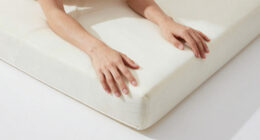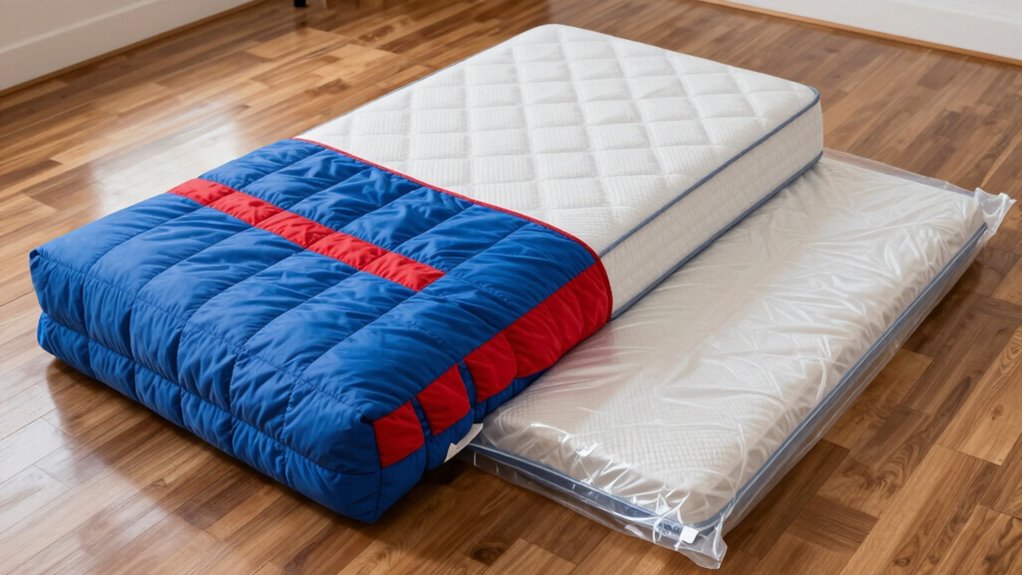
To protect your mattress during a move, choose between wraps, bags, or blankets based on your needs. Wraps offer superior protection against tears and moisture, but can be more challenging to secure. Moving bags are easy and provide basic dirt-and-scratch protection. Blankets are affordable and flexible for cushioning impacts but offer less moisture resistance. Each option has benefits and downsides—continue to explore which method suits your move best.
Key Takeaways
- Mattress wraps offer the highest protection against tears, punctures, and moisture, ideal for long-distance or rough handling.
- Moving bags are easy to use, providing basic dirt and dust protection, suitable for quick, cost-effective moves.
- Blankets offer excellent cushioning and impact absorption, making them best for scratch prevention and handling logistics.
- Wraps and bags tend to be more durable but are often more expensive, while blankets are reusable and budget-friendly.
- Securing the protection method properly and handling the mattress carefully ensures maximum safety during transit.

ComfortHome Mattress Bag for Moving and Storage, Queen and King Size, 1 Pack
【Queen/King】Size: Fits Queen and King Size Mattress ( smaller than 76 × 84 inch ) with height up…
As an affiliate, we earn on qualifying purchases.
As an affiliate, we earn on qualifying purchases.
Why Protect Your Mattress During a Move?
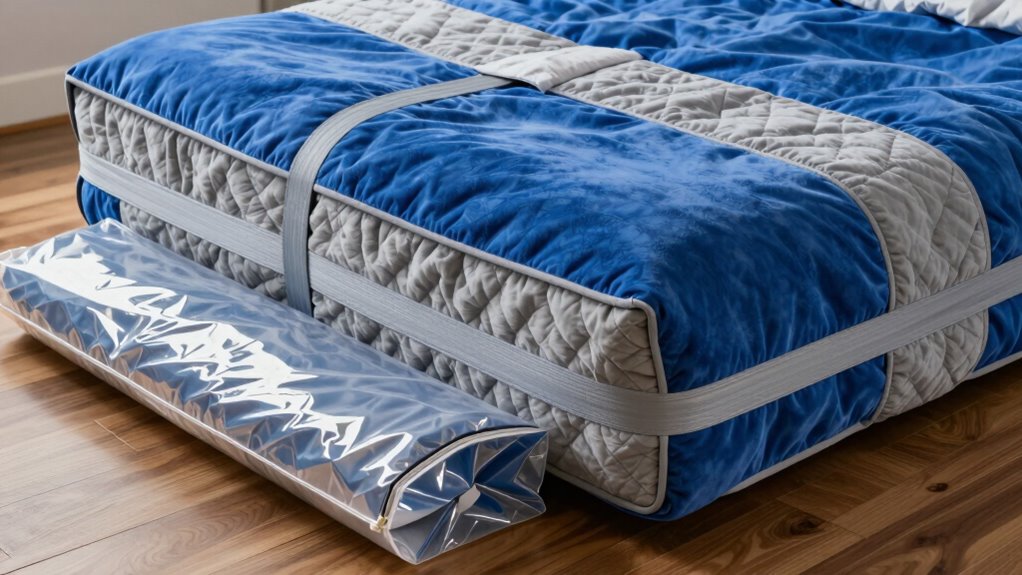
Protecting your mattress during a move is essential because it prevents damage and keeps it clean. When you safeguard your mattress, you maintain its mattress hygiene, reducing the risk of dirt, dust, and allergens settling on it. This is especially important if you’re moving in dirty or dusty environments. Additionally, protecting your mattress reduces its environmental impact by extending its lifespan, which means you won’t need to replace it prematurely. Using proper protection also prevents stains, tears, and other damages that can lead to waste. By taking these steps, you not only preserve the mattress’s condition but also contribute to sustainability efforts. Keeping your mattress protected during transport helps ensure it arrives at your new home in excellent shape, ready for use. Proper wrapping techniques, such as protective coverings, can further enhance its safety during the move.

Nordic Elk Mattress Bags for Moving and Storage (Queen) Heavy Duty Moving Supplies, 8 Sturdy Handles, Strong Zipper, Mattress Cover Queen Size Bed Bags, Storage Cover Essentials Packing Protector
Heavy-Duty Mattress Protector: Nordic Elk mattress bags for moving are crafted from high quality materials to protect your…
As an affiliate, we earn on qualifying purchases.
As an affiliate, we earn on qualifying purchases.
What Are Your Mattress Protection Options? Wraps, Bags, or Blankets
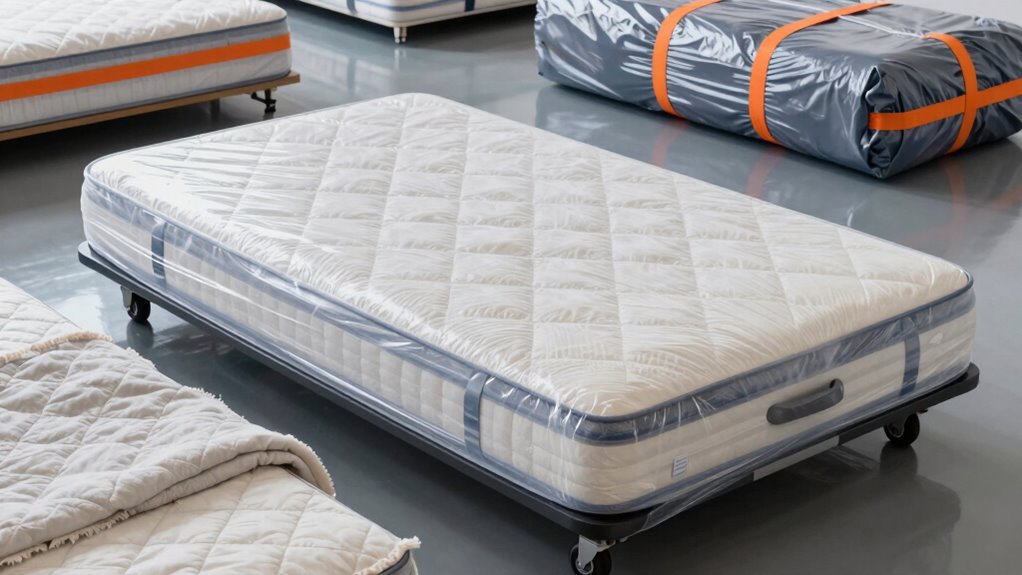
When choosing how to shield your mattress during a move, you have several options, including wraps, bags, and blankets. Each provides different levels of protection and uses various packing materials for security. Mattress wraps are typically plastic or fabric covers that tightly encase your mattress, offering excellent protection against dirt, moisture, and tears. Mattress bags are large plastic sacks designed specifically for moving, making them a simple storage solution that keeps your mattress clean during transport. Moving blankets, also called pads, are thick quilted coverings that cushion your mattress from scratches and impacts. Your choice depends on your needs—whether you prioritize moisture resistance or impact protection. These options help you find effective storage solutions that keep your mattress safe during your move, and understanding navigation and mapping can assist in planning your packing process efficiently.

Mattress Bags for Moving and Storage Queen Size, Waterproof Mattress Cover for Moving with Heavy Duty Handles, Strong Zipper, Reusable Mattress Storage Bag, Moving Supplies & Moving Bags
Perfect for moving & storage – Our quality mattress bags for moving (queen size:82" x 63" x 15")…
As an affiliate, we earn on qualifying purchases.
As an affiliate, we earn on qualifying purchases.
Why Use Mattress Wraps? Benefits Explained
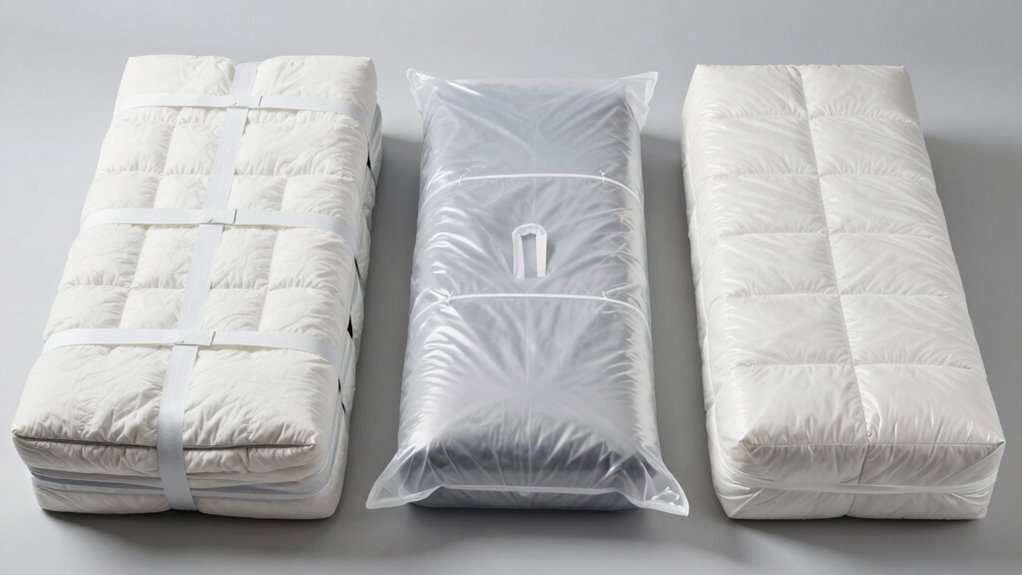
Using mattress wraps provides better protection against scratches, tears, and dirt during your move. They also make handling and transporting your mattress much easier and safer. With these benefits, mattress wraps are a smart choice to keep your mattress in top shape.
Enhanced Protection Against Damage
To prevent damage during your move, mattress wraps provide a vital layer of protection that keeps your mattress safe from tears, dirt, and moisture. They create a barrier against rough handling and accidental spills. The protective layer also shields your mattress material from scratches and abrasions during transport. Using high-quality packing materials enhances durability, guaranteeing the wraps stay in place and do their job. The table below highlights key benefits:
| Benefit | Description |
|---|---|
| Damage Prevention | Protects against tears, scratches, and punctures |
| Moisture Barrier | Keeps out water and spills |
| Dirt and Dust Shield | Prevents dirt accumulation and stains |
Additionally, selecting energy-efficient packing materials can contribute to a more sustainable move by reducing waste and environmental impact. With mattress wraps, you secure your investment and ensure it arrives in perfect condition.
Easy Handling and Transport
Mattress wraps make handling and transporting your mattress much easier by providing a secure, manageable package. They simplify the moving process, reducing the risk of damage or dirt exposure. Using wraps benefits you in several ways:
- Enhanced Mattress Hygiene: Keeps your mattress clean and free from dust, dirt, and pests during transit.
- Easy Handling: The wrap creates a firm, compact unit, making it easier to carry, lift, and maneuver.
- Environmental Impact: Many mattress wraps are reusable, reducing waste compared to single-use bags and promoting eco-friendly practices.
- Proper protection: Using the right protective materials ensures your mattress stays in optimal condition throughout the move.

TICONN 2PK Plastic Mattress Bag for Moving Storage, Waterproof Mattress Protector Cover, Heavy-Duty Mattress Moving Supplies (1.5 mil, Queen)
[PREMIUM QUALITY] TICONN mattress bags for moving are made from premium LDPE material with no odor and high…
As an affiliate, we earn on qualifying purchases.
As an affiliate, we earn on qualifying purchases.
Is a Moving Bag the Right Choice for Your Mattress?
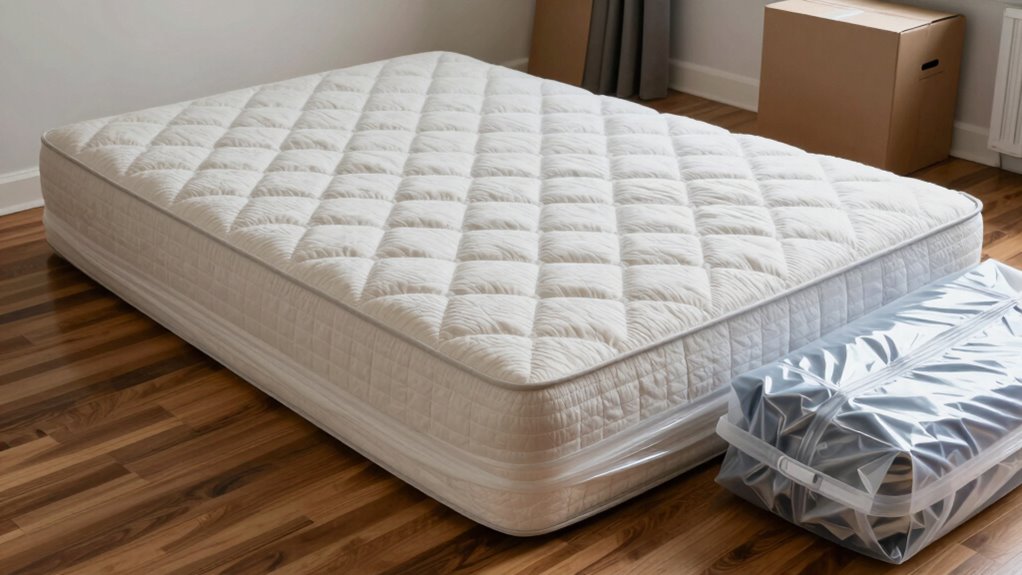
Are a moving bag and your mattress a good match? Moving bags are often made from durable materials like heavy-duty plastic or reinforced fabric, which provide decent material durability. They’re typically easy to slip over your mattress, offering quick protection. Plus, moving bags are generally cost-effective, making them an attractive option if you’re on a budget. However, their simplicity means they may not offer the same level of cushioning as blankets or padding. If your main goal is to shield your mattress from dirt, dust, and minor scratches during transport, a moving bag can be a practical choice. Just keep in mind that they might not fully prevent damage from impacts or sharp objects, so consider your specific moving conditions before opting for one. Additionally, understanding dog breed traits can help you better prepare your belongings for moving, especially if you have furry friends that might be affected by transportation.
Are Moving Blankets Good for Protecting Your Mattress?
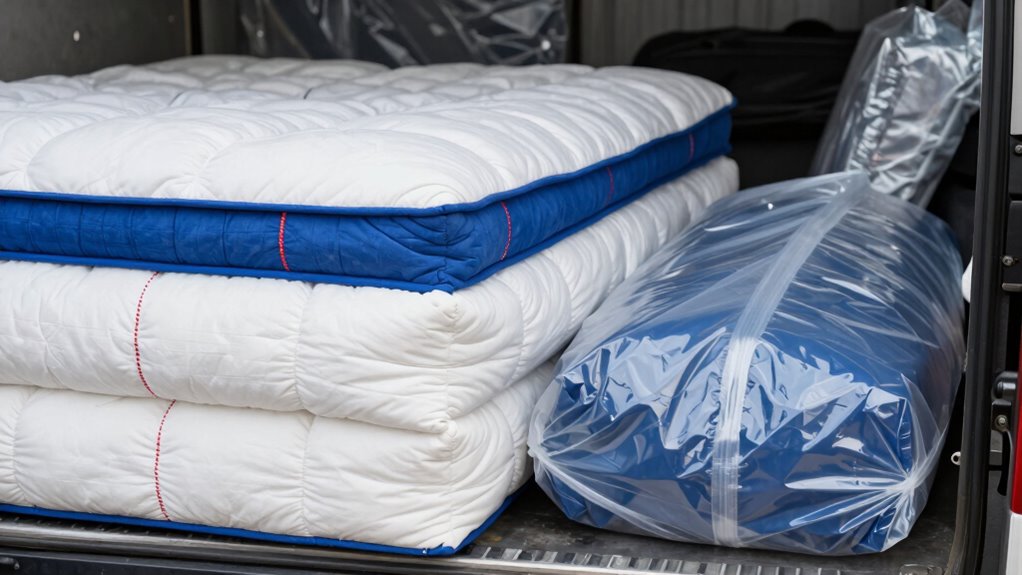
Moving blankets provide good cushioning and help prevent scratches during transport. They’re easy to wrap around your mattress, making the process straightforward. Plus, their soft material offers extra comfort and protection during your move. Incorporating visual and auditory cues can also enhance the protective process by making it easier to ensure the blanket stays in place.
Comfort and Cushioning
Because moving blankets are designed to absorb shocks and prevent scratches, they make an excellent choice for protecting your mattress. They also provide added comfort and cushioning support during transit, reducing the risk of damage. When using a blanket, consider these benefits:
- Enhanced mattress comfort – The soft padding cushions your mattress, preventing dents and tears.
- Shock absorption – Moving blankets absorb impacts from bumps and jostling, maintaining mattress integrity.
- Additional cushioning support – They distribute pressure evenly, protecting delicate parts like springs and foam layers.
- Using appropriate packing materials like moving blankets can also help prevent moisture damage during transport.
These features help keep your mattress in pristine condition, ensuring it arrives at your new home just as comfortable as when you packed it. Moving blankets are a reliable, protective layer that adds comfort during transport.
Ease of Use
Moving blankets are straightforward to use when protecting your mattress, making the process much easier. They require minimal handling logistics and don’t need extra packing materials. Simply lay the blanket over your mattress, secure it with straps or tape, and you’re ready to go. This simplicity saves time and effort compared to other options like bags. Moving blankets conform easily to different mattress sizes and shapes, reducing the fuss during packing. They also allow for quick adjustments if needed. Here’s a quick comparison: handling logistics are simplified with blankets, making them a popular choice for many movers.
| Feature | Moving Blanket | Other Packing Material |
|---|---|---|
| Handling logistics | Easy, minimal effort | More complicated, bulky |
| Ease of use | Very user-friendly | Often requires extra steps |
| Flexibility | Highly adaptable | Less adaptable |
| Setup time | Fast | Slower, more involved |
| Reusability | Reusable and durable | Often single-use |
Which Protection Method Is Most Durable: Wraps, Bags, or Blankets?
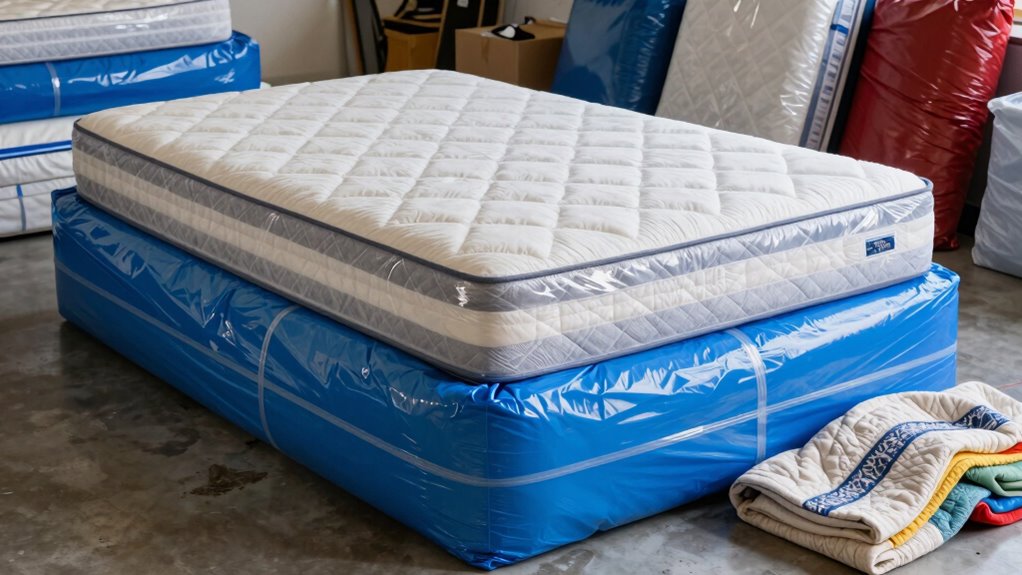
When it comes to protecting your mattress during a move, longevity is crucial. The longevity comparison among wraps, bags, and blankets depends on material strength and how well they withstand wear and tear. Typically,:
- Mattress wraps are made from thick plastic or heavy-duty fabric, offering high resistance to punctures and tears.
- Moving bags are usually durable but can rip if sharp objects or excessive force are involved.
- Moving blankets are the least durable in terms of material strength but excel in cushioning and flexibility.
If longevity is your main concern, wraps generally outperform bags and blankets because of their robust material composition. They provide the best protection against damage during transit, making them the most durable option overall.
How Easy Is It to Use Wraps, Bags, and Blankets?
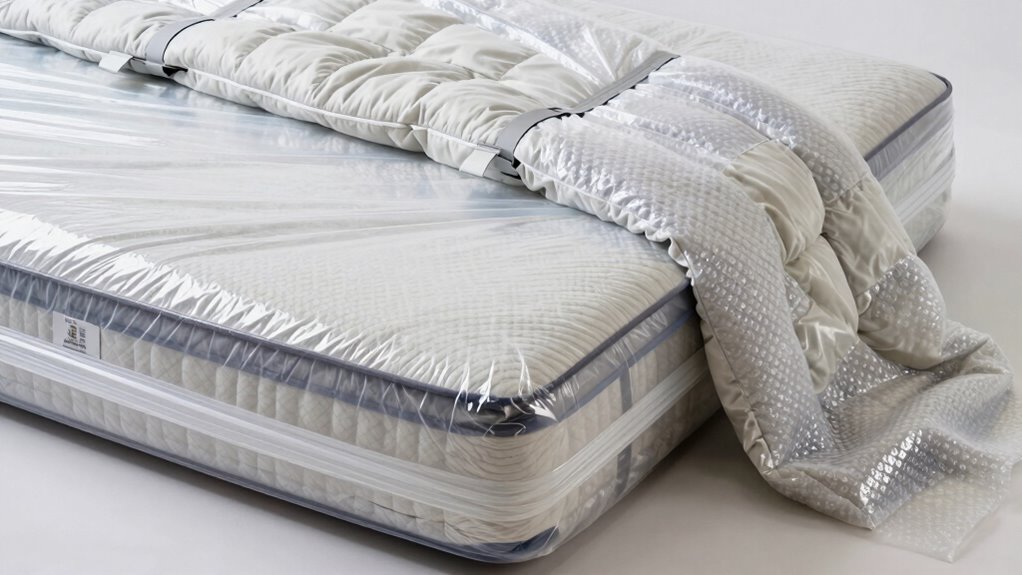
Protecting your mattress during a move depends largely on how easy it is to handle the protection methods. Wraps, bags, and blankets vary in user friendliness and ease of handling. Mattress wraps are often more challenging to put on, requiring some effort to secure tightly. Mattress bags are generally simple; you slide the mattress in and zip, making them quite user-friendly. Blankets are the easiest—they require no special skill, just wrapping and tucking. To compare:
| Method | Ease of Handling | User Friendliness | Installation Speed |
|---|---|---|---|
| Wraps | Moderate | Fair | Moderate |
| Bags | Easy | High | Fast |
| Blankets | Very Easy | Very High | Very Fast |
Choosing the easiest method depends on your comfort and quick handling needs. Additionally, cultural heritage can influence the choice of protective methods, as some traditions emphasize environmentally friendly and reusable options.
Which Mattress Protection Method Saves You Money?
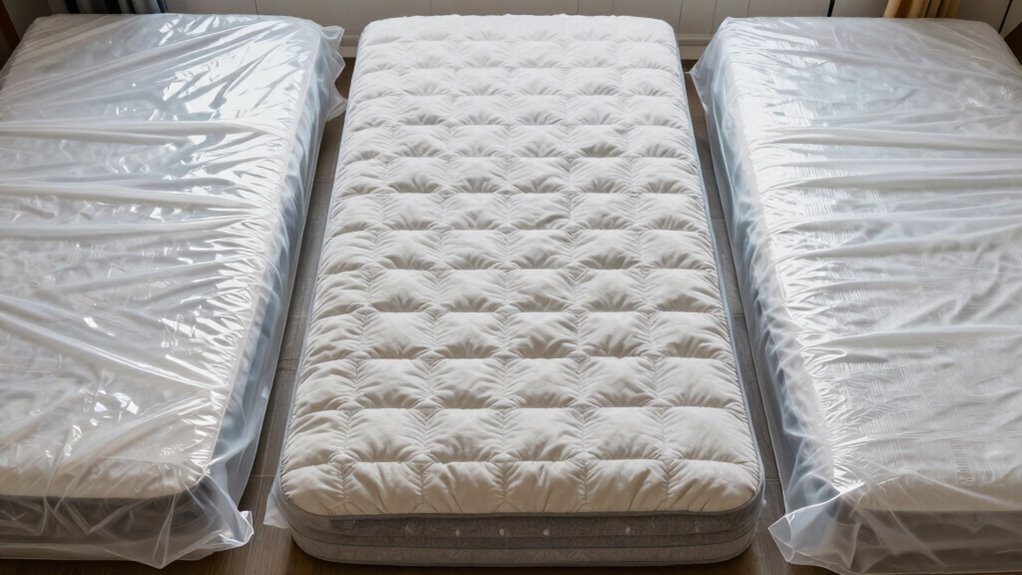
Among the available mattress protection options, using blankets tends to be the most cost-effective choice. When considering a cost comparison, blankets usually cost less upfront and can be reused multiple times, saving you money over time. Additionally, material durability plays a role; sturdy blankets made from thick, woven fabrics hold up better during transit, reducing the need for replacement. Incorporating sound vibrations into your packing routine can also help reduce stress and create a more calming environment during the move.
What Are the Downsides of Wraps, Bags, and Blankets?
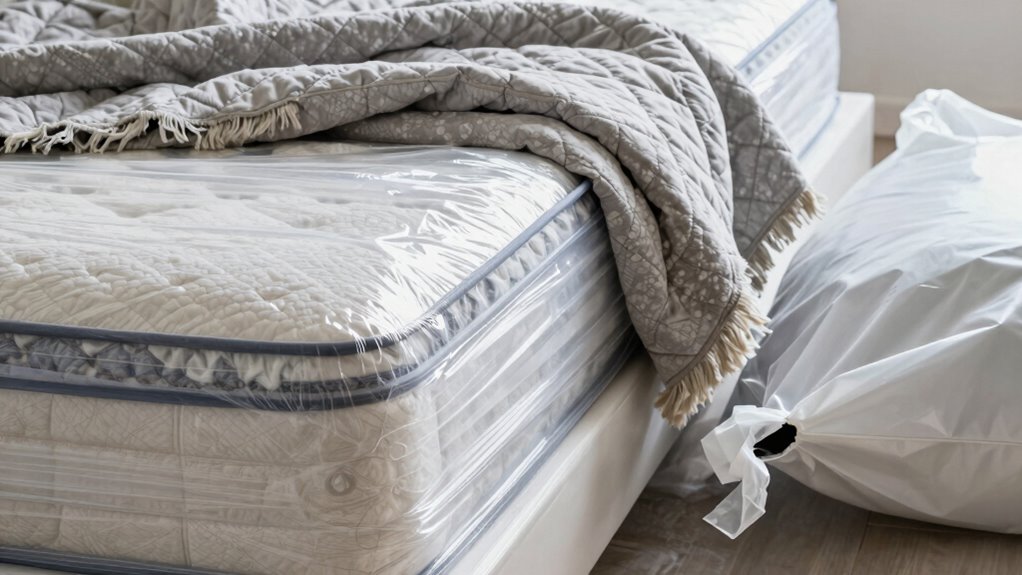
While blankets are the most budget-friendly option overall, they do have some drawbacks compared to wraps and bags. Blankets often lack durability and may not provide sufficient protection against tears or moisture during transit. They can also be less effective at preventing dirt or dust from reaching your mattress. In terms of material compatibility, blankets may not work well with certain moving equipment or tight spaces, making wrapping more difficult. Additionally, blankets tend to be less environmentally friendly, especially if they’re single-use or made from synthetic fibers that shed microplastics. Wraps and bags typically offer stronger, more consistent protection but may be more costly and less eco-conscious depending on their materials. Consider these downsides when choosing the best method for your move.
How Can You Secure Your Mattress During Transit?
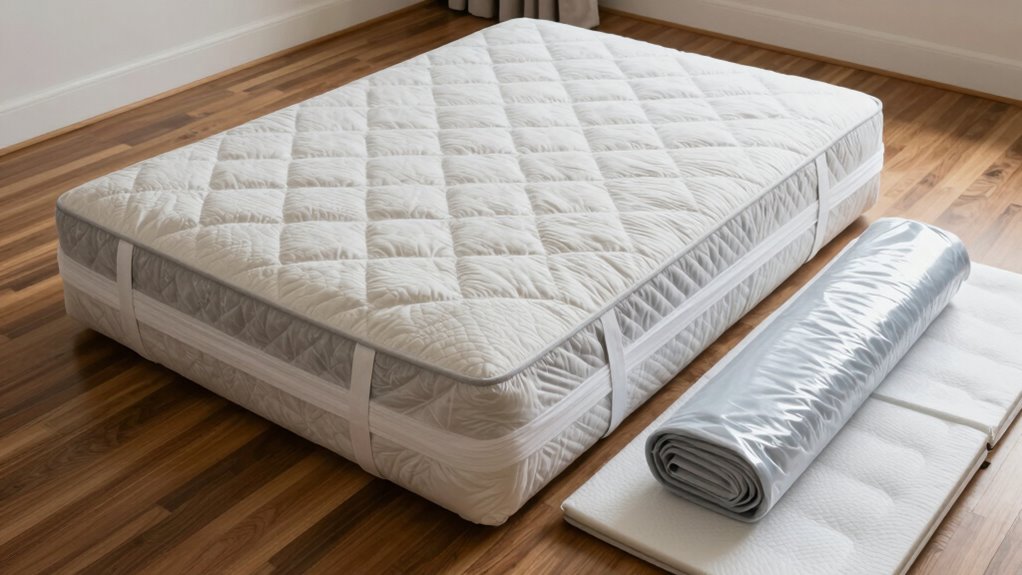
Securing your mattress during transit is essential to guarantee damage and make sure it arrives in good condition. To protect mattress hygiene and minimize environmental impact, follow these steps:
- Use a sturdy, breathable mattress bag or eco-friendly wrap to shield it from dirt, dust, and moisture.
- Secure the wrapping with strong tape or straps to prevent shifting and exposure during transport.
- Place the mattress flat in the truck, avoiding heavy objects on top, and use additional padding if needed to prevent tears or punctures.
Frequently Asked Questions
How Do I Choose the Best Protection Method for Different Mattress Sizes?
To choose the best protection method for different mattress sizes, consider the size and level of protection needed. For larger mattresses like king or queen, use a sturdy mattress bag to prevent dirt and damage. For extra cushioning, wrap with blankets, especially for fragile or valuable mattresses. Smaller mattresses, like twins, may only need a protective cover or blanket. Match your protection method to the mattress size for ideal safety during the move.
Can I Reuse Mattress Wraps, Bags, or Blankets for Multiple Moves?
You can often reuse mattress wraps, bags, or blankets for multiple moves if they have good material durability. For example, a heavy-duty plastic mattress bag may withstand several relocations, saving you money and effort. Reusability options depend on the material’s strength and condition after each move. If the wrap or blanket shows tears or damage, it’s best to replace it to guarantee proper protection for your mattress during the next move.
Are There Specific Brands or Materials Recommended for Mattress Protection?
You should choose brands that offer durable, protective materials, like U-Haul or Protect-a-Bed, which are trusted for their quality. Look for mattress covers made from heavy-duty plastic or quilted fabric, as these materials resist tears and dirt. Your goal is to select protective material choices that are sturdy, reusable, and easy to handle, ensuring your mattress stays clean and undamaged throughout the move.
How Do Protection Methods Impact the Overall Moving Cost?
Protection methods can influence your overall moving cost by requiring different packing materials and possibly affecting your moving insurance premiums. Using a mattress bag or wrap might be cheaper upfront but could impact insurance claims if damage occurs. Blankets are usually affordable and flexible, while professional packing materials add to costs. Consider your move’s distance and value to balance expenses with adequate protection, ensuring your mattress stays safe during transit.
What Safety Precautions Should I Take When Wrapping or Securing My Mattress?
You’ll want to stay safe as you wrap your mattress—don’t rush. Always use proper lifting techniques to avoid injury, bending at your knees and keeping your back straight. Secure the mattress tightly with straps to prevent shifting during transport. Be cautious around sharp edges or staples, and double-check that the wrapping is snug. These precautions protect both you and your belongings, making the move smoother and safer.
Conclusion
Choosing the right mattress protection is like finding the perfect shield for your sleep sanctuary. Whether you opt for wraps, bags, or blankets, each has its own perks and quirks. Consider your budget, ease of use, and the level of protection you need. With the right choice, your mattress will arrive at your new home as fresh as a daisy, ready to cradle you into restful nights. Protect it well, and it’ll serve you for years to come.