TL;DR
There is no single replacement date for every mattress: estimated average lifespans range from about 5.5 years for innerspring models to 8.5 years for latex. Persistent sagging, uneven support or lasting discomfort can signal wear, but age and morning aches alone do not prove a mattress needs replacing.
A mattress guide published in a paid partnership with Sleep Number says replacement timing depends on a mattress’s construction, use and condition—not age alone. It lists average lifespan estimates of 5.5 to 8.5 years across common mattress types and identifies persistent sagging, uneven support and a sustained loss of comfort as signs that a mattress may need replacing.

Get home appliances delivered free with Prime
- Fast, free delivery on millions of items
- Prime Video, Amazon Music and more included
- Member-only deals all year
The guide cites Sleep Foundation estimates that innerspring mattresses last an average of 5.5 to 6.5 years, foam mattresses 6 to 7 years, hybrid mattresses 6.5 to 7.5 years, and latex mattresses 7.5 to 8.5 years. These are averages, not guaranteed service lives or firm deadlines for replacing an individual bed.
Construction can affect how a mattress wears. The source says innerspring coils and comfort layers may lose support, foam can soften and develop lasting impressions, and latex is generally more resistant to compression. Hybrid mattresses combine a coil support system with foam or latex layers, so wear in either part can affect their condition.
Other factors include nightly use, the weight placed on the surface, sleeping position and care. A mattress used every night may wear differently from one used only occasionally. A suitable foundation, a mattress protector and cleaning can help with care; some mattresses can be rotated, but the manufacturer’s instructions should guide that decision.
When to replace a mattress Signs of wear matter
Lifespan estimates vary by mattress type, but there is no universal replacement date. Persistent wear and changing comfort can help guide your decision.
Estimates by mattress type
These are averages, not deadlines or guaranteed service lives.
| Type | Estimated average lifespan |
|---|---|
| Innerspring | 5.5–6.5 years |
| Foam | 6–7 years |
| Hybrid | 6.5–7.5 years |
| Latex | 7.5–8.5 years |
Signs worth checking
Look for persistent changes in the bed’s surface, support or comfort.
Lasting impressions
Persistent dips or sagging may point to wear in the comfort layers or support system.
Uneven feel
Uneven support, collapsing edges or structural damage may signal deterioration.
Sustained change
A lasting loss of comfort can matter, especially alongside visible wear.
What affects wear?
Materials and everyday use can make two mattresses age differently.
- Coils and comfort layers may lose support.
- Foam can soften and develop lasting impressions.
- Latex is generally more resistant to compression.
- Nightly use and weight placed on the surface affect wear.
- Sleeping position can concentrate pressure in different areas.
- A suitable foundation and manufacturer care instructions can help guide upkeep.
Check before replacing
Compare the mattress’s current condition and feel with how it used to perform.
Check for persistent sagging, indentations, uneven support or structural damage.
Account for changes in sleeping position or preferences, including those of anyone sharing the bed.
Follow the manufacturer’s instructions for cleaning and rotation. A topper may change surface feel but cannot repair a deteriorating support core.
How Wear Can Affect Sleep Comfort
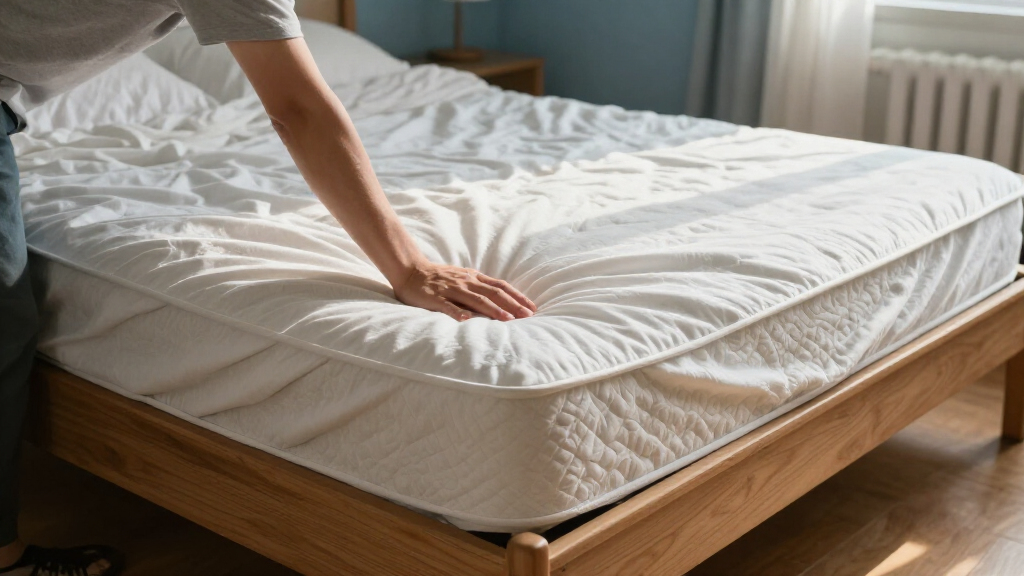
Recognizing changes in a mattress can help people decide whether to inspect their bed, review its care instructions or shop for a replacement. Persistent dips, collapsing edges or an uneven surface may point to wear in the comfort layers or support system. A topper might change how the surface feels, but the source cautions that it will not repair a deteriorating support core.
Comfort can also change even when a mattress is not visibly damaged. A new sleeping position, a change in body weight or different preferences can make a once-comfortable bed feel less suitable. People sharing a mattress may have different support and cushioning preferences, which can make the choice more complicated. The practical issue is whether the bed continues to feel supportive and comfortable for the people using it, rather than whether it has crossed a particular birthday.
Morning stiffness or soreness can have many causes, so it is not proof that a mattress is responsible. A pattern of discomfort alongside visible sagging or a clear loss of support is more relevant to evaluating the bed, though it still does not establish a medical cause.
Products Worth Considering

iRobot Roomba Plus 405 Combo Vacuum and Mop Robot with AutoWash Dock

Levoit Vital 100S-P Air Purifier with Washable Pre-Filter

Philips Hue Play HDMI Sync Box
As an affiliate, we earn on qualifying purchases.
Why Mattress Lifespans Differ
The lifespan figures in the source are type-based averages, and the supplied material does not give a study method, sample size or confidence range for those estimates. They are best read as general guidance rather than a prediction for every mattress. Two beds bought in the same year may age differently because their materials, construction and use differ.
Pressure is not distributed identically by every sleeper. The guide says side sleepers put more concentrated pressure around the shoulders and hips, while back and stomach sleepers distribute weight differently. Repeated pressure in the same areas can contribute to impressions. Quality and density of foam, latex and coil construction may also affect how well a mattress retains its shape.
The source’s advice appears in a commercial article identified as a paid partnership with Sleep Number. That relationship is relevant when weighing the material: the lifespan estimates are attributed to the Sleep Foundation, while the supplied article does not include independent testing of mattresses or a specific replacement standard.
“Age alone doesn’t tell you when a mattress needs replacing.”
— The supplied Sleep Number partnership article
What Lifespan Estimates Cannot Show
The supplied material does not specify how the average lifespan estimates were calculated, or how much results vary among brands, models and individual households. It also provides no universal test for deciding when a mattress has reached the end of its useful life. The figures should not be treated as a guarantee or a strict replacement schedule.
Discomfort, restless sleep and morning soreness can have causes beyond a mattress. The source identifies them as possible signs to consider, not diagnostic evidence. It is also not clear from the article how much a specific foundation, maintenance routine or mattress protector changes a product’s lifespan.
The source is a paid partnership, and the supplied text does not include independent expert interviews, clinical evidence or a statement from a mattress-testing body about replacement criteria. Readers therefore have general guidance, but no independently verified rule for assessing a particular mattress.
Check the Bed Before Replacing
The source recommends paying attention to persistent impressions, uneven support and structural damage, and following the manufacturer’s care instructions. A reader considering replacement can compare the current mattress’s condition and feel with how it used to perform, while also considering changes in sleeping position or comfort needs. A single uncomfortable morning or one better night in a hotel is not enough, on its own, to establish that replacement is necessary.
No further testing, product announcement or formal replacement deadline is described in the supplied material. The decision remains specific to the mattress and its users; the lifespan ranges serve as estimates, not a scheduled next step.
Key Questions
How often should you replace a mattress?
There is no single interval that applies to every mattress. The source cites average lifespan estimates ranging from 5.5 to 6.5 years for innerspring to 7.5 to 8.5 years for latex, but condition and use can differ from those averages.
What are common signs that a mattress may need replacing?
Signs to consider include persistent sagging, lasting indentations, uneven support, collapsing edges and damage such as broken components or exposed filling. A lasting loss of comfort may also be relevant, especially when it accompanies visible wear.
Does waking up sore mean the mattress is worn out?
No. The source says morning stiffness or soreness can have several causes and is not proof that the mattress is responsible. It may be worth considering the mattress if discomfort coincides with visible sagging or a noticeable loss of support.
Can a mattress topper fix a sagging mattress?
A topper may change the surface feel, but the source says it cannot repair a deteriorating support core. Persistent sagging or structural problems may require a broader assessment of the mattress.
What can affect how long a mattress lasts?
Construction and materials, nightly use, the weight placed on the bed, sleeping position and care can all affect wear. The source recommends using a suitable foundation and following the manufacturer’s instructions for cleaning and rotation.
Source: digitaltrends.com