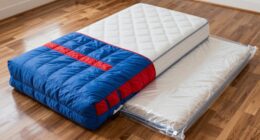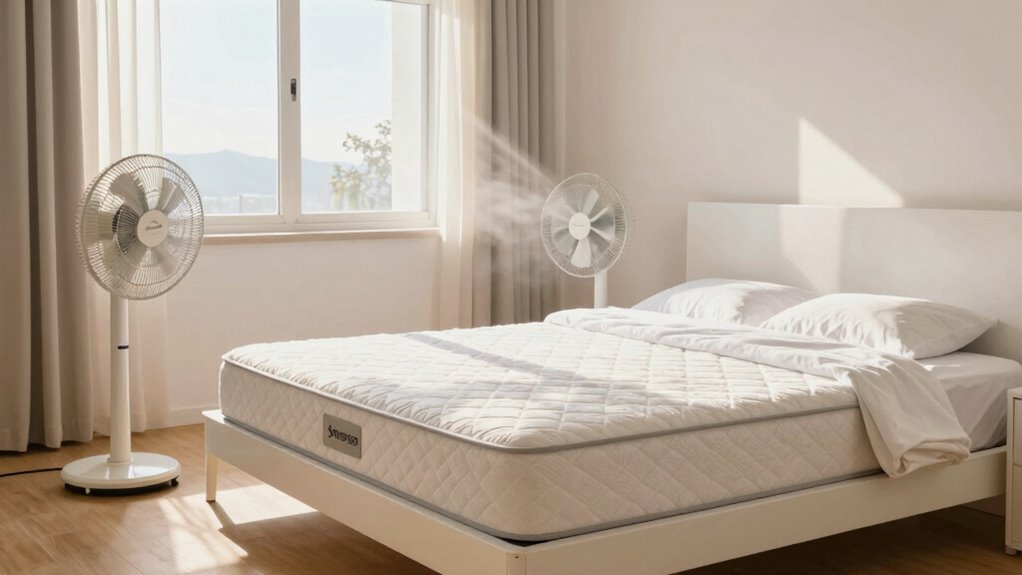
To dry your mattress quickly after cleaning, start by pressing out excess moisture with absorbent towels or microfiber cloths. Increase airflow by opening windows, using fans, and a dehumidifier to remove humidity. Vacuum damp areas and use a space heater or hair dryer on low heat for faster drying, but keep safety in mind. If you want to learn more about speedier drying techniques, keep exploring for detailed tips and tricks.
Key Takeaways
- Use absorbent cloths or towels to gently press and remove excess moisture from the mattress surface.
- Increase airflow by positioning fans and opening windows for cross-ventilation to speed up drying.
- Employ a wet/dry vacuum to extract standing water from damp areas effectively.
- Run a dehumidifier in the room to reduce humidity and promote faster moisture evaporation.
- Carefully use low heat sources like a space heater or cool hair dryer to accelerate drying without damaging the mattress.
Remove Excess Moisture With Absorbent Materials
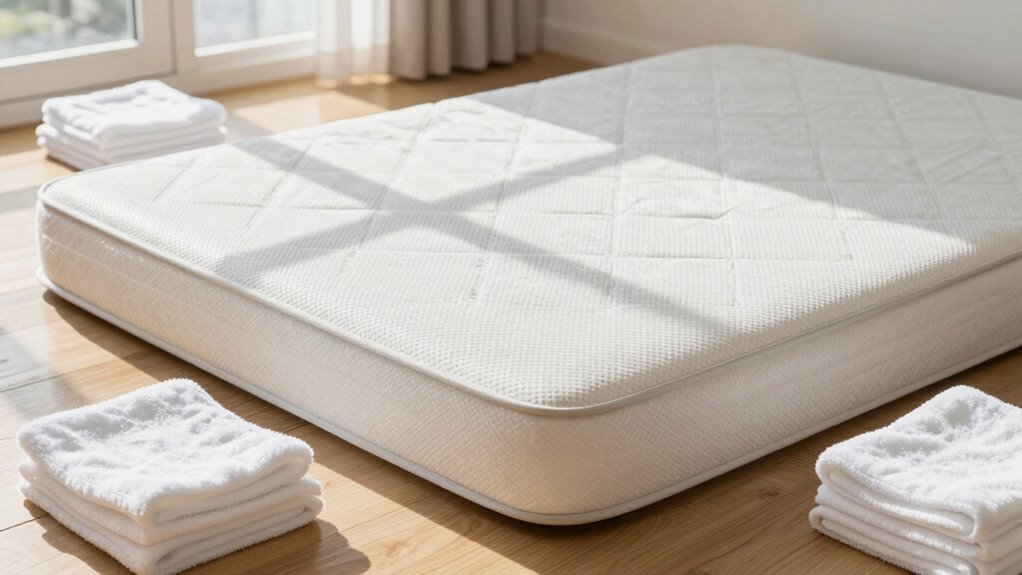
To begin removing excess moisture from your mattress, you should start by applying absorbent materials that can soak up the water effectively. Use absorbent cloths or towels to gently press on the damp areas, drawing out moisture. Employ toweling techniques by pressing firmly without rubbing, which helps lift water without damaging the mattress fibers. If you notice pooling water, fold the cloth to maximize its absorption capacity and replace it frequently. Be thorough, covering all affected zones, and make certain you remove as much moisture as possible before moving to other drying methods. This initial step is vital to prevent mold growth and reduce drying time, setting a solid foundation for a quick and effective drying process. Additionally, using absorbent materials like microfiber cloths can enhance moisture absorption and speed up the process.
Boost Airflow Using Fans and Ventilation
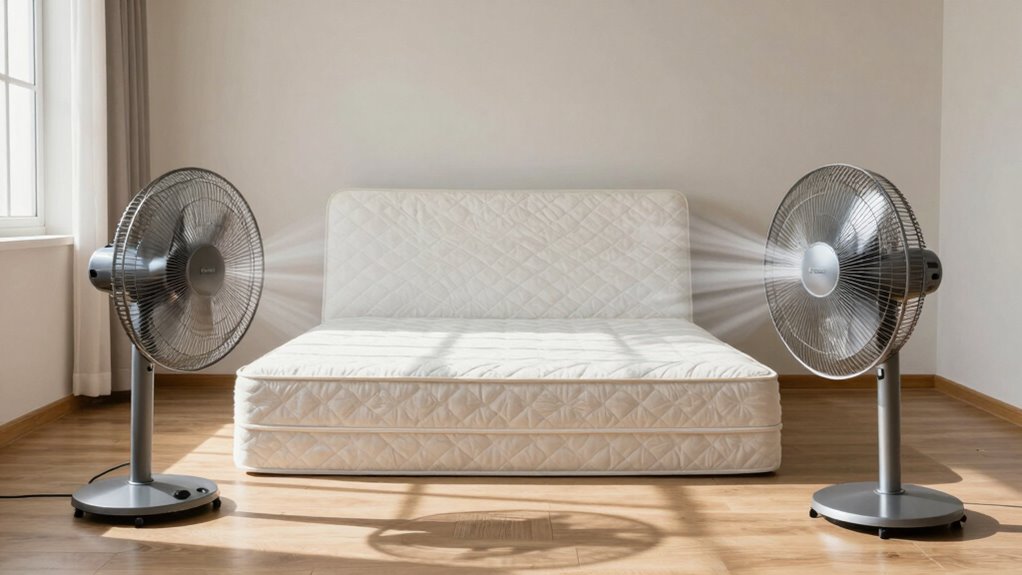
After removing excess moisture with absorbent materials, boosting airflow accelerates the drying process. Enhancing airflow maximization involves using fans and proper ventilation strategies to circulate fresh air and remove humidity. Position fans to direct air across the mattress surface, increasing evaporation. Open windows and doors to improve cross-ventilation, which helps humidity escape faster. Use a dehumidifier if available, to further reduce moisture in the room. Consider this setup:
| Fan Placement | Ventilation Strategy | Effect |
|---|---|---|
| Fan blowing across bed | Open windows on opposite sides | Increases airflow and dries quicker |
| Ceiling fan spinning | Keep room well-ventilated | Circulates air evenly |
| Oscillating fan nearby | Use exhaust fans in room | Removes humid air from space |
This approach ensures maximal airflow, speeding up your mattress drying process. Additionally, understanding the resale value of items like electric bikes can be helpful if you decide to upgrade your gear later.
Use a Wet/Dry Vacuum to Extract Water Quickly
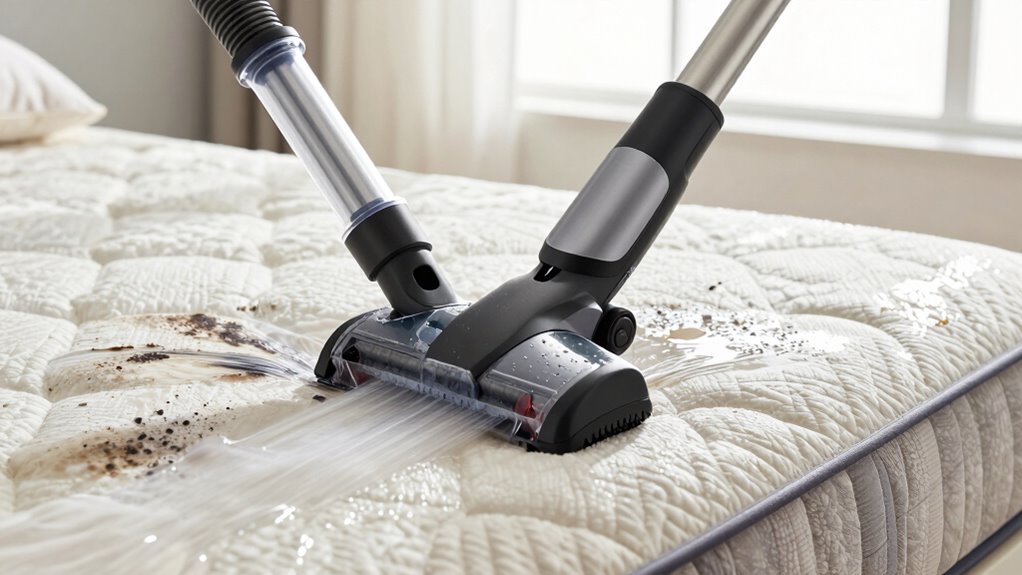
Using a wet/dry vacuum is one of the quickest ways to remove excess water from a soaked mattress. To maximize vacuum efficiency, confirm the vacuum is set to the wet mode and that you create a good seal over the mattress surface. Slowly move the vacuum across the fabric, allowing it to suction up as much water as possible. Focus on areas with visible moisture to improve water extraction. Keep the vacuum’s filter clean to maintain peak performance. This method considerably speeds up the drying process by removing bulk water that would otherwise take longer to evaporate. Remember, the more water you extract early on, the faster your mattress will dry, reducing the risk of mold or mildew developing. Additionally, using proper drying techniques can further enhance the overall drying time and prevent damage.
Run a Dehumidifier to Speed Up Drying
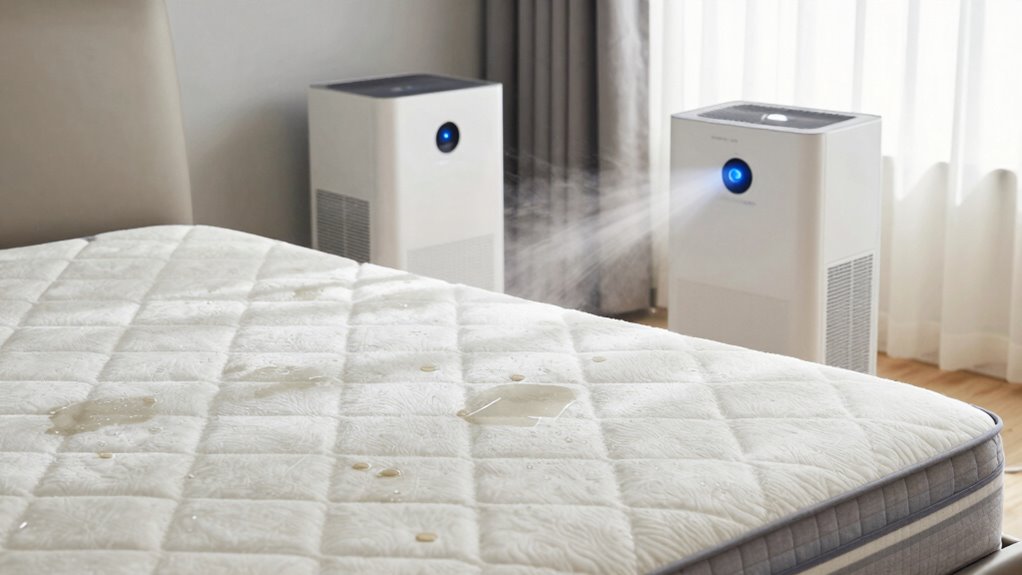
Running a dehumidifier helps remove remaining moisture from your mattress quickly after water extraction. It effectively controls humidity levels in the room, preventing excess moisture from lingering and slowing down the drying process. By reducing humidity, the dehumidifier accelerates moisture reduction within the mattress fibers, helping it dry more evenly and thoroughly. Keep the dehumidifier running in the same room as your mattress, ideally with good airflow, to maximize its effectiveness. Adjust the settings to the lowest humidity level possible for faster results, but avoid making the air too dry, which could damage your mattress or cause discomfort. Incorporating appropriate technology can further enhance the drying process and improve overall efficiency. Using a dehumidifier is a simple, energy-efficient method to speed up drying, especially in humid environments, ensuring your mattress dries faster and more completely.
Carefully Use Heat Sources to Dry Your Mattress Faster
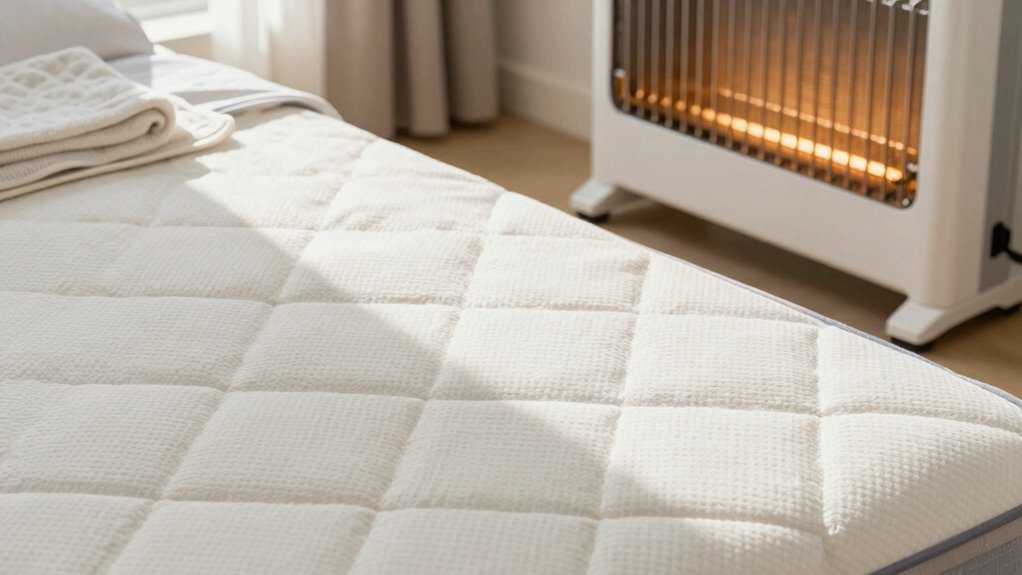
Using heat sources can speed up the drying process, but you need to be careful. A space heater can help, but keep it at a safe distance to avoid damage. You can also use a hair dryer on a low setting to target damp spots without risking overheating. Additionally, room‑by‑room safety measures, such as ensuring proper ventilation and avoiding fire hazards, are essential when using heat sources to dry your mattress quickly.
Use a Space Heater
A space heater can help speed up the drying process, but it must be used with caution. To avoid overheating your mattress or creating safety hazards, monitor the temperature regulation carefully. Keep the heater at a safe distance to prevent direct contact or burns. Always follow safety precautions, such as turning off the heater when you’re not in the room and avoiding leaving it unattended. Use a thermostat or timer to control the heat level, preventing excessive warmth that could damage the mattress or cause fire risks. Ascertain the space is well-ventilated to disperse excess moisture and reduce the chance of mold. By managing heat carefully, you can accelerate drying without compromising safety. Incorporating safe installation practices can help ensure your setup remains secure during the process.
Employ a Hair Dryer
Ever wondered if a hair dryer can speed up drying your mattress? It can, but use it carefully. Set your hair dryer to a low or cool thermal setting to prevent heat damage. Keep the dryer moving in slow, sweeping motions, and don’t hold it in one spot for too long. This method helps evaporate moisture quickly without risking damage to your mattress fabric or foam. Here are some hair dryer tips for safe and effective drying:
| Tip | Why it helps | Caution |
|---|---|---|
| Use cool/low heat | Prevents overheating and damage | Avoid high heat settings |
| Keep moving | Ensures even drying | Don’t stay in one spot |
| Short bursts | Controls heat exposure | Don’t overuse in one area |
| Maintain distance | Avoid direct, intense heat | Keep the dryer at least a few inches away |
| Check regularly | Monitor drying progress | Stop if fabric gets too hot |
Additionally, proper ventilation can accelerate the drying process by helping moisture escape more quickly.
Check When Your Mattress Is Fully Dry Before Sleeping
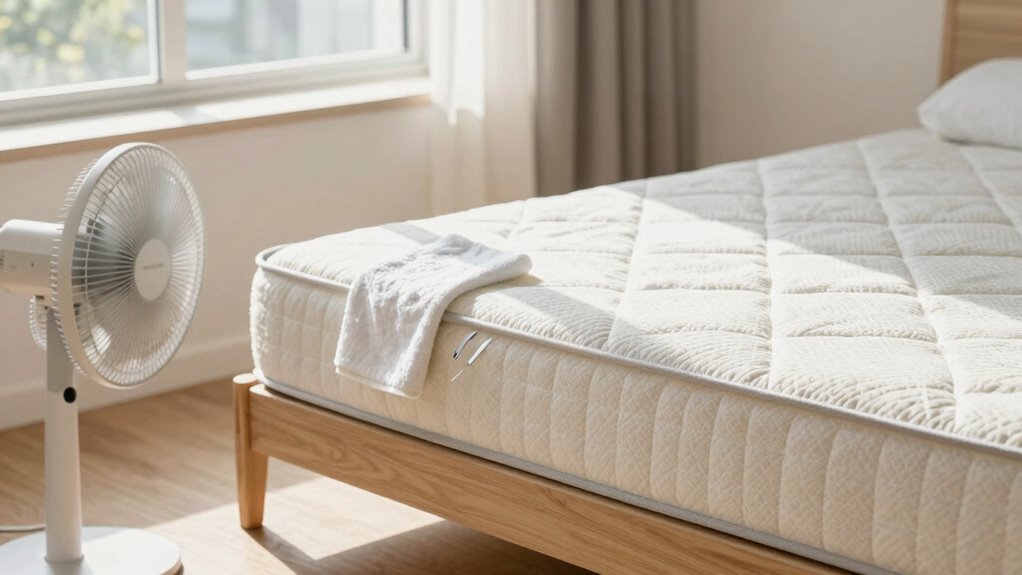
How can you be sure your mattress is fully dry before you sleep on it? The key is to check the mattress material for moisture. A damp mattress can compromise sleep safety and cause mold or mildew. To guarantee it’s completely dry, consider these steps:
- Touch the surface gently—if it feels damp or cool, give it more time to dry.
- Use a moisture meter if available, especially for thick or dense mattress materials.
- Check for any lingering odor, which can indicate residual moisture.
- Remember that proper drying techniques can significantly reduce the risk of mold growth and ensure your mattress is safe for sleep.
Frequently Asked Questions
How Long Does It Typically Take for a Mattress to Dry Completely?
It typically takes about 6 to 12 hours for your mattress to dry completely, depending on factors like mattress moisture and drying time methods. To speed up the process, increase airflow with fans or open windows, and use a dehumidifier if possible. Keep in mind that thicker or wetter mattresses may need longer drying times. Patience guarantees your mattress dries thoroughly, preventing mold or odors later on.
Can I Sleep on My Mattress Immediately After Drying?
You should wait until your mattress is completely dry before sleeping on it to prevent mattress odor and mold growth. Even if it feels dry, moisture might still be trapped inside, causing odors or mold over time. Use a fan or dehumidifier to speed up drying, and check for damp spots. Sleeping on a damp mattress increases risk of mold, so verify it’s fully dry for your health and comfort.
Are There Any Safety Risks Using Heat Sources to Dry a Mattress?
Using heat sources to dry your mattress is like playing with fire—there’s a real fire hazard and risk of chemical exposure if you’re not careful. Excessive heat can damage mattress materials or cause burns, while some drying agents release fumes. Always keep heat sources at a safe distance, use fans, or natural sunlight whenever possible. Prioritize safety to prevent accidents and protect your health during the drying process.
What Signs Indicate My Mattress Is Still Damp?
You’ll notice your mattress is still damp if you detect a musty odor or spot visible moisture indicators, such as dark patches or a damp feeling when you press down. Another sign is prolonged drying time or lingering humidity in the air around it. Keep checking regularly, as these clues help you know when it’s fully dry, preventing mold growth and ensuring a fresh, comfortable sleep surface.
Should I Use a Mattress Protector During the Drying Process?
Yes, you should use a mattress protector during the drying process. It helps maintain mattress hygiene by preventing dust, dirt, and potential allergens from settling on the damp surface. A protective covering also keeps your mattress clean while it dries, reducing the risk of mold and bacteria growth. Plus, it makes cleanup easier afterward, ensuring your mattress stays fresh and hygienic once fully dried.
Conclusion
Now, imagine your mattress as a sponge soaking up every drop of moisture, ready to be transformed into a dry, cozy haven. With each step, you’re guiding the dampness out — from absorbing with towels to blasting air and warmth. Soon, you’ll feel the gentle warmth seep into the fibers, like sunlight through a window, leaving your mattress fresh, dry, and inviting. Rest easy knowing it’s ready to cradle you in comfort once more.